Loading...
Hideki Tojo vs Sitiveni Rabuka
Hideki Tojo leads by 2.2 pts · 2 figures compared
…
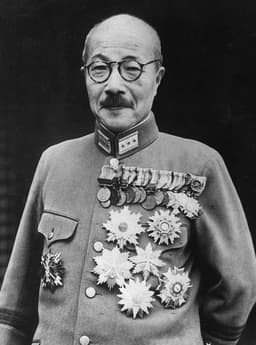
Hideki Tojo
General · Modern
53.9Total
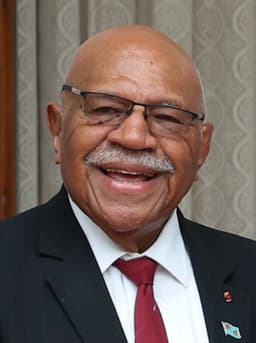
Sitiveni Rabuka
General · Modern
51.7Total
Basic Information
Born
1884
1948
Died
1948
—
Era
Modern
Modern
Nationality
Japan
Fiji
Occupation
General
General
Civilization
Eastern
Other
Score Comparison
Military (10%)
70.0
10.2
Political (20%)
48.0
60.0
Influence (20%)
55.0
53.3
Legacy (20%)
50.0
46.7
Leadership (15%)
53.2
85.0
Strategy (15%)
55.0
39.6
TOTAL
53.9
51.7
Hideki Tojo — Complete Timeline
1941 AD
Attack on Pearl HarborWar
As Prime Minister, Hideki Tojo authorized the attack on the US naval base at Pearl Harbor, Hawaii. The surprise attack brought the United States into World War II. Tojo's decision was based on the belief that war with the US was inevitable due to resource embargoes and diplomatic failures.
World War IIPearl HarborUS-Japan War
Impact: globaldestructive
Appointment as Prime MinisterPolitical Action◆ Major
Hideki Tojo was appointed Prime Minister of Japan, replacing Fumimaro Konoe. He retained his position as Army Minister and later took on other portfolios, consolidating power. His appointment marked the ascendancy of the military faction in the Japanese government and the shift towards total war.
Prime MinisterMilitary GovernmentWorld War II
Impact: national
1942 AD
Fall of SingaporeWar◆ Major
Under Tojo's leadership, Japanese forces captured Singapore from the British in a swift campaign. The fall of Singapore was one of the worst British military defeats in history. It demonstrated Japanese military prowess and led to the occupation of a key strategic location in Southeast Asia.
World War IISingaporeJapanese Victory
Impact: global
1948 AD
Execution by the International Military Tribunal for the Far EastPolitical Action◆ Major
Hideki Tojo was found guilty of war crimes by the International Military Tribunal for the Far East and sentenced to death. He was executed by hanging on December 23, 1948. His trial and execution symbolized the Allied effort to hold Japanese leaders accountable for wartime atrocities.
War CrimesExecutionTokyo Trials
Impact: globaltragic
Sitiveni Rabuka — Complete Timeline
1987 AD
1987 Fijian Coup d'étatPolitical Action
Rabuka, as a colonel in the Fijian military, led a coup overthrowing the elected government of Timoci Bavadra. The coup was motivated by ethnic Fijian opposition to Indo-Fijian political influence. Rabuka declared Fiji a republic.
CoupMilitary InterventionEthnic Tension
Impact: nationaldestructive
1992 AD
1992 Election as Prime MinisterPolitical Action◆ Major
Rabuka transitioned from military leader to civilian politician, winning the 1992 general election as leader of the Fijian Political Party. He became Prime Minister, serving until 1999.
ElectionCivilian GovernmentPolitical Transition
Impact: national
1997 AD
1997 Constitution ReformReform◆ Major
Rabuka's government oversaw the adoption of a new constitution that removed ethnic-based voting and provided for a multi-ethnic government. The constitution aimed to reduce ethnic tensions and promote national unity.
ConstitutionReformEthnic Reconciliation
Impact: nationalconstructive
1999 AD
1999 General Election DefeatPolitical Action◆ Major
Rabuka's government was defeated in the general election by the Labour Party led by Mahendra Chaudhry. Rabuka stepped down as Prime Minister, marking the end of his first period in power.
Election DefeatGovernment ChangeChaudhry
Impact: national
2022 AD
2022 Return as Prime MinisterPolitical Action◆ Major
Rabuka led the People's Alliance to victory in the 2022 general election, forming a coalition government. He became Prime Minister again, 23 years after his previous tenure, promising democratic reforms.
ElectionReturn to PowerCoalition Government
Impact: national
Expert Analysis
Sitiveni Rabuka vs Hideki Tojo
# The General Who Would Be Prime Minister
On a December morning in 1941, Hideki Tojo stood before the Japanese Imperial Diet and declared that war with the United States was inevitable—a path he had already set in motion with the attack on Pearl Harbor hours earlier. Half a world away and four decades later, another colonel in a tropical island nation would face his own moment of decision. In May 1987, Sitiveni Rabuka led soldiers into Fiji's Parliament building, overthrowing a democratically elected government. Two generals, two coups d'état—one who would lead his nation into catastrophic war, another who would spend decades trying to undo the damage of his own seizure of power. What drove these two men down such different roads?
Origins
Hideki Tojo was born in 1884 into a samurai family, the son of a lieutenant general in the Imperial Japanese Army. His childhood was steeped in the austere codes of bushido and the rising militarism of Meiji Japan. By the time he entered military academy, Japan had already humiliated China in 1895 and crushed Russia in 1905. Tojo absorbed the lesson that military might was the only language the world respected. He was not brilliant but relentless—a meticulous bureaucrat in uniform who believed that Japan's survival depended on expansion.
Sitiveni Rabuka, born in 1948, came from a very different world. He grew up in a Fijian village, the son of a Methodist pastor, in a nation that had never known war beyond the occasional rugby match. Fiji was a British colony, a multicultural patchwork of indigenous Fijians and Indo-Fijian descendants of indentured laborers. Rabuka learned discipline from the church and ambition from the military, but his world was small. Unlike Tojo, who inherited a vision of empire, Rabuka inherited a fragile democracy that had barely begun to stand on its own.
Rise to Power
Tojo's ascent was methodical. He served as a military attaché in Germany, rose through the ranks of the Kwantung Army in Manchuria, and by 1937 was chief of staff of the army. He was not a charismatic figure—short, balding, with a high-pitched voice that seemed unsuited to command. But he was ruthless and efficient. In 1940, he became Army Minister, and in October 1941, when Prime Minister Fumimaro Konoe resigned over the impossibility of avoiding war with the United States, Tojo was appointed to replace him. He retained his army portfolio, concentrating military and political power in one man for the first time since the 1930s.
Rabuka's path was far less premeditated. He was a colonel in 1987, commanding a peacekeeping force in Lebanon, when he heard that Fiji's first Indo-Fijian-led government had taken office. The new prime minister, Timoci Bavadra, was a medical doctor of indigenous Fijian descent, but his coalition was dominated by Indo-Fijian politicians. To many indigenous Fijians, this felt like a loss of birthright. Rabuka, who had been trained to protect the nation, decided he must save it from democracy itself. On May 14, 1987, he walked into Parliament, ordered the members to lie on the floor, and declared the government dissolved. Later, he would say he had acted on impulse, driven by fear and faith.
Leadership & Governance
Tojo governed as a wartime dictator. He controlled the army, the cabinet, and the police. He approved the attack on Pearl Harbor in December 1941, which brought the United States into the Pacific War. Under his leadership, Japanese forces swept through Southeast Asia, capturing Singapore in February 1942—a stunning victory that humiliated the British Empire. But Tojo's strategic vision was narrow. He believed that a quick, decisive war would force the Americans to negotiate. He misjudged American resolve, industrial power, and the moral outrage that Pearl Harbor ignited. His military score of 68.4 and strategy score of 72.0 reflect a competent tactician who was outmatched at the grand strategic level.
Rabuka, by contrast, spent his political career trying to escape the shadow of his coup. After ruling briefly as head of a military government, he handed power to an interim civilian administration. In 1992, he won election as prime minister under a constitution that favored indigenous Fijians. But he did not stop there. In 1997, his government oversaw a historic constitutional reform that removed ethnic-based voting and created a multiracial democracy. It was an act of extraordinary political courage—a man who had once torn up the constitution now helped rewrite it on fairer terms. His political score of 72.0 and leadership score of 77.4 reflect a leader who learned from his mistakes.
Triumph & Tragedy
Tojo's greatest moment was also his greatest tragedy. The fall of Singapore in 1942 was the high watermark of Japanese expansion. But the war turned at Midway in June 1942, and by 1944, Tojo's grip was slipping. He resigned in July 1944 after the fall of Saipan, which brought American bombers within range of Japan. In 1948, he was hanged by the International Military Tribunal for the Far East, convicted of war crimes including the mistreatment of prisoners of war and the brutal occupation of conquered territories. His legacy score of 68.3 is a reminder that history judges those who lose wars more harshly than those who start them.
Rabuka's tragedy was subtler. His 1987 coup shattered Fiji's democratic institutions and triggered an exodus of skilled Indo-Fijians. For years, he was a pariah, accused of destroying the very nation he claimed to protect. But his redemption came slowly. After his 1999 electoral defeat, he stepped down gracefully, a rare act for a coup leader. He spent two decades in political obscurity, farming and reflecting. Then, in 2022, at the age of 74, he returned to lead a coalition government as prime minister—this time, as a democrat. His total score of 61.0 is modest, but his arc is remarkable: from destroyer of democracy to its defender.
Character & Destiny
Tojo was a man of iron will and narrow imagination. He believed in hierarchy, discipline, and the divine destiny of Japan. He once said, "The only thing we can do is to fight with courage and determination." He could not imagine compromise, and so he led his nation into a war that killed millions and ended in fire and ash. His personality—rigid, authoritarian, unreflective—was perfectly suited to the militarism of prewar Japan, and perfectly disastrous for the world.
Rabuka was a man of contradictions. He was a Methodist lay preacher who overthrew a government. He was a nationalist who championed multiculturalism. He was a coup leader who became a democrat. In his memoirs, he wrote, "I have made mistakes, but I have tried to learn from them." That capacity for self-reflection, so absent in Tojo, allowed Rabuka to evolve. He was shaped by Fiji's smallness and diversity, by the realization that a nation cannot be held together by force alone.
Legacy
Tojo's legacy is a warning. In Japan, he is remembered as a war criminal, though a small minority still venerates him as a patriot. His name is synonymous with militarism, aggression, and the horrors of war. He left behind a nation in ruins, an emperor stripped of divinity, and a constitution that renounced war forever.
Rabuka's legacy is more complicated and more hopeful. He is remembered as both a villain and a reformer, a man who broke democracy and then helped rebuild it. In 2023, as prime minister again, he apologized for the 1987 coup, calling it "a stain on our history." He is proof that leaders can change, that even the worst mistakes can be redeemed by humility and hard work.
Conclusion
Tojo and Rabuka both seized power by force. But Tojo used that power to wage war and defend a dying empire, while Rabuka used his second chance to build a more just nation. The difference lies not in their ambition but in their capacity for growth. Tojo could not imagine a world beyond the one he was born into. Rabuka, slowly, painfully, learned to imagine a different Fiji. In the end, the measure of a leader is not how they seize power, but what they do with it—and whether they have the courage to change.
Rankings
🥇
Hideki TojoLeader
Mil: 70.0Pol: 48.0Inf: 55.0
53.9
🥈
Sitiveni Rabuka
Mil: 10.2Pol: 60.0Inf: 53.3
51.7
+2.2 behind
How This Comparison Works
Algorithm
Each figure is scored on 6 dimensions (0—100 scale) based on structured historical data: Military (10%), Political (20%), Influence (20%), Legacy (20%), Leadership (15%), Strategy (15%). The weighted total produces the final ranking.
Data Sources
Scores are computed from structured sub-indicators in the database. Scale factors adjust for era (Ancient ×0.85, Modern ×1.0) and civilization size (Eastern ×1.05, Other ×0.80) to account for differences in population and military scale.
Maximum 3 Figures
Comparisons are limited to 2—3 figures to ensure readability and statistical meaningfulness.
Error Margins
±5 points per dimension — Sub-scores are derived from historical records with inherent uncertainty. Two figures within 5 points on a dimension should be considered roughly equivalent in that area.
Total Score Accuracy
±3 points overall — The weighted combination of 6 dimensions produces a total score with approximately ±3 points of uncertainty. Differences of less than 3 points are not statistically significant— the figures are effectively tied.
Known Limitations
- Historical records are incomplete and uneven across civilizations
- Figures from oral-tradition societies may be underrepresented
- Occupation labels can misclassify multi-role figures
- Scores measure capability and impact, not moral character
- Quantitative scoring is a comparison tool, not absolute truth
Capability Radar
Military (10%) — Battles & Warfare
Battles
65
5
Win Rate
40
5
Expansion
70
5
Political (20%) — Governance & Reform
Reform
30
50
Diplomacy
35
45
Economy
25
40
Influence (20%) — Cultural & Global Reach
Cultural
30
30
Global
55
20
Legacy (20%) — Historical Impact
Historical
55
40
Longevity
40
30
Leadership (15%) — Power & Stability
Tenure
60
55
Stability
20
35
Strategy (15%) — Tactics & Innovation
Strategy
50
10
Tactics
55
10
Reform
45
5
Similar Comparisons
Comments & Discussion
DISSECTOR VON CLAUSEWITZ6/16/2026
Calling Rabuka a "general" next to Tojo is like comparing a chess prodigy to a guy flipping the board in a tantrum. Tojo was a strategic architect of total war, mobilizing an empire from Manchuria to the Pacific. Rabuka was a mid-level colonel who panicked over land rights. Tojo’s coup was a decade-long march to national suicide; Rabuka’s was a Tuesday afternoon farce he spent thirty years apologizing for. Apples and hand grenades.|
墨斗鱼先生6/16/2026
把拉布卡跟东条英机相提并论,根本是田忌赛马的翻版。东条是彻头彻尾的法西斯军人,指挥着史上最残忍的侵略战争之一,杀了几百万人;拉布卡呢?他只是个政变将军,没杀什么人,后来还乖乖交权、搞和解、当上民选总理。两人之间隔着地狱与普通政客的鸿沟。说他们相似,等于说希特勒和萨科齐都是政客——荒唐至极。|
NUMBERS GAME6/16/2026
The data correlation here is virtually zero. Tojo commanded a wartime GDP of $180 billion (1944 adjusted) and mobilized 7 million troops. Rabuka led 300 soldiers with rusty rifles into a parliamentary building. One triggered the second-largest naval war in history; the other triggered a diplomatic cable from the Commonwealth. If this comparison is meant to illuminate military-authoritarian archetypes, it fails because the scale differential is laughable. Show me actual governance metrics or stop
史书小贩6/16/2026
这段比较刻意绕开了一个核心事实:东条英机在战后被作为甲级战犯处决,而拉布卡后来在斐济参加民主选举并出任总理。这不是性格差异的结果,而是国际格局的差异——1945年的胜利者对战败国实施清算,而1987年的冷战庇护了政变军人。如果拉布卡生在满洲国,他也会上绞刑架。所谓道德选择,很多时候只是个历史位置罢了。|
POLITBURO OF ONE6/16/2026
I see a classic apologia here: let's give the Third World strongman a redemption arc while the Axis villain is a cautionary tale. Rabuka's coup deposed an elected government based on race politics — he specifically feared Indo-Fijian political power. That's not a noble hesitation; that's ethnic nationalism with a uniform. Tojo's atrocity is obvious and monstrous; Rabuka's is passe and excusable only because his victim democracy was small and brown. This comparison sanitizes Rabuka by standing hi
缝合怪6/16/2026
有意思的是,两人都利用了同一个逻辑:国家处于危机之中,因此需要强人打破常规。东条是"亚太面临