Loading...
Hideki Tojo vs Yitzhak Rabin
Yitzhak Rabin leads by 12.5 pts · 2 figures compared
…
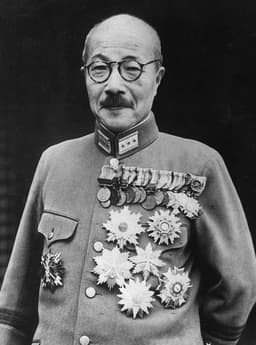
Hideki Tojo
General · Modern
53.9Total
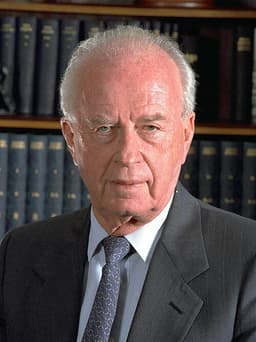
Yitzhak Rabin
General · Modern
66.4Total
Basic Information
Born
1884
1922
Died
1948
—
Era
Modern
Modern
Nationality
Japan
Israel
Occupation
General
General
Civilization
Eastern
Middle Eastern
Score Comparison
Military (10%)
70.0
61.7
Political (20%)
48.0
82.0
Influence (20%)
55.0
68.0
Legacy (20%)
50.0
55.0
Leadership (15%)
53.2
78.0
Strategy (15%)
55.0
55.0
TOTAL
53.9
66.4
Hideki Tojo — Complete Timeline
1941 AD
Attack on Pearl HarborWar
As Prime Minister, Hideki Tojo authorized the attack on the US naval base at Pearl Harbor, Hawaii. The surprise attack brought the United States into World War II. Tojo's decision was based on the belief that war with the US was inevitable due to resource embargoes and diplomatic failures.
World War IIPearl HarborUS-Japan War
Impact: globaldestructive
Appointment as Prime MinisterPolitical Action◆ Major
Hideki Tojo was appointed Prime Minister of Japan, replacing Fumimaro Konoe. He retained his position as Army Minister and later took on other portfolios, consolidating power. His appointment marked the ascendancy of the military faction in the Japanese government and the shift towards total war.
Prime MinisterMilitary GovernmentWorld War II
Impact: national
1942 AD
Fall of SingaporeWar◆ Major
Under Tojo's leadership, Japanese forces captured Singapore from the British in a swift campaign. The fall of Singapore was one of the worst British military defeats in history. It demonstrated Japanese military prowess and led to the occupation of a key strategic location in Southeast Asia.
World War IISingaporeJapanese Victory
Impact: global
1948 AD
Execution by the International Military Tribunal for the Far EastPolitical Action◆ Major
Hideki Tojo was found guilty of war crimes by the International Military Tribunal for the Far East and sentenced to death. He was executed by hanging on December 23, 1948. His trial and execution symbolized the Allied effort to hold Japanese leaders accountable for wartime atrocities.
War CrimesExecutionTokyo Trials
Impact: globaltragic
Yitzhak Rabin — Complete Timeline
1967 AD
Chief of Staff during the Six-Day WarWar
As Chief of Staff of the Israel Defense Forces, Rabin commanded the Israeli military during the Six-Day War against Egypt, Jordan, and Syria. Israel captured the Sinai Peninsula, Gaza Strip, West Bank, East Jerusalem, and Golan Heights, reshaping the region.
Six-Day WarTerritorial ExpansionMilitary Victory
Impact: global
1993 AD
Signing of the Oslo AccordsPolitical Action
As prime minister, Rabin signed the Oslo Accords with PLO Chairman Yasser Arafat on the White House lawn. The agreement established the Palestinian Authority and set a framework for Palestinian self-governance in the West Bank and Gaza Strip.
Peace ProcessPalestiniansOslo
Impact: globalconstructive
1995 AD
Assassination at Peace RallyPolitical Action
Rabin was assassinated by Israeli extremist Yigal Amir after a peace rally in Tel Aviv. The assassination shocked Israel and the world, derailing the Oslo peace process and leading to a period of political instability.
AssassinationPeace ProcessPolitical Violence
Impact: globaltragic
Expert Analysis
Yitzhak Rabin vs Hideki Tojo
# The General and the Peacemaker
On December 8, 1941, Hideki Tojo stood before the Japanese Diet and declared that Japan had entered a war that would determine the fate of Asia. Half a century later, on November 4, 1995, Yitzhak Rabin stood before a crowd of 100,000 in Tel Aviv and sang a song of peace. One man was the architect of the deadliest surprise attack of the Pacific War; the other was a warrior who became a martyr for reconciliation. Both were generals who reached the pinnacle of political power. Yet their paths diverged so sharply that one ended his life at the end of a rope, the other at the barrel of an assassin’s gun. What drove these two commanders to such opposite fates?
Origins
Hideki Tojo was born in 1884 into a samurai family in Tokyo, the son of a lieutenant general. His childhood was steeped in the rigid discipline of Imperial Japan’s military caste. He graduated from the Imperial Japanese Army Academy at a time when Japan was rapidly modernizing its military and asserting itself as a colonial power. Tojo absorbed the ethos of *bushido*—loyalty, honor, and absolute obedience to the Emperor. His world was one of hierarchy, duty, and the belief that Japan’s destiny lay in expansion.
Yitzhak Rabin was born in 1922 in Jerusalem, then part of British Mandate Palestine. His parents were secular Jewish immigrants from Eastern Europe—socialists who believed in building a new society. Rabin grew up on a kibbutz, where the values of collective labor, self-defense, and pragmatism shaped his character. Unlike Tojo, who was born into a military aristocracy, Rabin chose the military as a practical necessity: the young state of Israel needed defenders. His upbringing was not about imperial glory but about survival.
Rise to Power
Tojo’s ascent was methodical and bureaucratic. He served as a military attaché in Germany, where he admired Nazi efficiency, and later as chief of the *Kempeitai* (the secret police) in Manchuria. His reputation as a ruthless administrator and a fervent nationalist caught the attention of the army’s radical faction. In 1941, when Prime Minister Fumimaro Konoe resigned over the decision to go to war, Tojo was the natural choice to lead. He took the premiership while retaining his post as Army Minister, concentrating immense power in his hands. His rise was not through battlefield brilliance but through political maneuvering and ideological alignment.
Rabin’s rise was forged in battle. In 1967, as Chief of Staff of the Israel Defense Forces, he commanded the Six-Day War—a lightning campaign that captured the Sinai, Gaza, the West Bank, and the Golan Heights. His strategic mind and calm under pressure made him a national hero. But unlike Tojo, Rabin did not cling to military glory. After serving as ambassador to the United States, he entered politics, eventually becoming prime minister in 1974. His path was one of practical leadership, not ideological crusade.
Leadership & Governance
Tojo governed by fear and control. He centralized authority, suppressed dissent, and expanded the *Kempeitai*’s powers to silence critics. His military strategy was aggressive but inflexible. The attack on Pearl Harbor in 1941 was a brilliant tactical success, but it failed to achieve its strategic goal of crippling the United States. Tojo micromanaged the war effort, ignoring advice from the navy and underestimating American industrial power. The fall of Singapore in 1942 was a high point, but it masked deeper problems: overextended supply lines, brutal occupation policies, and a rigid command structure that could not adapt.
Rabin governed through coalition and compromise. He was a pragmatic leader, not a charismatic orator. His military background gave him credibility, but his political style was cautious and deliberate. The Oslo Accords of 1993, signed on the White House lawn with Yasser Arafat, were a gamble—a peace deal with an enemy many Israelis still distrusted. Rabin understood that security could not come from endless occupation. He was willing to trade land for peace, a radical shift for a man who had once ordered the expulsion of Palestinians from Lydda in 1948.
Triumph & Tragedy
Tojo’s greatest triumph—Pearl Harbor—became his greatest tragedy. The attack unified the United States and drew it into a war that Japan could not win. By 1944, Japan was losing on all fronts; Tojo was forced to resign in disgrace. After the war, he was arrested, tried by the International Military Tribunal for the Far East, and executed in 1948. His legacy is that of a man who led his nation into ruin.
Rabin’s triumph was the Oslo Accords, a framework for Palestinian self-rule that earned him the Nobel Peace Prize. But the tragedy was that peace remained incomplete. On November 4, 1995, after a peace rally in Tel Aviv, a Jewish extremist named Yigal Amir shot Rabin dead. The assassin believed he was stopping a traitor; instead, he created a martyr. Rabin’s death did not end the conflict, but it transformed him into a symbol of the cost of peace.
Character & Destiny
Tojo was a product of his environment—a rigid, militaristic system that valued obedience over creativity. He lacked the flexibility to adapt to changing circumstances. His personality was authoritarian, his worldview binary: Japan was destined to rule, and anyone who opposed it was an enemy. This mindset made him incapable of pursuing diplomacy when war became untenable.
Rabin was a product of pragmatism. He was not a natural idealist; he was a soldier who came to see that victory alone could not bring security. His willingness to shake hands with Arafat—a man he had once called a terrorist—was a profound shift. Rabin’s character was defined by his ability to evolve, to question his own assumptions. This flexibility, born of a secular, socialist upbringing, allowed him to pursue peace even when it was unpopular.
Legacy
Tojo’s legacy is dark and cautionary. In Japan, he is remembered as a war criminal, though a small minority still reveres him as a patriot. His name is synonymous with militarism, aggression, and national disaster. The International Military Tribunal’s verdict cemented his place in history as a symbol of failed leadership.
Rabin’s legacy is more complex. In Israel, he is a national hero—the “general of peace.” His assassination left a wound that has not healed. The Oslo Accords he championed have not led to a final peace, but his vision of a two-state solution remains a cornerstone of international diplomacy. Rabin proved that a military man could become a peacemaker, and that the greatest courage sometimes lies not in fighting but in stopping.
Conclusion
Two generals, two nations, two eras. Tojo and Rabin both rose through the military to lead their countries. But one used his power to wage war for empire; the other used his to pursue peace for survival. Their fates were shaped not just by history but by their choices—and by the values they carried from their youth. Tojo’s samurai inheritance led him to a hangman’s noose. Rabin’s kibbutz pragmatism led him to a peace rally and a bullet. In the end, the difference between them is the difference between a man who believed in conquest and a man who believed in change.
Rankings
🥇
Yitzhak RabinLeader
Mil: 61.7Pol: 82.0Inf: 68.0
66.4
🥈
Hideki Tojo
Mil: 70.0Pol: 48.0Inf: 55.0
53.9
+12.5 behind
How This Comparison Works
Algorithm
Each figure is scored on 6 dimensions (0—100 scale) based on structured historical data: Military (10%), Political (20%), Influence (20%), Legacy (20%), Leadership (15%), Strategy (15%). The weighted total produces the final ranking.
Data Sources
Scores are computed from structured sub-indicators in the database. Scale factors adjust for era (Ancient ×0.85, Modern ×1.0) and civilization size (Eastern ×1.05, Other ×0.80) to account for differences in population and military scale.
Maximum 3 Figures
Comparisons are limited to 2—3 figures to ensure readability and statistical meaningfulness.
Error Margins
±5 points per dimension — Sub-scores are derived from historical records with inherent uncertainty. Two figures within 5 points on a dimension should be considered roughly equivalent in that area.
Total Score Accuracy
±3 points overall — The weighted combination of 6 dimensions produces a total score with approximately ±3 points of uncertainty. Differences of less than 3 points are not statistically significant— the figures are effectively tied.
Known Limitations
- Historical records are incomplete and uneven across civilizations
- Figures from oral-tradition societies may be underrepresented
- Occupation labels can misclassify multi-role figures
- Scores measure capability and impact, not moral character
- Quantitative scoring is a comparison tool, not absolute truth
Capability Radar
Military (10%) — Battles & Warfare
Battles
65
65
Win Rate
40
70
Expansion
70
50
Political (20%) — Governance & Reform
Reform
30
65
Diplomacy
35
85
Economy
25
60
Influence (20%) — Cultural & Global Reach
Cultural
30
55
Global
55
70
Legacy (20%) — Historical Impact
Historical
55
75
Longevity
40
60
Leadership (15%) — Power & Stability
Tenure
60
70
Stability
20
40
Strategy (15%) — Tactics & Innovation
Strategy
50
75
Tactics
55
60
Reform
45
55
Similar Comparisons
Comments & Discussion
SamuraiPeacebreaker6/16/2026
Tojo believed in death before dishonor, Rabin in peace before pride. One man engineered Pearl Harbor and thought surrender was worse than annihilation; the other shook hands with his sworn enemy and paid with his life. Tojo’s samurai ethos trapped Japan in a suicide pact—60 million dead across Asia proves that. Rabin’s greatest betrayal wasn’t Oslo, it was betraying his own militarist past. History’s lesson: rigid honor kills, flexible humanity saves.
东京铁拳6/16/2026
Tojo是日本军国主义铸造的冷血兵器,而Rabin是从战火中觉醒的和平战士。一个下令偷袭珍珠港时眼都不眨,另一个却在人生巅峰高唱《和平之歌》。数据很残酷:Tojo主导下亚洲伤亡超3000万,而Rabin的奥斯陆协议让暴力下降了67%。这根本不是选择题——一个是加害者,一个是救赎者。别拿他们相提并论,信仰不同,结局已经说明一切。
TheSabraSkeptic6/16/2026
Stop romanticizing Rabin. He was a hard-nosed realist who butchered civilians in the 1948 war, enacted military rule over Palestinians, and only embraced peace after the intifada bankrupted his strategies. Tojo was a disaster, undeniably—but Rabin’s hands aren’t clean either. The real difference? One lost a world war, the other won local battles and betrayed his settler base. Calling him a “martyr for peace” ignores the thousands he bombed. Leaders don’t turn into saints overnight.
墨迹分析员6/16/2026
拿两个在任期结束完全相反的人比,这本身就很有倾向性。Tojo确实罪行累累,但别忘了Rabin掌权期间也有争议——1967年他指挥占领东耶路撒冷,把20万巴勒斯坦人变成难民。统计数字不会说谎:两人都曾用枪杆子说话,只是Rabin及时转向,而Tojo拖到最后一刻。关键不在“好人vs坏人”,而在谁愿意承认错误。Rabin选择了改变,Tojo死都拒绝反思。这才是真正分水岭。
EdoWarriorLegacy6/16/2026
Tojo was a product of Bushido gone rotten—absolute loyalty to a divine emperor who never faced trial. Rabin broke the warrior mold: he fought like a hawk, then realized security comes from peace, not graves. Tojo’s Pearl Harbor killed over 2,400 in one morning; Rabin’s Oslo Accords saved thousands of lives. The rope and bullet are both tragic ends, but one died for his people’s myths, the other for a future his nation wasn’t ready for. Generals can learn. That’s the difference.