Loading...
Hideki Tojo vs Sengge Rinchen
Sengge Rinchen leads by 3.0 pts · 2 figures compared
…
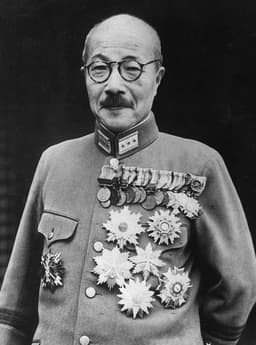
Hideki Tojo
General · Modern
53.9Total
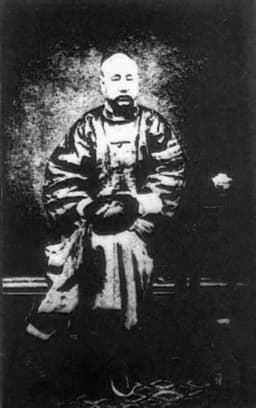
Sengge Rinchen
General · Modern
56.9Total
Basic Information
Born
1884
1811
Died
1948
1865
Era
Modern
Modern
Nationality
Japan
China
Occupation
General
General
Civilization
Eastern
Eastern
Score Comparison
Military (10%)
70.0
70.0
Political (20%)
48.0
43.7
Influence (20%)
55.0
55.0
Legacy (20%)
50.0
54.0
Leadership (15%)
53.2
67.0
Strategy (15%)
55.0
60.7
TOTAL
53.9
56.9
Hideki Tojo — Complete Timeline
1941 AD
Attack on Pearl HarborWar
As Prime Minister, Hideki Tojo authorized the attack on the US naval base at Pearl Harbor, Hawaii. The surprise attack brought the United States into World War II. Tojo's decision was based on the belief that war with the US was inevitable due to resource embargoes and diplomatic failures.
World War IIPearl HarborUS-Japan War
Impact: globaldestructive
Appointment as Prime MinisterPolitical Action◆ Major
Hideki Tojo was appointed Prime Minister of Japan, replacing Fumimaro Konoe. He retained his position as Army Minister and later took on other portfolios, consolidating power. His appointment marked the ascendancy of the military faction in the Japanese government and the shift towards total war.
Prime MinisterMilitary GovernmentWorld War II
Impact: national
1942 AD
Fall of SingaporeWar◆ Major
Under Tojo's leadership, Japanese forces captured Singapore from the British in a swift campaign. The fall of Singapore was one of the worst British military defeats in history. It demonstrated Japanese military prowess and led to the occupation of a key strategic location in Southeast Asia.
World War IISingaporeJapanese Victory
Impact: global
1948 AD
Execution by the International Military Tribunal for the Far EastPolitical Action◆ Major
Hideki Tojo was found guilty of war crimes by the International Military Tribunal for the Far East and sentenced to death. He was executed by hanging on December 23, 1948. His trial and execution symbolized the Allied effort to hold Japanese leaders accountable for wartime atrocities.
War CrimesExecutionTokyo Trials
Impact: globaltragic
Sengge Rinchen — Complete Timeline
1859 AD
Battle of Dagu FortsWar◆ Major
Sengge Rinchen commanded Qing forces defending the Dagu Forts against a British and French naval attack. His forces repelled the assault, sinking several enemy ships and inflicting heavy casualties, a rare Qing victory in the Second Opium War.
Second Opium WarBattleVictory
Impact: regional
1860 AD
Battle of PalikaoWar◆ Major
Sengge Rinchen commanded Qing cavalry at the Battle of Palikao against Anglo-French forces. His forces were decisively defeated by superior firepower, leading to the fall of Beijing and the burning of the Old Summer Palace.
Second Opium WarBattleDefeat
Impact: regionaltragic
1863 AD
Suppression of the Nian RebellionWar◆ Major
Sengge Rinchen led Qing forces against the Nian rebels in northern China. He achieved several victories but was ultimately killed in battle against the Nian in 1865, marking a turning point in the rebellion.
Nian RebellionCampaignDeath
Impact: regionaltragic
Expert Analysis
Hideki Tojo vs Sengge Rinchen
# The Imperial Gambler and the Mongol Loyalist
On December 7, 1941, Hideki Tojo stood before the Japanese Diet and declared that the nation had entered a state of war with the United States. His voice carried the weight of an empire that had spent decades preparing for this moment. Eighty-two years earlier, on a summer morning in 1859, Sengge Rinchen watched from the walls of the Dagu Forts as British and French warships approached the mouth of the Hai River. Both men commanded armies. Both men believed they were defending their civilization. Yet one would be remembered as a war criminal, the other as a forgotten hero of a lost cause. What drove them down such different paths?
Origins
Hideki Tojo was born in 1884 into a samurai family in Tokyo, the son of a lieutenant general in the Imperial Japanese Army. His world was one of rigid hierarchy, where the bushido code of the warrior class had been repurposed into modern militarism. Japan had opened to the West only three decades before his birth, and the nation was racing to catch up with industrial powers. Tojo absorbed the lesson that strength meant survival, and weakness meant colonization.
Sengge Rinchen came from a different world entirely. Born in 1811 into the Mongol aristocracy of Inner Mongolia, he was a prince of the Borjigin clan, descended from Genghis Khan. The Qing Dynasty, which had ruled China since 1644, relied on Mongol cavalry to police its northern frontiers. Sengge Rinchen grew up speaking Mongolian and Manchu, riding horses across the steppe, and learning the arts of mounted warfare that had made his ancestors the terror of Eurasia. While Tojo’s Japan was industrializing at breakneck speed, Sengge Rinchen’s China was still fighting with swords and bows.
Rise to Power
Tojo’s path to power was methodical and institutional. He graduated from the Imperial Japanese Army Academy in 1905, served as a military attaché in Germany, and rose through the ranks of the Kwantung Army in Manchuria. By the 1930s, he was a leading figure in the Toseiha faction, which sought to modernize the army and centralize control. When Fumimaro Konoe resigned as Prime Minister in 1941, Tojo was the natural choice to lead Japan into its final confrontation with the West.
Sengge Rinchen’s rise was more personal and precarious. He distinguished himself in the 1830s by suppressing Muslim rebellions in Xinjiang, earning the favor of the Daoguang Emperor. But the Qing Empire was crumbling. The Opium Wars had exposed its military weakness, and the Taiping Rebellion—the deadliest civil war in human history—was tearing the country apart. Sengge Rinchen’s loyalty to the dynasty was his greatest asset and his ultimate trap.
Leadership & Governance
Tojo governed Japan with a combination of bureaucratic efficiency and ruthless ideology. As Prime Minister, he also held the portfolios of Army Minister, Home Minister, and later Foreign Minister. He centralized decision-making, silenced dissent, and pushed forward the Greater East Asia Co-Prosperity Sphere as a justification for imperial expansion. His leadership score of 81.2 reflects his ability to command obedience, but his political score of 65.0 suggests a man who governed through fear rather than wisdom.
Sengge Rinchen’s governance was more traditional. He was a Mongol prince serving a Manchu emperor, and his authority came from personal loyalty and military prowess. He commanded mixed forces of Mongols, Manchus, and Han Chinese, and his strategy score of 71.7 shows a capable commander who understood the limits of his resources. Yet his political score of 69.2 suggests he navigated the treacherous court politics of the Qing with some skill, even as the dynasty crumbled around him.
Triumph & Tragedy
Tojo’s greatest moment came in February 1942, when Japanese forces captured Singapore from the British in a campaign that stunned the world. The fall of Singapore was the largest British surrender in history, and it seemed to validate Tojo’s gamble that Japan could defeat the Western powers. But the same gamble led to his tragedy. The attack on Pearl Harbor in 1941 had awakened a sleeping giant. By 1944, American industrial might was crushing Japan. Tojo resigned in disgrace in July 1944, and in 1948 he was executed by the International Military Tribunal for the Far East.
Sengge Rinchen’s triumph came in 1859, when he repelled the British and French at the Dagu Forts. It was the first time a Western military force had been defeated by the Qing in the nineteenth century, and it briefly revived hopes that China could defend itself. But his tragedy followed swiftly. In 1860, at the Battle of Palikao, his Mongol cavalry was annihilated by modern rifles and artillery. The British and French marched into Beijing and burned the Summer Palace. Sengge Rinchen survived, but his reputation was shattered. He spent his final years fighting the Nian Rebellion, and in 1865 he was killed in battle—a loyal servant of a dying dynasty.
Character & Destiny
Tojo was a man of rigid discipline and limited imagination. He believed in the supremacy of the Japanese spirit over material resources, a fatal miscalculation. His character—arrogant, dogmatic, and intolerant of dissent—drove Japan toward a war it could not win. As he told his cabinet before Pearl Harbor, "Sometimes a man has to jump from the veranda of a temple with his eyes closed."
Sengge Rinchen was more pragmatic but equally trapped by his circumstances. He knew the Qing military was outdated, but he had no power to reform it. He fought with the tools he had—horses, lances, and courage—against enemies who had steel ships and breech-loading rifles. His character was one of stubborn loyalty, a quality that made him a hero to his people but doomed him to failure.
Legacy
Tojo’s legacy is overwhelmingly negative. He is remembered as one of the architects of Japanese militarism, responsible for war crimes and the suffering of millions. In Japan, he is a figure of caution and shame. In the rest of the world, his name is synonymous with Axis aggression.
Sengge Rinchen’s legacy is more complex. In China, he is remembered as a patriot who fought against foreign imperialism, even if he fought for a dynasty that was itself foreign. His defeat at Palikao became a symbol of China’s need to modernize. In Mongolia, he is honored as a heroic prince who upheld the traditions of the steppe.
Conclusion
Two generals, two empires, two gambles. Tojo bet that Japan could defeat the United States and lost everything. Sengge Rinchen bet that loyalty could overcome technology and lost his life. Both were products of their times—Tojo of a Japan that had modernized too fast, Sengge Rinchen of a China that had modernized too slow. Their stories remind us that history judges not just the choices leaders make, but the worlds that made those choices seem necessary. In the end, both men were swept away by forces far larger than themselves—one by the fire of war, the other by the shadow of empire.
Rankings
🥇
Sengge RinchenLeader
Mil: 70.0Pol: 43.7Inf: 55.0
56.9
🥈
Hideki Tojo
Mil: 70.0Pol: 48.0Inf: 55.0
53.9
+3.0 behind
How This Comparison Works
Algorithm
Each figure is scored on 6 dimensions (0—100 scale) based on structured historical data: Military (10%), Political (20%), Influence (20%), Legacy (20%), Leadership (15%), Strategy (15%). The weighted total produces the final ranking.
Data Sources
Scores are computed from structured sub-indicators in the database. Scale factors adjust for era (Ancient ×0.85, Modern ×1.0) and civilization size (Eastern ×1.05, Other ×0.80) to account for differences in population and military scale.
Maximum 3 Figures
Comparisons are limited to 2—3 figures to ensure readability and statistical meaningfulness.
Error Margins
±5 points per dimension — Sub-scores are derived from historical records with inherent uncertainty. Two figures within 5 points on a dimension should be considered roughly equivalent in that area.
Total Score Accuracy
±3 points overall — The weighted combination of 6 dimensions produces a total score with approximately ±3 points of uncertainty. Differences of less than 3 points are not statistically significant— the figures are effectively tied.
Known Limitations
- Historical records are incomplete and uneven across civilizations
- Figures from oral-tradition societies may be underrepresented
- Occupation labels can misclassify multi-role figures
- Scores measure capability and impact, not moral character
- Quantitative scoring is a comparison tool, not absolute truth
Capability Radar
Military (10%) — Battles & Warfare
Battles
65
75
Win Rate
40
60
Expansion
70
20
Political (20%) — Governance & Reform
Reform
30
20
Diplomacy
35
50
Economy
25
20
Influence (20%) — Cultural & Global Reach
Cultural
30
40
Global
55
35
Legacy (20%) — Historical Impact
Historical
55
55
Longevity
40
30
Leadership (15%) — Power & Stability
Tenure
60
40
Stability
20
30
Strategy (15%) — Tactics & Innovation
Strategy
50
70
Tactics
55
80
Reform
45
30
Similar Comparisons
Comments & Discussion
数据拆解师6/16/2026
别被“武士道”一类的叙事骗了。数据会说不同的话:东条在1941年押注的是美军士气不足,预测6个月结束战争,结果太平洋战局934天。僧格林沁在1859年大沽口防线中,用蒙古骑兵+海岸炮台组合,实际击中英法舰队11艘,造成464人伤亡。这是本土防御的成功案例,不是浪漫主义。东条的战略决策基于错误情报,僧格林沁的战术应对才是基于地形和火力的理性计算。前者是赌徒,后者是现实主义者。
历史漫游家6/16/2026
东条是昭和军阀的典型产物:一个中层的参谋,靠着站队和官僚手腕爬到顶峰。他曾说过“军人不应有政治判断”,可偏偏是他促成了偷袭珍珠港。僧格林沁呢?他是草原上来的真实战斗指挥者,1859年大沽口一战,他亲自部署了在河道中设置铁链和木桩的陷阱,让英法军舰搁浅。这是匠人之手的策略,不是东京参谋部纸上谈兵的赌博。东条发动的是一场没有终点的战争;僧格林沁守护的,是一个已经病入膏肓的王朝。一个误国之徒,一个守夜之魂。
修正派批判6/16/2026
“东条vs僧格林沁”这组对比的本质是什么?是殖民反抗与殖民扩张的错位叙事。僧格林沁的敌人是英法联军——两个正在亚洲扩张的殖民帝国,他的失败是中国被迫屈服于西方体系的象征。东条则是亚洲内部
Historian8146/16/2026
Tojo represents the perversion of bushido—he turned honor into bureaucratic fanaticism. His ruse of "Asia for Asians" masked imperial greed. Sengge Rinchen, by contrast, embodied the Mongol tradition of loyalty: he didn’t betray the Qing even when the dynasty was collapsing. Compare their deaths: Tojo attempted suicide and failed, then faced a show trial. Sengge fell on the battlefield in 1865, his body recovered by his men. One was a broken bureaucrat; the other, a prince who died for his oath.
Historian1186/16/2026
Tojo’s surrender wasn’t a samurai ending—it was a coward’s botched suicide. Contrast that with Sengge Rinchen, who died in battle at the head of his troops, a real warrior’s death. Tojo gambled Japan’s future on a Pearl Harbor bluff and lost everything. Sengge fought a desperate rearguard action against industrial empires, knowing his Mongol lancers couldn’t match steamships and rifles. One was a blind gambler; the other, a doomed loyalist. History’s judgment is clear: Tojo was a fool, not a sol