Loading...
Hideki Tojo vs Samori Toure
Samori Toure leads by 16.6 pts · 2 figures compared
…
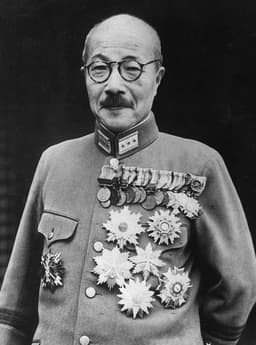
Hideki Tojo
General · Modern
53.9Total
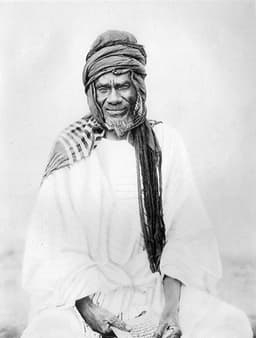
Samori Toure
General · Modern
70.5Total
Basic Information
Born
1884
1830
Died
1948
1900
Era
Modern
Modern
Nationality
Japan
Wassoulou Empire
Occupation
General
General
Civilization
Eastern
Other
Score Comparison
Military (10%)
70.0
60.0
Political (20%)
48.0
78.0
Influence (20%)
55.0
68.0
Legacy (20%)
50.0
72.0
Leadership (15%)
53.2
72.0
Strategy (15%)
55.0
70.0
TOTAL
53.9
70.5
Hideki Tojo — Complete Timeline
1941 AD
Attack on Pearl HarborWar
As Prime Minister, Hideki Tojo authorized the attack on the US naval base at Pearl Harbor, Hawaii. The surprise attack brought the United States into World War II. Tojo's decision was based on the belief that war with the US was inevitable due to resource embargoes and diplomatic failures.
World War IIPearl HarborUS-Japan War
Impact: globaldestructive
Appointment as Prime MinisterPolitical Action◆ Major
Hideki Tojo was appointed Prime Minister of Japan, replacing Fumimaro Konoe. He retained his position as Army Minister and later took on other portfolios, consolidating power. His appointment marked the ascendancy of the military faction in the Japanese government and the shift towards total war.
Prime MinisterMilitary GovernmentWorld War II
Impact: national
1942 AD
Fall of SingaporeWar◆ Major
Under Tojo's leadership, Japanese forces captured Singapore from the British in a swift campaign. The fall of Singapore was one of the worst British military defeats in history. It demonstrated Japanese military prowess and led to the occupation of a key strategic location in Southeast Asia.
World War IISingaporeJapanese Victory
Impact: global
1948 AD
Execution by the International Military Tribunal for the Far EastPolitical Action◆ Major
Hideki Tojo was found guilty of war crimes by the International Military Tribunal for the Far East and sentenced to death. He was executed by hanging on December 23, 1948. His trial and execution symbolized the Allied effort to hold Japanese leaders accountable for wartime atrocities.
War CrimesExecutionTokyo Trials
Impact: globaltragic
Samori Toure — Complete Timeline
1878 AD
Establishment of the Wassoulou EmpirePolitical Action
Samori Toure founded the Wassoulou Empire in West Africa, uniting various Mandinka states under his rule. He established a centralized administration and a professional army, creating a powerful state that resisted French expansion.
EmpireWassoulouUnification
Impact: regionalconstructive
1880 AD
Military Reforms and ModernizationReform◆ Major
Samori Toure modernized his army by importing firearms from European traders and establishing a standing army of up to 35,000 men. He organized his forces into regular units and introduced new tactics, making them effective against French troops.
Military ReformFirearmsArmy
Impact: regionalconstructive
1882 AD
First Franco-Wassoulou WarWar◆ Major
Samori Toure's forces fought the French army in the first major conflict between the Wassoulou Empire and France. The war ended with a treaty in 1886, recognizing Samori's control over the Niger River region.
WarFranceTreaty
Impact: regional
1891 AD
Second Franco-Wassoulou WarWar◆ Major
The French resumed hostilities, forcing Samori to retreat eastward. He employed a scorched-earth strategy, destroying villages and crops to deny resources to the French, prolonging the conflict for years.
WarScorched EarthRetreat
Impact: regionaltragic
1898 AD
Capture and ExileWar
Samori Toure was captured by French forces after a long campaign. He was exiled to Gabon, where he died in 1900. His capture ended the Wassoulou Empire and marked the completion of French conquest in West Africa.
CaptureExileEnd of Empire
Impact: regionaltragic
Expert Analysis
Hideki Tojo vs Samori Toure
# The General and the Guerrilla: Two Paths to Power, Two Destinies
In December 1941, Hideki Tojo stood before the Japanese Diet and declared that the nation stood at the dawn of a new era. Half a world away and sixty years earlier, Samori Toure had stood before his own assembled chiefs in the hills of West Africa, proclaiming the birth of the Wassoulou Empire. Both men were generals who would lead their peoples into war against overwhelming industrial powers. One would die by the hangman's noose, condemned by the world as a war criminal. The other would die in exile, a prisoner of the very empire he had defied for two decades. What separates a conqueror from a resistance leader, a villain from a hero, often comes down not to their abilities but to the choices they made when history demanded a reckoning.
Origins
Hideki Tojo was born in 1884 into a military household in Tokyo, the son of a lieutenant general who had served in the Boshin War. His childhood was one of rigid discipline and imperial loyalty—the samurai code filtered through Meiji-era modernization. He entered the Imperial Japanese Army Academy at sixteen, graduating tenth in his class, a competent but unremarkable student who compensated for lack of brilliance with ferocious dedication. Japan in the 1880s and 1890s was a nation remaking itself, racing to catch up with Western powers, and Tojo absorbed that anxious ambition like oxygen.
Samori Toure was born around 1830 in what is now Guinea, into a world that seemed untouched by the industrial revolution. He was a Dyula trader’s son who grew up learning the caravan routes of the Sahel, dealing in kola nuts and salt, not swords. His early life gave no hint of military greatness. But when French colonial forces began encroaching on the Mandinka heartland in the 1850s, Toure found himself drawn into a conflict that would define the rest of his existence. He was already in his forties when he began building an army, a late bloomer in a world that left no room for delay.
Rise to Power
Tojo’s ascent was methodical, almost bureaucratic. He served as a military attaché in Berlin, studied the German general staff system, and returned to Japan as a rising star in the Army Ministry. By the 1930s, he had become a key figure in the militarist faction that saw parliamentary democracy as weakness and expansion as destiny. His appointment as Prime Minister in October 1941 was the culmination of a career spent maneuvering through the corridors of power—not seizing it, but having it handed to him by a political system that had already surrendered to military logic.
Toure’s rise was more dramatic, forged in the crucible of war itself. In the 1860s and 1870s, he fought a series of campaigns against local rivals while simultaneously arming his followers with modern rifles purchased from British and German traders. By 1878, he had unified the Mandinka states under a single banner, establishing the Wassoulou Empire with himself as its ruler. He created a standing army of up to 30,000 men, organized along European lines, with a cavalry corps that could strike deep into enemy territory. Where Tojo inherited a modern military machine, Toure had to invent one from scratch.
Leadership & Governance
Tojo’s leadership style was that of a meticulous administrator who believed in control from the top. As Prime Minister, he held multiple portfolios simultaneously—Army Minister, Home Minister, later Chief of the General Staff—concentrating power in a way that left little room for dissent. His governance was harsh: the Kempeitai, Japan’s military police, suppressed opposition ruthlessly, and the war effort was managed through rationing and propaganda. Yet Tojo was not a charismatic dictator. He was a committee man who had risen by consensus, and his authority depended on maintaining the fragile coalition of military factions that had put him in power.
Toure ruled differently. His empire was a federation of chiefdoms held together by personal loyalty and the shared threat of French conquest. He was a master of diplomacy, negotiating with the British in Sierra Leone for arms while playing French commanders against each other. His military strategy was flexible and adaptive: when the French attacked in 1882, he fought a conventional war; when they returned in 1891 with superior forces, he retreated eastward, burning villages and crops to deny them supplies. The scorched-earth tactics that he employed were brutal but effective, prolonging his resistance for years beyond what anyone expected.
Triumph & Tragedy
For Tojo, the moment of triumph was also the seed of tragedy. The attack on Pearl Harbor on December 7, 1941, was a stunning tactical success—the US Pacific Fleet was crippled, and Japan’s southern advance seemed unstoppable. The fall of Singapore in February 1942, when 80,000 British troops surrendered to a smaller Japanese force, was the greatest humiliation of British arms in history. Tojo appeared invincible. But Pearl Harbor was also the moment that awakened a sleeping giant. The United States, with its vast industrial capacity, would never accept defeat, and Tojo had no plan for winning a long war.
Toure’s greatest triumph was simply survival. For sixteen years, he held the French at bay, building an empire that outlasted many European colonial ventures. But in 1898, betrayed by a local ally who revealed his location, he was captured by French forces. The tragedy was not his defeat—that was inevitable—but the manner of it. He was exiled to Gabon, far from his people, and died there in 1900 at the age of seventy. The Wassoulou Empire dissolved, and West Africa remained under French control for another six decades.
Character & Destiny
Tojo was a man of limited vision but immense determination. He believed in the divine mission of Japan and the inevitability of war with the West, but he lacked the strategic imagination to see beyond the initial victories. His refusal to consider surrender after the Battle of Midway in 1942, even as Japan’s situation deteriorated, condemned millions to unnecessary suffering. When he finally resigned in July 1944, it was too late to save anything. At his trial before the International Military Tribunal for the Far East, he accepted responsibility for his actions, but his final statement was a defense of Japanese imperialism that the world had already condemned.
Toure was a pragmatist who understood that resistance meant sacrifice. He was not a nationalist in the modern sense—his loyalty was to the Mandinka people and to his own authority—but he grasped something that Tojo never did: that the purpose of war is not victory but survival. When he was captured, he reportedly told his French captors, “I have done what I had to do. You would have done the same.” It was not a confession but a statement of fact.
Legacy
Tojo’s legacy is that of a villain in the Western world and a complex figure in Japan. He was executed on December 23, 1948, after being found guilty of war crimes. Today, he is remembered as the architect of Japan’s disastrous expansion, a symbol of militarism that led his country to ruin. His name is invoked as a warning against the dangers of unchecked nationalism.
Toure’s legacy is the opposite. In West Africa, he is celebrated as a hero of anti-colonial resistance, a man who stood against the tide of European conquest. His portrait hangs in government buildings across Guinea and Mali, and his tactics are studied by guerrilla fighters and historians alike. He died in exile, but his memory outlasted the empire that imprisoned him.
Conclusion
The difference between Tojo and Toure is not one of ability—both were skilled generals and shrewd politicians. It is not even one of morality, for both waged war with the brutality that war demands. The difference lies in what they fought for and whom they fought. Tojo fought for an empire of conquest, a bid to dominate Asia that could only end in defeat. Toure fought for survival, a defense of home and heritage that could only end in defeat as well—but a defeat that became a legend. One man chose his war; the other had war thrust upon him. History judges them accordingly.
Rankings
🥇
Samori ToureLeader
Mil: 60.0Pol: 78.0Inf: 68.0
70.5
🥈
Hideki Tojo
Mil: 70.0Pol: 48.0Inf: 55.0
53.9
+16.6 behind
How This Comparison Works
Algorithm
Each figure is scored on 6 dimensions (0—100 scale) based on structured historical data: Military (10%), Political (20%), Influence (20%), Legacy (20%), Leadership (15%), Strategy (15%). The weighted total produces the final ranking.
Data Sources
Scores are computed from structured sub-indicators in the database. Scale factors adjust for era (Ancient ×0.85, Modern ×1.0) and civilization size (Eastern ×1.05, Other ×0.80) to account for differences in population and military scale.
Maximum 3 Figures
Comparisons are limited to 2—3 figures to ensure readability and statistical meaningfulness.
Error Margins
±5 points per dimension — Sub-scores are derived from historical records with inherent uncertainty. Two figures within 5 points on a dimension should be considered roughly equivalent in that area.
Total Score Accuracy
±3 points overall — The weighted combination of 6 dimensions produces a total score with approximately ±3 points of uncertainty. Differences of less than 3 points are not statistically significant— the figures are effectively tied.
Known Limitations
- Historical records are incomplete and uneven across civilizations
- Figures from oral-tradition societies may be underrepresented
- Occupation labels can misclassify multi-role figures
- Scores measure capability and impact, not moral character
- Quantitative scoring is a comparison tool, not absolute truth
Capability Radar
Military (10%) — Battles & Warfare
Battles
65
75
Win Rate
40
65
Expansion
70
60
Political (20%) — Governance & Reform
Reform
30
75
Diplomacy
35
80
Economy
25
60
Influence (20%) — Cultural & Global Reach
Cultural
30
65
Global
55
55
Legacy (20%) — Historical Impact
Historical
55
70
Longevity
40
60
Leadership (15%) — Power & Stability
Tenure
60
70
Stability
20
55
Strategy (15%) — Tactics & Innovation
Strategy
50
85
Tactics
55
80
Reform
45
70
Similar Comparisons
Comments & Discussion
TOJO'S SHADOW6/16/2026
Tojo was a competent military bureaucrat, not a tactical genius. He rose through staff work and political loyalty, not battlefield brilliance. Let's not romanticize him as some samurai mastermind - his IJA 25th Army campaign in Malaya was planned by Yamashita, not him. Tojo's real talent was navigating factional politics. Toure actually built a functioning empire from scratch, fielded a standing army of 30,000-35,000 with modern rifles, and held off French colonial forces for 18 years. One was a
数据猎人0076/16/2026
光看"反抗西方"就觉得两人一样?数据上差别太大了。土肥原贤二(Tojo)时代日本已是亚洲第一工业国,年产飞机5000架、钢铁700万吨。萨摩里·杜尔(Toure)的军队还在用燧发枪和自制火药对抗法国的夏塞波步枪。把二战中一个侵略帝国的主将跟19世纪非洲抵抗运动的领袖放在一起比较,这本身就是在偷换概念。不能因为他们都输给了强大敌人,就强行划等号。
THE CLASSICIST6/16/2026
Both men built empires, but that's where the similarity ends. Tojo's Greater East Asia Co-Prosperity Sphere was a propaganda fiction masking military occupation; Toure's Wassoulou Empire had actual administrative structure, tax collection, trade routes, and diplomatic relations. The French described Toure's state as "remarkably organized" - they wouldn't have needed seven expeditions to defeat a ragtag band. Tojo's regime collapsed in four years of total war. Toure's resistance lasted nearly two
历史老饕老张6/16/2026
说白了,一个是侵略他国的战犯,一个是保卫家园的英雄。土肥原贤二签署了珍珠港的进攻令,他的政策导致数百万亚洲平民死亡。萨摩里·杜尔纵使使用了奴隶制这种历史污点,但他的战争本质是抵抗殖民侵略。我们要警惕那种"客观中性"的学术语气把道德判断模糊化了。历史不是物理学,侵略和抵抗是有本质区别的,不是两个"将军"就能画等号的。
REVISIONIST HAMMER6/16/2026
Stop pretending this comparison is neutral. The framing itself is propaganda - "two generals who fought industrial powers" deliberately erases the fact that Tojo WAS the industrial power attacking others, while Toure was defending against one. This is the kind of false equivalence that lets imperial apologists off the hook. Tojo's Japan invaded China in 1937, murdered millions in Nanjing, and treated all of Asia as a resource colony. Toure fought French troops who were literally invading his hom