Loading...
Hideki Tojo vs Ramon Castilla
Ramon Castilla leads by 5.8 pts · 2 figures compared
…
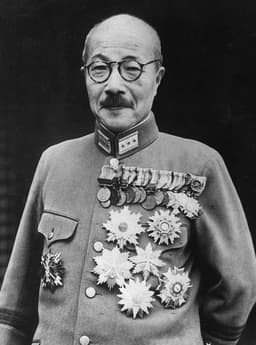
Hideki Tojo
General · Modern
53.9Total
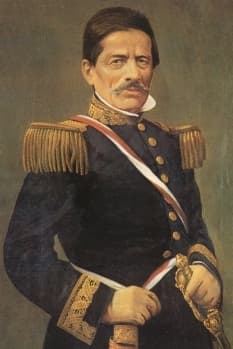
Ramon Castilla
General · Modern
59.7Total
Basic Information
Born
1884
1797
Died
1948
1867
Era
Modern
Modern
Nationality
Japan
Peru
Occupation
General
General
Civilization
Eastern
Western
Score Comparison
Military (10%)
70.0
40.0
Political (20%)
48.0
72.0
Influence (20%)
55.0
56.7
Legacy (20%)
50.0
52.0
Leadership (15%)
53.2
78.0
Strategy (15%)
55.0
60.0
TOTAL
53.9
59.7
Hideki Tojo — Complete Timeline
1941 AD
Attack on Pearl HarborWar
As Prime Minister, Hideki Tojo authorized the attack on the US naval base at Pearl Harbor, Hawaii. The surprise attack brought the United States into World War II. Tojo's decision was based on the belief that war with the US was inevitable due to resource embargoes and diplomatic failures.
World War IIPearl HarborUS-Japan War
Impact: globaldestructive
Appointment as Prime MinisterPolitical Action◆ Major
Hideki Tojo was appointed Prime Minister of Japan, replacing Fumimaro Konoe. He retained his position as Army Minister and later took on other portfolios, consolidating power. His appointment marked the ascendancy of the military faction in the Japanese government and the shift towards total war.
Prime MinisterMilitary GovernmentWorld War II
Impact: national
1942 AD
Fall of SingaporeWar◆ Major
Under Tojo's leadership, Japanese forces captured Singapore from the British in a swift campaign. The fall of Singapore was one of the worst British military defeats in history. It demonstrated Japanese military prowess and led to the occupation of a key strategic location in Southeast Asia.
World War IISingaporeJapanese Victory
Impact: global
1948 AD
Execution by the International Military Tribunal for the Far EastPolitical Action◆ Major
Hideki Tojo was found guilty of war crimes by the International Military Tribunal for the Far East and sentenced to death. He was executed by hanging on December 23, 1948. His trial and execution symbolized the Allied effort to hold Japanese leaders accountable for wartime atrocities.
War CrimesExecutionTokyo Trials
Impact: globaltragic
Ramon Castilla — Complete Timeline
1824 AD
Battle of AyacuchoWar
Castilla fought as a junior officer in the decisive Battle of Ayacucho, which ended Spanish rule in Peru. This victory secured Peruvian independence and marked the end of the Spanish Empire in South America, shaping Castilla's nationalist views.
Peruvian War of IndependenceBattleLiberation
Impact: regional
1845 AD
First Presidency of PeruPolitical Action◆ Major
Castilla was elected President of Peru in 1845, serving until 1851. His first term focused on economic development, including the guano boom, and infrastructure projects such as railroads and ports, modernizing the Peruvian state.
PresidencyEconomic DevelopmentGuano
Impact: nationalconstructive
1854 AD
Abolition of Slavery in PeruReform◆ Major
During his second presidency, Castilla issued a decree abolishing slavery in Peru on December 3, 1854. This reform freed approximately 25,000 slaves and was part of a broader liberal agenda, though it faced opposition from slave-owning elites.
AbolitionSlaveryHuman Rights
Impact: nationalprogressive
Abolition of Indigenous TributeReform◆ Major
Castilla also abolished the indigenous tribute tax in 1854, which had been a burden on native communities since colonial times. This measure aimed to integrate indigenous peoples into the Peruvian state as equal citizens, though its implementation was uneven.
Indigenous RightsTax ReformCitizenship
Impact: nationalprogressive
1855 AD
Second Presidency and Guano BoomPolitical Action◆ Major
Castilla served a second term from 1855 to 1862, during the peak of the guano export boom. He used guano revenues to fund public works, pay off foreign debt, and modernize the military, but also faced criticism for corruption and over-reliance on a single resource.
PresidencyGuanoModernization
Impact: nationalconstructive
1860 AD
Constitutional Reform of 1860Reform◆ Major
Castilla oversaw the adoption of a new constitution in 1860, which established a centralized republic with a strong executive. The constitution remained in effect until 1920 and shaped Peru's political structure, though it limited regional autonomy.
ConstitutionPolitical ReformCentralization
Impact: nationalconstructive
Expert Analysis
Hideki Tojo vs Ramon Castilla
The General and the Statesman
On a December morning in 1941, Hideki Tojo stood before the Imperial Diet in Tokyo and declared war on the United States, unleashing a conflict that would consume the Pacific and seal his own doom. Just over a century earlier, in the high Andes of Peru, a young Ramon Castilla fought in the Battle of Ayacucho, a clash that ended Spanish colonial rule and set him on a path toward building a nation. Both men were generals. Both rose to the pinnacle of political power. But their trajectories could not have diverged more sharply: one led his country into catastrophic war and died on the gallows; the other led his country through a golden age of reform and died in peace. Why? The answer lies not merely in circumstance, but in the very different visions they held of what a leader should be.
Origins
Hideki Tojo was born in 1884 into a military family in Tokyo, the son of a lieutenant general who had fought in the Sino-Japanese War. The Japan of his youth was a nation in rapid, anxious transformation—modernizing its army, building an empire, and nursing a deep resentment of Western powers that had forced unequal treaties upon it. Tojo absorbed this ethos completely. He entered the Imperial Japanese Army Academy at sixteen, graduating with the rigid discipline and unquestioning loyalty that defined the officer corps. His world was one of hierarchy, duty, and the sacredness of the emperor. There was little room for doubt or dissent.
Ramon Castilla, born in 1797 in Tarapacá, then part of the Viceroyalty of Peru, came from a more mixed world. His father was a Spanish official, his mother a mestiza of indigenous descent. He grew up on the frontier of empire, where colonial authority was weak and the winds of independence were already stirring. As a young man, he fought first for the Spanish crown against the Argentine liberator José de San Martín, then switched sides and joined the patriot cause. This early experience—of shifting loyalties, of choosing between a dying order and an uncertain future—gave him a pragmatism that Tojo never possessed. Castilla learned that power was not absolute; it was something to be negotiated, balanced, and used for concrete ends.
Rise to Power
Tojo’s ascent was methodical and relentless. He served as military attaché in Berlin, then as chief of the secret police in Manchuria, where he earned a reputation for ruthlessness and efficiency. By 1937, he was chief of staff of the Kwantung Army, the force that had already engineered the invasion of China. In 1941, with Japan’s civilian government paralyzed by indecision over war with the United States, the military pushed Tojo forward. He was appointed Prime Minister in October of that year, retaining his post as Army Minister. He did not so much seize power as inherit it from a system that had already surrendered to militarism.
Castilla’s path was more circuitous. After Ayacucho, he served in various military and administrative posts under Peru’s chaotic early republic, where coups and constitutions came and went with dizzying speed. He was exiled more than once. He backed the wrong strongman, then the right one. In 1845, after years of maneuvering, he was elected president. His rise was not the product of a single decisive moment, but of patient accumulation of influence and the willingness to wait for the right opportunity.
Leadership & Governance
Tojo governed by command. As prime minister, he concentrated power in his own hands, merging the roles of premier, army minister, and later chief of the general staff. He suppressed dissent, tightened censorship, and pushed through the decision for war against the United States, believing that a decisive strike at Pearl Harbor would cripple the American fleet and give Japan time to secure its empire. His military strategy was aggressive and short-sighted: the fall of Singapore in 1942 was a stunning victory, but it overextended Japanese forces and provoked a war of attrition Japan could not win. Tojo’s political wisdom was almost nonexistent. He saw diplomacy as weakness and compromise as betrayal.
Castilla governed by reform. During his first term (1845–1851), he stabilized Peru’s finances and began modernizing the state. But his greatest achievements came during his second term (1855–1862), when Peru was riding the guano boom—a windfall of wealth from bird droppings exported as fertilizer. Instead of squandering this fortune on war or personal enrichment, Castilla used it to abolish slavery in 1854, ending an institution that had scarred Peru for three centuries. That same year, he abolished the indigenous tribute tax, a colonial relic that had impoverished native communities. He then oversaw the adoption of a new constitution in 1860, creating a centralized republic with a strong executive but also guaranteeing basic rights. His military background informed his leadership—he was decisive and disciplined—but his political instincts told him that lasting power came from building institutions, not from crushing enemies.
Triumph & Tragedy
Tojo’s triumph was brief and hollow. The attack on Pearl Harbor was a tactical masterpiece, but it united Americans in fury and guaranteed eventual defeat. His greatest moment was also the beginning of his downfall. By 1944, Japan was losing on every front. Tojo resigned in July of that year, a broken man, and spent the last years of the war in obscurity. After Japan’s surrender, he attempted suicide but failed. In 1948, the International Military Tribunal for the Far East found him guilty of war crimes, including the mistreatment of prisoners of war and the orchestration of aggressive war. He was hanged on December 23, 1948. His legacy was destruction.
Castilla’s triumph was lasting. The abolition of slavery and indigenous tribute were not just moral victories; they were practical reforms that integrated millions of Peruvians into the nation. The guano boom could have enriched a few; instead, it funded schools, railways, and the modernization of Lima. Castilla left office in 1862, voluntarily, and died in 1867, respected and mourned. His tragedy, if it can be called one, was that the guano boom would eventually collapse, and later leaders would squander his legacy. But that was not his fault.
Character & Destiny
Tojo was a man of iron conviction and brittle imagination. He believed in the invincibility of the Japanese spirit and the inevitability of war. He could not conceive of a different path, and he surrounded himself with men who shared his certitude. His character was his destiny: rigid, unyielding, and ultimately self-destructive.
Castilla was a man of flexible principle. He had fought on both sides of a revolution. He understood that power was a tool, not an end. He was ambitious but not reckless, proud but not vain. He knew when to advance and when to retreat. His character did not seal his fate; it opened possibilities. He died in his bed, having seen his country transformed.
Legacy
Tojo’s legacy is a warning. In Japan, he is remembered with shame, a symbol of militarism run amok. In the rest of the world, he stands alongside Hitler and Mussolini as an architect of catastrophe. His name is synonymous with aggression and defeat. The International Military Tribunal ensured that his story would be told as a cautionary tale.
Castilla’s legacy is a foundation. In Peru, he is honored as a liberator and a builder, the president who ended slavery and gave the country its modern constitution. Statues of him stand in Lima and elsewhere. His reforms did not solve all of Peru’s problems, but they set the country on a path toward a more inclusive society. He is remembered not as a conqueror, but as a statesman.
Conclusion
The difference between Tojo and Castilla is not simply one of success or failure. Both men were products of their times—Tojo of a militarized Japan that saw war as glory, Castilla of a fractured Peru that saw reform as survival. But within those constraints, each made choices. Tojo chose to escalate, to dominate, to destroy. Castilla chose to build, to free, to reform. One used power as a weapon; the other used it as a tool. In the end, the general who never questioned his path ended it on the gallows, while the general who learned to question found his way to a monument. The lesson is as old as history itself: what matters is not the power you seize, but what you do with it.
Rankings
🥇
Ramon CastillaLeader
Mil: 40.0Pol: 72.0Inf: 56.7
59.7
🥈
Hideki Tojo
Mil: 70.0Pol: 48.0Inf: 55.0
53.9
+5.8 behind
How This Comparison Works
Algorithm
Each figure is scored on 6 dimensions (0—100 scale) based on structured historical data: Military (10%), Political (20%), Influence (20%), Legacy (20%), Leadership (15%), Strategy (15%). The weighted total produces the final ranking.
Data Sources
Scores are computed from structured sub-indicators in the database. Scale factors adjust for era (Ancient ×0.85, Modern ×1.0) and civilization size (Eastern ×1.05, Other ×0.80) to account for differences in population and military scale.
Maximum 3 Figures
Comparisons are limited to 2—3 figures to ensure readability and statistical meaningfulness.
Error Margins
±5 points per dimension — Sub-scores are derived from historical records with inherent uncertainty. Two figures within 5 points on a dimension should be considered roughly equivalent in that area.
Total Score Accuracy
±3 points overall — The weighted combination of 6 dimensions produces a total score with approximately ±3 points of uncertainty. Differences of less than 3 points are not statistically significant— the figures are effectively tied.
Known Limitations
- Historical records are incomplete and uneven across civilizations
- Figures from oral-tradition societies may be underrepresented
- Occupation labels can misclassify multi-role figures
- Scores measure capability and impact, not moral character
- Quantitative scoring is a comparison tool, not absolute truth
Capability Radar
Military (10%) — Battles & Warfare
Battles
65
45
Win Rate
40
50
Expansion
70
30
Political (20%) — Governance & Reform
Reform
30
85
Diplomacy
35
70
Economy
25
75
Influence (20%) — Cultural & Global Reach
Cultural
30
55
Global
55
50
Legacy (20%) — Historical Impact
Historical
55
65
Longevity
40
60
Leadership (15%) — Power & Stability
Tenure
60
65
Stability
20
60
Strategy (15%) — Tactics & Innovation
Strategy
50
45
Tactics
55
40
Reform
45
55
Similar Comparisons
Comments & Discussion
Chronicler31026/16/2026
Comparing a strategist who lost a four-year war to one who won a single decisive battle? That's apples to grenades. Tojo directed the Pearl
Historian4096/16/2026
Tojo is what happens when a military man never outgrows the barracks. He treated Japan like an army division: enemy lists, rationed obedience, zero diplomacy. Castilla commanded armies too, but he knew governance means building schools, not just crushing dissent. Tojo's autopsy? A career soldier who mistook national policy for a field manual. You don't judge generals by their battle plans alone—judge them by how they treat civilians when the fighting stops.|zh|东条英机是军人思维永不退役的典型。他把日本当成一个师团在治理:列敌名单
Historian2406/16/2026
Here's the real damning contrast: Castilla abolished slavery in Peru while building infrastructure; Tojo militarized every household in Japan. One man expanded freedom; the other tightened chains. Nationalism without moral compass is just organized selfishness. Castilla fought for independence against Spain; Tojo fought for domination over Asia. Big difference: liberator versus conqueror. History doesn't confuse the two.|zh|最尖锐的对立在这里:卡斯蒂利亚废除奴隶制、修建铁路网;东条拼命把每个家庭拉入战争机器。一个在扩宽自由,一个在收紧铁链。没有道德底线的民族主义,不
Chronicler18066/16/2026
I don't buy the golden narrative around Castilla either. Sure, he abolished slavery and modernized Peru—but he also centralized power and crushed indigenous uprisings brutally. Tojo's a monster, yes, but Castilla's no saint. Both men operated within their brutal eras. The real lesson? Leadership is measured by which abuses you choose to overlook. Castilla's "golden age" looks less golden when you're a Quechua farmer whose land got redistributed to coastal elites.|zh|别把卡斯蒂利亚吹成完人。他确实废除了奴隶制、推动了现代化,