Loading...
Hideki Tojo vs Plutarco Elias Calles
Plutarco Elias Calles leads by 4.6 pts · 2 figures compared
…
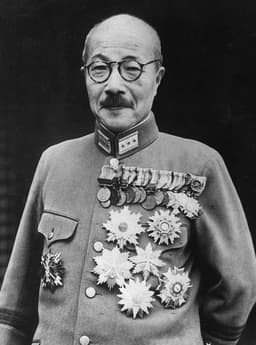
Hideki Tojo
General · Modern
53.9Total
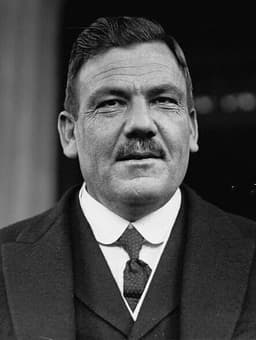
Plutarco Elias Calles
General · Modern
58.5Total
Basic Information
Born
1884
1877
Died
1948
1945
Era
Modern
Modern
Nationality
Japan
Mexico
Occupation
General
General
Civilization
Eastern
Western
Score Comparison
Military (10%)
70.0
40.0
Political (20%)
48.0
70.3
Influence (20%)
55.0
68.0
Legacy (20%)
50.0
40.0
Leadership (15%)
53.2
78.0
Strategy (15%)
55.0
52.5
TOTAL
53.9
58.5
Hideki Tojo — Complete Timeline
1941 AD
Attack on Pearl HarborWar
As Prime Minister, Hideki Tojo authorized the attack on the US naval base at Pearl Harbor, Hawaii. The surprise attack brought the United States into World War II. Tojo's decision was based on the belief that war with the US was inevitable due to resource embargoes and diplomatic failures.
World War IIPearl HarborUS-Japan War
Impact: globaldestructive
Appointment as Prime MinisterPolitical Action◆ Major
Hideki Tojo was appointed Prime Minister of Japan, replacing Fumimaro Konoe. He retained his position as Army Minister and later took on other portfolios, consolidating power. His appointment marked the ascendancy of the military faction in the Japanese government and the shift towards total war.
Prime MinisterMilitary GovernmentWorld War II
Impact: national
1942 AD
Fall of SingaporeWar◆ Major
Under Tojo's leadership, Japanese forces captured Singapore from the British in a swift campaign. The fall of Singapore was one of the worst British military defeats in history. It demonstrated Japanese military prowess and led to the occupation of a key strategic location in Southeast Asia.
World War IISingaporeJapanese Victory
Impact: global
1948 AD
Execution by the International Military Tribunal for the Far EastPolitical Action◆ Major
Hideki Tojo was found guilty of war crimes by the International Military Tribunal for the Far East and sentenced to death. He was executed by hanging on December 23, 1948. His trial and execution symbolized the Allied effort to hold Japanese leaders accountable for wartime atrocities.
War CrimesExecutionTokyo Trials
Impact: globaltragic
Plutarco Elias Calles — Complete Timeline
1915 AD
Governorship of SonoraPolitical Action
Calles served as Governor of Sonora from 1915 to 1919, implementing radical reforms including land redistribution, anti-clerical laws, and labor rights. His governorship established him as a key figure in the Sonoran dynasty and a proponent of revolutionary change.
GovernorshipSonoraReforms
Impact: regionalconstructive
1924 AD
Presidency of MexicoPolitical Action◆ Major
Calles was elected President of Mexico in 1924, serving until 1928. His administration continued revolutionary reforms, including land reform, labor rights, and secularization, but also faced opposition from the Catholic Church and conservative groups.
PresidencyMexican RevolutionReforms
Impact: nationalconstructive
1926 AD
Cristero WarWar◆ Major
Calles enforced anti-clerical laws, including the Calles Law, which restricted the Catholic Church's role in society. This sparked the Cristero War (1926-1929), a violent rebellion by Catholic peasants against the state, resulting in tens of thousands of deaths.
Cristero WarAnti-clericalismReligious Conflict
Impact: nationaldestructive
1928 AD
MaximatoPolitical Action◆ Major
After his presidency, Calles remained the de facto ruler of Mexico during the Maximato (1928-1934), controlling puppet presidents. He continued to influence policy, but his power waned as President L
MaximatoPolitical ControlCárdenas
Impact: national
1929 AD
Founding of the National Revolutionary Party (PNR)Political Action
Calles founded the National Revolutionary Party (PNR) in 1929, which later became the Institutional Revolutionary Party (PRI). This party dominated Mexican politics for over 70 years, institutionalizing the revolution's legacy and centralizing power.
Political PartyPRIInstitutionalization
Impact: nationalconstructive
Expert Analysis
Hideki Tojo vs Plutarco Elias Calles
# The General as Nation-Builder: Hideki Tojo and Plutarco Elías Calles
On a December morning in 1941, Hideki Tojo stood before the Japanese Diet and declared that Japan’s survival depended on a strike against the United States—a gamble that would end with his execution seven years later. Half a world away and two decades earlier, Plutarco Elías Calles took the presidential oath in Mexico City, vowing to complete the unfinished revolution that had torn his country apart. Both men were generals who became heads of state. Both sought to reshape their nations through iron will. But while Tojo drove Japan into catastrophic defeat, Calles built a political machine that would dominate Mexico for seventy years. What explains the chasm between their fates?
Origins
Hideki Tojo was born in 1884 into a samurai lineage in Tokyo, the son of an army officer who taught him that discipline and sacrifice were the highest virtues. Japan’s rapid modernization after the Meiji Restoration had created a nation bristling with ambition and insecurity—a small island empire that felt encircled by Western powers. Tojo absorbed this worldview at the military academy, where he learned that Japan’s destiny required expansion through force.
Plutarco Elías Calles, born in 1877 in the northern state of Sonora, came from a humbler background. His father died before he was born, and his mother worked as a servant. Calles grew up in a Mexico ruled by the iron fist of Porfirio Díaz, where the Catholic Church held immense power and land remained in the hands of a few. He became a schoolteacher, then a revolutionary, fighting alongside Álvaro Obregón and Venustiano Carranza to overthrow the old order. His Mexico was a nation bleeding from revolution, desperate for stability.
Rise to Power
Tojo’s ascent was methodical. He served as a military attaché in Germany, studied the Prussian war machine, and rose through the Army’s ranks as a hardline nationalist who believed Japan must dominate Asia. By 1937, he was chief of staff of the Kwantung Army in Manchuria, where he authorized brutal campaigns against Chinese civilians. His moment came in October 1941, when Emperor Hirohito appointed him Prime Minister after the civilian government faltered. Tojo retained his army portfolio, concentrating military and political power in one man.
Calles rose through revolution. After serving as Governor of Sonora from 1915 to 1919, he implemented radical land redistribution and attacked the Church’s influence—policies that earned him enemies among the wealthy and devout. He became President in 1924, winning an election that reflected Mexico’s fragile democracy. But Calles understood something Tojo never grasped: power must be institutionalized, not merely wielded.
Leadership & Governance
Tojo governed Japan as a military autocrat. He centralized decision-making, silenced dissent, and pushed the country toward total war. The attack on Pearl Harbor in December 1941 was his signature gamble—a surprise strike that he believed would cripple the U.S. Pacific Fleet and buy Japan time to conquer Southeast Asia. For a moment, it worked. Japanese forces swept through the Philippines, Malaya, and Singapore, capturing the British fortress in February 1942 in a campaign that humiliated the Empire. But Tojo’s strategy rested on the assumption that America would sue for peace. He had no plan for a protracted war.
Calles governed Mexico as a reformer and pragmatist. His presidency pushed through land redistribution, built schools, and created labor laws. But his most controversial act was the Calles Law of 1926, which severely restricted the Catholic Church—closing churches, deporting foreign priests, and banning religious processions. The Cristero War erupted, a bloody rebellion of Catholic peasants that killed tens of thousands. Calles crushed it ruthlessly, but he learned a lesson: ideological purity could destroy a nation.
Triumph & Tragedy
Tojo’s greatest triumph was the fall of Singapore, a victory that seemed to confirm Japan’s invincibility. His greatest tragedy was the war itself. By 1944, Japan was losing on every front. Tojo resigned in July after the fall of Saipan, but he could not escape responsibility. In 1948, the International Military Tribunal for the Far East sentenced him to death. He was hanged, a man who had led his country to ruin.
Calles’s triumph was the founding of the National Revolutionary Party (PNR) in 1929, which unified Mexico’s fractious revolutionary factions under one banner. His tragedy was the Maximato—the years after his presidency when he ruled through puppet presidents, manipulating Mexican politics from behind the scenes. His control bred corruption and resentment, and by 1936, President Lázaro Cárdenas exiled him to the United States. Calles died in 1945, a forgotten figure in the country he had helped build.
Character & Destiny
Tojo was a man of rigid conviction. He believed in hierarchy, obedience, and the divine destiny of Japan. His personality—cold, obsessive, and intolerant of dissent—made him incapable of compromise. When the war turned against Japan, he refused to consider surrender, even as cities burned under American bombs. His fate was sealed not by bad luck but by a worldview that left no room for retreat.
Calles was a man of flexible ambition. He believed in order, power, and the revolution—but he understood that survival required adaptation. He could crush the Church and then build a party that included Catholics. He could rule from the shadows after his presidency ended. His personality—calculating, patient, and pragmatic—allowed him to create institutions that outlasted him.
Legacy
Tojo’s legacy is singular: he is remembered as a war criminal, the architect of Japan’s imperial catastrophe. In Japan, he remains a controversial figure, condemned by history but still revered by a nationalist fringe. His name is synonymous with militarism and defeat.
Calles’s legacy is more complex. The party he founded, the Institutional Revolutionary Party (PRI), governed Mexico for seven decades, bringing stability but also authoritarian rule. He is credited with secularizing the state and building modern institutions, but also blamed for the Cristero War and the corruption of the Maximato. In Mexico, he is neither hero nor villain—he is the man who made the modern state, for better and worse.
Conclusion
Two generals, two nations, two paths. Tojo chose war as an end in itself, and his country paid the price. Calles chose power as a means to build, and his country endured. The difference lies not in their ambition—both were ruthless—but in their understanding of what lasts. Tojo believed in victory; Calles believed in institutions. One left a legacy of ashes; the other, a machine that outlived him. History judges them accordingly, but it also asks a harder question: what would we have done, standing in their shoes, with a nation’s fate in our hands?
Rankings
🥇
Plutarco Elias CallesLeader
Mil: 40.0Pol: 70.3Inf: 68.0
58.5
🥈
Hideki Tojo
Mil: 70.0Pol: 48.0Inf: 55.0
53.9
+4.6 behind
How This Comparison Works
Algorithm
Each figure is scored on 6 dimensions (0—100 scale) based on structured historical data: Military (10%), Political (20%), Influence (20%), Legacy (20%), Leadership (15%), Strategy (15%). The weighted total produces the final ranking.
Data Sources
Scores are computed from structured sub-indicators in the database. Scale factors adjust for era (Ancient ×0.85, Modern ×1.0) and civilization size (Eastern ×1.05, Other ×0.80) to account for differences in population and military scale.
Maximum 3 Figures
Comparisons are limited to 2—3 figures to ensure readability and statistical meaningfulness.
Error Margins
±5 points per dimension — Sub-scores are derived from historical records with inherent uncertainty. Two figures within 5 points on a dimension should be considered roughly equivalent in that area.
Total Score Accuracy
±3 points overall — The weighted combination of 6 dimensions produces a total score with approximately ±3 points of uncertainty. Differences of less than 3 points are not statistically significant— the figures are effectively tied.
Known Limitations
- Historical records are incomplete and uneven across civilizations
- Figures from oral-tradition societies may be underrepresented
- Occupation labels can misclassify multi-role figures
- Scores measure capability and impact, not moral character
- Quantitative scoring is a comparison tool, not absolute truth
Capability Radar
Military (10%) — Battles & Warfare
Battles
65
45
Win Rate
40
50
Expansion
70
30
Political (20%) — Governance & Reform
Reform
30
85
Diplomacy
35
65
Economy
25
60
Influence (20%) — Cultural & Global Reach
Cultural
30
70
Global
55
60
Legacy (20%) — Historical Impact
Historical
55
75
Longevity
40
70
Leadership (15%) — Power & Stability
Tenure
60
70
Stability
20
55
Strategy (15%) — Tactics & Innovation
Strategy
50
55
Tactics
55
40
Reform
45
60
Similar Comparisons
Comments & Discussion
SamuraiChemist6/16/2026
Classifying Tojo's Japan as a "nation-builder" is a whitewash of imperial madness. Tojo didn't build; he stockpiled. He starved his own people for bullets and turned diplomacy into a suicide pact. 80% of Japan's oil came from the U.S. before 1941—cutting that off wasn't a strategy, it was a tantrum. Calles at least signed the Bucareli Treaty to stabilize relations with Washington. Tojo gambled an empire on a carrier strike, lost, and left Japan in ashes. There's no "chasm of fate"—just one compe
ElPorfiriatoVulture6/16/2026
Let's be real: both men were ruthless authoritarians, but Calles had a political IQ above room temperature. Tojo alienated the Japanese Navy, ignored the Imperial Household, and trusted Germany's promises—classic army brute mistake. Calles, by contrast, crushed the Cristero War (50,000 dead, conservative estimate), then pivoted to create the PNR, which became PRI. He didn't need a kamikaze; he built a dynasty that outlived him by 60 years. Tojo's legacy is a noose. Calles's legacy is a party tha
历史博弈论6/16/2026
说这两人都是“民族建构者”,简直就是对历史的简化。东条把日本的国运押在珍珠港上,完全无视两国实力差距:美国钢铁产量是日本的17倍,石油产量是200倍。这不是战略,这是赌博。而卡列斯高明在哪?他懂得权力要制度化。卡列斯创建国家革命党(PNR),把军阀、地方首领都收进党派框架内。东条搞的是短命军政府,卡列斯搞的是七十年的政治机器。一个让国家毁于一旦,一个让国家制度化。差距,不在人品,在制度意识。
古典学叛徒6/16/2026
说东条是武士道化身,这完全是浪漫化的胡扯。他在1941年10月担任首相时,日本已经深陷中国泥潭(四年战争耗尽了50万兵力),还同时对美、英、荷兰开战。这是理性决策?不是。这是官僚式狂热。卡列斯相反:他清楚自己的局限。1929年他把权力让给波特斯·希尔,成为“最高领袖”(Jefe Máximo),坐在幕后遥控墨西哥三十年。他不是皇帝,他是权力架构师。东条想当战神,卡列斯只想当教父。都流了血,但只有一个人让血流出了制度。
BunkerArchitect6/16/2026
The core difference is that Calles built a bunker that could survive its builder, while Tojo built a pyre. Calles