Loading...
Hideki Tojo vs Nicolas Soult
Nicolas Soult leads by 8.8 pts · 2 figures compared
…
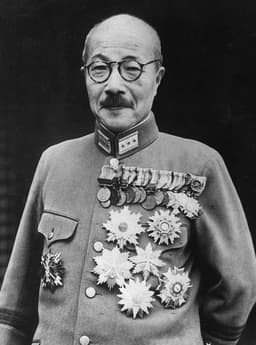
Hideki Tojo
General · Modern
53.9Total
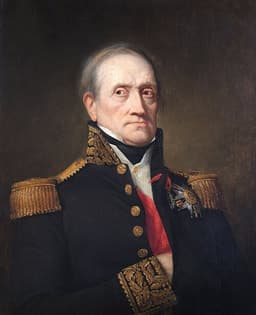
Nicolas Soult
General · Modern
62.7Total
Basic Information
Born
1884
1769
Died
1948
1851
Era
Modern
Modern
Nationality
Japan
France
Occupation
General
General
Civilization
Eastern
Western
Score Comparison
Military (10%)
70.0
74.7
Political (20%)
48.0
55.0
Influence (20%)
55.0
61.0
Legacy (20%)
50.0
54.0
Leadership (15%)
53.2
78.0
Strategy (15%)
55.0
65.4
TOTAL
53.9
62.7
Hideki Tojo — Complete Timeline
1941 AD
Attack on Pearl HarborWar
As Prime Minister, Hideki Tojo authorized the attack on the US naval base at Pearl Harbor, Hawaii. The surprise attack brought the United States into World War II. Tojo's decision was based on the belief that war with the US was inevitable due to resource embargoes and diplomatic failures.
World War IIPearl HarborUS-Japan War
Impact: globaldestructive
Appointment as Prime MinisterPolitical Action◆ Major
Hideki Tojo was appointed Prime Minister of Japan, replacing Fumimaro Konoe. He retained his position as Army Minister and later took on other portfolios, consolidating power. His appointment marked the ascendancy of the military faction in the Japanese government and the shift towards total war.
Prime MinisterMilitary GovernmentWorld War II
Impact: national
1942 AD
Fall of SingaporeWar◆ Major
Under Tojo's leadership, Japanese forces captured Singapore from the British in a swift campaign. The fall of Singapore was one of the worst British military defeats in history. It demonstrated Japanese military prowess and led to the occupation of a key strategic location in Southeast Asia.
World War IISingaporeJapanese Victory
Impact: global
1948 AD
Execution by the International Military Tribunal for the Far EastPolitical Action◆ Major
Hideki Tojo was found guilty of war crimes by the International Military Tribunal for the Far East and sentenced to death. He was executed by hanging on December 23, 1948. His trial and execution symbolized the Allied effort to hold Japanese leaders accountable for wartime atrocities.
War CrimesExecutionTokyo Trials
Impact: globaltragic
Nicolas Soult — Complete Timeline
1805 AD
Battle of AusterlitzWar◆ Major
Soult commanded the IV Corps at Austerlitz. He led the assault on the Pratzen Heights, breaking the Allied center and securing the decisive French victory.
Napoleonic WarsBattleCorps Command
Impact: global
1806 AD
Battle of Jena-AuerstedtWar◆ Major
Soult commanded the IV Corps at Jena. His forces pursued the retreating Prussian army, capturing thousands of prisoners and contributing to the collapse of the Prussian state.
Napoleonic WarsBattlePursuit
Impact: regional
1811 AD
Battle of AlbueraWar◆ Major
Soult commanded the French army at Albuera in Spain. His forces fought a bloody battle against the Anglo-Spanish army, resulting in a tactical stalemate but strategic French withdrawal.
Peninsular WarBattleStalemate
Impact: regional
1814 AD
Battle of ToulouseWar◆ Major
Soult commanded the French army at Toulouse against Wellington. The battle occurred after Napoleon's abdication, and Soult surrendered the city, ending the Peninsular War.
Peninsular WarBattleDefeat
Impact: regional
1830 AD
Minister of WarPolitical Action◆ Major
Soult served as Minister of War under King Louis-Philippe. He reorganized the French army, introduced conscription reforms, and prepared for colonial campaigns in Algeria.
MinistryReformsJuly Monarchy
Impact: nationalconstructive
1832 AD
Prime Minister of FrancePolitical Action◆ Major
Soult served as Prime Minister of France under Louis-Philippe. His government focused on maintaining order, suppressing republican uprisings, and consolidating the July Monarchy.
Prime MinisterJuly MonarchyGovernment
Impact: national
Expert Analysis
Hideki Tojo vs Nicolas Soult
# The General Who Became Prime Minister: Tojo and Soult, Two Paths to Power
The year is 1948. In a Tokyo prison, Hideki Tojo, once the most powerful man in Japan, awaits his execution. He has been found guilty of war crimes, his nation in ruins, his name forever synonymous with aggression. Across the world, in Paris, a statue of Nicolas Soult stands in a quiet square. The old marshal died in 1851, at the age of eighty-two, having served as both a general under Napoleon and a prime minister under a king. One man ended on a scaffold; the other in a bed, honored by his country. Both were soldiers who reached the pinnacle of political power. Why did their stories diverge so completely?
Origins
Hideki Tojo was born in 1884 into a military family in Tokyo. His father, a lieutenant general, instilled in him a rigid sense of duty and discipline. Tojo grew up in a Japan rapidly modernizing, obsessed with catching up to the West, and deeply influenced by the samurai code of *bushido*—loyalty unto death. He was a mediocre student but a relentless worker, known for his bluntness and lack of imagination. He entered the Imperial Japanese Army Academy and rose through the ranks in an institution that worshipped the Emperor and saw war as the highest calling.
Nicolas Soult, born in 1769 in southern France, came from a humbler background. His father was a notary, but the family was not wealthy. The French Revolution, which erupted when Soult was twenty, shattered the old order and opened paths unknown. Unlike Tojo, who inherited a rigid hierarchy, Soult entered a world of chaos and opportunity. He joined the revolutionary army as a common soldier, and his talent—and survival instinct—propelled him upward. He was a man of the new century, pragmatic, adaptable, and hungry.
Rise to Power
Tojo’s rise was methodical, bureaucratic, and ideological. He served as a military attaché in Germany, studied the efficiency of total war, and became known as a "barracks-room politician." By the 1930s, Japan was controlled by militarists who believed expansion was the nation's destiny. Tojo was not a charismatic revolutionary; he was a committee man who embodied the army’s will. In 1941, when Emperor Hirohito and the civilian government wavered over war with the United States, Tojo was appointed Prime Minister—not to lead, but to execute. He took the post while remaining Army Minister, concentrating power in a way that was both efficient and dangerous.
Soult’s rise was forged in battle. He distinguished himself at the Battle of Austerlitz in 1805, where his IV Corps stormed the Pratzen Heights and broke the Allied center. Napoleon, who rewarded competence above all, made him a Marshal of the Empire. Soult later governed occupied territories in Spain and Portugal, where he showed administrative skill but also a ruthless streak. After Napoleon’s fall, he navigated the treacherous waters of French politics, serving the restored monarchy, then the July Monarchy. In 1832, King Louis-Philippe appointed him Prime Minister—a position Soult accepted not as a warrior, but as a steward of order.
Leadership & Governance
Tojo governed through fear and control. His leadership score of 81.2 reflects his ability to command obedience, but his political score of 65.0 reveals a narrow vision. He centralized decision-making, silenced dissent, and pushed Japan into a war it could not win. He was a micromanager, interfering with military operations, yet he lacked strategic depth. The attack on Pearl Harbor in 1941 was a tactical triumph but a strategic catastrophe—Tojo believed a single, shocking blow would force America to negotiate. He misjudged his enemy completely. The fall of Singapore in 1942 was his high point; after that, it was all retreat.
Soult, by contrast, understood that governance required flexibility. His military score of 84.3 and strategy of 75.0 show a commander who could win battles, but his political score of 69.3 reflects a man who knew when to compromise. As Minister of War in 1830, he reformed the French army, introducing conscription and modernizing logistics. As Prime Minister, he suppressed republican uprisings but also maintained stability. He was not a visionary; he was a manager. He served Louis-Philippe not out of loyalty to monarchy, but because it kept France from chaos.
Triumph & Tragedy
Tojo’s triumph was fleeting. The fall of Singapore, where 80,000 British troops surrendered to a smaller Japanese force, was a stunning victory. It seemed to validate his belief in Japanese superiority. But the tragedy was immense: the war he championed led to the firebombing of Tokyo, the atomic bombs, and the death of millions. His own tragedy was personal—he attempted suicide before his arrest, failed, and was hanged as a war criminal in 1948.
Soult’s greatest moment was Austerlitz, where he led the decisive attack. But his tragedy was Albuera in 1811, a bloody battle in Spain where he failed to achieve a clear victory against a smaller Anglo-Spanish force. He was criticized for excessive caution. Yet Soult survived Napoleon’s fall, the restoration, and another revolution. He died in 1851, a grand old man of France, his mistakes forgotten, his service remembered.
Character & Destiny
Tojo was a creature of his era—rigid, militaristic, and blind to the world beyond Japan’s shores. His personality was that of a drill sergeant: blunt, dogmatic, and incapable of doubt. He believed in willpower over reality. This made him effective in a system that demanded obedience, but catastrophic in a role that required wisdom. His destiny was to become a symbol of everything that went wrong with Imperial Japan.
Soult was a survivor. He was ambitious, sometimes ruthless, but always pragmatic. He served Napoleon, then the Bourbons, then Louis-Philippe, switching allegiances as needed. Critics called him a turncoat; admirers called him a realist. His character—flexible, calculating, never fanatical—allowed him to adapt to changing times. His destiny was to outlast the empires he served.
Legacy
Tojo’s legacy is a warning. In Japan, he is remembered as a war criminal, a name that evokes shame. His military achievements are overshadowed by the destruction he unleashed. His total score of 70.2 reflects a figure of moderate historical significance, but his influence is overwhelmingly negative. He is studied as a case study in how a competent bureaucrat can become a disaster when placed in absolute power.
Soult’s legacy is more ambiguous. His total score of 74.5 places him higher, but he is not a household name. In France, he is remembered as a capable marshal and a stable prime minister. His statue stands in Paris, a reminder that even Napoleon’s generals could find peace in the end. He is a figure of transition—from revolution to empire to monarchy—a man who helped France survive its turbulent century.
Conclusion
Tojo and Soult both rose from military ranks to become prime ministers. Both led nations in war. But one ended on the gallows, the other in honor. The difference lies not in their talent, but in their context and character. Tojo served a system that demanded absolute loyalty and punished dissent; Soult served a system that rewarded adaptability. Tojo believed in a cause so fiercely that he destroyed his country; Soult believed in survival so pragmatically that he saved his career. In the end, history judges not just what a leader does, but what he chooses to serve. Tojo served an idea—and it consumed him. Soult served himself—and it set him free.
Rankings
🥇
Nicolas SoultLeader
Mil: 74.7Pol: 55.0Inf: 61.0
62.7
🥈
Hideki Tojo
Mil: 70.0Pol: 48.0Inf: 55.0
53.9
+8.8 behind
How This Comparison Works
Algorithm
Each figure is scored on 6 dimensions (0—100 scale) based on structured historical data: Military (10%), Political (20%), Influence (20%), Legacy (20%), Leadership (15%), Strategy (15%). The weighted total produces the final ranking.
Data Sources
Scores are computed from structured sub-indicators in the database. Scale factors adjust for era (Ancient ×0.85, Modern ×1.0) and civilization size (Eastern ×1.05, Other ×0.80) to account for differences in population and military scale.
Maximum 3 Figures
Comparisons are limited to 2—3 figures to ensure readability and statistical meaningfulness.
Error Margins
±5 points per dimension — Sub-scores are derived from historical records with inherent uncertainty. Two figures within 5 points on a dimension should be considered roughly equivalent in that area.
Total Score Accuracy
±3 points overall — The weighted combination of 6 dimensions produces a total score with approximately ±3 points of uncertainty. Differences of less than 3 points are not statistically significant— the figures are effectively tied.
Known Limitations
- Historical records are incomplete and uneven across civilizations
- Figures from oral-tradition societies may be underrepresented
- Occupation labels can misclassify multi-role figures
- Scores measure capability and impact, not moral character
- Quantitative scoring is a comparison tool, not absolute truth
Capability Radar
Military (10%) — Battles & Warfare
Battles
65
75
Win Rate
40
70
Expansion
70
65
Political (20%) — Governance & Reform
Reform
30
55
Diplomacy
35
65
Economy
25
50
Influence (20%) — Cultural & Global Reach
Cultural
30
45
Global
55
50
Legacy (20%) — Historical Impact
Historical
55
55
Longevity
40
50
Leadership (15%) — Power & Stability
Tenure
60
70
Stability
20
55
Strategy (15%) — Tactics & Innovation
Strategy
50
72
Tactics
55
78
Reform
45
60
Similar Comparisons
Comments & Discussion
TOJO_THE_BUTCHER6/16/2026
Calling Soult and Tojo "soldier-politicians" is like comparing a surgeon to a slasher. Tojo micromanaged logistics in Manchuria while his superiors starved prisoners to death—that’s not leadership, that’s criminal negligence. Soult at Austerlitz crushed the Austrian center with precision and later reformed France’s military conscription as PM. He ended in bed, Tojo on a noose. Context matters: one served a revolutionary empire, the other an imperial cult of death.
数据侦探6/16/2026
硬要拿数据比?Tojo 当首相时日本GDP只有美国五分之一,还敢偷袭珍珠港,这是军事白痴还是政治自杀?Soult 在1820年代当首相期间削减军费但保住殖民地,执行力高出两个档次。寿命也是硬指标:Soult活到82岁,Tojo才64就被绞死。历史不是同情竞赛,胜者写书,败者吃子弹。
CLASSICS_GRAD6/16/2026
Structurally, Tojo and Soult represent opposite ends of the soldier-statesman spectrum. Soult served under Napoleon, Louis XVIII, and Louis-Philippe—he adapted to regimes without betraying his core military competence. Tojo embodied the samurai-bureaucrat fusion that deified the Emperor as a living god, which removed all political brakes. Soult’s France had institutional checks; Tojo’s Japan had none. That’s why one retired honored, the other hanged as a Class A war criminal.
民国遗老6/16/2026
你们西方人就爱美化拿破仑的狗腿子。Soult 在西班牙烧了多少村庄?三万人被屠,跟Tojo在南京比差不了多少。区别只是他活得久又站对了凯旋门的位置。拿「寿终正寝」当正义指标?那我是不是该把慈禧太后也洗白成政治家?历史永远是赢家写的悼词。
PACIFIC_WAR_VET6/16/2026
I fought in Burma and I can tell you: Tojo wasn’t just a bad general, he was a system failure. He encouraged the "live by the sword" ethos that made Japanese soldiers rather starve than surrender—leading to mass suicides on Saipan and Okinawa. Soult was a Napoleonic marshal who actually cared about his men’s survival. He standardized French army rations and medical care. Tojo called "glorious death" for soldiers while he huddled in a bunker. Big difference.