Loading...
Hideki Tojo vs Mohammad Fahim
Hideki Tojo leads by 4.2 pts · 2 figures compared
…
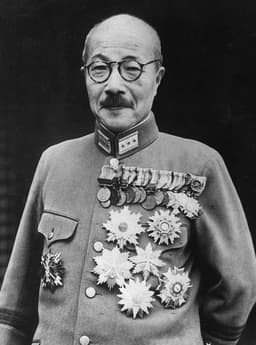
Hideki Tojo
General · Modern
53.9Total
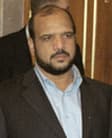
Mohammad Fahim
General · Modern
49.7Total
Basic Information
Born
1884
1957
Died
1948
—
Era
Modern
Modern
Nationality
Japan
Afghanistan
Occupation
General
General
Civilization
Eastern
Middle Eastern
Score Comparison
Military (10%)
70.0
40.0
Political (20%)
48.0
43.7
Influence (20%)
55.0
51.0
Legacy (20%)
50.0
43.3
Leadership (15%)
53.2
74.0
Strategy (15%)
55.0
45.0
TOTAL
53.9
49.7
Hideki Tojo — Complete Timeline
1941 AD
Attack on Pearl HarborWar
As Prime Minister, Hideki Tojo authorized the attack on the US naval base at Pearl Harbor, Hawaii. The surprise attack brought the United States into World War II. Tojo's decision was based on the belief that war with the US was inevitable due to resource embargoes and diplomatic failures.
World War IIPearl HarborUS-Japan War
Impact: globaldestructive
Appointment as Prime MinisterPolitical Action◆ Major
Hideki Tojo was appointed Prime Minister of Japan, replacing Fumimaro Konoe. He retained his position as Army Minister and later took on other portfolios, consolidating power. His appointment marked the ascendancy of the military faction in the Japanese government and the shift towards total war.
Prime MinisterMilitary GovernmentWorld War II
Impact: national
1942 AD
Fall of SingaporeWar◆ Major
Under Tojo's leadership, Japanese forces captured Singapore from the British in a swift campaign. The fall of Singapore was one of the worst British military defeats in history. It demonstrated Japanese military prowess and led to the occupation of a key strategic location in Southeast Asia.
World War IISingaporeJapanese Victory
Impact: global
1948 AD
Execution by the International Military Tribunal for the Far EastPolitical Action◆ Major
Hideki Tojo was found guilty of war crimes by the International Military Tribunal for the Far East and sentenced to death. He was executed by hanging on December 23, 1948. His trial and execution symbolized the Allied effort to hold Japanese leaders accountable for wartime atrocities.
War CrimesExecutionTokyo Trials
Impact: globaltragic
Mohammad Fahim — Complete Timeline
2001 AD
Led Northern Alliance Forces in Fall of KabulWar
Mohammad Fahim, as a senior Northern Alliance commander, led forces that captured Kabul from the Taliban in November 2001. This victory followed the US invasion and was a turning point in the war, leading to the collapse of Taliban rule.
AfghanistanWarTaliban
Impact: national
Appointed Vice President of AfghanistanPolitical Action◆ Major
Mohammad Fahim was appointed Vice President of Afghanistan under Hamid Karzai in 2001, serving until 2004. He was a key Northern Alliance commander and his appointment was part of the post-Taliban power-sharing arrangement.
AfghanistanVice PresidencyNorthern Alliance
Impact: nationalconstructive
Served as Minister of DefensePolitical Action◆ Major
Mohammad Fahim served as Afghanistan's Minister of Defense from 2001 to 2004. He oversaw the formation of the new Afghan National Army and security forces, integrating former mujahideen and Northern Alliance fighters.
AfghanistanDefenseMilitary
Impact: nationalconstructive
2009 AD
Appointed First Vice President in 2009Political Action◆ Major
Mohammad Fahim was appointed First Vice President of Afghanistan under President Hamid Karzai in 2009. He served until his death in 2014, playing a key role in security and political affairs.
AfghanistanVice PresidencyGovernment
Impact: nationalconstructive
Expert Analysis
Hideki Tojo vs Mohammad Fahim
The General Who Fought the World and the Commander Who Fought for a Country
In the winter of 1941, Hideki Tojo stood at the apex of Japanese power, a man whose every decision seemed to tighten the noose around his nation’s neck. Half a world away and sixty years later, Mohammad Fahim rode into Kabul on the back of a pickup truck, a commander whose moment of triumph would dissolve into the quiet tragedy of a peace he could not keep. One led a global empire into ruin; the other led a ragtag militia to a fragile victory. Both were generals. Both became vice presidents. But the currents that carried them—and the depths they sank to—could not have been more different.
Origins
Hideki Tojo was born in 1884 into a samurai family in Tokyo, a lineage that prized discipline, hierarchy, and militarism. His father, a lieutenant general in the Imperial Japanese Army, instilled in him a rigid sense of duty. Tojo grew up in an era when Japan was rapidly industrializing and expanding its empire, a time when military officers were revered as the guardians of the nation’s honor. He attended the Imperial Japanese Army Academy, graduating in the top tier of his class, and later studied at the Army War College. His world was one of order, obedience, and imperial ambition—a world that saw war as a tool of destiny.
Mohammad Fahim, born in 1957 in the Panjshir Valley of Afghanistan, came from a very different soil. His family were ethnic Tajiks, a minority group in a country riven by tribal and ethnic divides. He grew up during the Soviet invasion of Afghanistan, a cataclysm that shattered his homeland and radicalized a generation. Fahim had no formal military education; he learned warfare in the mountains, fighting alongside the mujahideen against Soviet tanks and helicopters. Where Tojo inherited a tradition of imperial conquest, Fahim inherited a tradition of resistance. His mentor was Ahmad Shah Massoud, the “Lion of Panjshir,” a guerrilla leader who taught him that survival was the first victory.
Rise to Power
Tojo’s rise was methodical, bureaucratic, and relentless. By the 1930s, he had served as a military attaché in Germany and as chief of the Kempetai, Japan’s dreaded military police. He earned a reputation as a ruthless administrator who crushed dissent without hesitation. In 1941, with Japan’s militarists ascendant, he was appointed Prime Minister, replacing the more cautious Fumimaro Konoe. Tojo retained his post as Army Minister, consolidating both political and military power. His path was paved by the institutions of a modern empire—a parliament, a cabinet, a chain of command. He did not seize power; he was handed it by a system that had already chosen war.
Fahim’s ascent was more chaotic. After the Soviet withdrawal, Afghanistan descended into civil war. The Taliban emerged in the mid-1990s, capturing Kabul in 1996 and driving the Northern Alliance into the mountains. Fahim became one of Massoud’s top commanders, fighting a desperate guerrilla campaign. When Massoud was assassinated by al-Qaeda agents on September 9, 2001—just two days before the 9/11 attacks—Fahim inherited the military leadership. Two months later, with American air support, he led the Northern Alliance into Kabul, toppling the Taliban regime. He was not appointed by a stable government; he seized the moment, and the moment seized him.
Leadership & Governance
Tojo’s leadership was defined by centralization and paranoia. He micromanaged the war effort, issuing orders to generals in the field and meddling in naval strategy, despite his lack of expertise in maritime operations. His political wisdom was limited: he dissolved political parties, suppressed dissent, and governed through fear. The attack on Pearl Harbor in December 1941 was his greatest gamble, a bid to cripple the United States and secure Japan’s dominance in Asia. It succeeded tactically but failed strategically, awakening a sleeping giant. Tojo’s military genius lay in logistics and organization, not in vision. He could mobilize an army but could not win a war.
Fahim’s governance was more pragmatic but equally flawed. As Minister of Defense under President Hamid Karzai from 2001 to 2004, he oversaw the creation of a new Afghan army, but his methods were rough-hewn. He relied on patronage, distributing positions to fellow Tajiks and Northern Alliance loyalists, alienating Pashtuns and other ethnic groups. His strategy was simple: hold territory, secure alliances, and survive. He lacked Tojo’s grand ambitions but also his grand delusions. Fahim knew he was building a house of cards; Tojo believed he was forging an empire.
Triumph & Tragedy
Tojo’s greatest triumph was the fall of Singapore in February 1942, a stunning victory that humiliated the British Empire and secured Japan’s southern resources. It was the high-water mark of his leadership. But his tragedy was total: by 1944, Japan was losing on every front. The Battle of Midway, the bloody island campaigns, the firebombing of Tokyo—all were failures of strategy that Tojo could not reverse. He resigned in July 1944, a broken man. In 1948, he was hanged by the International Military Tribunal for the Far East, convicted of war crimes for atrocities committed under his command, including the Bataan Death March and the treatment of prisoners of war.
Fahim’s triumph was Kabul, November 2001. He rode into the capital as a liberator, driving out the Taliban and their al-Qaeda allies. It was a moment of pure victory, earned through years of sacrifice. But his tragedy was the peace that followed. He served as Vice President from 2001 to 2004, and again from 2009 until his death in 2014. Yet the Afghanistan he helped build remained corrupt, fractured, and dependent on foreign aid. He died of natural causes, but his legacy was tarnished by accusations of corruption and human rights abuses. Unlike Tojo, he faced no tribunal; unlike Tojo, he left no clear victory.
Character & Destiny
Tojo was a man of iron will and narrow vision. He once said, “Sometimes it is necessary to take a step backward in order to take two steps forward,” but he never took that step. His personality—rigid, authoritarian, contemptuous of compromise—drove Japan into a war it could not win. He believed in the infallibility of the military and the divinity of the emperor, and those beliefs blinded him to reality. His destiny was tragedy because he could not imagine any other path.
Fahim was more adaptable, more cynical, and perhaps more realistic. He knew that power in Afghanistan was a matter of survival, not ideology. He switched alliances, made deals, and kept his men alive. His personality—pragmatic, opportunistic, tribal—allowed him to navigate the chaos of Afghan politics. But it also prevented him from building a lasting state. His destiny was ambiguity: he was neither a hero nor a villain, just a survivor who outlasted his enemies.
Legacy
Tojo’s legacy is a cautionary tale. In Japan, he is remembered as a war criminal, a symbol of militarist folly. His name is invoked to warn against nationalism and unchecked power. His scores—a total of 70.2, with high marks in leadership (81.2) and strategy (72.0)—reflect a man who was effective in execution but catastrophic in judgment. He left behind a ruined country, a shattered empire, and a lesson for the ages.
Fahim’s legacy is more ambiguous. With a total score of 60.5, he ranks lower in military (57.3) and strategy (48.9) but higher in influence (67.1). He is remembered as a key figure in the fall of the Taliban, but also as a symbol of the Northern Alliance’s failure to build a unified Afghanistan. His name evokes both gratitude and bitterness. In the West, he is largely forgotten; in Afghanistan, he is a ghost of a war that never ended.
Conclusion
One general led an empire to its doom. The other led a rebellion to a fleeting victory. Tojo’s story is a tragedy of hubris; Fahim’s is a tragedy of incompleteness. Both were products of their times—Tojo of imperial Japan, Fahim of war-torn Afghanistan. Both wielded power with ruthless pragmatism. But where Tojo’s ambition consumed the world, Fahim’s ambition could barely hold a country together. In the end, the difference between them is not just in their scores or their outcomes. It is in the scale of their dreams and the depth of their failures. One dreamed of a new order in Asia and left a graveyard. The other dreamed of a free Afghanistan and left a question mark.
Rankings
🥇
Hideki TojoLeader
Mil: 70.0Pol: 48.0Inf: 55.0
53.9
🥈
Mohammad Fahim
Mil: 40.0Pol: 43.7Inf: 51.0
49.7
+4.2 behind
How This Comparison Works
Algorithm
Each figure is scored on 6 dimensions (0—100 scale) based on structured historical data: Military (10%), Political (20%), Influence (20%), Legacy (20%), Leadership (15%), Strategy (15%). The weighted total produces the final ranking.
Data Sources
Scores are computed from structured sub-indicators in the database. Scale factors adjust for era (Ancient ×0.85, Modern ×1.0) and civilization size (Eastern ×1.05, Other ×0.80) to account for differences in population and military scale.
Maximum 3 Figures
Comparisons are limited to 2—3 figures to ensure readability and statistical meaningfulness.
Error Margins
±5 points per dimension — Sub-scores are derived from historical records with inherent uncertainty. Two figures within 5 points on a dimension should be considered roughly equivalent in that area.
Total Score Accuracy
±3 points overall — The weighted combination of 6 dimensions produces a total score with approximately ±3 points of uncertainty. Differences of less than 3 points are not statistically significant— the figures are effectively tied.
Known Limitations
- Historical records are incomplete and uneven across civilizations
- Figures from oral-tradition societies may be underrepresented
- Occupation labels can misclassify multi-role figures
- Scores measure capability and impact, not moral character
- Quantitative scoring is a comparison tool, not absolute truth
Capability Radar
Military (10%) — Battles & Warfare
Battles
65
35
Win Rate
40
40
Expansion
70
25
Political (20%) — Governance & Reform
Reform
30
20
Diplomacy
35
40
Economy
25
15
Influence (20%) — Cultural & Global Reach
Cultural
30
15
Global
55
20
Legacy (20%) — Historical Impact
Historical
55
30
Longevity
40
20
Leadership (15%) — Power & Stability
Tenure
60
45
Stability
20
20
Strategy (15%) — Tactics & Innovation
Strategy
50
35
Tactics
55
30
Reform
45
20
Similar Comparisons
Comments & Discussion
溃败分析师6/16/2026
数据不会撒谎:东条英机指挥的日军在英帕尔战役中损失超过5万人,其中绝大多数死于饥饿和疾病——这是后勤灾难,而非战术失误。而法希姆在2001年配合美军推翻塔利班时,他的北方联盟只有1.5万兵力,却击溃了5万人的敌军。一个用全国之力制造饥荒,一个用游击思维打崩正规军。把东条和法希姆放在一起比较,是对法希姆的侮辱。
TojoTorcher6/16/2026
Calling these two "generals" is like comparing cancer to a broken leg. Tojo was a strategic *catastrophe*—he greenlit Pearl Harbor against Yamamoto's explicit warning, then micromanaged the war from a bunker while Japan’s supply lines collapsed. Fahim, by contrast, understood the ground truth: he held the Panjshir Valley against the Soviets using local knowledge, not suicidal dogma. Tojo fought for an ideology of annihilation; Fahim fought for a valley. Not the same league.
ClassicsProf6/16/2026
The Greek historian Thucydides would see this as a clash between *hubris* and *pragma*. Tojo believed in the "divine wind" of Japanese spirit winning against American steel—that's pure tragic arrogance. Fahim, however, operated like a Spartan general: he knew he couldn't win a set-piece battle, so he used the mountains as his allies. Tojo marched his nation into a wall; Fahim climbed over the wall. One is a lesson in overreach; the other is a lesson in survival.
血火见证者6/16/2026
我爷爷是衡阳会战的老兵,他说东条英机那种人根本不配叫军人——他在东京遥控指挥,把士兵的命当棋子,最后搞出“玉碎”口号逼人送死。法希姆恰恰相反,潘杰希尔山谷里他和士兵同吃同住,打仗时冲在最前面。东条赢了军衔,输了道德;法希姆输了名声(没错他后来很贪婪),但没输过骨气。兵法和人品,两回事。
RevisionistRebel6/16/2026
Spare me the "plucky Afghan warrior" myth. Fahim was a warlord who got lucky. He presided over a heroin-fueled economy in the 1990s, and his "victory" in 2001 was handed to him by American B-52s. Tojo, as vile as he was, actually built a war machine from scratch—industrializing Japan’s military logistics was no small feat. Both men were ruthless. But let's not pretend Fahim was some noble liberator; he was a factional thug who stumbled into a vice presidency.