Loading...
Hideki Tojo vs Marouf al-Bakhit
Hideki Tojo leads by 12.3 pts · 2 figures compared
…
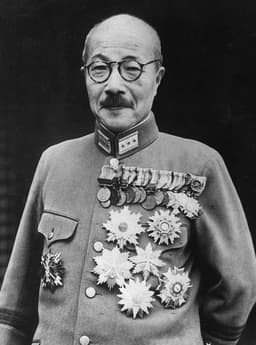
Hideki Tojo
General · Modern
53.9Total
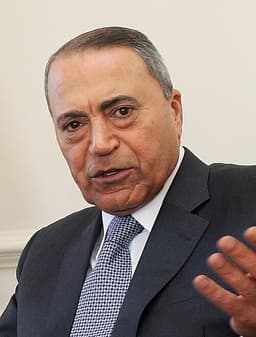
Marouf al-Bakhit
General · Modern
41.6Total
Basic Information
Born
1884
1947
Died
1948
—
Era
Modern
Modern
Nationality
Japan
Jordan
Occupation
General
General
Civilization
Eastern
Middle Eastern
Score Comparison
Military (10%)
70.0
10.2
Political (20%)
48.0
61.3
Influence (20%)
55.0
48.6
Legacy (20%)
50.0
38.3
Leadership (15%)
53.2
40.0
Strategy (15%)
55.0
36.8
TOTAL
53.9
41.6
Hideki Tojo — Complete Timeline
1941 AD
Attack on Pearl HarborWar
As Prime Minister, Hideki Tojo authorized the attack on the US naval base at Pearl Harbor, Hawaii. The surprise attack brought the United States into World War II. Tojo's decision was based on the belief that war with the US was inevitable due to resource embargoes and diplomatic failures.
World War IIPearl HarborUS-Japan War
Impact: globaldestructive
Appointment as Prime MinisterPolitical Action◆ Major
Hideki Tojo was appointed Prime Minister of Japan, replacing Fumimaro Konoe. He retained his position as Army Minister and later took on other portfolios, consolidating power. His appointment marked the ascendancy of the military faction in the Japanese government and the shift towards total war.
Prime MinisterMilitary GovernmentWorld War II
Impact: national
1942 AD
Fall of SingaporeWar◆ Major
Under Tojo's leadership, Japanese forces captured Singapore from the British in a swift campaign. The fall of Singapore was one of the worst British military defeats in history. It demonstrated Japanese military prowess and led to the occupation of a key strategic location in Southeast Asia.
World War IISingaporeJapanese Victory
Impact: global
1948 AD
Execution by the International Military Tribunal for the Far EastPolitical Action◆ Major
Hideki Tojo was found guilty of war crimes by the International Military Tribunal for the Far East and sentenced to death. He was executed by hanging on December 23, 1948. His trial and execution symbolized the Allied effort to hold Japanese leaders accountable for wartime atrocities.
War CrimesExecutionTokyo Trials
Impact: globaltragic
Marouf al-Bakhit — Complete Timeline
2005 AD
Appointed Prime Minister of JordanPolitical Action◆ Major
King Abdullah II appointed Marouf al-Bakhit as Prime Minister of Jordan in November 2005, following the 2005 Amman bombings. Al-Bakhit, a former intelligence chief, was tasked with restoring security and stability.
JordanPrime MinisterAppointment
Impact: national
2007 AD
Resigned as Prime MinisterPolitical Action
Marouf al-Bakhit resigned as Prime Minister of Jordan in November 2007 after parliamentary elections. His resignation followed criticism of economic policies and political reforms.
JordanPrime MinisterResignation
Impact: national
2011 AD
Appointed Prime Minister for Second TermPolitical Action◆ Major
King Abdullah II appointed Marouf al-Bakhit as Prime Minister again in February 2011, during the Arab Spring protests. Al-Bakhit was tasked with implementing political reforms to address public demands.
JordanArab SpringPrime Minister
Impact: national
Resigned as Prime Minister for Second TermPolitical Action
Marouf al-Bakhit resigned as Prime Minister in October 2011, after failing to satisfy protesters' demands for faster political reforms. His resignation marked the end of his second term.
JordanArab SpringResignation
Impact: national
Expert Analysis
Hideki Tojo vs Marouf al-Bakhit
# The General as Statesman: Two Paths from the Barracks to Power
On a crisp December morning in 1941, Hideki Tojo stood before the Japanese Imperial Diet and declared that the nation had entered a state of war with the United States and Britain. The chamber erupted in cheers. Sixty-six years later and thousands of miles away, Marouf al-Bakhit sat in his office in Amman as King Abdullah II handed him a mandate to form a government—not to wage war, but to calm a restless populace demanding reform. Both men were generals who became prime ministers. Both stepped from the parade ground into the treacherous arena of politics. Yet their journeys could hardly have diverged more sharply, and the outcomes they left behind—one a scaffold, the other a quiet retirement—tell us much about the nature of power in different times and places.
Origins
Hideki Tojo was born in 1884 into a samurai family in Tokyo, the son of a lieutenant general who had fought in the Satsuma Rebellion. From childhood, he absorbed the austere code of bushido—loyalty, honor, and absolute obedience to the emperor. Japan at the turn of the century was hurtling toward modernization, but its military elite remained steeped in a warrior tradition that viewed compromise as weakness and expansion as destiny. Tojo graduated from the Imperial Japanese Army Academy in 1904, just in time to serve in the Russo-Japanese War, a conflict that convinced many Japanese officers that a small, disciplined nation could humble a European giant.
Marouf al-Bakhit was born in 1947 in Salt, a town in what was then the British-influenced Emirate of Transjordan. His family was of modest means, and his path to prominence ran through education and the security services. Jordan in the mid-twentieth century was a fragile state carved from the desert, ruled by a Hashemite monarchy that balanced precariously between Palestinian refugees, Bedouin tribes, and the pressures of the Cold War. Al-Bakhit studied political science at the University of Jordan, then earned a PhD in strategic studies from the University of Southern California. He joined the General Intelligence Department—Jordan's intelligence service—and rose through its ranks during the 1970s and 1980s, a period when the kingdom faced assassination attempts, coup plots, and the aftershocks of Black September.
Tojo was forged in the fire of imperial ambition; al-Bakhit, in the shadows of state survival.
Rise to Power
Tojo's ascent was methodical and ruthless. He served as a military attaché in Germany after World War I, where he admired the discipline of the Prussian army, and later commanded the Kenpeitai, Japan's dreaded military police, in Manchuria. By the late 1930s, he had become a leading figure in the Imperial Army's "Control Faction," which argued that Japan must secure resources in Southeast Asia before the Western powers could rearm. In 1940, he was appointed Army Minister under Prime Minister Fumimaro Konoe. When Konoe resigned in October 1941 over the deadlock in negotiations with the United States, Tojo was the natural successor—a man who would not hesitate.
Al-Bakhit's rise was quieter, but no less significant. As director of the General Intelligence Department in the late 1990s, he helped Jordan navigate the aftermath of the 1994 peace treaty with Israel and the threat of Islamist militancy. His reputation was that of a steady hand, a technocrat rather than a firebrand. When al-Qaeda bombed three hotels in Amman in November 2005, killing sixty people, King Abdullah II turned to al-Bakhit to restore confidence. He was appointed prime minister that same month, tasked with reforming the security services and reassuring a shaken public.
Tojo seized power at a moment of national crisis; al-Bakhit was handed it at a moment of national shock.
Leadership & Governance
Tojo governed as a dictator in all but name. He remained Army Minister while serving as prime minister, and later took on the portfolios of Home Minister and Munitions Minister. He centralized decision-making, purged officers he considered defeatist, and pushed through the attack on Pearl Harbor in December 1941 against the advice of the Navy. His leadership during the war's early triumphs—the fall of Singapore in February 1942, the conquest of the Philippines—was celebrated, but as the tide turned, his rigidity proved catastrophic. He refused to consider surrender even after the fall of Saipan in 1944, insisting that the Japanese people must fight to the last man.
Al-Bakhit governed as a crisis manager, not a visionary. His first term focused on security reforms and economic stabilization, but he faced constant pressure from both the Islamist opposition and the monarchy. He resigned in November 2007 after parliamentary elections, as was customary. When he was recalled in February 2011 during the Arab Spring protests, his mandate was explicitly to implement political reforms—but he moved too slowly for the demonstrators and too quickly for the palace. He resigned again in October 2011, his second term lasting barely eight months.
Tojo commanded a war machine; al-Bakhit managed a balancing act.
Triumph & Tragedy
Tojo's greatest triumph was also the seed of his tragedy. The attack on Pearl Harbor on December 7, 1941, was a stunning tactical success that crippled the U.S. Pacific Fleet and allowed Japan to sweep across Southeast Asia unopposed. For six months, Tojo was the architect of an empire that stretched from India to the Aleutians. But the same gamble that brought him glory also ensured his destruction. The United States, once aroused, possessed industrial might that Japan could never match. By 1944, Tojo's own colleagues had forced him to resign; by 1948, he stood before the International Military Tribunal for the Far East, was found guilty of war crimes, and was hanged.
Al-Bakhit's triumphs were modest, his tragedies personal rather than national. He successfully stabilized Jordan after the 2005 bombings, preventing a spiral of violence. He oversaw parliamentary elections that, while flawed, were more open than those that preceded them. But his failure to satisfy the demands of the 2011 protests—for faster political liberalization, for an end to corruption—left him as a symbol of the monarchy's unwillingness to change. He faded from public view, a footnote in Jordan's modern history rather than a headline.
Tojo's tragedy was global; al-Bakhit's was local.
Character & Destiny
Tojo was a man of iron will and narrow vision. He once told a subordinate, "Sometimes it is necessary to shut one's eyes and jump." That willingness to leap—into war, into dictatorship, into national suicide—defined his character. He believed in the divinity of the emperor, the purity of the Japanese spirit, and the inevitability of conflict. These convictions made him decisive but also blind. He could not see that his nation's strength was a mirage, that the very ruthlessness he admired would lead to the firebombing of Tokyo and the atomic destruction of Hiroshima.
Al-Bakhit was a man of caution and calculation. A PhD in strategic studies is not the training of a gambler. He understood that Jordan's survival depended on navigating between the United States, Israel, Saudi Arabia, and the Palestinian cause. He knew that reform could not outpace the monarchy's tolerance. His caution preserved his life and his reputation, but it also ensured that he would never be a transformative figure. He was a caretaker in an age that demanded builders.
Tojo was shaped by the certainty of his era; al-Bakhit, by its uncertainty.
Legacy
Hideki Tojo's legacy is one of infamy. In Japan, he is remembered as the prime minister who led the nation to catastrophic defeat, and his name is invoked as a cautionary tale of militarism run amok. In China, Korea, and the West, he stands as a symbol of wartime brutality—the man who authorized the Bataan Death March, the comfort women system, and the biological warfare experiments of Unit 731. His execution did not cleanse his memory; it sealed it.
Marouf al-Bakhit's legacy is one of obscurity. He is not a villain, nor a hero—just a functionary who did his duty in difficult times. In Jordan, he is remembered, if at all, as the prime minister who tried to hold the line during the Arab Spring. His scores in history's ledger are modest: a military rating of 19.9 reflects his background in intelligence rather than command, a political rating of 63.0 shows competence without brilliance. He was a general who never fought a war, a leader who never made a revolution.
Conclusion
What drove these two men to such different fates? Not their profession—both were generals. Not their ambition—both sought power. What separated them was the nature of the states they served. Tojo led an empire that believed in its own invincibility and was willing to risk annihilation to prove it. Al-Bakhit served a fragile kingdom that knew its own vulnerability and survived by learning to bend. One man's tragedy was that his nation was too strong for its own good; the other's was that his nation was too weak to afford greatness. In the end, both were prisoners of their context—Tojo of his samurai past, al-Bakhit of his desert present. The general who becomes a statesman does not choose the battlefield; the battlefield chooses him.
Rankings
🥇
Hideki TojoLeader
Mil: 70.0Pol: 48.0Inf: 55.0
53.9
🥈
Marouf al-Bakhit
Mil: 10.2Pol: 61.3Inf: 48.6
41.6
+12.3 behind
How This Comparison Works
Algorithm
Each figure is scored on 6 dimensions (0—100 scale) based on structured historical data: Military (10%), Political (20%), Influence (20%), Legacy (20%), Leadership (15%), Strategy (15%). The weighted total produces the final ranking.
Data Sources
Scores are computed from structured sub-indicators in the database. Scale factors adjust for era (Ancient ×0.85, Modern ×1.0) and civilization size (Eastern ×1.05, Other ×0.80) to account for differences in population and military scale.
Maximum 3 Figures
Comparisons are limited to 2—3 figures to ensure readability and statistical meaningfulness.
Error Margins
±5 points per dimension — Sub-scores are derived from historical records with inherent uncertainty. Two figures within 5 points on a dimension should be considered roughly equivalent in that area.
Total Score Accuracy
±3 points overall — The weighted combination of 6 dimensions produces a total score with approximately ±3 points of uncertainty. Differences of less than 3 points are not statistically significant— the figures are effectively tied.
Known Limitations
- Historical records are incomplete and uneven across civilizations
- Figures from oral-tradition societies may be underrepresented
- Occupation labels can misclassify multi-role figures
- Scores measure capability and impact, not moral character
- Quantitative scoring is a comparison tool, not absolute truth
Capability Radar
Military (10%) — Battles & Warfare
Battles
65
5
Win Rate
40
5
Expansion
70
5
Political (20%) — Governance & Reform
Reform
30
30
Diplomacy
35
40
Economy
25
30
Influence (20%) — Cultural & Global Reach
Cultural
30
10
Global
55
10
Legacy (20%) — Historical Impact
Historical
55
10
Longevity
40
10
Leadership (15%) — Power & Stability
Tenure
60
40
Stability
20
35
Strategy (15%) — Tactics & Innovation
Strategy
50
10
Tactics
55
10
Reform
45
10
Similar Comparisons
Comments & Discussion
The Iron Samson6/16/2026
Tojo’s real mistake wasn’t aggression—it was overreach. As a militarist, he had the strategic sense to take Singapore and the Philippines quickly, but then he got greedy. Unlike Bakhit, who knew his limits as a Jordanian PM under a king, Tojo ignored logistics and intelligence failures. Pearl Harbor was a tactical win but a strategic disaster; nobody checks fuel reserves before picking a fight with a sleeping giant. History forgot that.
统计老兵6/16/2026
数据不说谎:Tojo统治下的日本1941-44年军费占GDP超70%,而Bakhit当政时约旦失业率还降了2%。一个把国家当赌注押在帝国梦上,一个拼命维稳以免被街头怒火掀翻。所谓“将军治国”,本质就是甲午后的赌徒和阿拉伯春天的救火员,完全两码事。
Aesthetics of Ruin6/16/2026
Bakhit was never in the same league. Tojo embodied the tragic glamour of imperial hubris—the crisp uniform, the radio addresses, the final flight to face a tribunal. Bakhit was just a loyal functionary who shuffled cabinets and smiled at the king. One gets a statue in Yasukuni, the other a footnote in Jordanian politics. Give me the grandeur of doomed ambition over boring stability any day.
学院派逻辑6/16/2026
拿将军政体比较是经典误导。Tojo在日本军国体制下是最高决策者之一,发动战争、镇压异议,直接对千万人命负责;Bakhit在约旦君主制下只是个应急宰相,连防长都不是他兼任的,改革压力下进退有度。把东京审判的战犯和安曼的行政官放天秤上,要么是政治学基础太差,要么是为了流量强行配对。严肃点。