Loading...
Hideki Tojo vs Justo Rufino Barrios
Justo Rufino Barrios leads by 4.7 pts · 2 figures compared
…
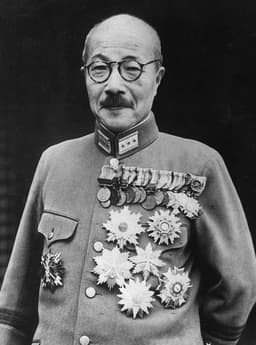
Hideki Tojo
General · Modern
53.9Total
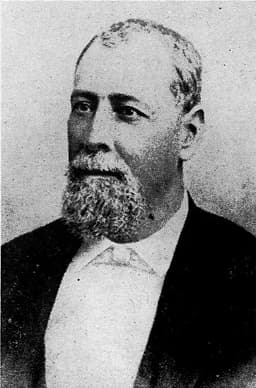
Justo Rufino Barrios
General · Modern
58.6Total
Basic Information
Born
1884
1835
Died
1948
1885
Era
Modern
Modern
Nationality
Japan
Guatemala
Occupation
General
General
Civilization
Eastern
Western
Score Comparison
Military (10%)
70.0
52.5
Political (20%)
48.0
72.0
Influence (20%)
55.0
60.0
Legacy (20%)
50.0
49.2
Leadership (15%)
53.2
65.0
Strategy (15%)
55.0
55.0
TOTAL
53.9
58.6
Hideki Tojo — Complete Timeline
1941 AD
Attack on Pearl HarborWar
As Prime Minister, Hideki Tojo authorized the attack on the US naval base at Pearl Harbor, Hawaii. The surprise attack brought the United States into World War II. Tojo's decision was based on the belief that war with the US was inevitable due to resource embargoes and diplomatic failures.
World War IIPearl HarborUS-Japan War
Impact: globaldestructive
Appointment as Prime MinisterPolitical Action◆ Major
Hideki Tojo was appointed Prime Minister of Japan, replacing Fumimaro Konoe. He retained his position as Army Minister and later took on other portfolios, consolidating power. His appointment marked the ascendancy of the military faction in the Japanese government and the shift towards total war.
Prime MinisterMilitary GovernmentWorld War II
Impact: national
1942 AD
Fall of SingaporeWar◆ Major
Under Tojo's leadership, Japanese forces captured Singapore from the British in a swift campaign. The fall of Singapore was one of the worst British military defeats in history. It demonstrated Japanese military prowess and led to the occupation of a key strategic location in Southeast Asia.
World War IISingaporeJapanese Victory
Impact: global
1948 AD
Execution by the International Military Tribunal for the Far EastPolitical Action◆ Major
Hideki Tojo was found guilty of war crimes by the International Military Tribunal for the Far East and sentenced to death. He was executed by hanging on December 23, 1948. His trial and execution symbolized the Allied effort to hold Japanese leaders accountable for wartime atrocities.
War CrimesExecutionTokyo Trials
Impact: globaltragic
Justo Rufino Barrios — Complete Timeline
1871 AD
Enacted the Liberal Reforms of 1871Reform
Justo Rufino Barrios, after coming to power, implemented sweeping liberal reforms. These included the separation of church and state, confiscation of church lands, establishment of secular education, and promotion of coffee cultivation for export.
GuatemalaLiberal ReformSecularization
Impact: nationalprogressive
1873 AD
Modernized Guatemala's InfrastructureReform◆ Major
Barrios oversaw the construction of roads, telegraph lines, and railways, particularly to support coffee exports. He also promoted immigration and foreign investment, transforming Guatemala's economy.
GuatemalaInfrastructureEconomic Development
Impact: nationalconstructive
1885 AD
Killed at the Battle of ChalchuapaWar
Barrios was killed in battle at Chalchuapa, El Salvador, while leading an invasion to forcibly reunify Central America. His death ended the unification attempt and preserved the sovereignty of the individual Central American states.
Central AmericaBattleDeath
Impact: regionaltragic
Declared the Unification of Central AmericaPolitical Action◆ Major
Barrios unilaterally declared the reunification of the Central American republics by force. He issued a decree proclaiming himself supreme military commander of a unified Central America, leading to war with neighboring states.
Central AmericaUnificationWar
Impact: regionaldestructive
Expert Analysis
Hideki Tojo vs Justo Rufino Barrios
# The General as Statesman: Two Paths to Power and Ruin
On a December morning in 1941, Hideki Tojo stood before the Japanese Diet and declared war on the United States, setting in motion a conflict that would consume the Pacific and end with his own execution. Forty-six years earlier and half a world away, Justo Rufino Barrios rode into battle at Chalchuapa, El Salvador, convinced he could reunify Central America by force—only to be cut down by enemy fire. Both were generals who became political leaders. Both believed in the transformative power of military will. Yet one led his nation to catastrophic defeat, while the other died pursuing a dream that died with him. What separates a visionary from a disaster? The answer lies not in their ambitions, but in how they understood the limits of power.
Origins
Hideki Tojo was born in 1884 into a samurai family in Tokyo, a lineage that prized discipline, hierarchy, and imperial loyalty. His father, a lieutenant general in the Imperial Japanese Army, instilled in him a rigid sense of duty. Tojo graduated from the Imperial Military Academy and later the Army War College, emerging as a career officer shaped by the belief that Japan's survival depended on military expansion. He saw the West not as a model but as a threat, and the army as the nation's only true protector.
Justo Rufino Barrios, born in 1835 in San Lorenzo, Guatemala, came from a different world—a rural, mestizo background in a country still recovering from Spanish colonial rule. He entered politics through the chaos of Central America's liberal-conservative wars, where military skill and personal charisma mattered more than pedigree. Barrios was a self-made man in a region where nations were still being invented. His ambition was not to defend an empire, but to build one.
Rise to Power
Tojo's ascent was methodical. He served as a military attaché in Germany, commanded troops in Manchuria, and became chief of the Kwantung Army's secret police. By 1940, he was Army Minister, advocating for a "Greater East Asia Co-Prosperity Sphere" that justified Japanese expansion. In October 1941, with Emperor Hirohito's approval, he replaced Prime Minister Fumimaro Konoe. Tojo did not seize power—he inherited it as the crisis deepened, presenting himself as the only man willing to make hard decisions.
Barrios rose through revolution. In 1871, he joined the liberal uprising against President Vicente Cerna, a conservative. After victory, he became a general and then president in 1873. His path was violent, personal, and immediate. He did not wait for permission; he took it.
Leadership & Governance
Tojo governed as a military bureaucrat. He centralized authority, expanded the secret police, and suppressed dissent. His reforms were tactical: conscription, industrial mobilization, and propaganda. He micromanaged war planning but lacked strategic vision. The attack on Pearl Harbor in 1941 was a gamble, not a plan—he believed a decisive blow would force America to negotiate. Instead, it awakened a giant.
Barrios governed as a modernizer. His Liberal Reforms of 1871 separated church and state, abolished monastic orders, and established secular education. He built roads, telegraph lines, and railways to boost coffee exports. He modernized Guatemala's economy, but his ambition outran his resources. In 1885, he declared the unification of Central America by force—a goal that required diplomacy, not just bullets.
Triumph & Tragedy
Tojo's greatest moment was the fall of Singapore in 1942, when Japanese forces captured the British stronghold in a stunning campaign. It seemed to validate his strategy. But the triumph was fleeting. By 1944, Japan was losing—Midway, Guadalcanal, the Philippines. Tojo resigned after the fall of Saipan, but the war he started consumed his nation. In 1948, he was hanged for war crimes by the International Military Tribunal for the Far East.
Barrios's tragedy was more intimate. He died at the Battle of Chalchuapa on April 2, 1885, leading a charge into El Salvador. His dream of reunification died with him. But his reforms survived. Guatemala became a modern state, even if the Central American federation never materialized.
Character & Destiny
Tojo was a man of duty without imagination. He believed in order, hierarchy, and the emperor's divine will. He could not conceive of defeat, because defeat would mean the collapse of the system he embodied. His rigidity made him effective in peacetime but catastrophic in war. As he told his cabinet before Pearl Harbor: "Sometimes a man has to jump from the veranda." He jumped—and dragged Japan with him.
Barrios was a man of vision without patience. He saw Central America's fragmentation as a historical mistake he could correct through force. He believed in progress, railroads, and secular education—but also in his own invincibility. His death was reckless, but it was also principled. He died for a dream, not a calculation.
Legacy
Tojo is remembered as a war criminal, a symbol of militarist excess. His name is synonymous with Pearl Harbor and the Pacific War's horrors. In Japan, he is a cautionary tale—a leader who confused nationalism with strategy.
Barrios is remembered as a reformer and a martyr. Guatemala's modern infrastructure owes much to him. His statue stands in Guatemala City, and his name adorns streets and schools. But his failed unification attempt is a lesson in the limits of force.
Conclusion
Both men were generals who became statesmen. Both believed that military power could reshape nations. But Tojo saw war as an end in itself, while Barrios saw it as a tool for a greater purpose. Tojo led Japan into annihilation; Barrios died for a dream that outlived him. In the end, the difference is not in their ambition, but in their understanding of what power can and cannot achieve. Tojo jumped from the veranda and took a nation with him. Barrios charged into battle alone—and became a legend.
Rankings
🥇
Justo Rufino BarriosLeader
Mil: 52.5Pol: 72.0Inf: 60.0
58.6
🥈
Hideki Tojo
Mil: 70.0Pol: 48.0Inf: 55.0
53.9
+4.7 behind
How This Comparison Works
Algorithm
Each figure is scored on 6 dimensions (0—100 scale) based on structured historical data: Military (10%), Political (20%), Influence (20%), Legacy (20%), Leadership (15%), Strategy (15%). The weighted total produces the final ranking.
Data Sources
Scores are computed from structured sub-indicators in the database. Scale factors adjust for era (Ancient ×0.85, Modern ×1.0) and civilization size (Eastern ×1.05, Other ×0.80) to account for differences in population and military scale.
Maximum 3 Figures
Comparisons are limited to 2—3 figures to ensure readability and statistical meaningfulness.
Error Margins
±5 points per dimension — Sub-scores are derived from historical records with inherent uncertainty. Two figures within 5 points on a dimension should be considered roughly equivalent in that area.
Total Score Accuracy
±3 points overall — The weighted combination of 6 dimensions produces a total score with approximately ±3 points of uncertainty. Differences of less than 3 points are not statistically significant— the figures are effectively tied.
Known Limitations
- Historical records are incomplete and uneven across civilizations
- Figures from oral-tradition societies may be underrepresented
- Occupation labels can misclassify multi-role figures
- Scores measure capability and impact, not moral character
- Quantitative scoring is a comparison tool, not absolute truth
Capability Radar
Military (10%) — Battles & Warfare
Battles
65
45
Win Rate
40
55
Expansion
70
55
Political (20%) — Governance & Reform
Reform
30
70
Diplomacy
35
45
Economy
25
55
Influence (20%) — Cultural & Global Reach
Cultural
30
40
Global
55
30
Legacy (20%) — Historical Impact
Historical
55
50
Longevity
40
35
Leadership (15%) — Power & Stability
Tenure
60
50
Stability
20
30
Strategy (15%) — Tactics & Innovation
Strategy
50
50
Tactics
55
40
Reform
45
60
Similar Comparisons
Comments & Discussion
**DeathMarchDice**6/16/2026
Tojo wasn’t a "visionary"—he was a logistics disaster in a uniform. By 1944, Japanese supply lines were a joke, with troops starving on Guadalcanal while he hoarded rice for the home islands. Barrios at least died on his own terms in a fair fight. Tojo? He botched a suicide attempt, then begged for a pardon at his trial. Visionaries don’t miss the gun.
**老档案猎人**6/16/2026
这个比较偷换了概念。巴尔里奥斯死在自己发动的战争里,算是个传统的军阀。但东条英机不一样——他代表的是现代军国主义国家的集体崩溃。别忘了,联合国军占领日本后,连天皇都要去麦克阿瑟那里"问候"。巴尔里奥斯是个人失败,东条是系统腐烂的结果。把两人放在一起比较,反而模糊了历史的真正教训。
**SaltAndParchment**6/16/2026
What actually separates them? Scale and context. Barrios wanted a fractured region to unite, a small-time centralizing fantasy that ended in a single skirmish. Tojo gambled the entire Pacific Rim on a sneak attack at Pearl Harbor. One man’s delusion fit his local stage, the other’s delusion required total war and atomic fire. Comparing their "visions" ignores that one was always a footnote, the other a global catastrophe.
**野史修正官**6/16/2026
说巴尔里奥斯是"梦想家"?我看他是僭主。他1880年代在危地马拉推咖啡种植园经济,把原住民逼成债务农奴,跟东条在满洲的奴役政策本质一样。唯一区别是东条玩得更大了——从慰安妇到731部队,把武家政治推向种族灭绝。两位都不配被称作政治家,不过是穿着将军制服的强盗。
**FortressMind**6/16/2026
You guys romanticize Barrios too much. He literally died because he overestimated his army’s ability to take Chalchuapa—classic tactical hubris. Tojo at least understood Japan needed to cripple the US Navy to have a chance at empire. His sin was strategic overreach, not tactical stupidity. Barrios’s "dream" was just poorly planned aggression. Call it what it was: a bad gamble that got him killed.