Loading...
Hideki Tojo vs John Lambert
John Lambert leads by 2.8 pts · 2 figures compared
…
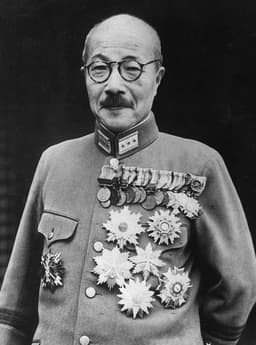
Hideki Tojo
General · Modern
53.9Total
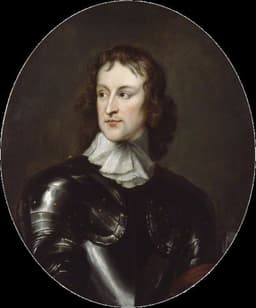
John Lambert
General · Modern
56.7Total
Basic Information
Born
1884
1619
Died
1948
1684
Era
Modern
Modern
Nationality
Japan
England
Occupation
General
General
Civilization
Eastern
Western
Score Comparison
Military (10%)
70.0
70.0
Political (20%)
48.0
45.0
Influence (20%)
55.0
59.0
Legacy (20%)
50.0
50.0
Leadership (15%)
53.2
68.0
Strategy (15%)
55.0
55.0
TOTAL
53.9
56.7
Hideki Tojo — Complete Timeline
1941 AD
Attack on Pearl HarborWar
As Prime Minister, Hideki Tojo authorized the attack on the US naval base at Pearl Harbor, Hawaii. The surprise attack brought the United States into World War II. Tojo's decision was based on the belief that war with the US was inevitable due to resource embargoes and diplomatic failures.
World War IIPearl HarborUS-Japan War
Impact: globaldestructive
Appointment as Prime MinisterPolitical Action◆ Major
Hideki Tojo was appointed Prime Minister of Japan, replacing Fumimaro Konoe. He retained his position as Army Minister and later took on other portfolios, consolidating power. His appointment marked the ascendancy of the military faction in the Japanese government and the shift towards total war.
Prime MinisterMilitary GovernmentWorld War II
Impact: national
1942 AD
Fall of SingaporeWar◆ Major
Under Tojo's leadership, Japanese forces captured Singapore from the British in a swift campaign. The fall of Singapore was one of the worst British military defeats in history. It demonstrated Japanese military prowess and led to the occupation of a key strategic location in Southeast Asia.
World War IISingaporeJapanese Victory
Impact: global
1948 AD
Execution by the International Military Tribunal for the Far EastPolitical Action◆ Major
Hideki Tojo was found guilty of war crimes by the International Military Tribunal for the Far East and sentenced to death. He was executed by hanging on December 23, 1948. His trial and execution symbolized the Allied effort to hold Japanese leaders accountable for wartime atrocities.
War CrimesExecutionTokyo Trials
Impact: globaltragic
John Lambert — Complete Timeline
1648 AD
Battle of PrestonWar◆ Major
John Lambert commanded parliamentary forces at the Battle of Preston, defeating a Scottish royalist army. The victory helped secure the parliamentary cause in the Second English Civil War.
BattleEnglish Civil WarParliament
Impact: national
1653 AD
Drafted the Instrument of GovernmentPolitical Action◆ Major
John Lambert was the principal author of the Instrument of Government, the written constitution that established the Protectorate under Oliver Cromwell. The document created a Lord Protector and a Council of State, but was never fully implemented.
ConstitutionProtectorateCromwell
Impact: nationalconstructive
1662 AD
Exiled to GuernseyPolitical Action◆ Major
After the Restoration, John Lambert was tried for treason and exiled to the island of Guernsey. He spent the remainder of his life in captivity, never regaining political influence.
ExileRestorationPunishment
Impact: nationaltragic
Expert Analysis
Hideki Tojo vs John Lambert
### The General and the Constitution-Maker
On a December morning in 1941, Hideki Tojo stood before the Japanese parliament and declared war on the United States, setting in motion a conflict that would consume millions of lives and end with his own execution. A century earlier and half a world away, John Lambert sat in a London committee room, drafting a written constitution for the English Commonwealth—a document that would, for a fleeting moment, make England a republic. Both men were generals. Both shaped the fates of their nations. Yet one is remembered as a war criminal, the other as a forgotten architect of parliamentary rule. What drove them down such different paths?
### Origins
Hideki Tojo was born in 1884 into a samurai family in Tokyo, a lineage that prized military discipline and imperial loyalty. His father, a lieutenant general, instilled in him a rigid sense of duty. Japan’s rapid modernization after the Meiji Restoration meant that Tojo grew up in a world where the emperor was divine, the army was sacred, and expansion was destiny. He entered the Imperial Japanese Army Academy at eighteen, absorbing a culture that valued obedience over debate and conquest over compromise.
John Lambert was born in 1619 into a Yorkshire gentry family, his father a lawyer. England was then a kingdom torn by religious and constitutional strife—the Stuart kings claimed absolute power, while Parliament demanded its ancient rights. Lambert studied law at the Inns of Court but abandoned it for soldiering when civil war erupted in 1642. He joined the Parliamentarian cause not out of revolutionary fervor but because he believed in ordered liberty under law. Where Tojo was shaped by a closed, hierarchical society, Lambert was forged in a crucible of open conflict over ideas.
### Rise to Power
Tojo’s ascent was methodical. He served as a military attaché in Germany, then as head of the Kempetai, Japan’s secret police, where he earned a reputation for ruthless efficiency. By 1937, he was chief of staff of the Kwantung Army in Manchuria, leading campaigns that expanded Japan’s empire. In 1941, with Japan locked in a debilitating war in China and facing oil embargoes from the United States, the civilian prime minister Fumimaro Konoe resigned. Tojo, as Army Minister, stepped into the vacuum. He was not a usurper; he was the choice of a military establishment that saw no alternative to war.
Lambert’s rise was more dramatic. He distinguished himself at the Battle of Preston in 1648, where his tactical brilliance crushed a Scottish royalist army. This victory made him indispensable to Oliver Cromwell. When Cromwell dissolved the Rump Parliament in 1653, Lambert did not seize power—he helped design a new government. He became the principal author of the Instrument of Government, the first written constitution in English history. His rise came not through court intrigue but through the force of his ideas and his sword.
### Leadership & Governance
Tojo governed as a military dictator. He retained his position as Army Minister while serving as Prime Minister, centralizing control over every aspect of Japanese life. His leadership style was rigid and hierarchical—he demanded total obedience and punished dissent. The attack on Pearl Harbor in December 1941 was his gambit: a surprise strike meant to cripple the U.S. Pacific Fleet and buy Japan time to conquer Southeast Asia. It succeeded tactically but failed strategically, awakening a sleeping giant. Under his command, Japanese forces captured Singapore in 1942, a stunning victory that humiliated the British Empire. But Tojo’s governance was brittle. He suppressed political opposition, ignored economic realities, and refused to consider surrender even as the war turned.
Lambert governed as a constitutionalist. As a member of Cromwell’s Council of State, he helped administer the Commonwealth, balancing military necessity with legal restraint. The Instrument of Government created a separation of powers—a Lord Protector, a council, and a parliament—designed to prevent any one man from becoming a tyrant. Lambert believed that military victory must be followed by political settlement. He was no democrat; the constitution excluded Catholics and royalists from voting. But he saw governance as a matter of law, not will. His military genius lay in strategy, not aggression—he knew when to fight and when to negotiate.
### Triumph & Tragedy
Tojo’s greatest triumph was the fall of Singapore in 1942, a campaign that demonstrated Japanese military efficiency. His greatest tragedy was the war itself. By 1944, Japan was losing on all fronts. Tojo resigned in July 1944 after the fall of Saipan, but he had already sealed his fate. In 1948, the International Military Tribunal for the Far East found him guilty of war crimes—including the mistreatment of prisoners and the slaughter of civilians—and hanged him. His triumph was a prelude to annihilation.
Lambert’s greatest triumph was the Instrument of Government, a bold experiment in written constitutionalism. His tragedy came after Cromwell’s death in 1658. The Commonwealth collapsed into factionalism, and Lambert’s attempt to restore military rule failed. In 1660, the monarchy was restored under Charles II. Lambert was tried for treason and exiled to the island of Guernsey in 1662, where he spent the rest of his life in captivity. His constitution died with the republic.
### Character & Destiny
Tojo was a product of his environment: a rigid, honor-bound culture that equated compromise with cowardice. He once said, “The time has come for Japan to show its true strength.” His character—disciplined, dutiful, but inflexible—drove him to pursue a path of no return. He could not imagine surrender, so he led his nation to ruin.
Lambert was a lawyer-soldier, pragmatic and creative. He believed that power must be constrained by law. His character—independent, thoughtful, but politically naive—led him to draft a constitution that could not survive without Cromwell’s personal authority. He trusted institutions to restrain ambition, but ambition destroyed them.
### Legacy
Tojo is remembered as a symbol of Japanese militarism and aggression. In Japan, his legacy is deeply contested—some see him as a patriot, others as a villain. Globally, he stands alongside Hitler and Mussolini as a face of wartime evil. His name evokes Pearl Harbor, Bataan, and the kamikaze.
Lambert is largely forgotten. The Instrument of Government lasted only five years, but its ideas—a written constitution, separation of powers, religious toleration—influenced later documents, including the United States Constitution. He is a footnote in English history, but his vision of government by law, not men, outlived him.
### Conclusion
Tojo and Lambert were both soldiers who rose to power in times of crisis. One chose war as an end in itself; the other saw war as a means to peace. One built an empire of conquest; the other built a constitution of laws. Their fates remind us that the same qualities—discipline, ambition, courage—can lead to vastly different outcomes depending on the ideas they serve. Tojo’s tragedy was that he had no vision beyond victory. Lambert’s was that his vision arrived too soon. Both were prisoners of their times, yet one chose to destroy, the other to build. History remembers the destroyer; perhaps it should remember the builder.
Rankings
🥇
John LambertLeader
Mil: 70.0Pol: 45.0Inf: 59.0
56.7
🥈
Hideki Tojo
Mil: 70.0Pol: 48.0Inf: 55.0
53.9
+2.8 behind
How This Comparison Works
Algorithm
Each figure is scored on 6 dimensions (0—100 scale) based on structured historical data: Military (10%), Political (20%), Influence (20%), Legacy (20%), Leadership (15%), Strategy (15%). The weighted total produces the final ranking.
Data Sources
Scores are computed from structured sub-indicators in the database. Scale factors adjust for era (Ancient ×0.85, Modern ×1.0) and civilization size (Eastern ×1.05, Other ×0.80) to account for differences in population and military scale.
Maximum 3 Figures
Comparisons are limited to 2—3 figures to ensure readability and statistical meaningfulness.
Error Margins
±5 points per dimension — Sub-scores are derived from historical records with inherent uncertainty. Two figures within 5 points on a dimension should be considered roughly equivalent in that area.
Total Score Accuracy
±3 points overall — The weighted combination of 6 dimensions produces a total score with approximately ±3 points of uncertainty. Differences of less than 3 points are not statistically significant— the figures are effectively tied.
Known Limitations
- Historical records are incomplete and uneven across civilizations
- Figures from oral-tradition societies may be underrepresented
- Occupation labels can misclassify multi-role figures
- Scores measure capability and impact, not moral character
- Quantitative scoring is a comparison tool, not absolute truth
Capability Radar
Military (10%) — Battles & Warfare
Battles
65
65
Win Rate
40
60
Expansion
70
40
Political (20%) — Governance & Reform
Reform
30
55
Diplomacy
35
50
Economy
25
45
Influence (20%) — Cultural & Global Reach
Cultural
30
35
Global
55
30
Legacy (20%) — Historical Impact
Historical
55
50
Longevity
40
40
Leadership (15%) — Power & Stability
Tenure
60
60
Stability
20
40
Strategy (15%) — Tactics & Innovation
Strategy
50
65
Tactics
55
70
Reform
45
55
Similar Comparisons
Comments & Discussion
历史彩蛋猎人6/16/2026
没人记得Lambert被流放是因为他拒绝支持查理二世的复辟——他宁愿失去庄园和头衔也不改签。Tojo呢?他在狱中写了首诗说“此身终将化为护国之鬼”,然后乖乖吃了绞刑架。一个为原则放弃财产,一个为天皇放弃思考。Lambert是个失败的清教徒硬汉,Tojo只是个完美的帝国齿轮。
ConstitutionGambler6/16/2026
Lambert’s big mistake wasn’t his constitutional vision—it was backing the wrong horse. He helped Cromwell crush the Levellers and their Agreement of the People, which was way more democratic. Then after Cromwell died, Lambert tried to set up a military junta. So he’s not a pure constitution-maker; he’s a general who used law as a weapon. Tojo at least never pretended his militarism was about liberty. Lambert was a hypocrite with a quill.
SamuraiStatist6/16/2026
Tojo was a product of samurai ethos twisted by modernity, but Lambert was the true revolutionary here. Tojo led Japan into a suicidal war based on a fantasy of racial purity and divine mandate, while Lambert literally drafted England’s only written constitution—the Instrument of Government. One clung to emperor-worship, the other tried to make parliamentary sovereignty real. I’d rather have a constitution-maker than a war criminal any day.
数据拆解师6/16/2026
数据不会撒谎:Tojo指挥的军队杀了大约3000万亚洲平民,而Lambert在英国打了三场内战估计死了20万人。但讽刺的是,Lambert的宪法只活了几年就被我们当废纸扔了,结果后来英国那套所谓“不成文宪法”比任何东亚独裁者都长寿。你告诉我哪个赢了?数字太会逗我们玩了。
WartimeLogician6/16/2026
Let’s be brutally honest: Tojo didn’t start the Pacific War—the US oil embargo did. He was a tactician, not a mastermind. Japan’s military was already running the show before he became PM. Lambert, on the other hand, actually wrote the constitution that gave Cromwell dictatorial powers. So Tojo obeyed a system he didn’t create; Lambert designed one that failed. Which is worse: the executor or the architect?