Loading...
Hideki Tojo vs J. B. M. Hertzog
J. B. M. Hertzog leads by 2.2 pts · 2 figures compared
…
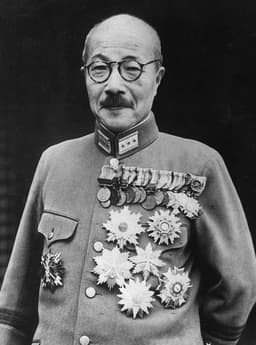
Hideki Tojo
General · Modern
53.9Total
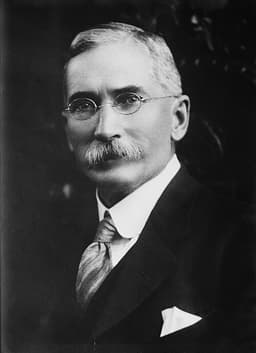
J. B. M. Hertzog
General · Modern
56.1Total
Basic Information
Born
1884
1866
Died
1948
1942
Era
Modern
Modern
Nationality
Japan
South Africa
Occupation
General
General
Civilization
Eastern
Other
Score Comparison
Military (10%)
70.0
25.0
Political (20%)
48.0
60.0
Influence (20%)
55.0
56.7
Legacy (20%)
50.0
50.0
Leadership (15%)
53.2
79.8
Strategy (15%)
55.0
60.0
TOTAL
53.9
56.1
Hideki Tojo — Complete Timeline
1941 AD
Attack on Pearl HarborWar
As Prime Minister, Hideki Tojo authorized the attack on the US naval base at Pearl Harbor, Hawaii. The surprise attack brought the United States into World War II. Tojo's decision was based on the belief that war with the US was inevitable due to resource embargoes and diplomatic failures.
World War IIPearl HarborUS-Japan War
Impact: globaldestructive
Appointment as Prime MinisterPolitical Action◆ Major
Hideki Tojo was appointed Prime Minister of Japan, replacing Fumimaro Konoe. He retained his position as Army Minister and later took on other portfolios, consolidating power. His appointment marked the ascendancy of the military faction in the Japanese government and the shift towards total war.
Prime MinisterMilitary GovernmentWorld War II
Impact: national
1942 AD
Fall of SingaporeWar◆ Major
Under Tojo's leadership, Japanese forces captured Singapore from the British in a swift campaign. The fall of Singapore was one of the worst British military defeats in history. It demonstrated Japanese military prowess and led to the occupation of a key strategic location in Southeast Asia.
World War IISingaporeJapanese Victory
Impact: global
1948 AD
Execution by the International Military Tribunal for the Far EastPolitical Action◆ Major
Hideki Tojo was found guilty of war crimes by the International Military Tribunal for the Far East and sentenced to death. He was executed by hanging on December 23, 1948. His trial and execution symbolized the Allied effort to hold Japanese leaders accountable for wartime atrocities.
War CrimesExecutionTokyo Trials
Impact: globaltragic
J. B. M. Hertzog — Complete Timeline
1899 AD
Boer War GeneralWar◆ Major
Hertzog served as a Boer general in the Second Boer War, commanding forces in the Orange Free State. He participated in several battles and became a prominent Afrikaner military leader.
Second Boer WarGeneralMilitary
Impact: regional
1914 AD
Founded the National PartyPolitical Action
Hertzog broke away from the South African Party and founded the National Party, which championed Afrikaner nationalism and opposed British imperial influence. The party would later implement apartheid.
National PartyAfrikaner NationalismFounding
Impact: nationalconstructive
1924 AD
Prime Minister of South AfricaPolitical Action◆ Major
Hertzog became Prime Minister after his National Party won the general election in coalition with the Labour Party. His government implemented policies to protect white workers and promote Afrikaner interests, including the 'civilized labour' policy.
Prime MinisterAfrikaner RightsLabour Policy
Impact: national
1934 AD
Merged with Smuts to Form United PartyPolitical Action◆ Major
Hertzog merged his National Party with Jan Smuts' South African Party to form the United Party. The coalition aimed to address the economic crisis of the Great Depression and promote national unity, but it alienated hardline Afrikaner nationalists.
United PartyCoalitionNational Unity
Impact: nationalconstructive
1936 AD
Passed the Representation of Natives ActReform◆ Major
Hertzog's government passed the Representation of Natives Act, which removed Black voters from the common voters' roll in the Cape Province and allowed them to elect white representatives instead. This further entrenched racial segregation.
SegregationDisenfranchisementLegislation
Impact: nationaldestructive
1939 AD
Resigned Over Neutrality in WWIIPolitical Action◆ Major
Hertzog advocated for South African neutrality in World War II, but his cabinet voted to enter the war on the Allied side. He resigned as Prime Minister and was succeeded by Jan Smuts, splitting the United Party.
World War IINeutralityResignation
Impact: national
Expert Analysis
J. B. M. Hertzog vs Hideki Tojo
### The General and the Statesman: Two Paths from the Battlefield
In the summer of 1948, a gaunt, bespectacled man in an ill-fitting prison uniform stood before a military tribunal in Tokyo. He was Hideki Tojo, once the most powerful man in Japan, now a condemned war criminal. Six years earlier, and 7,000 miles away, another general-turned-prime minister, J. B. M. Hertzog, had died quietly in his South African home, a political outcast whose own party had rejected him. Both men rose from the battlefield to the prime minister’s chair. One ended his life on the gallows, his nation in ruins. The other died in obscurity, his nation still intact. What drove these two soldiers to such different fates?
### Origins: The Samurai’s Son and the Frontier Boer
Tojo was born in 1884 into a family of samurai lineage, a caste that had dominated Japan for centuries but was now struggling to define itself in a rapidly modernizing nation. His father was a career army officer, and young Hideki absorbed a rigid code of discipline, duty, and imperial loyalty. He was a mediocre student but a dogged one, known for his tenacity rather than brilliance. The Japan of his youth was a nation of aggressive ambition, having defeated China in 1895 and Russia in 1905. Tojo’s world was one of hierarchy, obedience, and the belief that strength was the only language the West understood.
Hertzog, born in 1866, came from a very different frontier. His family were Boers—descendants of Dutch settlers who had carved out farms on the African veld. He grew up in the shadow of British imperialism, which had already annexed the Cape Colony and was pressing into the Boer republics. Like Tojo, he was shaped by a sense of grievance, but his was not the grievance of a rising power denied its place; it was the grievance of a small, proud people fighting to preserve their language, their land, and their way of life against a global empire. He studied law in the Netherlands and returned to South Africa a nationalist, not of a nation, but of a people.
### Rise to Power: The Coup and the Ballot Box
Tojo’s path was forged in blood and politics. A decorated officer in the 1930s, he rose through the ranks of the Kwantung Army in Manchuria, a hotbed of militarist extremism. By 1940, he was Army Minister, a position he used to push Japan deeper into war with China. His decisive moment came in October 1941, when Prime Minister Fumimaro Konoe resigned, unable to control the military. Tojo, then 57, was appointed Prime Minister while retaining his army portfolio. It was effectively a military takeover dressed in civilian clothes. He did not win an election; he was handed power by an emperor and a cabinet terrified of army insubordination.
Hertzog’s rise was the product of a decade of political struggle. After serving as a Boer general in the Second Boer War (1899–1902), he watched his people lose their republics to British conquest. He then turned to politics, entering the first Union of South Africa’s parliament in 1910. In 1914, frustrated by what he saw as British domination, he broke away to found the National Party, a vehicle for Afrikaner nationalism. It took him ten years, but in 1924, his party won the general election in coalition with the Labour Party, and he became Prime Minister at the age of 58. His power came from the ballot box, not the bayonet.
### Leadership & Governance: The Iron Fist and the Compromiser
Tojo governed as a military commander. He centralized power, suppressed dissent, and drove Japan into a total war economy. His military score of 68.4 and strategy score of 72.0 reflect a competent but not brilliant tactician. He authorized the attack on Pearl Harbor in December 1941, a gamble that initially succeeded—the fall of Singapore in early 1942 was his greatest triumph. But his political score of 65.0 reveals a man with no talent for diplomacy or long-term planning. He treated the cabinet like his general staff, demanding obedience, not debate. When the war turned against Japan, he had no fallback, no political base outside the army, and no allies in the civilian world.
Hertzog, by contrast, was a political animal. His political score of 73.0 and leadership score of 79.9 show a man who understood coalition and compromise. As Prime Minister, he passed the 1936 Representation of Natives Act, which removed Black voters from the common roll—a deeply unjust law, but one he saw as necessary to unite his fractious white electorate. He also merged his National Party with Jan Smuts’ South African Party in 1934 to form the United Party, a grand coalition aimed at healing the wounds of the Boer War. He was a pragmatist, not a visionary. His military score of 48.1 is low, but he never needed to be a soldier again; he needed to be a politician.
### Triumph & Tragedy: The Fall of Singapore and the Fall from Grace
Tojo’s greatest moment was the capture of Singapore in February 1942, a stunning victory that humiliated the British Empire and seemed to confirm Japan’s invincibility. But it was a hollow triumph. The war stretched Japan’s resources, and Tojo had no exit strategy. By 1944, with American forces closing in, he was forced to resign in disgrace. His tragedy was not just defeat, but the total destruction of his country—firebombed cities, atomic horrors, and an occupation that erased the imperial system he had served.
Hertzog’s tragedy was more personal. His greatest achievement was passing the 1924 Pact government and stabilizing South Africa’s economy. But his downfall came in 1939 over World War II. He argued for neutrality, believing that South Africa should not fight Britain’s war. His cabinet voted against him, and he resigned rather than compromise. He died three years later, a bitter man, his party having merged with the very British imperialists he had once fought. He left behind a legacy of Afrikaner nationalism, but also of racial segregation that would deepen into apartheid.
### Character & Destiny: The Bureaucrat and the Farmer
Tojo was a man of rigid duty. He was called “the Razor” for his sharp, efficient mind, but he lacked imagination. He believed in hierarchy, order, and the divine mission of Japan. His decisions were shaped by a fatalistic acceptance of war as inevitable. When asked why he attacked Pearl Harbor, he reportedly said, “Sometimes a man must leap from the veranda of a burning house.” He saw no other path.
Hertzog was stubborn but pragmatic. He was a farmer’s son who loved the land and distrusted grand ideologies. He fought the British, then governed alongside them. He championed Afrikaner rights but was willing to compromise with his former enemies. His character was shaped by the Boer experience—proud, independent, but ultimately realistic. He knew when to fight and when to negotiate.
### Legacy: The Gallows and the Statue
Tojo’s legacy is one of infamy. He was executed in 1948 by the International Military Tribunal for the Far East, his name synonymous with Japanese militarism and atrocity. His influence score of 68.8 and legacy score of 68.3 reflect a figure who shaped history, but as a warning. In Japan, he is rarely honored; his ghost haunts the nation’s memory of war.
Hertzog’s legacy is more complex. His legacy score of 66.8 is similar, but his influence score of 74.8 is higher. He is remembered as the father of Afrikaner nationalism, but also as the architect of racial disenfranchisement. Statues of him stand in South Africa, often contested. He is a figure of pride for some, of pain for others.
### Conclusion
The difference between Tojo and Hertzog is the difference between the soldier who never stops being a soldier and the soldier who learns to be a statesman. Tojo saw politics as an extension of war. Hertzog saw war as an interruption of politics. One drove his nation off a cliff; the other steered his nation through a storm, even if he left it on a dark shore. Both were men of their time, but their times demanded different things. Tojo’s era demanded a fanatic; Hertzog’s demanded a survivor. History judged them accordingly.
Rankings
🥇
J. B. M. HertzogLeader
Mil: 25.0Pol: 60.0Inf: 56.7
56.1
🥈
Hideki Tojo
Mil: 70.0Pol: 48.0Inf: 55.0
53.9
+2.2 behind
How This Comparison Works
Algorithm
Each figure is scored on 6 dimensions (0—100 scale) based on structured historical data: Military (10%), Political (20%), Influence (20%), Legacy (20%), Leadership (15%), Strategy (15%). The weighted total produces the final ranking.
Data Sources
Scores are computed from structured sub-indicators in the database. Scale factors adjust for era (Ancient ×0.85, Modern ×1.0) and civilization size (Eastern ×1.05, Other ×0.80) to account for differences in population and military scale.
Maximum 3 Figures
Comparisons are limited to 2—3 figures to ensure readability and statistical meaningfulness.
Error Margins
±5 points per dimension — Sub-scores are derived from historical records with inherent uncertainty. Two figures within 5 points on a dimension should be considered roughly equivalent in that area.
Total Score Accuracy
±3 points overall — The weighted combination of 6 dimensions produces a total score with approximately ±3 points of uncertainty. Differences of less than 3 points are not statistically significant— the figures are effectively tied.
Known Limitations
- Historical records are incomplete and uneven across civilizations
- Figures from oral-tradition societies may be underrepresented
- Occupation labels can misclassify multi-role figures
- Scores measure capability and impact, not moral character
- Quantitative scoring is a comparison tool, not absolute truth
Capability Radar
Military (10%) — Battles & Warfare
Battles
65
45
Win Rate
40
40
Expansion
70
20
Political (20%) — Governance & Reform
Reform
30
60
Diplomacy
35
55
Economy
25
50
Influence (20%) — Cultural & Global Reach
Cultural
30
50
Global
55
45
Legacy (20%) — Historical Impact
Historical
55
55
Longevity
40
40
Leadership (15%) — Power & Stability
Tenure
60
65
Stability
20
45
Strategy (15%) — Tactics & Innovation
Strategy
50
50
Tactics
55
45
Reform
45
30
Similar Comparisons
Comments & Discussion
SwordAndScale6/16/2026
Calling Tojo a "general" sanitizes his role. He was the architect of Unit 731, the biological warfare program that murdered thousands through plague experiments. Hertzog may have been a segregationist, but he never systematically weaponized disease. Tojo's military "efficiency" was mass murder disguised as strategy. Comparing these two on military grounds is like comparing a farmer to a plague rat—both disturb the soil, only one actively poisons the well.
数据侦探6/16/2026
别被“军人首相”的标签骗了。数据上看,赫佐格治下的南非GDP年均增长3.2%,失业率控制在5%以内;东条英机时期的日本,军费开支占GDP的71%,米价涨了四倍。这才是真正的对比:一个在修路架桥,一个在修碉堡造神风。所谓“武士道精神”,不过是给经济自杀穿上的绣花衣。
Codebreaker6/16/2026
The Hertzog-Tojo framing ignores a critical variable: institutional constraints. Hertzog operated within a parliamentary system that could (and did) vote him out. Tojo had the Imperial Japanese Army's entire machinery behind him. Hertzog's failure was ideological; Tojo's was structural. Compare the systems, not just the men, or you're just judging fish by their ability to fly.
双面史官6/16/2026
那些说赫佐格是“温和民族主义者”的人,最好翻翻1936年的《土著代表法》。他把南非黑人彻底排除在政治之外,连白人的普选权利都按种族切割。而东条至少懂得在军靴下塞点动员口号。说穿了,两个都是种族主义的建筑师,只不过东条把图纸画成了炸弹,赫佐格把图纸刻成了铁丝网。别给任何一种“合法”的种族隔离洗白。