Loading...
Hideki Tojo vs Hyder Ali
Hyder Ali leads by 15.5 pts · 2 figures compared
…
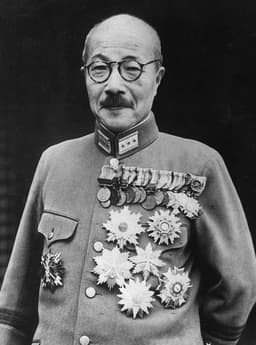
Hideki Tojo
General · Modern
53.9Total
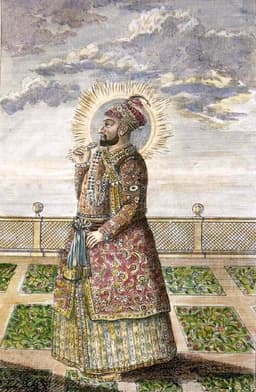
Hyder Ali
General · Modern
69.4Total
Basic Information
Born
1884
1720
Died
1948
1782
Era
Modern
Modern
Nationality
Japan
India
Occupation
General
General
Civilization
Eastern
Indian
Score Comparison
Military (10%)
70.0
80.0
Political (20%)
48.0
65.7
Influence (20%)
55.0
82.0
Legacy (20%)
50.0
56.0
Leadership (15%)
53.2
68.0
Strategy (15%)
55.0
68.0
TOTAL
53.9
69.4
Hideki Tojo — Complete Timeline
1941 AD
Attack on Pearl HarborWar
As Prime Minister, Hideki Tojo authorized the attack on the US naval base at Pearl Harbor, Hawaii. The surprise attack brought the United States into World War II. Tojo's decision was based on the belief that war with the US was inevitable due to resource embargoes and diplomatic failures.
World War IIPearl HarborUS-Japan War
Impact: globaldestructive
Appointment as Prime MinisterPolitical Action◆ Major
Hideki Tojo was appointed Prime Minister of Japan, replacing Fumimaro Konoe. He retained his position as Army Minister and later took on other portfolios, consolidating power. His appointment marked the ascendancy of the military faction in the Japanese government and the shift towards total war.
Prime MinisterMilitary GovernmentWorld War II
Impact: national
1942 AD
Fall of SingaporeWar◆ Major
Under Tojo's leadership, Japanese forces captured Singapore from the British in a swift campaign. The fall of Singapore was one of the worst British military defeats in history. It demonstrated Japanese military prowess and led to the occupation of a key strategic location in Southeast Asia.
World War IISingaporeJapanese Victory
Impact: global
1948 AD
Execution by the International Military Tribunal for the Far EastPolitical Action◆ Major
Hideki Tojo was found guilty of war crimes by the International Military Tribunal for the Far East and sentenced to death. He was executed by hanging on December 23, 1948. His trial and execution symbolized the Allied effort to hold Japanese leaders accountable for wartime atrocities.
War CrimesExecutionTokyo Trials
Impact: globaltragic
Hyder Ali — Complete Timeline
1757 AD
Battle of PlasseyWar◆ Major
Hyder Ali, as a commander under the Wodeyar dynasty, participated in the Battle of Plassey indirectly by supporting the French against the British. However, his major role came later. This battle marked the beginning of British dominance in Bengal, which Hyder Ali would later challenge in the Carnatic Wars.
Carnatic WarsBritish East India CompanyMysore
Impact: regional
1761 AD
Capture of the throne of MysorePolitical Action◆ Major
Hyder Ali, a military commander, overthrew the Wodeyar ruler Krishnaraja Wodeyar II and established himself as the de facto ruler of Mysore. He imprisoned the maharaja and assumed full control, transforming Mysore into a powerful state through military reforms and expansion.
CoupMysore KingdomWodeyar Dynasty
Impact: regionaldestructive
1767 AD
First Anglo-Mysore WarWar◆ Major
Hyder Ali led Mysore against the British East India Company in the First Anglo-Mysore War. He formed alliances with the Nizam of Hyderabad and the Marathas. The war ended with the Treaty of Madras in 1769, which restored conquered territories and established a defensive alliance between Mysore and the British.
Anglo-Mysore WarsTreaty of MadrasBritish India
Impact: regional
1780 AD
Second Anglo-Mysore WarWar◆ Major
Hyder Ali launched the Second Anglo-Mysore War, attacking British territories in the Carnatic. He captured Arcot and defeated British forces at Pollilur. The war continued after his death in 1782, with his son Tipu Sultan taking command. The conflict ended with the Treaty of Mangalore in 1784.
Anglo-Mysore WarsBattle of PollilurTipu Sultan
Impact: regional
Expert Analysis
Hideki Tojo vs Hyder Ali
The Tiger and the Sultan
In December 1941, as Japanese bombers raced toward Pearl Harbor, a squat, bespectacled man in Tokyo gave the final nod. Half a world away and nearly two centuries earlier, a Muslim soldier of fortune rode out from the hills of southern India to challenge the might of the British Empire. Hideki Tojo and Hyder Ali never met, never corresponded, and belonged to civilizations that rarely intersected. Yet both men rose from military backgrounds to seize political power, both fought against Western imperialism, and both left behind legacies tangled in blood and fire. Why did one end on the gallows and the other on a throne? The answer lies not in their wars, but in the worlds they inhabited.
Origins
Hideki Tojo was born in 1884 into a samurai family that had fallen on hard times. His father, a minor army officer, raised him in the austere code of bushido—loyalty, obedience, and sacrifice. Tojo was not brilliant; he was dogged. He graduated from the Imperial Japanese Army Academy near the bottom of his class, but his relentless work ethic and ideological purity caught the attention of militarist factions. Japan in the 1930s was a nation drunk on expansion, convinced that its destiny lay in conquering Asia and expelling white colonizers. Tojo absorbed this vision like a sponge.
Hyder Ali, born in 1720 in the borderlands of what is now Karnataka, came from nothing. His father was a local commander in the service of the Wodeyar kings of Mysore. Hyder learned war as a boy—not from textbooks, but from skirmishes and sieges. He was illiterate, but possessed a tactical mind that could read terrain and men better than any written page. India in the eighteenth century was a graveyard of empires: the Mughal dynasty was crumbling, the Marathas were rising, and the British East India Company was tightening its grip. Hyder saw opportunity in chaos.
Rise to Power
Tojo’s ascent was bureaucratic and brutal. He served as a military attaché in Berlin and Geneva, then as chief of the *Kempeitai*—Japan’s secret police—in Manchuria. There he crushed dissent with efficiency, earning the nickname “The Razor.” In 1941, when Emperor Hirohito and the civilian government hesitated over war with the United States, Tojo stepped forward as the man of action. He was appointed Prime Minister in October 1941, retaining his post as Army Minister. He did not seize power; he was handed it by a system that had already chosen militarism.
Hyder Ali seized power with his bare hands. In 1761, after years as a loyal commander, he marched into the palace of Mysore, deposed the young Wodeyar king, and declared himself the de facto ruler. He did not abolish the monarchy—he kept the king as a puppet—but everyone knew who held the sword. Hyder had no ideological mandate, no divine emperor to serve. He simply saw that the old order was weak and that survival required a new kind of leadership: ruthless, pragmatic, and utterly independent.
Leadership & Governance
Tojo governed Japan like a garrison. He centralized control, suppressed political parties, and enforced total mobilization for war. His military strategy was aggressive but brittle: the attack on Pearl Harbor in 1941 was a gamble that succeeded in the short term but ensured a war Japan could never win. The fall of Singapore in 1942 was his greatest triumph—a stunning victory that humiliated the British Empire. But Tojo had no plan for peace. He believed that willpower could overcome material inferiority, a fatal delusion that led Japan into a spiral of island-hopping defeats.
Hyder Ali governed Mysore like a warlord-king. He reformed the tax system, built a modern arsenal with French assistance, and created a standing army equipped with rockets and European-style infantry. His military strategy was fluid and adaptive. In the First Anglo-Mysore War (1767–1769), he outmaneuvered the British and forced them to sign a treaty on his terms. In the Second Anglo-Mysore War (1780–1782), he captured Arcot and devastated British supply lines. Hyder understood that Western technology could be adopted without Western domination. He was not fighting for glory; he was fighting for survival.
Triumph & Tragedy
Tojo’s triumph was the fall of Singapore in February 1942—80,000 British and Commonwealth soldiers surrendered to a smaller Japanese force. It was the worst military disaster in British history. But Tojo’s tragedy was Pearl Harbor itself. The attack unified American public opinion, brought the United States into the war, and sealed Japan’s fate. By 1944, Tojo was forced to resign as American bombs rained on Tokyo. He attempted suicide in 1945 but failed. In 1948, he was hanged by the International Military Tribunal for the Far East, convicted of war crimes including the mistreatment of prisoners of war.
Hyder Ali’s triumph was the humiliation of the British at the gates of Madras in 1769. He dictated terms to the East India Company, proving that an Indian ruler could defeat European armies. His tragedy was his death in 1782 from cancer, just as he was preparing to crush the British once and for all. He never saw the final battle. His son, Tipu Sultan, inherited the war and would eventually lose everything—but that is another story.
Character & Destiny
Tojo was a man of rigid ideology. He believed in the divine mission of Japan, the supremacy of the military, and the necessity of sacrifice. He was not a charismatic leader; he was a bureaucrat with a gun. His decisions were driven by fear of appearing weak, by groupthink within the army, and by a fatal inability to question the premises of Japanese expansion. His destiny was to become a symbol of everything the world hated about militarism.
Hyder Ali was a man of fluid pragmatism. He allied with the French, negotiated with the Marathas, and even considered an alliance with the British when it suited him. He was cruel when necessary—he executed prisoners and burned villages—but he was also a skilled diplomat who knew when to fight and when to bargain. His destiny was to be remembered as the father of resistance against British colonialism, a figure who inspired his son and generations of Indian nationalists.
Legacy
Tojo’s legacy is overwhelmingly negative. He is remembered as a war criminal, the architect of Japanese aggression, and a symbol of authoritarian folly. In modern Japan, he is rarely celebrated; his name evokes shame or controversy. His military scores—68.4—and political scores—65.0—reflect a leader who was competent within a flawed system but ultimately catastrophic.
Hyder Ali’s legacy is more ambiguous. He is celebrated in Karnataka as a heroic ruler who defied the British, but his methods were harsh and his rule was autocratic. His military score of 87.4 reflects genuine tactical brilliance, while his political score of 66.2 shows the limits of his state-building. He is not as famous as his son Tipu, but historians recognize him as the true architect of Mysore’s resistance.
Conclusion
Two men, two worlds, two fates. Tojo rose through a modern empire that demanded obedience and ended in disgrace. Hyder rose through a crumbling empire that demanded cunning and died in his bed. The difference was not in their courage or their cruelty—both had plenty of both. The difference was in their context. Tojo was a cog in a machine that had no brakes; Hyder was the driver of a chariot he built himself. One was a product of his system; the other was a creator of his own. In the end, history judges not just what a leader does, but whether he could have done anything else. Tojo could not. Hyder would not. And that is why one hangs in infamy, while the other rides through memory as the tiger of Mysore.
Rankings
🥇
Hyder AliLeader
Mil: 80.0Pol: 65.7Inf: 82.0
69.4
🥈
Hideki Tojo
Mil: 70.0Pol: 48.0Inf: 55.0
53.9
+15.5 behind
How This Comparison Works
Algorithm
Each figure is scored on 6 dimensions (0—100 scale) based on structured historical data: Military (10%), Political (20%), Influence (20%), Legacy (20%), Leadership (15%), Strategy (15%). The weighted total produces the final ranking.
Data Sources
Scores are computed from structured sub-indicators in the database. Scale factors adjust for era (Ancient ×0.85, Modern ×1.0) and civilization size (Eastern ×1.05, Other ×0.80) to account for differences in population and military scale.
Maximum 3 Figures
Comparisons are limited to 2—3 figures to ensure readability and statistical meaningfulness.
Error Margins
±5 points per dimension — Sub-scores are derived from historical records with inherent uncertainty. Two figures within 5 points on a dimension should be considered roughly equivalent in that area.
Total Score Accuracy
±3 points overall — The weighted combination of 6 dimensions produces a total score with approximately ±3 points of uncertainty. Differences of less than 3 points are not statistically significant— the figures are effectively tied.
Known Limitations
- Historical records are incomplete and uneven across civilizations
- Figures from oral-tradition societies may be underrepresented
- Occupation labels can misclassify multi-role figures
- Scores measure capability and impact, not moral character
- Quantitative scoring is a comparison tool, not absolute truth
Capability Radar
Military (10%) — Battles & Warfare
Battles
65
78
Win Rate
40
72
Expansion
70
70
Political (20%) — Governance & Reform
Reform
30
70
Diplomacy
35
68
Economy
25
60
Influence (20%) — Cultural & Global Reach
Cultural
30
50
Global
55
50
Legacy (20%) — Historical Impact
Historical
55
55
Longevity
40
45
Leadership (15%) — Power & Stability
Tenure
60
65
Stability
20
55
Strategy (15%) — Tactics & Innovation
Strategy
50
80
Tactics
55
85
Reform
45
75
Similar Comparisons
Comments & Discussion
虎鉴君6/16/2026
军事史专家视角?别逗了。说Tojo和Hyder Ali一样?一个是帝国体系崩溃中爬出来的野心家,用珍珠港把日本推向毁灭;另一个是穆斯林僭主,用法国训练的火器打得东印度公司跪地求饶。Hyder Ali没输过一场决战,Tojo输掉了整个战争。差异?Hyder Ali死在权力顶峰,Tojo像条狗一样被绞死——这就是战略家与狂徒的区别。
The Bengal Lancer6/16/2026
Hyder Ali's military brilliance is vastly underrated. He introduced rocket artillery to India decades before the British caught on - those iron-cased rockets at Srirangapatnam were the direct ancestors of Congreve's. Tojo's "genius" was relying on a flawed carrier doctrine and underestimating American industrial capacity. One innovated within his means; the other gambled his nation's future on a tactical surprise. No contest here.
数据屠夫6/16/2026
别拿Hyder Ali和Tojo比数据。Tojo接手时日本海军吨位世界第三、陆军常备军超百万,美国还在和平主义里打盹。Hyder Ali呢?他的Mysore王国人口不足500万,和东印度公司比连零头都不到。Tojo输是因为资源配比和后勤灾难客观摆着——他不过是军国主义机器里的螺丝钉。Hyder Ali才是真正的资源魔术师,用棉布和火药对抗欧洲铁船。谁更值得研究?数据说话。
The Classics Pedant6/16/2026
You're all missing the structural context. Hyder Ali operated in a collapsing Mughal order where local warlords carved out fiefdoms - classic late-imperial chaos. Tojo functioned within a modern, centralized nation-state with industrial capacity and a fascist bureaucracy. Hyder could afford tactical genius because his enemies were fragmented. Tojo's failure was systemic: he couldn't manage the alliance with Germany or the logistics of a three-front war. Different rules of the game entirely.
东方硝烟评论员6/16/2026
Revisionist批评?老实说,Tojo和Hyder Ali都是西方中心叙事下的替罪羊。Tojo被军事审判法庭钉上耻辱柱,Hyder被英帝国史料描绘成“野蛮暴君”。真相呢?Tojo在中国和东南亚的战争罪行确实无可辩驳,但Hyder对英国殖民地的攻击?那是反殖抵抗的早期实践。两者都输了历史书写战——胜利者把他们同一个笼子:暴政与威胁。看透这点,才能理解为什么一个在东京审判台上哭,一个在Mysore史书中笑。