Loading...
Francisco Morazan vs Hideki Tojo
Francisco Morazan leads by 4.1 pts · 2 figures compared
…
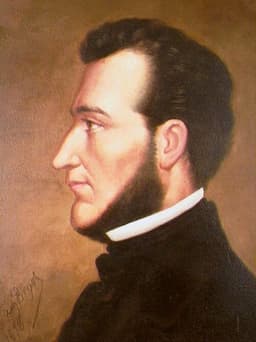
Francisco Morazan
General · Modern
58.0Total
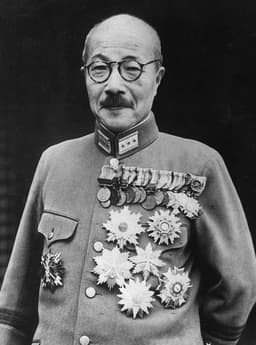
Hideki Tojo
General · Modern
53.9Total
Basic Information
Born
1792
1884
Died
1842
1948
Era
Modern
Modern
Nationality
Honduras
Japan
Occupation
General
General
Civilization
Western
Eastern
Score Comparison
Military (10%)
52.5
70.0
Political (20%)
60.0
48.0
Influence (20%)
62.0
55.0
Legacy (20%)
50.0
50.0
Leadership (15%)
68.0
53.2
Strategy (15%)
55.0
55.0
TOTAL
58.0
53.9
Francisco Morazan — Complete Timeline
1824 AD
Abolition of slavery in Central AmericaReform◆ Major
As a key leader in the liberal movement, Moraz
AbolitionSlaveryLiberal Reform
Impact: regionalprogressive
1827 AD
Battle of La TrinidadWar◆ Major
Morazán led a liberal army to victory against conservative forces at La Trinidad, Honduras. This battle was a key turning point in the Central American civil war, allowing Morazán to consolidate power and eventually become president of the federation.
BattleLiberal VictoryCivil War
Impact: regional
1830 AD
Presidency of the Federal Republic of Central AmericaPolitical Action
Morazán was elected president of the Federal Republic of Central America, a union of Guatemala, El Salvador, Honduras, Nicaragua, and Costa Rica. He pursued liberal reforms including separation of church and state, free trade, and land reform, facing opposition from conservatives.
Federal RepublicLiberal ReformsCentral America
Impact: regionalconstructive
1842 AD
Execution by firing squadPolitical Action
After a failed attempt to restore the Federal Republic, Moraz
ExecutionEnd of FederationLiberal Defeat
Impact: regionaltragic
Hideki Tojo — Complete Timeline
1941 AD
Attack on Pearl HarborWar
As Prime Minister, Hideki Tojo authorized the attack on the US naval base at Pearl Harbor, Hawaii. The surprise attack brought the United States into World War II. Tojo's decision was based on the belief that war with the US was inevitable due to resource embargoes and diplomatic failures.
World War IIPearl HarborUS-Japan War
Impact: globaldestructive
Appointment as Prime MinisterPolitical Action◆ Major
Hideki Tojo was appointed Prime Minister of Japan, replacing Fumimaro Konoe. He retained his position as Army Minister and later took on other portfolios, consolidating power. His appointment marked the ascendancy of the military faction in the Japanese government and the shift towards total war.
Prime MinisterMilitary GovernmentWorld War II
Impact: national
1942 AD
Fall of SingaporeWar◆ Major
Under Tojo's leadership, Japanese forces captured Singapore from the British in a swift campaign. The fall of Singapore was one of the worst British military defeats in history. It demonstrated Japanese military prowess and led to the occupation of a key strategic location in Southeast Asia.
World War IISingaporeJapanese Victory
Impact: global
1948 AD
Execution by the International Military Tribunal for the Far EastPolitical Action◆ Major
Hideki Tojo was found guilty of war crimes by the International Military Tribunal for the Far East and sentenced to death. He was executed by hanging on December 23, 1948. His trial and execution symbolized the Allied effort to hold Japanese leaders accountable for wartime atrocities.
War CrimesExecutionTokyo Trials
Impact: globaltragic
Expert Analysis
Francisco Morazan vs Hideki Tojo
# The General and the Dreamer: Two Paths to Ruin
On December 7, 1941, Hideki Tojo stood before the Japanese Diet and declared that the nation had entered a state of war with the United States and the British Empire. The chamber erupted in cheers. Half a world away and a century earlier, on September 15, 1842, Francisco Morazán faced a firing squad in San José, Costa Rica, his last words reportedly urging his executioners to "shoot straight." One man commanded the mightiest empire in Asia; the other led a fragile federation of Central American states. Both were generals who rose to supreme political power. Both ended their lives executed as enemies of the order they had tried to reshape. Yet the forces that drove them, and the worlds they sought to build, could not have been more different.
Origins
Hideki Tojo was born in 1884 into a samurai family in Tokyo, at a time when Japan was remaking itself with furious speed. His father, a lieutenant general in the Imperial Army, instilled in him a rigid sense of duty and discipline. The young Tojo entered military school at an age when most boys still played with toys. He was neither brilliant nor charismatic, but he was relentless—a man who believed that order, hierarchy, and sacrifice were the only paths to national greatness. Japan’s rapid industrialization and military expansion during his youth taught him that strength was the only language the Western powers understood.
Francisco Morazán, born in 1792 in Tegucigalpa, Honduras, came from a very different world. The son of a Creole merchant in the declining Spanish Empire, he grew up in a society of rigid class divisions and simmering revolutionary ideas. The Enlightenment reached him through smuggled books and the conversations of liberal intellectuals who dreamed of breaking free from Spanish rule. Where Tojo was shaped by a rising empire, Morazán was shaped by a collapsing one. He learned law, not warfare, and his early heroes were not samurai but thinkers like Rousseau and the architects of the American Revolution.
Rise to Power
Tojo’s ascent was methodical, almost mechanical. He climbed the ranks of the Imperial Army for three decades, serving in military intelligence and as a commander in Manchuria. By 1940, he was Army Minister, and when Prime Minister Konoe resigned in October 1941 over disagreements about war with the United States, Tojo was the natural successor. He was not chosen for his vision but for his certainty. In a moment of national crisis, Japan’s leaders wanted a man who would not waver.
Morazán’s rise was messier, more romantic, and far more precarious. In 1824, he was a young secretary general in the liberal government of Honduras when the Federal Republic of Central America was formed. But conservative forces—landowners, the Church, and military caudillos—opposed the liberal reforms. Morazán took up arms. At the Battle of La Trinidad in 1827, he led a ragged army of volunteers to a stunning victory that turned him into a revolutionary hero. By 1830, at age 38, he was president of the entire federation. Tojo inherited power; Morazán seized it.
Leadership & Governance
Tojo governed through fear and efficiency. As Prime Minister, he also held the posts of Army Minister and Home Minister, concentrating power in his own hands. He expanded the secret police, suppressed dissent, and forced Japan’s economy onto a total war footing. His military strategy was aggressive and gambler-like: the attack on Pearl Harbor in 1941 was a calculated risk that he believed would buy Japan time to secure resources in Southeast Asia. The fall of Singapore in 1942 was his greatest triumph—a lightning campaign that humiliated the British Empire and made Japan the dominant power in Asia. But Tojo had no plan for peace. He believed that willpower alone could overcome material disadvantage, a fatal miscalculation.
Morazán governed through reform and idealism. As president of the Federal Republic, he abolished slavery in 1824, established freedom of the press, promoted public education, and tried to reduce the power of the Catholic Church. He believed that Central America could become a modern, democratic nation like the United States. But his liberal agenda alienated the conservative elites, and his federation was always fragile—a patchwork of states with competing interests and jealous local strongmen. His military strategy was defensive and reactive; he fought not to expand territory but to hold his union together.
Triumph & Tragedy
Tojo’s triumph was brief and bloody. For six months after Pearl Harbor, Japan seemed invincible. But the Battle of Midway in June 1942 shattered the illusion. By 1944, American forces were closing in on Japan itself. Tojo resigned in disgrace in July 1944, and in 1948, the International Military Tribunal for the Far East sentenced him to death. He was hanged, his ashes scattered at sea. The empire he had served with such ferocity was reduced to rubble and occupation.
Morazán’s tragedy was slower and more poignant. The Federal Republic collapsed in 1839 amid civil war. He went into exile, but in 1842 he attempted to reclaim his dream, landing in Costa Rica with a small force. He was betrayed, captured, and executed by firing squad. His last letter, written hours before his death, spoke of his love for Central America and his hope that future generations would finish what he started.
Character & Destiny
Tojo was a man of iron will and narrow vision. He saw the world as a zero-sum struggle between races and empires, where compromise was weakness and surrender was death. His personality—rigid, authoritarian, and utterly convinced of Japan’s destiny—drove him to make decisions that cost millions of lives. He was not a madman; he was a product of his system, and that system was designed for war.
Morazán was a man of grand dreams and flawed execution. He believed in progress, liberty, and the possibility of a united Central America. But he was also a product of his time—a caudillo who tried to impose liberal reforms from above, who relied on military force when persuasion failed, and who underestimated the power of entrenched interests. His idealism was both his strength and his undoing.
Legacy
Today, Hideki Tojo is remembered as a symbol of Japanese militarism and wartime brutality. In Japan, his legacy is deeply contested; some see him as a scapegoat, others as a villain. In the rest of the world, he stands alongside Hitler and Mussolini as an architect of catastrophe.
Francisco Morazán is remembered very differently. He is a national hero in Honduras and revered across Central America as the father of the liberal tradition. His face appears on currency, his name adorns streets and schools, and his dream of Central American unity still inspires politicians and poets. But his federation is gone, and the region remains fractured.
Conclusion
One general built an empire that destroyed itself. Another general tried to build a republic that could not hold. Tojo’s tragedy was that he succeeded too well at what he set out to do. Morazán’s tragedy was that he failed at what he set out to do. Both men were prisoners of their times, their ambitions shaped by forces larger than themselves. And both, in the end, were executed by the very world they had tried to remake. Perhaps the real lesson is not about generals or nations, but about the terrible weight of certainty—and the even greater cost of dreams.
Rankings
🥇
Francisco MorazanLeader
Mil: 52.5Pol: 60.0Inf: 62.0
58.0
🥈
Hideki Tojo
Mil: 70.0Pol: 48.0Inf: 55.0
53.9
+4.1 behind
How This Comparison Works
Algorithm
Each figure is scored on 6 dimensions (0—100 scale) based on structured historical data: Military (10%), Political (20%), Influence (20%), Legacy (20%), Leadership (15%), Strategy (15%). The weighted total produces the final ranking.
Data Sources
Scores are computed from structured sub-indicators in the database. Scale factors adjust for era (Ancient ×0.85, Modern ×1.0) and civilization size (Eastern ×1.05, Other ×0.80) to account for differences in population and military scale.
Maximum 3 Figures
Comparisons are limited to 2—3 figures to ensure readability and statistical meaningfulness.
Error Margins
±5 points per dimension — Sub-scores are derived from historical records with inherent uncertainty. Two figures within 5 points on a dimension should be considered roughly equivalent in that area.
Total Score Accuracy
±3 points overall — The weighted combination of 6 dimensions produces a total score with approximately ±3 points of uncertainty. Differences of less than 3 points are not statistically significant— the figures are effectively tied.
Known Limitations
- Historical records are incomplete and uneven across civilizations
- Figures from oral-tradition societies may be underrepresented
- Occupation labels can misclassify multi-role figures
- Scores measure capability and impact, not moral character
- Quantitative scoring is a comparison tool, not absolute truth
Capability Radar
Military (10%) — Battles & Warfare
Battles
55
65
Win Rate
60
40
Expansion
40
70
Political (20%) — Governance & Reform
Reform
70
30
Diplomacy
45
35
Economy
50
25
Influence (20%) — Cultural & Global Reach
Cultural
45
30
Global
35
55
Legacy (20%) — Historical Impact
Historical
50
55
Longevity
40
40
Leadership (15%) — Power & Stability
Tenure
55
60
Stability
30
20
Strategy (15%) — Tactics & Innovation
Strategy
55
50
Tactics
50
55
Reform
45
45
Similar Comparisons
Comments & Discussion
No comments yet. Be the first to share your thoughts!