Loading...
Gulbuddin Hekmatyar vs Vladimir Lenin
Vladimir Lenin leads by 32.9 pts · 2 figures compared
…
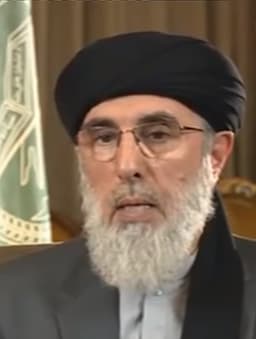
Gulbuddin Hekmatyar
Revolutionary · Modern
38.3Total
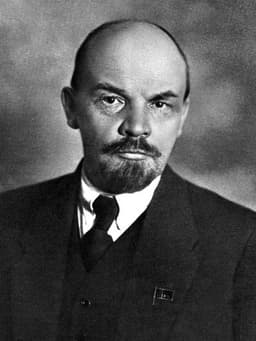
Vladimir Lenin
Revolutionary · Modern
71.2Total
Basic Information
Born
1947
1870
Died
—
1924
Era
Modern
Modern
Nationality
Afghanistan
Russia
Occupation
Revolutionary
Revolutionary
Civilization
Middle Eastern
Western
Score Comparison
Military (10%)
35.0
30.0
Political (20%)
26.4
78.0
Influence (20%)
47.1
82.0
Legacy (20%)
36.7
72.0
Leadership (15%)
40.4
80.0
Strategy (15%)
38.3
60.0
TOTAL
38.3
71.2
Gulbuddin Hekmatyar — Complete Timeline
1975 AD
Founding of Hezb-e Islami (1975)Political Action◆ Major
Gulbuddin Hekmatyar founded the Hezb-e Islami political party, an Islamist faction that became one of the most powerful mujahideen groups during the Soviet-Afghan War. The party received significant support from Pakistan's ISI and foreign Islamist donors.
MujahideenIslamist PartyCold War
Impact: national
1993 AD
Prime Minister during Civil War (1993-1994)Political Action◆ Major
Hekmatyar served as Prime Minister of Afghanistan from 1993 to 1994 under President Burhanuddin Rabbani. His tenure was marked by intense factional fighting, including rocket attacks on Kabul that caused thousands of civilian casualties, contributing to the devastation of the city.
Civil WarKabulRocket Attacks
Impact: nationaldestructive
1996 AD
Alliance with Taliban (1996-2001)Political Action
After the Taliban captured Kabul in 1996, Hekmatyar initially fled to Iran. He later aligned with the Taliban regime, though his influence waned. He remained in Afghanistan until the US-led invasion in 2001, after which he fled to Pakistan.
TalibanExileAlliance
Impact: national
2016 AD
Peace Agreement with Afghan Government (2016)Political Action◆ Major
Hekmatyar signed a peace agreement with the Afghan government of President Ashraf Ghani in 2016. The deal allowed him to return to Afghanistan from exile, with his party recognized as a political entity and his fighters integrated into state security forces.
Peace DealReconciliationGhani
Impact: nationalconstructive
Vladimir Lenin — Complete Timeline
1903 AD
Founding of the Bolshevik PartyPolitical Action
At the Second Congress of the Russian Social Democratic Labour Party in London, Lenin led a split that created the Bolshevik faction. The Bolsheviks advocated for a disciplined vanguard party of professional revolutionaries, a key element of Lenin's political strategy.
Political PartyRevolutionIdeology
Impact: global
1917 AD
April ThesesPolitical Action◆ Major
Lenin returned to Russia from exile and published the April Theses, calling for the overthrow of the Provisional Government, transfer of power to the soviets, and an end to World War I. This document set the Bolshevik agenda for the coming revolution.
RevolutionIdeologyPolitical Strategy
Impact: national
October RevolutionPolitical Action
Lenin led the Bolshevik seizure of power in Petrograd, capturing key government buildings and the Winter Palace. The revolution overthrew the Provisional Government and established the world's first socialist state, the Russian Soviet Federative Socialist Republic.
RevolutionCoupCommunism
Impact: global
1918 AD
Treaty of Brest-LitovskPolitical Action◆ Major
Lenin signed a separate peace treaty with the Central Powers, ceding vast territories including Ukraine, Belarus, and the Baltic states. The treaty ended Russia's involvement in World War I but caused significant territorial losses and internal opposition.
TreatyWorld War ITerritorial Loss
Impact: globaldestructive
1921 AD
New Economic Policy (NEP)Reform◆ Major
Lenin introduced the NEP, allowing limited private enterprise and market mechanisms to revive the war-torn Soviet economy. The policy replaced War Communism, permitting small-scale capitalism while the state retained control of major industries.
Economic ReformPolicyRecovery
Impact: nationalconstructive
1922 AD
Establishment of the Soviet UnionPolitical Action
Lenin oversaw the creation of the Union of Soviet Socialist Republics (USSR), a federation of Soviet republics. The new state consolidated Bolshevik control over much of the former Russian Empire and became a model for communist states worldwide.
State FormationCommunismFederation
Impact: global
Expert Analysis
Vladimir Lenin vs Gulbuddin Hekmatyar
# The Revolutionary’s Dilemma
In the winter of 1917, Vladimir Lenin stood before a crowd in Petrograd’s Finland Station, his voice cutting through the frozen air as he declared that the time for socialist revolution had arrived. In the summer of 1993, Gulbuddin Hekmatyar sat in a bombed-out presidential palace in Kabul, his artillery shells raining down on the city he was supposed to govern as prime minister. Both men were revolutionaries. Both sought to tear down old orders and build new ones. Yet Lenin reshaped the world, while Hekmatyar became a footnote in a civil war that consumed his country. The difference between them is not merely one of scale, but of vision, ruthlessness, and historical timing.
Origins
Lenin was born into the Russian intelligentsia in 1870, the son of a school inspector who rose from humble origins to the nobility. His brother Alexander’s execution for plotting to assassinate the tsar in 1887 radicalized the young Vladimir Ilyich, turning a promising law student into a revolutionary. The Russia of his youth was a brittle autocracy, cracking under the pressures of industrialization, peasant unrest, and military defeat. Lenin absorbed Marx’s writings in exile, but he added his own twist: the idea that a disciplined vanguard party, not the spontaneous action of workers, would drive the revolution.
Hekmatyar was born in 1947 in northern Afghanistan, a world away from European intellectual salons. He studied engineering at Kabul University, where he fell under the spell of the Muslim Brotherhood’s Islamist ideology. Afghanistan in the 1970s was a patchwork of tribes and ethnicities, ruled by a weak monarchy and later a Soviet-backed communist government. Hekmatyar’s revolution was not against capitalism but against secularism and foreign domination. He founded Hezb-e Islami in 1975, a party that blended religious fervor with ruthless ambition.
Rise to Power
Lenin’s path to power was a masterclass in patience and opportunism. For two decades he lived in exile, writing pamphlets, organizing party congresses, and waiting for the cracks in the tsarist system to widen. The First World War was his great opening: Russia’s defeats shattered the monarchy, and the Provisional Government that replaced it proved weak. In April 1917, Lenin returned from Switzerland in a sealed train, courtesy of the German government, which hoped he would destabilize Russia. He published the April Theses, demanding “Peace, Land, and Bread,” and by October, his Bolsheviks had seized power in Petrograd with stunning efficiency. The October Revolution was not a mass uprising but a coup d’état—a small, determined group capturing key points in the capital while the world watched.
Hekmatyar rose through the chaos of the Soviet-Afghan War (1979–1989). He became one of the “Peshawar Seven,” the main Islamist factions receiving weapons and money from the United States, Pakistan, and Saudi Arabia. He was a skilled fundraiser and organizer, but his methods were brutal: he murdered rival commanders and shelled civilian areas to weaken his opponents. When the Soviets withdrew in 1989, Afghanistan collapsed into civil war. Hekmatyar refused to share power with other mujahideen factions, and in 1993, he was appointed prime minister as a compromise. It was a hollow title. His forces continued to bombard Kabul, killing thousands of civilians, while he negotiated from a position of weakness.
Leadership & Governance
Lenin governed with a combination of ideological clarity and pragmatic ruthlessness. After the Bolsheviks took power, they faced a civil war against the White Army and foreign intervention. Lenin authorized the Red Terror, a campaign of mass executions and political repression that crushed dissent. But he also showed flexibility: in 1921, after the devastation of war communism, he introduced the New Economic Policy (NEP), allowing limited private enterprise to revive the economy. He signed the Treaty of Brest-Litovsk in 1918, ceding vast territories to Germany to buy time—a decision that outraged his allies but saved his regime. Lenin’s genius was in knowing when to push and when to retreat.
Hekmatyar never learned this lesson. As prime minister, he had no interest in governing. He refused to attend cabinet meetings, preferring to direct his forces from a bunker. His ideology was rigid: he wanted an Islamic state ruled by Sharia law, but he had no plan for building one. His leadership was defined by destruction, not construction. When the Taliban emerged in 1994, promising order and justice, Hekmatyar first opposed them, then allied with them in 1996, then fled to Iran. He was a revolutionary who could destroy but could not build.
Triumph & Tragedy
Lenin’s greatest triumph was the creation of the Soviet Union in 1922, a federation of republics that would become a global superpower. His greatest tragedy was the human cost: the Red Terror, the famine that followed war communism, and the seeds of a totalitarian system that would outlive him. He died in 1924, at age 53, his body preserved in a mausoleum on Red Square, a symbol of a revolution that had consumed its creator.
Hekmatyar’s triumph was the survival of his faction through decades of war. His tragedy was that he became irrelevant. The Taliban, his former allies, pushed him aside. The peace agreement he signed with the Afghan government in 2016 allowed him to return from exile, but by then he was a ghost, a relic of a war that had ended. He outlived his own revolution.
Character & Destiny
Lenin was a man of iron will and cold intellect. He could be charming with allies, but he was merciless with enemies. His personality shaped history because he believed in the power of the party and the inevitability of revolution. He was a strategist who thought in decades, not days.
Hekmatyar was a man of passion and paranoia. He trusted no one, and no one trusted him. His personality shaped his failure: he could not compromise, could not build alliances, could not see beyond the next battle. He was a tactician who thought in hours, not years.
Legacy
Lenin’s legacy is written in the blood of the twentieth century. His ideas inspired revolutions from China to Cuba, and his Soviet Union became a superpower that defined global politics for seventy years. But his methods—the one-party state, the secret police, the gulag—became a blueprint for tyranny. He is remembered as both a liberator and a monster.
Hekmatyar’s legacy is smaller. He is remembered, if at all, as a warlord who helped destroy his country. His Hezb-e Islami faded into irrelevance, and his name appears in history books as a warning: that revolution without vision leads only to ruin.
Conclusion
Lenin and Hekmatyar were both revolutionaries, but they operated in different worlds. Lenin had a theory, a party, and a historical moment that demanded a new order. Hekmatyar had a grievance, a gun, and a country that was already falling apart. The difference between them is the difference between a man who built a system and a man who only broke one. In the end, revolutions are judged not by their promises but by their outcomes. Lenin’s revolution changed the world. Hekmatyar’s changed nothing—except the rubble.
Rankings
🥇
Vladimir LeninLeader
Mil: 30.0Pol: 78.0Inf: 82.0
71.2
🥈
Gulbuddin Hekmatyar
Mil: 35.0Pol: 26.4Inf: 47.1
38.3
+32.9 behind
How This Comparison Works
Algorithm
Each figure is scored on 6 dimensions (0—100 scale) based on structured historical data: Military (10%), Political (20%), Influence (20%), Legacy (20%), Leadership (15%), Strategy (15%). The weighted total produces the final ranking.
Data Sources
Scores are computed from structured sub-indicators in the database. Scale factors adjust for era (Ancient ×0.85, Modern ×1.0) and civilization size (Eastern ×1.05, Other ×0.80) to account for differences in population and military scale.
Maximum 3 Figures
Comparisons are limited to 2—3 figures to ensure readability and statistical meaningfulness.
Error Margins
±5 points per dimension — Sub-scores are derived from historical records with inherent uncertainty. Two figures within 5 points on a dimension should be considered roughly equivalent in that area.
Total Score Accuracy
±3 points overall — The weighted combination of 6 dimensions produces a total score with approximately ±3 points of uncertainty. Differences of less than 3 points are not statistically significant— the figures are effectively tied.
Known Limitations
- Historical records are incomplete and uneven across civilizations
- Figures from oral-tradition societies may be underrepresented
- Occupation labels can misclassify multi-role figures
- Scores measure capability and impact, not moral character
- Quantitative scoring is a comparison tool, not absolute truth
Capability Radar
Military (10%) — Battles & Warfare
Battles
45
20
Win Rate
30
35
Expansion
25
70
Political (20%) — Governance & Reform
Reform
15
95
Diplomacy
20
75
Economy
10
60
Influence (20%) — Cultural & Global Reach
Cultural
25
80
Global
25
90
Legacy (20%) — Historical Impact
Historical
30
95
Longevity
20
85
Leadership (15%) — Power & Stability
Tenure
30
55
Stability
5
40
Strategy (15%) — Tactics & Innovation
Strategy
35
55
Tactics
40
30
Reform
20
85
Similar Comparisons
Comments & Discussion
弹药统计员6/16/2026
“历史地位”这个词把很多人忽悠瘸了。列宁能赢是因为俄国工人阶级集中在彼得堡莫斯科,通讯靠电报铁路,布尔什维克才有组织条件。阿富汗呢?部落、语言、地形全部碎片化,希克马蒂亚尔连喀布尔都控制不了。比个人能力?他比列宁差远了,但就算列宁穿越过去,面对普什图部落和山区地形也一样抓瞎。环境决定上限,别吹个人英雄。
ClassicsProf6/16/2026
The real difference? Lenin studied power, Hekmatyar studied revenge. Lenin read Clausewitz, understood statecraft, and knew when to compromise—New Economic Policy proved he could pivot. Hekmatyar? He shelled his own capital for a prime minister’s chair that had no real authority. That’s not a revolutionary, that’s a warlord who never graduated from street fighting. One built a state machinery; the other just broke things. There’s levels to this.