Loading...
Abd el-Krim vs Gulbuddin Hekmatyar
Abd el-Krim leads by 23.5 pts · 2 figures compared
…
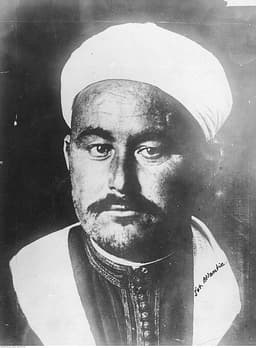
Abd el-Krim
Revolutionary · Modern
61.8Total
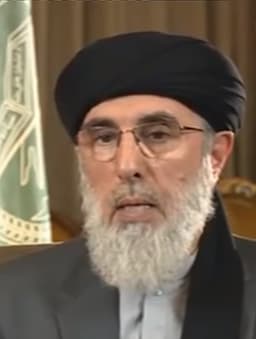
Gulbuddin Hekmatyar
Revolutionary · Modern
38.3Total
Basic Information
Born
1882
1947
Died
1963
—
Era
Modern
Modern
Nationality
Morocco
Afghanistan
Occupation
Revolutionary
Revolutionary
Civilization
Middle Eastern
Middle Eastern
Score Comparison
Military (10%)
75.0
35.0
Political (20%)
72.0
26.4
Influence (20%)
59.0
47.1
Legacy (20%)
50.0
36.7
Leadership (15%)
72.0
40.4
Strategy (15%)
55.0
38.3
TOTAL
61.8
38.3
Abd el-Krim — Complete Timeline
1921 AD
Battle of AnnualWar
Abd el-Krim's Riffian forces decisively defeated a Spanish army at Annual in Spanish Morocco. The Spanish suffered thousands of casualties and lost vast amounts of equipment. This victory established Abd el-Krim as a major military leader and led to the proclamation of the Rif Republic.
Rif WarSpanish ColonialismBattle
Impact: regional
1923 AD
Proclamation of the Rif RepublicPolitical Action◆ Major
Abd el-Krim formally proclaimed the independent Rif Republic in northern Morocco. He established a government and administrative system, challenging Spanish and French colonial rule. The republic was not internationally recognized but functioned as a de facto state.
Rif RepublicIndependenceAnti-Colonialism
Impact: regionalconstructive
1925 AD
Rif War against FranceWar◆ Major
Abd el-Krim's forces attacked French positions in Morocco, expanding the conflict beyond Spanish territory. The French responded with a massive military campaign, using superior firepower and chemical weapons. This led to the eventual defeat of the Rif Republic.
Rif WarFrench ColonialismChemical Weapons
Impact: regional
1926 AD
Surrender and Exile to RéunionWar◆ Major
After a prolonged campaign, Abd el-Krim surrendered to French forces. He was exiled to the island of R
Rif WarExileDefeat
Impact: regionaltragic
1947 AD
Release and Move to EgyptPolitical Action
Abd el-Krim was released by the French and allowed to move to Egypt. He settled in Cairo, where he continued to advocate for North African independence and became a symbolic figure for anti-colonial movements.
ExileAnti-ColonialismSymbol
Impact: regionalconstructive
Gulbuddin Hekmatyar — Complete Timeline
1975 AD
Founding of Hezb-e Islami (1975)Political Action◆ Major
Gulbuddin Hekmatyar founded the Hezb-e Islami political party, an Islamist faction that became one of the most powerful mujahideen groups during the Soviet-Afghan War. The party received significant support from Pakistan's ISI and foreign Islamist donors.
MujahideenIslamist PartyCold War
Impact: national
1993 AD
Prime Minister during Civil War (1993-1994)Political Action◆ Major
Hekmatyar served as Prime Minister of Afghanistan from 1993 to 1994 under President Burhanuddin Rabbani. His tenure was marked by intense factional fighting, including rocket attacks on Kabul that caused thousands of civilian casualties, contributing to the devastation of the city.
Civil WarKabulRocket Attacks
Impact: nationaldestructive
1996 AD
Alliance with Taliban (1996-2001)Political Action
After the Taliban captured Kabul in 1996, Hekmatyar initially fled to Iran. He later aligned with the Taliban regime, though his influence waned. He remained in Afghanistan until the US-led invasion in 2001, after which he fled to Pakistan.
TalibanExileAlliance
Impact: national
2016 AD
Peace Agreement with Afghan Government (2016)Political Action◆ Major
Hekmatyar signed a peace agreement with the Afghan government of President Ashraf Ghani in 2016. The deal allowed him to return to Afghanistan from exile, with his party recognized as a political entity and his fighters integrated into state security forces.
Peace DealReconciliationGhani
Impact: nationalconstructive
Expert Analysis
Abd el-Krim vs Gulbuddin Hekmatyar
### The Mountain and the Warlord: Abd el-Krim and Gulbuddin Hekmatyar
In the summer of 1921, a Spanish army of some 20,000 men advanced confidently into the Rif Mountains of northern Morocco. By August, fewer than a thousand had escaped alive. The disaster at Annual was not just a military rout; it was the birth cry of a republic. Half a world away and a century later, in the spring of 1992, another man stood on the balcony of a Kabul hotel, watching rockets arc over the city. He was Gulbuddin Hekmatyar, and the rockets were his own. He had just been offered the prime ministership of a country his fighters were methodically destroying. One man built a state from a mountain victory; the other tore one apart from the seat of power. Why did their paths diverge so sharply?
#### Origins: The Scholar and the Engineer
Abd el-Krim was born in 1882 into a family of learned Berber judges. His father was a qadi, a religious magistrate, and young Muhammad—his given name—studied at the University of al-Qarawiyyin in Fez, one of the oldest universities in the world. He became a journalist and a Spanish-language translator, a man fluent in both Islamic jurisprudence and European bureaucracy. His world was one of negotiation and law, even as Spanish colonialism encroached on his homeland. He was, in essence, a product of the old order trying to navigate the new.
Gulbuddin Hekmatyar, born in 1947 in the northern Afghan province of Kunduz, came from a different mold. His family were Ghilzai Pashtuns, a warrior tribe with a long history of rebellion. He studied engineering at Kabul University but never graduated. Instead, he was drawn to the radical Islamist circles that simmered in the 1960s and 1970s, a reaction against both the Soviet-leaning Afghan monarchy and the creeping influence of the West. Where Abd el-Krim was a scholar, Hekmatyar was an activist. Where the Riffian sought to codify a nation, the Afghan sought to purify a faith.
#### Rise to Power: The Battle and the Party
Abd el-Krim’s rise was forged in a single, spectacular event. The Battle of Annual in 1921 was a turning point of almost biblical proportions. The Spanish commander, General Silvestre, had boasted he would be bathing in the Rif by nightfall. Instead, he committed suicide as his army disintegrated. Abd el-Krim, who had previously worked for the Spanish colonial administration, knew their weaknesses intimately. He used captured Spanish weapons—machine guns, artillery, even airplanes—to arm his tribesmen. From that victory, he proclaimed the Rif Republic in 1923, with a cabinet, a treasury, and a postal service. It was a state born from a single, brilliant stroke of war.
Hekmatyar’s rise was slower and more fragmented. In 1975, he founded Hezb-e Islami, a political party that grew into one of the most powerful mujahideen factions during the Soviet-Afghan War. He received massive aid from Pakistan’s ISI and the CIA, becoming a favorite of the intelligence services. But Hekmatyar was never a unifier. He spent as much energy fighting rival mujahideen groups as he did the Soviets. His rise was not a single victory but a series of alliances and betrayals, funded by foreign money and fueled by personal ambition.
#### Leadership & Governance: The Republic and the Ruin
As a leader, Abd el-Krim was a rare combination of military strategist and political administrator. His military score of 57.2 and strategy of 72.0 are modest, but his leadership score of 86.5 reveals the truth: he inspired loyalty. He organized the Rif into a functioning state, with courts, taxes, and a postal system. He even tried to modernize agriculture. When France intervened in 1925, joining Spain in a massive campaign, Abd el-Krim fought a brilliant defensive war. But he understood the limits of his power. A Berber leader with no navy, no air force, and a population of perhaps 300,000 could not hold out forever against two European empires. In 1926, he surrendered, not in disgrace but in a calculated act to spare his people.
Hekmatyar’s governance was the opposite. When he became Prime Minister in 1993, Kabul was already a battlefield. His forces shelled the city indiscriminately, killing thousands of civilians. His political score of 45.9 and leadership of 41.3 reflect a man who could never govern, only destroy. He had no vision of a state beyond his own power. Where Abd el-Krim built institutions, Hekmatyar bombed them. Where the Riffian sought legitimacy, the Afghan sought submission.
#### Triumph & Tragedy
Abd el-Krim’s greatest moment was Annual, but his deepest tragedy was the fall of the Rif Republic. Exiled to the Indian Ocean island of Réunion in 1926, he spent 21 years in captivity. When he was finally released in 1947, he was taken to Egypt, not Morocco. He died in Cairo in 1963, a symbol of resistance but never a king in his own land. His tragedy was that his dream of a Rif state died with him.
Hekmatyar’s triumph was surviving. He outlasted the Soviets, the civil war, the Taliban, and the American invasion. In 2016, he signed a peace agreement with the Afghan government and returned to Kabul, a ghost of a warlord. But his tragedy is that he never built anything. His legacy is not a republic but a city in ruins, not a nation but a faction.
#### Character & Destiny
What drove the difference? Abd el-Krim was a man of the 19th century, a product of Islamic scholarship and colonial resistance. He believed in law, in order, in the possibility of a modern state. Hekmatyar was a man of the 20th century, a product of the Cold War and the chaos of decolonization. He believed in power, in violence, in the necessity of destruction. One sought to create; the other sought to control.
Their characters shaped their destinies. Abd el-Krim’s surrender was a strategic choice, not a moral collapse. Hekmatyar’s endless war was a moral choice, not a strategic necessity. The Riffian leader once said, “We are not rebels; we are a nation.” Hekmatyar never said anything so generous.
#### Legacy
Today, Abd el-Krim is remembered as a hero of anti-colonial resistance, a father of Moroccan nationalism, a man who stood against empires. His legacy score of 66.8 is solid, a testament to his enduring symbolic power. Hekmatyar’s legacy score of 47.8 is a warning. He is remembered, if at all, as a cautionary tale—a man who could have been a leader but became a warlord.
#### Conclusion
Standing on the cliffs of the Rif, you can still feel the wind of 1921. Standing in the ruins of Kabul, you can still hear the rockets of 1993. Two men, two mountains, two wars. One built a republic from a victory; the other lost a nation from a position of power. The difference was not in their enemies but in themselves. Abd el-Krim dreamed of a state; Hekmatyar only dreamed of himself. That is the difference between a revolutionary and a warlord.
Rankings
🥇
Abd el-KrimLeader
Mil: 75.0Pol: 72.0Inf: 59.0
61.8
🥈
Gulbuddin Hekmatyar
Mil: 35.0Pol: 26.4Inf: 47.1
38.3
+23.5 behind
How This Comparison Works
Algorithm
Each figure is scored on 6 dimensions (0—100 scale) based on structured historical data: Military (10%), Political (20%), Influence (20%), Legacy (20%), Leadership (15%), Strategy (15%). The weighted total produces the final ranking.
Data Sources
Scores are computed from structured sub-indicators in the database. Scale factors adjust for era (Ancient ×0.85, Modern ×1.0) and civilization size (Eastern ×1.05, Other ×0.80) to account for differences in population and military scale.
Maximum 3 Figures
Comparisons are limited to 2—3 figures to ensure readability and statistical meaningfulness.
Error Margins
±5 points per dimension — Sub-scores are derived from historical records with inherent uncertainty. Two figures within 5 points on a dimension should be considered roughly equivalent in that area.
Total Score Accuracy
±3 points overall — The weighted combination of 6 dimensions produces a total score with approximately ±3 points of uncertainty. Differences of less than 3 points are not statistically significant— the figures are effectively tied.
Known Limitations
- Historical records are incomplete and uneven across civilizations
- Figures from oral-tradition societies may be underrepresented
- Occupation labels can misclassify multi-role figures
- Scores measure capability and impact, not moral character
- Quantitative scoring is a comparison tool, not absolute truth
Capability Radar
Military (10%) — Battles & Warfare
Battles
75
45
Win Rate
70
30
Expansion
60
25
Political (20%) — Governance & Reform
Reform
70
15
Diplomacy
65
20
Economy
50
10
Influence (20%) — Cultural & Global Reach
Cultural
60
25
Global
55
25
Legacy (20%) — Historical Impact
Historical
70
30
Longevity
55
20
Leadership (15%) — Power & Stability
Tenure
55
30
Stability
45
5
Strategy (15%) — Tactics & Innovation
Strategy
80
35
Tactics
85
40
Reform
65
20
Similar Comparisons
Comments & Discussion
Mountain Breaker6/16/2026
Annual wasn't just a battle, it was a masterclass in asymmetric warfare. Abd el-Krim studied Spanish logistics like a doctoral thesis—he knew their supply lines were overstretched and hit them at the one point where European firepower couldn't save them. Hekmatyar? Guy couldn't even coordinate a rocket attack without hitting his own allies. One was a strategist who built institutions; the other was a thug with an RPG launcher.
契约之王6/16/2026
别拿“现代民族英雄”那套糊弄我。Hekmatyar就是个阿富汗版土皇帝,拿苏联人给的美元炸喀布尔的平民,最后连塔利班都嫌他脏。可Abd el-Krim呢?他建立的Rif共和国1923年就有正规法院和税务局,连法国人都得承认他那套治理体系比西班牙的殖民烂摊子强。这不是“领袖”vs“军阀”的差距,是正经国家建设vs部落抢劫的鸿沟。
Gravely Misread6/16/2026
The comparison is absurd on operational grounds. Hekmatyar's 1992 Kabul offensive wasn't even a decision—it was desperation after losing the CIA's favor post-Soviet withdrawal. He had zero industrial base, zero unified command, and spent more time bombing water supplies than taking territory. Abd el-Krim, by contrast, fielded a disciplined force that captured Spanish artillery and used it against them within weeks. Hekmatyar couldn't have run a Rif republic for three hours without his own fighte
春秋笔法6/16/2026
你们历史爱好者总爱把“抵抗领袖”当万金油标签。Abd el-Krim至少知道自己要什么——一个独立的酋长国,有山有矿,跟法国谈边界,跟西班牙谈俘虏交换。Hekmatyar呢?他1996年跟塔利班联手打过马苏德,接着又跟塔利班翻脸投奔伊朗,最后蹲在巴基斯坦当代理人。这种人连个稳定的敌人名单都列不出来,也配跟Rif之虎相提并论?省省吧。
Firepower Fanatic6/16/2026
Let's talk hardware: Abd el-Krim captured over 20,000 Spanish rifles, 400 machine guns, and 120 field guns at Annual alone. That's an arsenal that made him a regional power overnight. Hekmatyar's peak military achievement was acquiring Chinese-made artillery that couldn't hit a grid coordinate. You can't build a state on a mountain of captured weapons if you're too busy shelling your own capital. The difference isn't ideology—it's logistics, and Hekmatyar was a logistical disaster.
不识山之傲6/16/2026
最讽刺的是什么?Hekmatyar年轻时也读理工科,结果把阿富汗炸成了废墟实验室。Abd el-Krim一辈子没出过马格里布,愣是用