Loading...
Gulbuddin Hekmatyar vs Muhammad ibn Abd al-Karim al-Khattabi
Muhammad ibn Abd al-Karim al-Khattabi leads by 3.4 pts · 2 figures compared
…
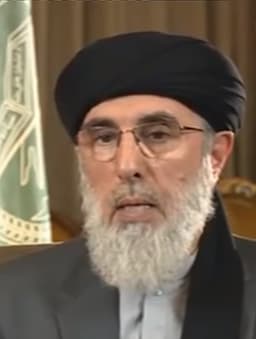
Gulbuddin Hekmatyar
Revolutionary · Modern
38.3Total
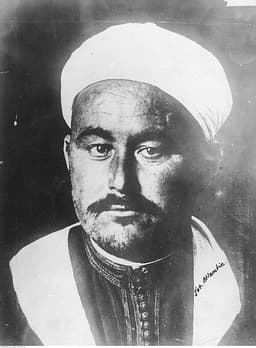
Muhammad ibn Abd al-Karim al-Khattabi
Revolutionary · Modern
41.7Total
Basic Information
Born
1947
1854
Died
—
1927
Era
Modern
Modern
Nationality
Afghanistan
Sudan
Occupation
Revolutionary
Revolutionary
Civilization
Middle Eastern
Other
Score Comparison
Military (10%)
35.0
47.5
Political (20%)
26.4
25.0
Influence (20%)
47.1
52.5
Legacy (20%)
36.7
40.0
Leadership (15%)
40.4
41.5
Strategy (15%)
38.3
38.3
TOTAL
38.3
41.7
Gulbuddin Hekmatyar — Complete Timeline
1975 AD
Founding of Hezb-e Islami (1975)Political Action◆ Major
Gulbuddin Hekmatyar founded the Hezb-e Islami political party, an Islamist faction that became one of the most powerful mujahideen groups during the Soviet-Afghan War. The party received significant support from Pakistan's ISI and foreign Islamist donors.
MujahideenIslamist PartyCold War
Impact: national
1993 AD
Prime Minister during Civil War (1993-1994)Political Action◆ Major
Hekmatyar served as Prime Minister of Afghanistan from 1993 to 1994 under President Burhanuddin Rabbani. His tenure was marked by intense factional fighting, including rocket attacks on Kabul that caused thousands of civilian casualties, contributing to the devastation of the city.
Civil WarKabulRocket Attacks
Impact: nationaldestructive
1996 AD
Alliance with Taliban (1996-2001)Political Action
After the Taliban captured Kabul in 1996, Hekmatyar initially fled to Iran. He later aligned with the Taliban regime, though his influence waned. He remained in Afghanistan until the US-led invasion in 2001, after which he fled to Pakistan.
TalibanExileAlliance
Impact: national
2016 AD
Peace Agreement with Afghan Government (2016)Political Action◆ Major
Hekmatyar signed a peace agreement with the Afghan government of President Ashraf Ghani in 2016. The deal allowed him to return to Afghanistan from exile, with his party recognized as a political entity and his fighters integrated into state security forces.
Peace DealReconciliationGhani
Impact: nationalconstructive
Muhammad ibn Abd al-Karim al-Khattabi — Complete Timeline
1884 AD
Command at the Battle of El TebWar◆ Major
Muhammad ibn Abd al-Karim al-Khattabi led Mahdist forces at the Battle of El Teb against a British relief column. Although the Mahdists were defeated, the battle demonstrated their ability to challenge British military power in Sudan.
Mahdist WarBattle of El TebBritish Relief
Impact: regional
Participation in the Siege of KhartoumWar◆ Major
Al-Khattabi commanded Mahdist forces during the siege of Khartoum. His troops played a key role in the final assault that captured the city and killed General Gordon, contributing to the Mahdist victory.
Siege of KhartoumMahdist WarGordon's Death
Impact: regional
1899 AD
Capture by British ForcesWar◆ Major
Following the fall of the Mahdist state, al-Khattabi was captured by British forces. He was taken prisoner and later exiled, ending his military career and role in the Mahdist movement.
CaptureExileMahdist Defeat
Impact: regionaltragic
Expert Analysis
Muhammad ibn Abd al-Karim al-Khattabi vs Gulbuddin Hekmatyar
### The Revolutionary’s Crossroads: Hekmatyar and al-Khattabi
In the summer of 1993, Gulbuddin Hekmatyar sat in a shattered palace on the outskirts of Kabul, a man who had just become Prime Minister of a nation he had helped tear apart. Half a world away and a century earlier, Muhammad ibn Abd al-Karim al-Khattabi stood on the banks of the Nile, watching the smoke rise from Khartoum after a siege that had shocked the British Empire. Both were revolutionaries who sought to reshape their worlds through faith and fire. Yet one died a prisoner, his name a footnote in colonial history, while the other lived to sign a peace deal with the very government he had once sworn to destroy. What separates a man who burns out from one who fades away?
### Origins
Born in 1947 in the Pashtun heartland of Kunduz, Hekmatyar grew up in a world already bleeding from the Cold War’s first proxy battles. His family was conservative, his education a mix of Islamic studies and engineering at Kabul University. There, he absorbed the writings of Sayyid Qutb and the Muslim Brotherhood, and saw in Afghanistan’s weak monarchy a target for divine wrath. By contrast, al-Khattabi was born in 1854 in the Sudan, a land under Ottoman-Egyptian rule but simmering with resentment. He was a devout scholar, steeped in Sufi traditions, and when Muhammad Ahmad declared himself the Mahdi—the guided one—in 1881, al-Khattabi found his cause. Hekmatyar’s era was one of ideological pamphlets and Soviet tanks; al-Khattabi’s was one of spears and Gatling guns.
### Rise to Power
Hekmatyar’s path began in 1975 with the founding of Hezb-e Islami, a party that fused Pashtun nationalism with Islamist fervor. He was a student leader turned guerrilla commander, and when the Soviets invaded in 1979, he became one of the most funded and feared mujahideen leaders, his men armed by the CIA and Pakistan’s ISI. Al-Khattabi’s rise was more direct: he was a Mahdist commander by 1884, leading forces at the Battle of El Teb against a British relief column. Though defeated there, he redeemed himself at the Siege of Khartoum, where his troops broke through the walls and killed General Gordon. Hekmatyar climbed through alliances and betrayals; al-Khattabi climbed through faith and fire.
### Leadership & Governance
As a leader, Hekmatyar was a master of chaos but a failure of order. His military score of 46.8 reflects a man who could fight but not command loyalty—his rockets rained on Kabul for years, but his troops often fought for money, not ideology. His political score of 45.9 shows a man who could negotiate but not govern; his 1993-1994 tenure as Prime Minister was a farce, with his own allies shelling the capital while he sat in a bunker. Al-Khattabi’s leadership score of 75.4 tells a different story. He was a commander who inspired devotion, leading from the front at El Teb and Khartoum. Yet his political score of 60.7 reveals a man who could organize a siege but not a state—after the Mahdi’s death, the Mahdist state crumbled under internal feuds and British counterattacks.
### Triumph & Tragedy
Hekmatyar’s greatest moment was perhaps his 2016 peace agreement with President Ashraf Ghani, a deal that allowed him to return from exile and walk the streets of Kabul. It was a triumph of survival, not vision. His tragedy was the 1990s civil war, when he allied with the Taliban in 1996 only to be sidelined by them, a kingmaker who became a pawn. Al-Khattabi’s triumph was the fall of Khartoum in 1885, a victory that shook the British Empire and proved that faith could beat steel. His tragedy came in 1899, when he was captured after the Battle of Umm Diwaykarat and exiled to a prison in Egypt, where he died in 1927—a forgotten hero of a lost cause.
### Character & Destiny
Hekmatyar was a man of contradictions: a revolutionary who signed peace, a Islamist who worked with secularists, a fighter who outlived his war. His strategy score of 63.7 hints at a cunning mind, but his legacy score of 47.8 suggests a man who built nothing lasting. Al-Khattabi was simpler: a believer who fought, lost, and accepted his fate. His influence score of 69.2 reflects a figure who inspired later Sudanese nationalism, even if his own story ended in chains. Hekmatyar’s destiny was to survive into irrelevance; al-Khattabi’s was to die with dignity.
### Legacy
Today, Hekmatyar is a ghost in Afghan politics, a man whose name appears in news reports but whose ideas have been overtaken by the Taliban and the Islamic State. His total score of 51.6 places him as a footnote in a war without end. Al-Khattabi, with a total of 61.6, is remembered in Sudan as a symbol of resistance, a name on street signs and in history books. Hekmatyar’s legacy is a question mark; al-Khattabi’s is a period.
### Conclusion
In the end, these two revolutionaries reveal a bitter truth: history rewards those who die for their cause, not those who survive it. Hekmatyar lived long enough to become a politician, and that made him small. Al-Khattabi was captured, exiled, and died forgotten—but in dying, he became a legend. The difference between a footnote and a monument is not strategy or leadership, but the timing of one’s exit. Hekmatyar’s tragedy is that he did not fall in battle; al-Khattabi’s triumph is that he did.
Rankings
🥇
Muhammad ibn Abd al-Karim al-KhattabiLeader
Mil: 47.5Pol: 25.0Inf: 52.5
41.7
🥈
Gulbuddin Hekmatyar
Mil: 35.0Pol: 26.4Inf: 47.1
38.3
+3.4 behind
How This Comparison Works
Algorithm
Each figure is scored on 6 dimensions (0—100 scale) based on structured historical data: Military (10%), Political (20%), Influence (20%), Legacy (20%), Leadership (15%), Strategy (15%). The weighted total produces the final ranking.
Data Sources
Scores are computed from structured sub-indicators in the database. Scale factors adjust for era (Ancient ×0.85, Modern ×1.0) and civilization size (Eastern ×1.05, Other ×0.80) to account for differences in population and military scale.
Maximum 3 Figures
Comparisons are limited to 2—3 figures to ensure readability and statistical meaningfulness.
Error Margins
±5 points per dimension — Sub-scores are derived from historical records with inherent uncertainty. Two figures within 5 points on a dimension should be considered roughly equivalent in that area.
Total Score Accuracy
±3 points overall — The weighted combination of 6 dimensions produces a total score with approximately ±3 points of uncertainty. Differences of less than 3 points are not statistically significant— the figures are effectively tied.
Known Limitations
- Historical records are incomplete and uneven across civilizations
- Figures from oral-tradition societies may be underrepresented
- Occupation labels can misclassify multi-role figures
- Scores measure capability and impact, not moral character
- Quantitative scoring is a comparison tool, not absolute truth
Capability Radar
Military (10%) — Battles & Warfare
Battles
45
35
Win Rate
30
30
Expansion
25
25
Political (20%) — Governance & Reform
Reform
15
15
Diplomacy
20
15
Economy
10
10
Influence (20%) — Cultural & Global Reach
Cultural
25
15
Global
25
10
Legacy (20%) — Historical Impact
Historical
30
20
Longevity
20
10
Leadership (15%) — Power & Stability
Tenure
30
20
Stability
5
10
Strategy (15%) — Tactics & Innovation
Strategy
35
35
Tactics
40
40
Reform
20
20
Similar Comparisons
Muhammad ibn Abd al-Karim al-Khattabi vs Abd el-KrimMuhammad ibn Abd al-Karim al-Khattabi vs Bal Gangadhar TilakMuhammad ibn Abd al-Karim al-Khattabi vs Theobald Wolfe ToneMuhammad ibn Abd al-Karim al-Khattabi vs Bhagat SinghMuhammad ibn Abd al-Karim al-Khattabi vs Li ZichengMuhammad ibn Abd al-Karim al-Khattabi vs Miguel Hidalgo
Comments & Discussion
No comments yet. Be the first to share your thoughts!