Loading...
Bal Gangadhar Tilak vs Gulbuddin Hekmatyar
Bal Gangadhar Tilak leads by 14.6 pts · 2 figures compared
…
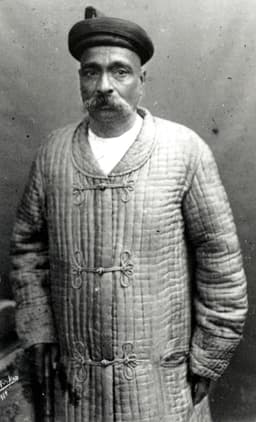
Bal Gangadhar Tilak
Revolutionary · Modern
52.9Total
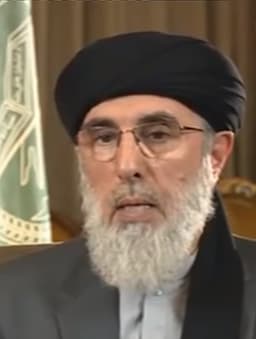
Gulbuddin Hekmatyar
Revolutionary · Modern
38.3Total
Basic Information
Born
1856
1947
Died
1920
—
Era
Modern
Modern
Nationality
India
Afghanistan
Occupation
Revolutionary
Revolutionary
Civilization
Indian
Middle Eastern
Score Comparison
Military (10%)
50.0
35.0
Political (20%)
48.0
26.4
Influence (20%)
58.3
47.1
Legacy (20%)
56.0
36.7
Leadership (15%)
50.7
40.4
Strategy (15%)
45.0
38.3
TOTAL
52.9
38.3
Bal Gangadhar Tilak — Complete Timeline
1881 AD
Launch of the Maratha and Kesari NewspapersCultural◆ Major
Tilak founded the Marathi-language newspaper 'Kesari' and the English-language 'Maratha' to spread nationalist ideas. These newspapers became influential platforms for criticizing British rule and mobilizing public opinion.
MediaNationalism
Impact: nationalconstructive
1897 AD
Imprisonment for SeditionPolitical Action◆ Major
Tilak was arrested and sentenced to 18 months imprisonment for sedition after publishing articles critical of British rule. His imprisonment increased his popularity and made him a martyr for the nationalist cause.
ImprisonmentSedition
Impact: national
1905 AD
Introduction of Swadeshi MovementPolitical Action◆ Major
Bal Gangadhar Tilak promoted the Swadeshi movement, advocating for the boycott of British goods and the use of Indian-made products. This movement gained widespread support and became a key part of the Indian independence struggle.
NationalismEconomic Boycott
Impact: nationalconstructive
1908 AD
Lucky Ali TrialPolitical Action◆ Major
Tilak was tried and sentenced to six years in Mandalay prison for sedition after defending the use of violence against British officials. His trial and imprisonment further galvanized the Indian independence movement.
TrialImprisonment
Impact: national
1916 AD
Formation of the Home Rule LeaguePolitical Action◆ Major
Tilak founded the Indian Home Rule League in 1916, demanding self-government for India within the British Empire. The movement gained mass support and pressured the British government to consider political reforms.
Political MovementSelf-Government
Impact: nationalconstructive
Gulbuddin Hekmatyar — Complete Timeline
1975 AD
Founding of Hezb-e Islami (1975)Political Action◆ Major
Gulbuddin Hekmatyar founded the Hezb-e Islami political party, an Islamist faction that became one of the most powerful mujahideen groups during the Soviet-Afghan War. The party received significant support from Pakistan's ISI and foreign Islamist donors.
MujahideenIslamist PartyCold War
Impact: national
1993 AD
Prime Minister during Civil War (1993-1994)Political Action◆ Major
Hekmatyar served as Prime Minister of Afghanistan from 1993 to 1994 under President Burhanuddin Rabbani. His tenure was marked by intense factional fighting, including rocket attacks on Kabul that caused thousands of civilian casualties, contributing to the devastation of the city.
Civil WarKabulRocket Attacks
Impact: nationaldestructive
1996 AD
Alliance with Taliban (1996-2001)Political Action
After the Taliban captured Kabul in 1996, Hekmatyar initially fled to Iran. He later aligned with the Taliban regime, though his influence waned. He remained in Afghanistan until the US-led invasion in 2001, after which he fled to Pakistan.
TalibanExileAlliance
Impact: national
2016 AD
Peace Agreement with Afghan Government (2016)Political Action◆ Major
Hekmatyar signed a peace agreement with the Afghan government of President Ashraf Ghani in 2016. The deal allowed him to return to Afghanistan from exile, with his party recognized as a political entity and his fighters integrated into state security forces.
Peace DealReconciliationGhani
Impact: nationalconstructive
Expert Analysis
Bal Gangadhar Tilak vs Gulbuddin Hekmatyar
### The Firebrand and the Warlord: Two Paths of Revolutionary Fury
In the sweltering heat of an Indian summer in 1908, a fifty-two-year-old Brahmin, Bal Gangadhar Tilak, stood before a British judge in Bombay. His crime was sedition—for writing that the British government had “no right” to exist in India. He was sentenced to six years in the distant Mandalay prison, a punishment that would transform him into a martyr. Half a world away and half a century later, in the shattered city of Kabul in 1993, another revolutionary, Gulbuddin Hekmatyar, took the oath of office as Prime Minister of Afghanistan. His path to power had been paved with rocket barrages that reduced a capital to rubble, and his tenure would last barely a year. Both men were consumed by a single, burning idea: that foreign domination must end. But why did one become the “Father of Indian Unrest,” a revered architect of a nation, while the other became a byword for civil war, a figure whose legacy is inseparable from destruction? The answer lies not in their shared fury, but in the soil, the era, and the very nature of the revolutions they sought to lead.
### Origins
Tilak was born in 1856 into a Chitpavan Brahmin family in Ratnagiri, a coastal town in western India. His was a world of ancient hierarchies and British overlordship, where the Raj was a distant, bureaucratic fact of life. Educated in law and mathematics, Tilak was a product of the very system he would later attack. He was a scholar of the Vedas, a man who saw India’s past as a golden age of self-rule. His revolution was intellectual, a reclamation of cultural pride. Hekmatyar, born in 1947 in the northern Afghan province of Kunduz, entered a world of chaos. His father was a landowner, but the family was uprooted by the Soviet-backed coup in the 1970s. Hekmatyar was a student of engineering at Kabul University, but he was expelled for political activity. His revolution was born not in libraries but in the mountains, forged in the crucible of a foreign invasion. Tilak’s enemy was a colonial administration; Hekmatyar’s enemy was a superpower. The difference in their origins—one a colonial subject seeking reform, the other a refugee seeking vengeance—would define everything.
### Rise to Power
Tilak’s rise was slow, deliberate, and rooted in the power of the word. In 1881, he launched the Marathi newspaper *Kesari* and the English *Maratha*, turning them into platforms for nationalist agitation. He did not lead an army; he led a readership. His first imprisonment in 1897 for sedition did not break him; it made him a folk hero. The Swadeshi movement of 1905, which he championed, was a campaign of economic boycott and self-reliance—a non-violent war of attrition. His power came from persuasion, from organizing festivals like Ganesh Chaturthi into mass political rallies. Hekmatyar’s rise was the opposite. In 1975, he founded Hezb-e Islami, an Islamist party armed with Soviet weapons and Pakistani support. His path was forged in guerrilla warfare against the Soviet occupation of the 1980s. He was not a writer; he was a commander. His power came from the Kalashnikov and the foreign intelligence agency. While Tilak built a movement from ink and ideology, Hekmatyar built one from bullets and blood.
### Leadership & Governance
As a leader, Tilak was a master of political strategy. His slogan, “Swaraj is my birthright, and I shall have it,” galvanized a generation. He understood that nationalism required a cultural foundation, so he linked the fight for freedom to the revival of Hindu festivals and the Maratha warrior tradition. His political score of 76.0 reflects this—he was a coalition-builder, founding the Home Rule League in 1916 to demand self-government. He was a revolutionary who worked within the system even as he denounced it. Hekmatyar, by contrast, was a revolutionary who destroyed the system. His military score of 46.8 and strategy score of 63.7 suggest a man who understood warfare but not governance. As Prime Minister in 1993, he could not control the factions around him. His tenure was marked by rocket attacks on Kabul, not by policy. He was a warlord who had won the war but could not win the peace. Tilak built institutions; Hekmatyar burned them down.
### Triumph & Tragedy
Tilak’s greatest moment came not in victory, but in sacrifice. His imprisonment in Mandalay from 1908 to 1914 made him a national icon. He emerged to find a movement that had grown in his absence, and in 1916, he forged the Lucknow Pact with the Muslim League, a rare moment of Hindu-Muslim unity. Yet his tragedy was that he never saw independence. He died in 1920, a quarter-century before the British left. Hekmatyar’s triumph was survival. He outlasted the Soviets, the mujahideen infighting, and the Taliban. In 2016, he signed a peace agreement with the Afghan government, returning from exile to a country still at war. But his tragedy was that his name became synonymous with the destruction of Kabul. Where Tilak’s legacy was a nation’s awakening, Hekmatyar’s was a city’s ruin.
### Character & Destiny
Tilak was a man of iron will and intellectual rigor. He was called “Lokmanya”—revered by the people—because he connected with them through ideas. Hekmatyar was a man of iron will and tactical cunning. He was called the “Engineer” for his engineering background, but he was also known for his ruthlessness. Tilak’s destiny was to be the father of a movement; Hekmatyar’s was to be a fragmenter of a nation. Their personalities shaped their fates: Tilak’s patience allowed him to build, while Hekmatyar’s impatience led him to destroy. The British Raj was a monolithic enemy; the Soviet invasion and its aftermath were a hydra. One man sought to replace a system; the other sought to inherit the chaos.
### Legacy
Today, Tilak is remembered as a founding father of modern India. His legacy score of 68.1 understates his influence: his ideas of Swadeshi and Swaraj are woven into the fabric of Indian nationalism. Statues of him dot the country; his words are taught in schools. Hekmatyar’s legacy is more ambiguous. His score of 47.8 reflects a figure who is neither forgotten nor celebrated. He is a cautionary tale—a revolutionary who could not transition to statesman. In Afghanistan, he is a ghost of a brutal era, a man who signed peace but never truly made peace with his past.
### Conclusion
Standing at the edge of their respective histories, Tilak and Hekmatyar offer two answers to the same question: What does it mean to fight for freedom? For Tilak, it meant building a nation through sacrifice and words. For Hekmatyar, it meant tearing down an empire through fire and steel. One became a martyr; the other, a survivor. Their stories remind us that revolution is not a single path, but a forking road—one leading to a monument, the other to a graveyard of broken promises. In the end, the difference between the father of Indian unrest and the warlord of Afghanistan is not just about era or nation. It is about what a revolutionary chooses to build after the fire has burned.
Rankings
🥇
Bal Gangadhar TilakLeader
Mil: 50.0Pol: 48.0Inf: 58.3
52.9
🥈
Gulbuddin Hekmatyar
Mil: 35.0Pol: 26.4Inf: 47.1
38.3
+14.6 behind
How This Comparison Works
Algorithm
Each figure is scored on 6 dimensions (0—100 scale) based on structured historical data: Military (10%), Political (20%), Influence (20%), Legacy (20%), Leadership (15%), Strategy (15%). The weighted total produces the final ranking.
Data Sources
Scores are computed from structured sub-indicators in the database. Scale factors adjust for era (Ancient ×0.85, Modern ×1.0) and civilization size (Eastern ×1.05, Other ×0.80) to account for differences in population and military scale.
Maximum 3 Figures
Comparisons are limited to 2—3 figures to ensure readability and statistical meaningfulness.
Error Margins
±5 points per dimension — Sub-scores are derived from historical records with inherent uncertainty. Two figures within 5 points on a dimension should be considered roughly equivalent in that area.
Total Score Accuracy
±3 points overall — The weighted combination of 6 dimensions produces a total score with approximately ±3 points of uncertainty. Differences of less than 3 points are not statistically significant— the figures are effectively tied.
Known Limitations
- Historical records are incomplete and uneven across civilizations
- Figures from oral-tradition societies may be underrepresented
- Occupation labels can misclassify multi-role figures
- Scores measure capability and impact, not moral character
- Quantitative scoring is a comparison tool, not absolute truth
Capability Radar
Military (10%) — Battles & Warfare
Battles
23
45
Win Rate
30
30
Expansion
30
25
Political (20%) — Governance & Reform
Reform
70
15
Diplomacy
60
20
Economy
20
10
Influence (20%) — Cultural & Global Reach
Cultural
65
25
Global
55
25
Legacy (20%) — Historical Impact
Historical
70
30
Longevity
60
20
Leadership (15%) — Power & Stability
Tenure
30
30
Stability
40
5
Strategy (15%) — Tactics & Innovation
Strategy
37
35
Tactics
39
40
Reform
43
20
Similar Comparisons
Comments & Discussion
No comments yet. Be the first to share your thoughts!