Loading...
Gulbuddin Hekmatyar vs Theobald Wolfe Tone
Theobald Wolfe Tone leads by 9.5 pts · 2 figures compared
…
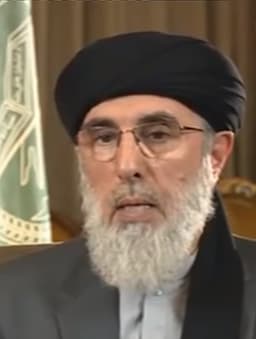
Gulbuddin Hekmatyar
Revolutionary · Modern
38.3Total
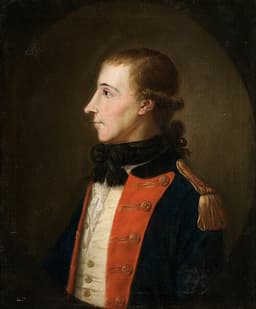
Theobald Wolfe Tone
Revolutionary · Modern
47.8Total
Basic Information
Born
1947
1763
Died
—
1798
Era
Modern
Modern
Nationality
Afghanistan
Ireland
Occupation
Revolutionary
Revolutionary
Civilization
Middle Eastern
Western
Score Comparison
Military (10%)
35.0
39.9
Political (20%)
26.4
27.9
Influence (20%)
47.1
57.2
Legacy (20%)
36.7
49.2
Leadership (15%)
40.4
57.1
Strategy (15%)
38.3
45.0
TOTAL
38.3
47.8
Gulbuddin Hekmatyar — Complete Timeline
1975 AD
Founding of Hezb-e Islami (1975)Political Action◆ Major
Gulbuddin Hekmatyar founded the Hezb-e Islami political party, an Islamist faction that became one of the most powerful mujahideen groups during the Soviet-Afghan War. The party received significant support from Pakistan's ISI and foreign Islamist donors.
MujahideenIslamist PartyCold War
Impact: national
1993 AD
Prime Minister during Civil War (1993-1994)Political Action◆ Major
Hekmatyar served as Prime Minister of Afghanistan from 1993 to 1994 under President Burhanuddin Rabbani. His tenure was marked by intense factional fighting, including rocket attacks on Kabul that caused thousands of civilian casualties, contributing to the devastation of the city.
Civil WarKabulRocket Attacks
Impact: nationaldestructive
1996 AD
Alliance with Taliban (1996-2001)Political Action
After the Taliban captured Kabul in 1996, Hekmatyar initially fled to Iran. He later aligned with the Taliban regime, though his influence waned. He remained in Afghanistan until the US-led invasion in 2001, after which he fled to Pakistan.
TalibanExileAlliance
Impact: national
2016 AD
Peace Agreement with Afghan Government (2016)Political Action◆ Major
Hekmatyar signed a peace agreement with the Afghan government of President Ashraf Ghani in 2016. The deal allowed him to return to Afghanistan from exile, with his party recognized as a political entity and his fighters integrated into state security forces.
Peace DealReconciliationGhani
Impact: nationalconstructive
Theobald Wolfe Tone — Complete Timeline
1791 AD
Founding of the United IrishmenPolitical Action◆ Major
Tone co-founded the Society of United Irishmen in Belfast, a revolutionary organization seeking parliamentary reform and Catholic emancipation. The society later became a secret republican movement aiming for Irish independence.
Irish RepublicanismFoundingReform
Impact: nationalprogressive
Publication of 'An Argument on Behalf of the Catholics of Ireland'Cultural
Tone published a pamphlet arguing for the inclusion of Catholics in Irish political life. It helped bridge the gap between Protestant radicals and the Catholic majority, broadening the base of the United Irishmen.
PamphletCatholic EmancipationPolitical Thought
Impact: nationalprogressive
1796 AD
Expédition d'IrlandeWar◆ Major
Tone accompanied a French fleet of 43 ships carrying 15,000 troops to invade Ireland. The expedition was scattered by storms off Bantry Bay and failed to land, a major setback for the republican cause.
French InvasionNavalFailure
Impact: nationaltragic
Mission to FrancePolitical Action◆ Major
Tone traveled to France to secure French military support for an Irish rebellion. He persuaded the French Directory to launch an invasion of Ireland, leading to the dispatch of a large expeditionary force.
DiplomacyFrench RevolutionInvasion
Impact: national
1798 AD
Battle of Tory IslandWar◆ Major
Tone was captured aboard a French ship at the Battle of Tory Island, part of a second French invasion attempt. The French squadron was defeated by the Royal Navy, ending French hopes of aiding the Irish Rebellion.
1798 RebellionNaval BattleCapture
Impact: nationaltragic
Trial and SuicidePolitical Action◆ Major
Tone was tried for treason in Dublin and sentenced to death by hanging. Before execution, he cut his own throat to deny the British the spectacle of his hanging, dying from the wound a week later.
TrialSuicideMartyrdom
Impact: nationaltragic
Expert Analysis
Theobald Wolfe Tone vs Gulbuddin Hekmatyar
### Two Revolutions, Two Fates
On a grey September morning in 1996, Gulbuddin Hekmatyar watched from the outskirts of Kabul as Taliban fighters rolled into the capital he had once governed. He had been Prime Minister just two years earlier, a position won through years of blood and betrayal. Now he was a fugitive, his own rockets having reduced much of the city to rubble. Across the world and two centuries apart, another revolutionary faced his final defeat. Theobald Wolfe Tone, captured aboard a French warship off the coast of Donegal in 1798, lay in a Dublin prison cell with a self-inflicted wound to his throat. He had tried to cheat the hangman. Both men sought to remake their nations through violence. One is remembered as a martyr and a founding father. The other is remembered, when he is remembered at all, as a warlord who helped destroy his own country. Why did their paths diverge so dramatically?
### The Ragged Edge of Empire
Wolfe Tone was born in 1763 into the Protestant Ascendancy of Dublin. His father was a coach-maker, a respectable trade, but Tone grew up in a world where a small Anglican elite ruled over a Catholic majority and a dissenter minority. He studied law at Trinity College, but his true education came from the ferment of the French Revolution. He saw in its ideals a mirror for Ireland: a nation divided by religion and land, ruled by a distant crown. His anger was intellectual, his grievance philosophical. He was a man of pamphlets and parliaments, a lawyer who learned to dream of a republic.
Gulbuddin Hekmatyar emerged from a different world. Born in 1947 in the northern province of Kunduz, he was a Pashtun from a land that had never truly been conquered. The Soviet Union loomed to the north, and the Afghan monarchy was a fragile thing. Hekmatyar studied engineering at Kabul University, but the classroom was a battleground. He joined the Islamist movement, rejecting both the communist atheism of the left and the traditionalism of the old clergy. Where Tone had been shaped by Enlightenment reason, Hekmatyar was forged in the fire of Cold War jihad. His grievance was not philosophical; it was existential, a war for the soul of Islam itself.
### The Ladder and the Abyss
Tone’s rise was a masterclass in political persuasion. In 1791, he co-founded the Society of United Irishmen, a coalition of Catholics, Presbyterians, and liberal Protestants. His pamphlet, *An Argument on Behalf of the Catholics of Ireland*, was a strategic masterpiece, convincing the Protestant Dissenters that Catholic emancipation was not a threat but a necessity. He was not a man of the streets; he was a man of the salon and the printing press. When the British government cracked down, he fled to America, then to France. In 1796, he stood before the French Directory and convinced them to launch an invasion of Ireland. It was a spectacular failure—a storm scattered the fleet—but Tone had done what no Irish rebel had done before: he had made the revolution a European affair.
Hekmatyar’s rise was bloodier and more direct. In 1975, he founded Hezb-e Islami, an Islamist party that rejected both the Soviet-backed government and the traditional tribal leaders. He was a man of the gun from the start. When the Soviets invaded in 1979, Hekmatyar became one of the most powerful mujahideen commanders, funded by the CIA and Pakistan’s ISI. But his war was not only against the Russians. He fought his fellow Afghan resistance as fiercely as he fought the enemy. His rockets fell on Kabul not to liberate it, but to break his rivals. By 1993, when he became Prime Minister, the city was a graveyard. His rise was a triumph of ambition, but it was also a tragedy for his people.
### The Art of Ruin
As a leader, Tone was a visionary who never had to govern. His time in France was spent in diplomacy and planning, not in the muddy trenches of rebellion. He was a brilliant strategist on paper, but his only military action was the doomed 1796 expedition and the final, hopeless Battle of Tory Island in 1798. On the battlefield, he was a passenger, not a commander. But his political genius lay in his ability to unite disparate factions. He understood that the only way to defeat the British was to bridge the chasm between Catholic and Protestant. He failed, but the idea survived him.
Hekmatyar, by contrast, was a leader who could only destroy. As Prime Minister, he presided over a government that barely controlled the capital. His Hezb-e Islami fighters were infamous for their brutality, shelling civilian neighborhoods and executing prisoners. His political score of 45.9 reflects a man who could not build, only bargain. When the Taliban captured Kabul in 1996, he fled to Iran, then later allied with them—the same men he had once fought. It was a cynical move, born of survival, not principle. In 2016, he signed a peace agreement with the Afghan government, returning to a country that had moved on without him. He was a relic, a ghost from a war that had ended.
### The Final Reckoning
Tone’s tragedy was that he died before his dream could be realized. Captured at Tory Island, he was tried for treason in Dublin. His speech from the dock was a masterpiece of defiance: “I have attempted to establish the independence of my country—I have failed.” Before the hangman could take him, he slit his own throat, dying on November 19, 1798. His death made him a martyr. He could not be defeated; he could only be remembered.
Hekmatyar’s tragedy is that he lived too long. He saw his country fall to the Taliban, then to the Americans, then to the Taliban again. His legacy is a civil war that killed tens of thousands, a capital reduced to rubble, and a reputation as the man who would burn down the house to win the argument. His influence score of 61.9 is high, but it is the influence of a poison, not a cure.
### The Echo of Failure
Why do we remember Tone and forget Hekmatyar? Because Tone’s failure was noble; Hekmatyar’s was sordid. Tone fought for an idea—a republic of all the Irish—that could not be killed by a bullet. Hekmatyar fought for power, and power is a hungry master. Tone’s legacy is the Irish Republic that eventually emerged, a nation he never saw but helped conceive. Hekmatyar’s legacy is the chaos that still grips Afghanistan, a country that has yet to find peace.
Theobald Wolfe Tone is buried in Bodenstown, a quiet grave that is still visited by Irish presidents. Gulbuddin Hekmatyar is alive, a cautionary tale in a country of endless wars. One man’s death was a beginning. The other’s life was an ending that never came.
Rankings
🥇
Theobald Wolfe ToneLeader
Mil: 39.9Pol: 27.9Inf: 57.2
47.8
🥈
Gulbuddin Hekmatyar
Mil: 35.0Pol: 26.4Inf: 47.1
38.3
+9.5 behind
How This Comparison Works
Algorithm
Each figure is scored on 6 dimensions (0—100 scale) based on structured historical data: Military (10%), Political (20%), Influence (20%), Legacy (20%), Leadership (15%), Strategy (15%). The weighted total produces the final ranking.
Data Sources
Scores are computed from structured sub-indicators in the database. Scale factors adjust for era (Ancient ×0.85, Modern ×1.0) and civilization size (Eastern ×1.05, Other ×0.80) to account for differences in population and military scale.
Maximum 3 Figures
Comparisons are limited to 2—3 figures to ensure readability and statistical meaningfulness.
Error Margins
±5 points per dimension — Sub-scores are derived from historical records with inherent uncertainty. Two figures within 5 points on a dimension should be considered roughly equivalent in that area.
Total Score Accuracy
±3 points overall — The weighted combination of 6 dimensions produces a total score with approximately ±3 points of uncertainty. Differences of less than 3 points are not statistically significant— the figures are effectively tied.
Known Limitations
- Historical records are incomplete and uneven across civilizations
- Figures from oral-tradition societies may be underrepresented
- Occupation labels can misclassify multi-role figures
- Scores measure capability and impact, not moral character
- Quantitative scoring is a comparison tool, not absolute truth
Capability Radar
Military (10%) — Battles & Warfare
Battles
45
5
Win Rate
30
5
Expansion
25
5
Political (20%) — Governance & Reform
Reform
15
30
Diplomacy
20
25
Economy
10
5
Influence (20%) — Cultural & Global Reach
Cultural
25
45
Global
25
40
Legacy (20%) — Historical Impact
Historical
30
50
Longevity
20
55
Leadership (15%) — Power & Stability
Tenure
30
10
Stability
5
5
Strategy (15%) — Tactics & Innovation
Strategy
35
15
Tactics
40
10
Reform
20
20
Similar Comparisons
Comments & Discussion
No comments yet. Be the first to share your thoughts!