Loading...
Gulbuddin Hekmatyar vs Miguel Hidalgo
Miguel Hidalgo leads by 8.7 pts · 2 figures compared
…
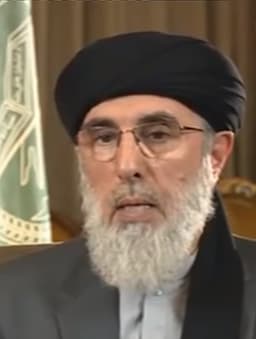
Gulbuddin Hekmatyar
Revolutionary · Modern
38.3Total
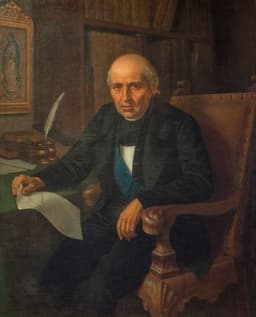
Miguel Hidalgo
Revolutionary · Modern
47.0Total
Basic Information
Born
1947
1753
Died
—
1811
Era
Modern
Modern
Nationality
Afghanistan
Mexico
Occupation
Revolutionary
Revolutionary
Civilization
Middle Eastern
Western
Score Comparison
Military (10%)
35.0
50.0
Political (20%)
26.4
36.5
Influence (20%)
47.1
55.0
Legacy (20%)
36.7
52.0
Leadership (15%)
40.4
39.0
Strategy (15%)
38.3
39.6
TOTAL
38.3
47.0
Gulbuddin Hekmatyar — Complete Timeline
1975 AD
Founding of Hezb-e Islami (1975)Political Action◆ Major
Gulbuddin Hekmatyar founded the Hezb-e Islami political party, an Islamist faction that became one of the most powerful mujahideen groups during the Soviet-Afghan War. The party received significant support from Pakistan's ISI and foreign Islamist donors.
MujahideenIslamist PartyCold War
Impact: national
1993 AD
Prime Minister during Civil War (1993-1994)Political Action◆ Major
Hekmatyar served as Prime Minister of Afghanistan from 1993 to 1994 under President Burhanuddin Rabbani. His tenure was marked by intense factional fighting, including rocket attacks on Kabul that caused thousands of civilian casualties, contributing to the devastation of the city.
Civil WarKabulRocket Attacks
Impact: nationaldestructive
1996 AD
Alliance with Taliban (1996-2001)Political Action
After the Taliban captured Kabul in 1996, Hekmatyar initially fled to Iran. He later aligned with the Taliban regime, though his influence waned. He remained in Afghanistan until the US-led invasion in 2001, after which he fled to Pakistan.
TalibanExileAlliance
Impact: national
2016 AD
Peace Agreement with Afghan Government (2016)Political Action◆ Major
Hekmatyar signed a peace agreement with the Afghan government of President Ashraf Ghani in 2016. The deal allowed him to return to Afghanistan from exile, with his party recognized as a political entity and his fighters integrated into state security forces.
Peace DealReconciliationGhani
Impact: nationalconstructive
Miguel Hidalgo — Complete Timeline
1810 AD
Captured Guanajuato and massacred SpaniardsWar◆ Major
Hidalgo's army of 80,000 captured the city of Guanajuato on September 28, 1810. After taking the Alh
BattleMassacreViolence
Impact: regionaldestructive
Issued the Grito de DoloresPolitical Action
On September 16, 1810, Father Miguel Hidalgo rang the church bell in Dolores and called for rebellion against Spanish colonial rule. His speech, known as the Grito de Dolores, urged Mexicans to rise up against the Spanish and marked the beginning of the Mexican War of Independence.
IndependenceRebellionGrito de Dolores
Impact: nationalconstructive
1811 AD
Defeated at the Battle of Calderón BridgeWar◆ Major
Hidalgo's poorly trained army was decisively defeated by a smaller Spanish royalist force at the Battle of Calder
DefeatSpanish RoyalistsTurning Point
Impact: regionaltragic
Executed by Spanish authoritiesPolitical Action◆ Major
Hidalgo was captured in Acatita de Baj
ExecutionMartyrdomIndependence Movement
Impact: nationaltragic
Expert Analysis
Miguel Hidalgo vs Gulbuddin Hekmatyar
# The Bell and the Bullet
On a September morning in 1810, a Catholic priest in a small Mexican town rang his church bell and summoned a nation to war. On a September morning in 1996, an Islamist warlord watched from exile as the Taliban rolled into Kabul, the capital he had once governed. Miguel Hidalgo and Gulbuddin Hekmatyar never met, never knew each other's names, yet they share a peculiar kinship: both were revolutionaries who lit fires they could not control, men who dreamed of liberation but left behind trails of blood and broken promises. Why did one become a national father and the other a cautionary tale?
Origins
Hidalgo was born in 1753 into a creole family of comfortable means in colonial Mexico. He studied theology, read the Enlightenment philosophers banned by the Spanish Inquisition, and became a parish priest in the dusty town of Dolores. His world was one of rigid hierarchy—Spanish-born peninsulares at the top, creoles beneath them, then mestizos, and finally Indians and slaves at the bottom. Hidalgo’s rebellion was born of that injustice, but also of a specific intellectual ferment: he believed in Rousseau’s social contract, in the rights of man, in the possibility of a new world order.
Hekmatyar, born in 1947 in the northern Afghan province of Kunduz, came of age in a different kind of ferment. The 1960s and 1970s saw Afghanistan caught between competing ideologies—monarchism, communism, and a rising Islamism fueled by the Muslim Brotherhood. Hekmatyar studied engineering at Kabul University, where he joined the Islamist student movement. Unlike Hidalgo, he had no patience for Enlightenment universalism; his vision was shaped by the belief that Islam alone could redeem a nation corrupted by foreign influence and secular decay. Where Hidalgo saw a broken social contract, Hekmatyar saw a broken covenant with God.
Rise to Power
Hidalgo’s path was sudden and almost accidental. On September 16, 1810, he learned that a conspiracy for independence had been betrayed. Rather than flee, he rang the bell of his church and issued the Grito de Dolores—a cry for rebellion against Spanish rule. Within weeks, he commanded an army of 80,000, mostly poor Indians and mestizos armed with machetes, slings, and farming tools. They captured Guanajuato on September 28, 1810, storming the Alhóndiga de Granaditas granary and massacring the Spanish civilians inside. It was a victory, but a brutal one that alienated many creoles who might have supported him.
Hekmatyar’s rise was slower and more calculated. In 1975, he founded Hezb-e Islami, an Islamist party that became one of the most powerful mujahideen factions during the Soviet-Afghan War of the 1980s. While Hidalgo’s army was a rabble of the desperate, Hekmatyar’s was a disciplined force funded by foreign intelligence services—the CIA, Pakistan’s ISI, and Saudi Arabia. He became known for his ruthlessness, both against Soviet troops and against rival mujahideen commanders. By the time the Soviets withdrew in 1989, Hekmatyar was one of the most feared men in Afghanistan, though far from the most beloved.
Leadership & Governance
Hidalgo was a priest, not a general. His military score of 42.0 reflects a man who inspired multitudes but could not command them. His army’s discipline collapsed after Guanajuato; they looted, they drank, they deserted. At the Battle of Calderón Bridge on January 17, 1811, a Spanish force of just 6,000 routed his 100,000-strong horde with artillery and cavalry. Hidalgo fled north, hoping to escape to the United States. He was captured on March 21, 1811, tried by the Inquisition, defrocked, and executed.
Hekmatyar was a better strategist—his score of 63.7 suggests a man who understood the chessboard of war. But his political score of 45.9 reveals a leader who could not govern. He served as Prime Minister of Afghanistan from 1993 to 1994, during the civil war that followed the Soviet withdrawal. His tenure was a disaster: his forces shelled Kabul, killing thousands of civilians, and he proved incapable of forming a stable coalition. When the Taliban captured Kabul in 1996, Hekmatyar fled to Iran, later aligning with the very regime that had defeated him.
Triumph & Tragedy
Hidalgo’s greatest moment was also his most tragic. The Grito de Dolores became the founding act of Mexican independence, but Hidalgo himself did not live to see it. His execution made him a martyr; his severed head was displayed in Guanajuato as a warning, but it only fueled the rebellion. His tragedy was that he unleashed a force—popular rage—that he could neither direct nor contain.
Hekmatyar’s tragedy was different. He survived. After decades of war, he signed a peace agreement with the Afghan government in 2016, returning from exile to a country still torn by violence. He was allowed to live in Kabul, a relic of a past that most Afghans wanted to forget. He had fought the Soviets, the communists, and the Americans, but he had never built anything that outlasted him. His triumph was survival; his tragedy was irrelevance.
Character & Destiny
Hidalgo was a man of ideas in an age of action. He believed in liberty, equality, and fraternity, but he was also a man of his time—a priest who saw no contradiction between Christianity and revolution, a creole who led an army of Indians but could not fully understand them. His character was that of a prophet: he spoke truth to power, but he could not manage the consequences.
Hekmatyar was a man of action in an age of ideas. He believed in power, discipline, and purity, but he was also a man of his time—a product of the Cold War, of foreign funding, of a world that turned local grievances into global proxy wars. His character was that of a warlord: he could destroy, but he could not build. Where Hidalgo’s destiny was to be remembered, Hekmatyar’s was to be forgotten.
Legacy
Hidalgo’s legacy score of 75.0 reflects a man who became a symbol. Every September 16, the President of Mexico rings the bell of the National Palace and repeats the Grito. Hidalgo’s face appears on the 1,000-peso note. He is the father of his country, even if his actual achievements were limited and his methods brutal.
Hekmatyar’s legacy score of 47.8 tells a different story. He is remembered, if at all, as a cautionary figure—a man who helped destroy his country and then made peace with the destroyers. In Afghan memory, he is not a father but a fracture, a reminder of how the struggle for freedom can become a war against everyone.
Conclusion
What separates Hidalgo from Hekmatyar is not their intentions, which were both sincere in their own way, nor their methods, which were both brutal. It is the story that came after. Hidalgo’s failure was redeemed by the success of the movement he started. Hekmatyar’s failure was never redeemed—only repeated. The bell and the bullet both summon men to war, but only one of them echoes through the centuries. That is the difference between a founder and a footnote.
Rankings
🥇
Miguel HidalgoLeader
Mil: 50.0Pol: 36.5Inf: 55.0
47.0
🥈
Gulbuddin Hekmatyar
Mil: 35.0Pol: 26.4Inf: 47.1
38.3
+8.7 behind
How This Comparison Works
Algorithm
Each figure is scored on 6 dimensions (0—100 scale) based on structured historical data: Military (10%), Political (20%), Influence (20%), Legacy (20%), Leadership (15%), Strategy (15%). The weighted total produces the final ranking.
Data Sources
Scores are computed from structured sub-indicators in the database. Scale factors adjust for era (Ancient ×0.85, Modern ×1.0) and civilization size (Eastern ×1.05, Other ×0.80) to account for differences in population and military scale.
Maximum 3 Figures
Comparisons are limited to 2—3 figures to ensure readability and statistical meaningfulness.
Error Margins
±5 points per dimension — Sub-scores are derived from historical records with inherent uncertainty. Two figures within 5 points on a dimension should be considered roughly equivalent in that area.
Total Score Accuracy
±3 points overall — The weighted combination of 6 dimensions produces a total score with approximately ±3 points of uncertainty. Differences of less than 3 points are not statistically significant— the figures are effectively tied.
Known Limitations
- Historical records are incomplete and uneven across civilizations
- Figures from oral-tradition societies may be underrepresented
- Occupation labels can misclassify multi-role figures
- Scores measure capability and impact, not moral character
- Quantitative scoring is a comparison tool, not absolute truth
Capability Radar
Military (10%) — Battles & Warfare
Battles
45
30
Win Rate
30
25
Expansion
25
20
Political (20%) — Governance & Reform
Reform
15
60
Diplomacy
20
30
Economy
10
20
Influence (20%) — Cultural & Global Reach
Cultural
25
70
Global
25
60
Legacy (20%) — Historical Impact
Historical
30
75
Longevity
20
70
Leadership (15%) — Power & Stability
Tenure
30
15
Stability
5
10
Strategy (15%) — Tactics & Innovation
Strategy
35
25
Tactics
40
20
Reform
20
10
Similar Comparisons
Comments & Discussion
BellRingerHistorian6/16/2026
Hidalgo's bell rings louder through history because he died for his cause—executed as a heretic and rebel. Hekmatyar outlived every faction he burned through, from the Soviets to the Taliban. That survival tells you everything: Hidalgo was a martyr who lost control of his mob, while Hekmatyar was a master of chaos who never built anything except rubble. One gave Mexico its first cry of freedom; the other gave Afghanistan a blueprint for endless civil war.
炮火账簿员6/16/2026
比伤亡数字,别比口号。Hidalgo的农民起义前四个月就杀了2万平民,光瓜纳华托一处就屠了800西班牙人;Hekmatyar在1994年喀布尔的火箭弹可是创下了2.5万平民死亡的战绩。一个用刀,一个用火箭炮,但本质都是对控制不了的力量上瘾。我不觉得哪个更"父亲",哪个更"警示"——他们都是燃料,只是烧的火场不一样大。
ClassicsScholar6/16/2026
Hidalgo was reading Rousseau and the Enlightenment; Hekmatyar had the Muslim Brotherhood and Qutb. Both were intellectuals who mistook books for reality. Hidalgo thought he could conjure a new world from a church bell; Hekmatyar believed he could blast Afghanistan into a caliphate with RPGs. The difference is that Hidalgo's naive idealism got him a statue in Mexico City, while Hekmatyar's cynical pragmatism got him a spot on the State Department's terror list. Enlightenment dreams are safer to r
旁观兵痞6/16/2026
Hidalgo起事时喊的是"美洲万岁,坏政府该死",Hekmatyar喊的是"真主至大,苏联去死"。但细看手段——Hidalgo纵容暴民洗劫城市,Hekmatyar向巴基斯坦要导弹打同胞。两人都擅长借别人的恨来掩盖自己的野心。唯一的区别是:Hidalgo的队伍里还有知识分子,Hekmatyar的队伍里只剩军阀。历史给了前者一个教堂钟声,给了后者一堆空弹壳。
RevisionistCritic6/16/2026
Everyone forgets that Hidalgo's "independence" was a disaster—he abolished slavery but never controlled his army, and his movement collapsed into banditry within a year. Hekmatyar at least kept his party intact for decades, even if it was a terrorist network. Romanticizing a failed priest over a surviving warlord is exactly the kind of historical flattery that lets us pretend broken revolutions are noble. Hidalgo wasn't a father; he was a first draft that got rewritten by smarter men.