Loading...
Bhagat Singh vs Gulbuddin Hekmatyar
Bhagat Singh leads by 8.5 pts · 2 figures compared
…
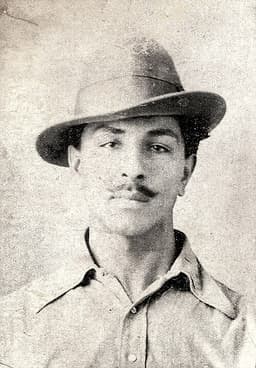
Bhagat Singh
Revolutionary · Modern
46.8Total
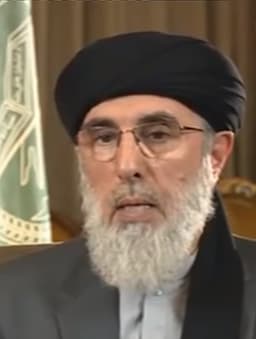
Gulbuddin Hekmatyar
Revolutionary · Modern
38.3Total
Basic Information
Born
1907
1947
Died
1931
—
Era
Modern
Modern
Nationality
India
Afghanistan
Occupation
Revolutionary
Revolutionary
Civilization
Indian
Middle Eastern
Score Comparison
Military (10%)
30.0
35.0
Political (20%)
25.0
26.4
Influence (20%)
61.0
47.1
Legacy (20%)
50.0
36.7
Leadership (15%)
65.0
40.4
Strategy (15%)
25.0
38.3
TOTAL
46.8
38.3
Bhagat Singh — Complete Timeline
1928 AD
Killing of John SaundersPolitical Action◆ Major
Bhagat Singh and his associates killed British police officer John Saunders in Lahore, mistaking him for James Scott, who had ordered the lathi charge that killed Lala Lajpat Rai. This act of revenge escalated the revolutionary movement.
AssassinationRevolutionary Action
Impact: national
1929 AD
Central Legislative Assembly BombingPolitical Action◆ Major
Bhagat Singh and Batukeshwar Dutt threw bombs in the Central Legislative Assembly in Delhi to protest the Public Safety Bill and Trade Disputes Act. They were arrested and used the trial to propagate revolutionary ideas.
ProtestRevolutionary Action
Impact: national
Hunger Strike in JailPolitical Action◆ Major
Bhagat Singh and fellow prisoners went on a 116-day hunger strike in Lahore jail demanding better treatment for political prisoners. The strike drew national attention and forced the British to make concessions.
ProtestPrison Reform
Impact: national
1931 AD
Execution by HangingPolitical Action◆ Major
Bhagat Singh was executed by hanging at Lahore jail at age 23, along with Rajguru and Sukhdev. His execution sparked widespread protests and made him a martyr for the Indian independence movement.
ExecutionMartyrdom
Impact: nationaltragic
Gulbuddin Hekmatyar — Complete Timeline
1975 AD
Founding of Hezb-e Islami (1975)Political Action◆ Major
Gulbuddin Hekmatyar founded the Hezb-e Islami political party, an Islamist faction that became one of the most powerful mujahideen groups during the Soviet-Afghan War. The party received significant support from Pakistan's ISI and foreign Islamist donors.
MujahideenIslamist PartyCold War
Impact: national
1993 AD
Prime Minister during Civil War (1993-1994)Political Action◆ Major
Hekmatyar served as Prime Minister of Afghanistan from 1993 to 1994 under President Burhanuddin Rabbani. His tenure was marked by intense factional fighting, including rocket attacks on Kabul that caused thousands of civilian casualties, contributing to the devastation of the city.
Civil WarKabulRocket Attacks
Impact: nationaldestructive
1996 AD
Alliance with Taliban (1996-2001)Political Action
After the Taliban captured Kabul in 1996, Hekmatyar initially fled to Iran. He later aligned with the Taliban regime, though his influence waned. He remained in Afghanistan until the US-led invasion in 2001, after which he fled to Pakistan.
TalibanExileAlliance
Impact: national
2016 AD
Peace Agreement with Afghan Government (2016)Political Action◆ Major
Hekmatyar signed a peace agreement with the Afghan government of President Ashraf Ghani in 2016. The deal allowed him to return to Afghanistan from exile, with his party recognized as a political entity and his fighters integrated into state security forces.
Peace DealReconciliationGhani
Impact: nationalconstructive
Expert Analysis
Bhagat Singh vs Gulbuddin Hekmatyar
# The Revolutionary’s Mirror: Bhagat Singh and Gulbuddin Hekmatyar
On a cold March morning in 1931, a 23-year-old man walked to the gallows in Lahore jail, his hands unbound, his face calm, singing “Down with British imperialism.” A generation later, in the 1990s, another revolutionary sat in a bunker outside Kabul, ordering rocket barrages that reduced the Afghan capital to rubble. Both men called themselves freedom fighters. Both challenged the political order with violence. But one became a martyr whose name still inspires millions, while the other became a warlord whose legacy is stained by the very destruction he helped unleash. What made the difference?
Origins
Bhagat Singh was born in 1907 into a Punjabi Sikh family steeped in anti-colonial resistance. His father was a nationalist, his uncle had been hanged for killing a British officer, and the Jallianwala Bagh massacre in 1919—when he was twelve—burned itself into his soul. He grew up reading European anarchist literature, Marx, and the lives of Irish revolutionaries. The British Raj was his enemy, but his intellectual horizon stretched to Moscow, Dublin, and Paris. He was a product of the early twentieth-century global wave of anti-imperialism, where ideas of liberation traveled across borders.
Gulbuddin Hekmatyar, born in 1947 in northern Afghanistan, came of age in a different world. The Cold War was the backdrop, and Afghanistan was a pawn between superpowers. He studied engineering at Kabul University, where he joined the Islamist movement that opposed both the Soviet-backed communist government and the traditional monarchy. His intellectual influences were the Muslim Brotherhood and Sayyid Qutb, whose writings framed politics as a struggle between pure Islam and corrupt modernity. Where Singh saw class struggle and national liberation, Hekmatyar saw religious war.
Rise to Power
Singh entered the revolutionary stage through direct action. In 1928, he and his associates killed John Saunders, a British police officer in Lahore—a case of mistaken identity, as they had intended to kill the police chief responsible for the death of nationalist leader Lala Lajpat Rai. The act was amateurish, but it announced his arrival. In 1929, he and Batukeshwar Dutt threw bombs into the Central Legislative Assembly in Delhi, not to kill, but to make a point: they deliberately aimed at empty benches and surrendered immediately, turning the courtroom into a platform for their ideas. Singh understood that revolution needed an audience.
Hekmatyar rose differently. In 1975, he founded Hezb-e Islami, an Islamist political party that armed itself during the Soviet-Afghan War. With funding from Pakistan’s intelligence service and the United States, he became one of the most powerful mujahideen commanders. His rise was built on weapons, foreign patronage, and a ruthless willingness to eliminate rivals. While Singh’s violence was symbolic and targeted, Hekmatyar’s was strategic and indiscriminate.
Leadership & Governance
Singh never governed. He was 23 when executed, and his “leadership” was confined to prison cells and secret meetings. Yet in jail, he demonstrated extraordinary political acumen. In 1929, he led a 116-day hunger strike demanding better treatment for political prisoners. The strike drew international attention, forced the British to negotiate, and turned Singh into a symbol of resistance. His leadership was moral—he inspired through sacrifice and ideas, not through command.
Hekmatyar did govern, disastrously. As Prime Minister of Afghanistan from 1993 to 1994, he presided over the civil war that followed the Soviet withdrawal. His forces shelled Kabul relentlessly, killing thousands of civilians. He allied with the Taliban in 1996, then fled, then returned in 2016 to sign a peace agreement with the government he had fought. His military score of 46.8 and strategy score of 63.7 suggest tactical competence, but his political and legacy scores—45.9 and 47.8—reflect the hollow outcome of his ambition: power without purpose.
Triumph & Tragedy
Singh’s triumph was his death. On March 23, 1931, he was hanged along with Rajguru and Sukhdev. The British expected the execution to crush the revolutionary movement. Instead, it sparked protests across India, and Singh’s image—the young man with the tilted hat and defiant eyes—became immortal. His tragedy was the brevity of his life: he never saw the independence he fought for.
Hekmatyar’s triumph was survival. He outlasted the Soviet Union, the Taliban, and multiple Afghan governments, returning from exile in 2016 to a hero’s welcome from some factions. His tragedy was that his “victories” were pyrrhic. He destroyed the city he claimed to want to rule and left behind a country in ruins. His influence score of 61.9 reflects his lasting presence, but it is the influence of a spoiler, not a builder.
Character & Destiny
Bhagat Singh was an intellectual who chose violence reluctantly. He wrote essays on atheism, socialism, and the philosophy of revolution. He quoted Lenin and Bakunin but also the Sikh gurus. His character was defined by clarity: he knew he would die and accepted it, believing that martyrdom would awaken a nation. His destiny was to become a symbol, not a ruler.
Hekmatyar was a pragmatist who cloaked himself in ideology. He switched alliances, from Soviet enemy to Taliban partner to government ally, always seeking power. His character was defined by ambition without vision. His destiny was to be remembered as a warlord, not a statesman. Where Singh’s total score of 53.4 reflects a life cut short but perfectly aimed, Hekmatyar’s 51.6 reflects a longer life that hit nothing of lasting value.
Legacy
Singh’s legacy is alive in every Indian protest, every slogan about freedom, every debate about revolutionary violence. He is invoked by leftists, nationalists, and even the government that once hanged him. His image adorns walls from Punjab to Kerala. He remains a moral benchmark: what would Bhagat Singh do?
Hekmatyar’s legacy is a cautionary tale. In Afghanistan, he is seen as a symbol of the civil war’s brutality. His peace agreement in 2016 allowed him to return, but he commands little respect. He is a reminder that revolution without a vision for governance becomes mere destruction.
Conclusion
Standing at the gallows, Bhagat Singh said, “The sword of revolution is sharpened on the whetting stone of ideas.” Hekmatyar, watching his rockets fall on Kabul, might have said something else—perhaps nothing at all. Both men took up arms against what they saw as tyranny. But Singh’s revolution was aimed at an idea—empire—and he sacrificed himself to that idea. Hekmatyar’s revolution was aimed at power, and he lived to see power slip through his fingers. In the end, the difference between a martyr and a warlord is not the violence they commit, but the world they leave behind.
Rankings
🥇
Bhagat SinghLeader
Mil: 30.0Pol: 25.0Inf: 61.0
46.8
🥈
Gulbuddin Hekmatyar
Mil: 35.0Pol: 26.4Inf: 47.1
38.3
+8.5 behind
How This Comparison Works
Algorithm
Each figure is scored on 6 dimensions (0—100 scale) based on structured historical data: Military (10%), Political (20%), Influence (20%), Legacy (20%), Leadership (15%), Strategy (15%). The weighted total produces the final ranking.
Data Sources
Scores are computed from structured sub-indicators in the database. Scale factors adjust for era (Ancient ×0.85, Modern ×1.0) and civilization size (Eastern ×1.05, Other ×0.80) to account for differences in population and military scale.
Maximum 3 Figures
Comparisons are limited to 2—3 figures to ensure readability and statistical meaningfulness.
Error Margins
±5 points per dimension — Sub-scores are derived from historical records with inherent uncertainty. Two figures within 5 points on a dimension should be considered roughly equivalent in that area.
Total Score Accuracy
±3 points overall — The weighted combination of 6 dimensions produces a total score with approximately ±3 points of uncertainty. Differences of less than 3 points are not statistically significant— the figures are effectively tied.
Known Limitations
- Historical records are incomplete and uneven across civilizations
- Figures from oral-tradition societies may be underrepresented
- Occupation labels can misclassify multi-role figures
- Scores measure capability and impact, not moral character
- Quantitative scoring is a comparison tool, not absolute truth
Capability Radar
Military (10%) — Battles & Warfare
Battles
0
45
Win Rate
0
30
Expansion
0
25
Political (20%) — Governance & Reform
Reform
15
15
Diplomacy
5
20
Economy
0
10
Influence (20%) — Cultural & Global Reach
Cultural
55
25
Global
50
25
Legacy (20%) — Historical Impact
Historical
60
30
Longevity
55
20
Leadership (15%) — Power & Stability
Tenure
0
30
Stability
0
5
Strategy (15%) — Tactics & Innovation
Strategy
5
35
Tactics
10
40
Reform
0
20
Similar Comparisons
Comments & Discussion
🔥MARTYR OR MONSTER6/16/2026
Saying these two are comparable is an insult to history. Bhagat Singh died singing songs of revolution. Hekmatyar rained rockets on his own capital, killing thousands of civilians to win a grudge match. Singh read Lenin and Marx; Hekmatyar read CIA pamphlets and Saudi wahhabism. One fought an empire, the other became a warlord to enrich himself. Stop romanticizing every man with a gun just because he says "resistance." Context matters. Violence without a moral compass is just crime.
炮火批判家6/16/2026
从军事和逻辑上看,这种对比根本站不住脚。巴格特·辛格在1931年被执行绞刑时手无寸铁,而赫克马蒂亚尔在90年代拥有重炮和火箭弹,其中许多来自美国资助。辛格的象征力量在于他用身体对抗一个无法击败的帝国;赫克马蒂亚尔拥有压倒性火力,却打出了一场破坏狂潮。军人看重资源分配与战绩,而赫克马蒂亚尔明显两者皆无。把这两者并列,就像把一枚炸弹与一把屠刀比较:产地可能类似,但造成的伤害完全不同。
📜KASHMIRI CLASSICIST6/16/2026
作为研究殖民地反叛史的学者,我必须指出最关键的区别:辛格的思想体系是国际主义与社会主义的融合;赫克马蒂亚若则根植于种族伊斯兰主义的狭隘视野。辛格引用马克思、巴枯宁、甚至爱尔兰共和军——他的敌人不是具体的英国人,而是"帝国主义制度"。赫克马蒂亚尔呢?他下台前还在炮击喀布尔,原因是普什图民族的优越感与政治野心。他们的暴力哲学在本质上相悖:前者追求解放,后者巩固权力。这是文明与野蛮的区别。
Skeptical Sam6/16/2026
Comparing a 23-year-old who wrote manifestos from prison to a warlord who married a Saudi billionaire's daughter is intellectually dishonest. Singh was executed before he could ever hold real power, leaving only ideology behind. Hekmatyar governed in chaos, launched coup after coup, and saw his so-called "resistance" become indistinguishable from drug trade and ethnic cleansing. Singh remains an icon because he died young and clean; Hekmatyar lived long enough to become a monster. We should be h
🌏反殖民异见者6/16/2026
别把赫克马蒂亚尔洗白了。他没有"理想主义"的基因,只有一个贪婪、残忍的军阀头脑。80年代,在苏联占领期间,他不仅与苏联作战,还屠杀和驱逐不同族裔的阿富汗平民——包括从喀布尔郊外挖出兄弟团体的尸体。而辛格在监狱里绝食抗议政治犯的糟糕待遇,甚至拒绝假释,因为那