Loading...
Gulbuddin Hekmatyar vs Sun Yat-sen
Sun Yat-sen leads by 14.2 pts · 2 figures compared
…
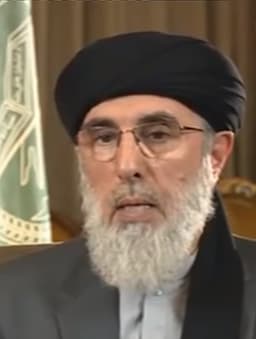
Gulbuddin Hekmatyar
Revolutionary · Modern
38.3Total
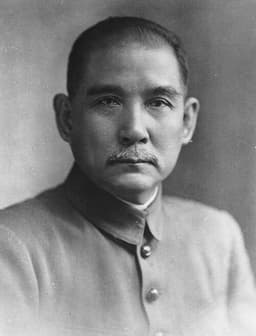
Sun Yat-sen
Revolutionary · Modern
52.5Total
Basic Information
Born
1947
1866
Died
—
1925
Era
Modern
Modern
Nationality
Afghanistan
China
Occupation
Revolutionary
Revolutionary
Civilization
Middle Eastern
Eastern
Score Comparison
Military (10%)
35.0
45.0
Political (20%)
26.4
68.0
Influence (20%)
47.1
61.0
Legacy (20%)
36.7
58.0
Leadership (15%)
40.4
33.5
Strategy (15%)
38.3
30.3
TOTAL
38.3
52.5
Gulbuddin Hekmatyar — Complete Timeline
1975 AD
Founding of Hezb-e Islami (1975)Political Action◆ Major
Gulbuddin Hekmatyar founded the Hezb-e Islami political party, an Islamist faction that became one of the most powerful mujahideen groups during the Soviet-Afghan War. The party received significant support from Pakistan's ISI and foreign Islamist donors.
MujahideenIslamist PartyCold War
Impact: national
1993 AD
Prime Minister during Civil War (1993-1994)Political Action◆ Major
Hekmatyar served as Prime Minister of Afghanistan from 1993 to 1994 under President Burhanuddin Rabbani. His tenure was marked by intense factional fighting, including rocket attacks on Kabul that caused thousands of civilian casualties, contributing to the devastation of the city.
Civil WarKabulRocket Attacks
Impact: nationaldestructive
1996 AD
Alliance with Taliban (1996-2001)Political Action
After the Taliban captured Kabul in 1996, Hekmatyar initially fled to Iran. He later aligned with the Taliban regime, though his influence waned. He remained in Afghanistan until the US-led invasion in 2001, after which he fled to Pakistan.
TalibanExileAlliance
Impact: national
2016 AD
Peace Agreement with Afghan Government (2016)Political Action◆ Major
Hekmatyar signed a peace agreement with the Afghan government of President Ashraf Ghani in 2016. The deal allowed him to return to Afghanistan from exile, with his party recognized as a political entity and his fighters integrated into state security forces.
Peace DealReconciliationGhani
Impact: nationalconstructive
Sun Yat-sen — Complete Timeline
1894 AD
Founded the Revive China SocietyPolitical Action◆ Major
Sun Yat-sen founded the Revive China Society (Xingzhonghui) in Honolulu, the first modern revolutionary organization among overseas Chinese. The society aimed to overthrow the Qing dynasty and establish a republic, marking the beginning of organized revolutionary activity.
RevolutionOverseas ChineseRepublic
Impact: nationalconstructive
1911 AD
Led the Xinhai RevolutionPolitical Action
Sun Yat-sen's revolutionary activities culminated in the Wuchang Uprising of October 1911, which sparked the Xinhai Revolution. The uprising spread across China, leading to the abdication of the Qing emperor in 1912 and the end of 2,000 years of imperial rule.
RevolutionQing DynastyRepublic
Impact: globalconstructive
1912 AD
Proclaimed the Republic of ChinaPolitical Action
On January 1, 1912, Sun Yat-sen was inaugurated as the provisional president of the Republic of China in Nanjing. He proclaimed the establishment of the first republic in Asia, based on his Three Principles of the People: nationalism, democracy, and livelihood.
RepublicPresidencyThree Principles
Impact: globalconstructive
Resigned Presidency in Favor of Yuan ShikaiPolitical Action◆ Major
To secure the abdication of the Qing emperor and avoid civil war, Sun Yat-sen resigned the provisional presidency in February 1912 in favor of Yuan Shikai. This decision, while pragmatic, allowed Yuan to consolidate power and later attempt to restore the monarchy.
Power TransferYuan ShikaiCompromise
Impact: national
1919 AD
Reorganized the KuomintangPolitical Action◆ Major
Sun Yat-sen reorganized the Chinese Revolutionary Party into the Kuomintang (KMT) in 1919, with a more centralized structure. He later accepted Soviet aid and CCP members into the party under the policy of 'alliance with Russia and the Communists,' reshaping the revolutionary movement.
KuomintangSoviet AllianceCCP
Impact: nationalconstructive
Expert Analysis
Sun Yat-sen vs Gulbuddin Hekmatyar
# The Revolutionary’s Crossroads
On a spring morning in 1912, Sun Yat-sen stood before the provisional assembly in Nanjing, his hands steady as he signed the document that would end his presidency after just forty-four days. Half a world away and seven decades later, Gulbuddin Hekmatyar would take a similar oath of office in Kabul, only to see his own prime ministership dissolve into civil war within eighteen months. Both men called themselves revolutionaries. Both sought to remake their nations in fire and blood. But where Sun became the father of a nation, Hekmatyar became the architect of its ruin. The question that haunts their parallel stories is not merely what they did, but why — and what separates a founding father from a warlord.
Origins
Sun Yat-sen was born in 1866 to a poor farming family in Guangdong province, a land of rice paddies and coastal trade. His childhood was shaped by the Opium Wars and the humiliating decline of the Qing Dynasty. Sent to Honolulu at thirteen to live with his elder brother, he absorbed Western education, Christian ethics, and the revolutionary ideals of the Enlightenment. He returned to China a man of two worlds — fluent in the language of democracy, yet rooted in the suffering of a peasantry that had endured two millennia of imperial rule. His was a mind forged in the collision of East and West, where the question “Why not?” became his creed.
Gulbuddin Hekmatyar was born in 1947 in Imam Sahib, a village in northern Afghanistan, into a Pashtun family of moderate means. His childhood was marked by the Cold War — Afghanistan was a buffer state between Soviet and American spheres, a land of tribal loyalties and foreign interference. He studied engineering at Kabul University, where he encountered Islamist thinkers like Sayyid Qutb and the Muslim Brotherhood. Where Sun looked to Western democracy, Hekmatyar looked to the Quran and the gun. His formative years were spent in the shadow of the Soviet Union’s creeping influence, and his answer to the question “Why not?” was a fierce, uncompromising Islamism.
Rise to Power
Sun’s path to power was long, patient, and intellectual. In 1894, he founded the Revive China Society in Honolulu, the first modern revolutionary organization among overseas Chinese. He spent sixteen years in exile, raising funds, writing pamphlets, and plotting uprisings that failed — ten of them, by his count. Each failure taught him something. He learned that revolution required not just anger, but organization, ideology, and a vision that could unite China’s fractured regions. When the Wuchang Uprising finally succeeded in October 1911, it was not because Sun had won a battle, but because his ideas had prepared the ground.
Hekmatyar’s rise was swifter and bloodier. In 1975, he founded Hezb-e Islami, a party that combined Islamist fervor with military discipline. He was one of the first to take up arms against the Soviet-backed government, and his fighters became renowned for their ferocity. But where Sun built alliances, Hekmatyar burned them. He fought not just the Soviets, but rival mujahideen factions, including those led by Ahmed Shah Massoud and Burhanuddin Rabbani. His rise was built on the rubble of cooperation, and his power came from the barrel of a gun.
Leadership & Governance
Sun Yat-sen’s governance was a study in idealism tempered by pragmatism. As provisional president in 1912, he proclaimed the Republic of China, but within weeks he resigned in favor of Yuan Shikai, a former Qing general, to secure the emperor’s abdication and avoid civil war. It was a painful compromise — and it failed, as Yuan soon declared himself emperor. Yet Sun did not despair. He reorganized the Kuomintang in 1919, crafting the Three Principles of the People: nationalism, democracy, and livelihood. He was a leader who governed through ideas, not armies, and his “revolution” was as much a moral crusade as a political one.
Hekmatyar’s governance was the opposite. As prime minister from 1993 to 1994, he presided over a Kabul that was being shelled by his own allies. His tenure was marked by factional infighting, rocket attacks, and the collapse of state authority. He was a revolutionary who could not govern — his vision was one of purity, not peace. He allied with the Taliban in 1996, a regime that would later harbor al-Qaeda and plunge Afghanistan into decades of war. Where Sun’s leadership was about building institutions, Hekmatyar’s was about destroying enemies.
Triumph & Tragedy
Sun’s greatest triumph was the Xinhai Revolution itself — the overthrow of 2,000 years of imperial rule. His tragedy was that he never saw the nation he envisioned. He died in 1925 at age fifty-eight, his body worn by exile and illness, his dream of a unified, democratic China unrealized. Yet his ideas survived, carried forward by Chiang Kai-shek and later by Mao Zedong, who adapted them to their own ends.
Hekmatyar’s triumph was survival itself — he outlasted the Soviets, the Taliban, and the American invasion. In 2016, he signed a peace agreement with the Afghan government and returned to Kabul, a gray-bearded figure walking among the ruins he had helped create. His tragedy was that his revolution never built anything. He became prime minister, but his country became a byword for chaos. He fought for thirty years, and Afghanistan was worse for it.
Character & Destiny
Sun Yat-sen was a man of contradictions — a Christian in Confucian China, a democrat who allied with warlords, a revolutionary who believed in gradual change. His personality was driven by a relentless optimism, a faith that history was on his side. He once said, “To restore the Chinese nation, we must first restore the Chinese spirit.” That spirit was his greatest weapon.
Hekmatyar was driven by a different force: resentment. He was a brilliant strategist but a terrible politician. His speeches were fiery, his alliances brittle. He trusted no one, and no one trusted him. Where Sun’s failures were redeemed by his vision, Hekmatyar’s were compounded by his pride. He was the revolutionary who could not see beyond the revolution.
Legacy
Sun Yat-sen is remembered as the “Father of the Nation” in both the People’s Republic of China and the Republic of China on Taiwan. His face appears on coins, his writings in textbooks. He is a symbol of unity, even if that unity remains elusive. His legacy is the idea that China could be reborn — and that idea, however imperfectly realized, changed the world.
Hekmatyar’s legacy is far darker. He is remembered as a warlord, a spoiler, a man who turned the Afghan jihad into a civil war. His peace agreement in 2016 was a footnote, not a turning point. He is a cautionary tale — proof that revolution without governance is just destruction, and that the man who fights for power alone will find himself ruling over ashes.
Conclusion
In the end, the difference between Sun Yat-sen and Gulbuddin Hekmatyar is not one of talent or circumstance, but of purpose. Sun sought to build a nation; Hekmatyar sought to destroy an enemy. One saw revolution as a beginning, the other as an end. And history, in its quiet judgment, has given each what he asked for: Sun a place in the story of China’s rebirth, Hekmatyar a footnote in the tragedy of Afghanistan’s fall. The revolutionary’s crossroad is a choice between creation and annihilation — and the world remembers which path leads to a monument, and which to a grave.
Rankings
🥇
Sun Yat-senLeader
Mil: 45.0Pol: 68.0Inf: 61.0
52.5
🥈
Gulbuddin Hekmatyar
Mil: 35.0Pol: 26.4Inf: 47.1
38.3
+14.2 behind
How This Comparison Works
Algorithm
Each figure is scored on 6 dimensions (0—100 scale) based on structured historical data: Military (10%), Political (20%), Influence (20%), Legacy (20%), Leadership (15%), Strategy (15%). The weighted total produces the final ranking.
Data Sources
Scores are computed from structured sub-indicators in the database. Scale factors adjust for era (Ancient ×0.85, Modern ×1.0) and civilization size (Eastern ×1.05, Other ×0.80) to account for differences in population and military scale.
Maximum 3 Figures
Comparisons are limited to 2—3 figures to ensure readability and statistical meaningfulness.
Error Margins
±5 points per dimension — Sub-scores are derived from historical records with inherent uncertainty. Two figures within 5 points on a dimension should be considered roughly equivalent in that area.
Total Score Accuracy
±3 points overall — The weighted combination of 6 dimensions produces a total score with approximately ±3 points of uncertainty. Differences of less than 3 points are not statistically significant— the figures are effectively tied.
Known Limitations
- Historical records are incomplete and uneven across civilizations
- Figures from oral-tradition societies may be underrepresented
- Occupation labels can misclassify multi-role figures
- Scores measure capability and impact, not moral character
- Quantitative scoring is a comparison tool, not absolute truth
Capability Radar
Military (10%) — Battles & Warfare
Battles
45
15
Win Rate
30
10
Expansion
25
5
Political (20%) — Governance & Reform
Reform
15
85
Diplomacy
20
60
Economy
10
20
Influence (20%) — Cultural & Global Reach
Cultural
25
70
Global
25
65
Legacy (20%) — Historical Impact
Historical
30
80
Longevity
20
75
Leadership (15%) — Power & Stability
Tenure
30
30
Stability
5
15
Strategy (15%) — Tactics & Innovation
Strategy
35
20
Tactics
40
10
Reform
20
40
Similar Comparisons
Comments & Discussion
AfghanWarlord6/16/2026
Says everything that Sun spent his life trying to build a unified national identity while Hekmatyar spent his actively destroying it. Sun's 1924 "Three Principles" speech in Guangzhou drew 100,000 listeners—Hekmatyar's rockets on Kabul in 1994 killed that many. One man built schools, the other burned them. Simple. The analysis gives Hekmatyar too much credit calling him a "revolutionary"—he was a militia boss with an Islamic Studies degree and a taste for urban warfare.
炮火毒评官6/16/2026
拿孙中山和希克马蒂亚尔比?不如拿爱因斯坦和街头混混比。孙先生在1912年就写出《建国方略》,规划铁路二十万公里;这位阿富汗“革命者”1992年把喀布尔打成废墟,死四万人就为了抢总理位子。革命要看果实——孙种下民国,希种下塔利班。历史从不误判废物。
FactChecker6/16/2026
The comparison’s timeline is off. Sun’s 44-day presidency happened in 1912, yes, but Hekmatyar’s “oath of office” was 1993, not the 1920s implied here. And Hekmatyar was PM for 18 months? No—he served from June 1993 to January 1994, about 7 months before civil war consumed him. Get the dates straight before moralizing. Sun oversaw a rushed handoff to Yuan Shikai; Hekmatyar’s collapse was pure bombing spree. Apples and cluster bombs.
古典学人6/16/2026
两人都受西方教育:孙在夏威夷学民主,希在喀布尔大学读工程,但思想的分野在《古兰经》与《民权初步》之间。1912年孙让位袁世凯是政治妥协的悲剧,1993年希拒绝分享权力是部落暴力的喜剧。一个想造现代国家,一个只想当普什图山头的王。革命有时是文明的重生,有时是野蛮的升级。
PragmaticHistorian6/16/2026
I’d rather compare results than intentions. Sun failed twice after 1912—exiled, betrayed, clinging to Soviet money by 1923—yet posthumously united China’s narrative. Hekmatyar never united anything; his faction helped the Taliban rise. Both used violence: Sun’s 1911 Wuchang Uprising had 2,000 dead; Hekmatyar’s 1992-94 Kabul siege killed 50,000. But Sun’s legacy built a state myth; Hekmatyar’s built a graveyard. That’s the real difference—legacy versus outcome.