Loading...
Gulbuddin Hekmatyar vs Mangal Pandey
Mangal Pandey leads by 10.3 pts · 2 figures compared
…
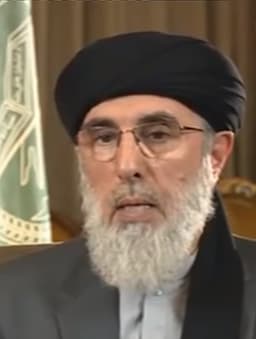
Gulbuddin Hekmatyar
Revolutionary · Modern
38.3Total
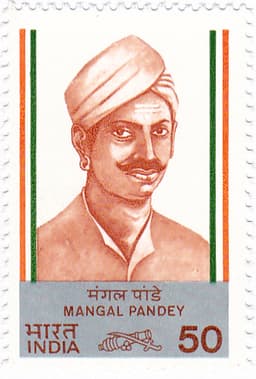
Mangal Pandey
Revolutionary · Modern
48.6Total
Basic Information
Born
1947
1827
Died
—
1857
Era
Modern
Modern
Nationality
Afghanistan
India
Occupation
Revolutionary
Revolutionary
Civilization
Middle Eastern
Indian
Score Comparison
Military (10%)
35.0
39.9
Political (20%)
26.4
35.0
Influence (20%)
47.1
51.8
Legacy (20%)
36.7
46.7
Leadership (15%)
40.4
62.6
Strategy (15%)
38.3
53.8
TOTAL
38.3
48.6
Gulbuddin Hekmatyar — Complete Timeline
1975 AD
Founding of Hezb-e Islami (1975)Political Action◆ Major
Gulbuddin Hekmatyar founded the Hezb-e Islami political party, an Islamist faction that became one of the most powerful mujahideen groups during the Soviet-Afghan War. The party received significant support from Pakistan's ISI and foreign Islamist donors.
MujahideenIslamist PartyCold War
Impact: national
1993 AD
Prime Minister during Civil War (1993-1994)Political Action◆ Major
Hekmatyar served as Prime Minister of Afghanistan from 1993 to 1994 under President Burhanuddin Rabbani. His tenure was marked by intense factional fighting, including rocket attacks on Kabul that caused thousands of civilian casualties, contributing to the devastation of the city.
Civil WarKabulRocket Attacks
Impact: nationaldestructive
1996 AD
Alliance with Taliban (1996-2001)Political Action
After the Taliban captured Kabul in 1996, Hekmatyar initially fled to Iran. He later aligned with the Taliban regime, though his influence waned. He remained in Afghanistan until the US-led invasion in 2001, after which he fled to Pakistan.
TalibanExileAlliance
Impact: national
2016 AD
Peace Agreement with Afghan Government (2016)Political Action◆ Major
Hekmatyar signed a peace agreement with the Afghan government of President Ashraf Ghani in 2016. The deal allowed him to return to Afghanistan from exile, with his party recognized as a political entity and his fighters integrated into state security forces.
Peace DealReconciliationGhani
Impact: nationalconstructive
Mangal Pandey — Complete Timeline
1857 AD
Attack on British officers at BarrackporePolitical Action◆ Major
Mangal Pandey attacked two British officers at the Barrackpore military cantonment. He was arrested after the attack, and his actions sparked widespread unrest among Indian sepoys, leading to the 1857 rebellion.
Indian Rebellion of 1857Trigger Event
Impact: regional
Execution by hangingPolitical Action◆ Major
Mangal Pandey was tried by a British military court and executed by hanging at Barrackpore. His execution made him a martyr and a symbol of resistance against British rule in India.
Indian Rebellion of 1857ExecutionMartyr
Impact: regionaltragic
Expert Analysis
Gulbuddin Hekmatyar vs Mangal Pandey
### The Revolutionary’s Crossroads: Hekmatyar and Pandey
In the spring of 1857, on a dusty parade ground in Barrackpore, India, a sepoy named Mangal Pandey loaded his musket and turned it on his British officers. His act was a single, desperate spark—a flash of rage that would ignite a continent. A century and a half later, in the mountains of Afghanistan, another revolutionary, Gulbuddin Hekmatyar, signed a peace agreement with the government he had once fought to destroy. Between Pandey’s martyrdom and Hekmatyar’s compromise lies the entire arc of modern insurgency: one man who died for a symbol, another who lived to negotiate. What drove these two men—one a soldier of empire, the other a warlord of ideology—to such different ends?
### Origins
Mangal Pandey was born in 1827 in a high-caste Brahmin family in northern India. The British East India Company had ruled his homeland for decades, imposing foreign law, taxing peasants, and, most dangerously, threatening religious customs. Pandey joined the Company’s army as a sepoy, a soldier trained in European tactics but bound by Indian rituals. His world was one of simmering resentment, where the greased cartridges for new rifles—rumored to be smeared with cow and pig fat—became the final insult to Hindu and Muslim sepoys alike. Pandey was not a scholar or a politician; he was a man of action, shaped by a culture of honor and a military that demanded obedience but offered no respect.
Gulbuddin Hekmatyar, born in 1947 in the northern Afghan province of Kunduz, emerged from a very different crucible. His family was Pashtun, but he grew up in a modernizing state under King Zahir Shah, where education and engineering were paths to power. Hekmatyar studied at Kabul University, where he fell under the spell of political Islam, particularly the Muslim Brotherhood’s vision of a purified, anti-Western state. Where Pandey faced an empire, Hekmatyar faced a fractured nation: a monarchy, a communist coup, and then a Soviet invasion. His anger was not about cartridges but about ideology—a battle for the soul of Afghanistan.
### Rise to Power
Pandey’s rise was not a rise at all; it was a single, explosive moment. On March 29, 1857, at Barrackpore, he attacked two British officers, Lieutenant Baugh and Sergeant Hewson, after they tried to arrest him for insubordination. He was quickly subdued by loyal sepoys and a British sergeant. His trial was swift, and on April 8, 1857, he was hanged. Pandey did not build a movement; he became its catalyst. Within weeks, the Indian Rebellion of 1857 erupted across northern India, from Delhi to Kanpur, as sepoys and princes rose against British rule. Pandey’s name became a rallying cry, but he never led an army.
Hekmatyar’s path was the opposite—a slow, calculated climb. In 1975, he founded Hezb-e Islami, a radical Islamist party that quickly became one of the most powerful factions in Afghanistan’s anti-Soviet resistance. He was a master of strategy and patronage, securing weapons from the CIA and Pakistan’s ISI, and building a network of commanders. By the time the Soviets withdrew in 1989, Hekmatyar was a kingmaker. In 1993, he became Prime Minister of Afghanistan, but his tenure was a disaster: he shelled Kabul to oust rival factions, killing thousands of civilians. His rise was not a spark but a slow fire, fed by war and ambition.
### Leadership & Governance
Pandey’s leadership was instinctive, not institutional. He had no political program, no party, no long-term plan. His attack on the British was a desperate act of defiance, driven by honor and faith. He was a symbol, not a ruler. In contrast, Hekmatyar was a master of political maneuvering and military strategy, with a score of 63.7 in strategy and 45.9 in politics. He governed through fear and alliance, but his rule was chaotic: he bombed his own capital, alienated allies, and failed to build a stable state. Where Pandey inspired a rebellion, Hekmatyar fueled a civil war.
### Triumph & Tragedy
Pandey’s triumph was his martyrdom. His execution turned him into a legend, a hero of Indian nationalism. His tragedy was that he died before seeing the rebellion he sparked—a rebellion that ultimately failed, crushed by British reinforcements. Hekmatyar’s greatest moment was arguably his 2016 peace agreement with President Ashraf Ghani, which allowed him to return to Afghanistan after years in exile. But this was a hollow triumph: he had spent decades fighting the very government he now joined, and his legacy was one of destruction. His tragedy was that he outlived his cause, becoming a relic in a country that had moved on to the Taliban and the Americans.
### Character & Destiny
Pandey was a man of passion, not calculation. He acted on impulse, driven by a sense of outrage that could not be contained. Hekmatyar was a survivor, a man of cold strategy who shifted alliances as needed—from the CIA to the Taliban to the Afghan government. Pandey’s character led him to a noose; Hekmatyar’s led him to a negotiating table. One became a martyr, the other a politician. Destiny, in both cases, was shaped by their eras: Pandey lived in a time of empire, where rebellion meant death; Hekmatyar lived in a time of failed states, where survival meant compromise.
### Legacy
Mangal Pandey is remembered as a freedom fighter in India, a symbol of resistance against colonial rule. His name adorns streets, stamps, and films. Hekmatyar’s legacy is more ambiguous: he is a warlord, a spoiler, a man who helped drive Afghanistan into chaos. His influence score of 61.9 is high, but his legacy score of 47.8 reflects a mixed judgment. In the West, he is often called a terrorist; in Afghanistan, he is a figure of both reverence and revulsion.
### Conclusion
Pandey and Hekmatyar stand at opposite ends of the revolutionary spectrum: the pure flame and the pragmatic fire. One gave his life for a cause he could not see fulfilled; the other gave his cause for a life he could continue. Their stories remind us that history does not reward the righteous or the ruthless alone—it rewards those who fit their moment. Pandey’s moment was a flash in the dark; Hekmatyar’s was a long, smoldering war. In the end, both men shaped the world they left behind, but only one left a world that remembered him without regret.
Rankings
🥇
Mangal PandeyLeader
Mil: 39.9Pol: 35.0Inf: 51.8
48.6
🥈
Gulbuddin Hekmatyar
Mil: 35.0Pol: 26.4Inf: 47.1
38.3
+10.3 behind
How This Comparison Works
Algorithm
Each figure is scored on 6 dimensions (0—100 scale) based on structured historical data: Military (10%), Political (20%), Influence (20%), Legacy (20%), Leadership (15%), Strategy (15%). The weighted total produces the final ranking.
Data Sources
Scores are computed from structured sub-indicators in the database. Scale factors adjust for era (Ancient ×0.85, Modern ×1.0) and civilization size (Eastern ×1.05, Other ×0.80) to account for differences in population and military scale.
Maximum 3 Figures
Comparisons are limited to 2—3 figures to ensure readability and statistical meaningfulness.
Error Margins
±5 points per dimension — Sub-scores are derived from historical records with inherent uncertainty. Two figures within 5 points on a dimension should be considered roughly equivalent in that area.
Total Score Accuracy
±3 points overall — The weighted combination of 6 dimensions produces a total score with approximately ±3 points of uncertainty. Differences of less than 3 points are not statistically significant— the figures are effectively tied.
Known Limitations
- Historical records are incomplete and uneven across civilizations
- Figures from oral-tradition societies may be underrepresented
- Occupation labels can misclassify multi-role figures
- Scores measure capability and impact, not moral character
- Quantitative scoring is a comparison tool, not absolute truth
Capability Radar
Military (10%) — Battles & Warfare
Battles
45
5
Win Rate
30
5
Expansion
25
5
Political (20%) — Governance & Reform
Reform
15
5
Diplomacy
20
5
Economy
10
5
Influence (20%) — Cultural & Global Reach
Cultural
25
40
Global
25
40
Legacy (20%) — Historical Impact
Historical
30
60
Longevity
20
50
Leadership (15%) — Power & Stability
Tenure
30
5
Stability
5
5
Strategy (15%) — Tactics & Innovation
Strategy
35
5
Tactics
40
10
Reform
20
5
Similar Comparisons
Comments & Discussion
火药与笔杆6/16/2026
Pandey是19世纪印度士兵的愤怒化身,一颗子弹引爆了整个大陆的怨恨。而Hekmatyar呢?他更像阿富汗政治的棋手,一边轰炸喀布尔,一边在和平协议上签字。Pandey死于叛乱失败,却成了民族神话;Hekmatyar活到谈判,却背负着内战屠夫的恶名。一个为象征牺牲,一个为生存妥协——这差距比喜马拉雅山还高。历史同情勇者,但现实奖励狡猾的狐狸。
古典学派的批评6/16/2026
从古典革命理论看,Pandey是典型的“绝望起义者”——马克思说的农民暴动,因外部压迫而爆发,缺乏组织与意识形态。Hekmatyar则更像马基雅维利式的“狐狸君主”,在苏联撤退后的权力真空中灵活周旋。Pandey的牺牲属于宗教仪式般的殉道,而Hekmatyar的三十年战争属于现代国家建构的残酷博弈。把这两个人放一起比,就像把罗马角斗士和威尼斯商人并列——同样的混乱舞台,不同的生存智慧。
Historian8416/16/2026
Let's cut the martyr worship. Pandey was a religious fundamentalist who rebelled because his cow-greased cartridges offended his caste purity—hardly a secular freedom fighter. And Hekmatyar? He's the guy who aligned with the CIA, then with Iran, then with Pakistan's ISI, always switching sides for power. Both men were products of their empires: Pandey of British colonialism, Hekmatyar
DeepScribe236/16/2026
Okay, let's get real. The comparison here leans hard on romanticized narratives, but look at the numbers: Pandey's 1857 mutiny killed maybe a few hundred British and sepoys in its initial spark, while Hekmatyar's 1990s rocket attacks on Kabul killed thousands of civilians. One man's legend is built on a single musket shot, the other's on a city's ruin. If we're talking revolutionary impact, Pandey's failure triggered British retaliation that actually strengthened colonial control for decades. He
Chronicler32446/16/2026
This is like comparing a lit match to a nuclear reactor. Pandey's act was personal, visceral—a sepoy who snapped at a specific injustice. Hekmatyar, though, played the long game of Afghan power politics for decades, surviving Soviet invasions, civil wars, and U.S. drone strikes. Pandey's rebellion flickered out in hours; Hekmatyar's patience outlasted empires. The former is a martyr's snapshot, the latter a warlord's marathon. Pandey's legacy is pure, Hekmatyar's is pragmatic survival. Choose yo