Loading...
Gulbuddin Hekmatyar vs Li Zicheng
Li Zicheng leads by 5.2 pts · 2 figures compared
…
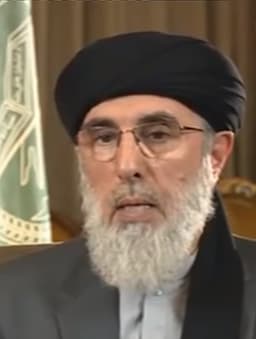
Gulbuddin Hekmatyar
Revolutionary · Modern
38.3Total
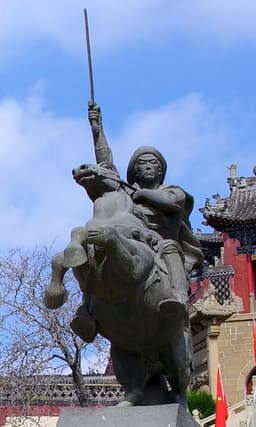
Li Zicheng
Revolutionary · Modern
43.5Total
Basic Information
Born
1947
1606
Died
—
1645
Era
Modern
Modern
Nationality
Afghanistan
China
Occupation
Revolutionary
Revolutionary
Civilization
Middle Eastern
Eastern
Score Comparison
Military (10%)
35.0
50.0
Political (20%)
26.4
27.9
Influence (20%)
47.1
52.5
Legacy (20%)
36.7
44.2
Leadership (15%)
40.4
39.0
Strategy (15%)
38.3
43.3
TOTAL
38.3
43.5
Gulbuddin Hekmatyar — Complete Timeline
1975 AD
Founding of Hezb-e Islami (1975)Political Action◆ Major
Gulbuddin Hekmatyar founded the Hezb-e Islami political party, an Islamist faction that became one of the most powerful mujahideen groups during the Soviet-Afghan War. The party received significant support from Pakistan's ISI and foreign Islamist donors.
MujahideenIslamist PartyCold War
Impact: national
1993 AD
Prime Minister during Civil War (1993-1994)Political Action◆ Major
Hekmatyar served as Prime Minister of Afghanistan from 1993 to 1994 under President Burhanuddin Rabbani. His tenure was marked by intense factional fighting, including rocket attacks on Kabul that caused thousands of civilian casualties, contributing to the devastation of the city.
Civil WarKabulRocket Attacks
Impact: nationaldestructive
1996 AD
Alliance with Taliban (1996-2001)Political Action
After the Taliban captured Kabul in 1996, Hekmatyar initially fled to Iran. He later aligned with the Taliban regime, though his influence waned. He remained in Afghanistan until the US-led invasion in 2001, after which he fled to Pakistan.
TalibanExileAlliance
Impact: national
2016 AD
Peace Agreement with Afghan Government (2016)Political Action◆ Major
Hekmatyar signed a peace agreement with the Afghan government of President Ashraf Ghani in 2016. The deal allowed him to return to Afghanistan from exile, with his party recognized as a political entity and his fighters integrated into state security forces.
Peace DealReconciliationGhani
Impact: nationalconstructive
Li Zicheng — Complete Timeline
1644 AD
Captured Beijing and Ended the Ming DynastyWar
Li Zicheng led his rebel army to capture Beijing. The Chongzhen Emperor committed suicide, ending the Ming dynasty. Li Zicheng proclaimed the Shun dynasty and briefly ruled from the Forbidden City before being defeated by Qing forces.
Ming-Qing TransitionRebellionBeijing
Impact: globaldestructive
Defeated at the Battle of Shanhai PassWar◆ Major
Li Zicheng's army was defeated by the combined forces of Wu Sangui and the Manchus at the Battle of Shanhai Pass. The defeat forced him to abandon Beijing and retreat westward, effectively ending his control over northern China.
Ming-Qing TransitionBattleDefeat
Impact: globaltragic
Proclaimed the Shun DynastyPolitical Action◆ Major
After capturing Beijing, Li Zicheng formally proclaimed the establishment of the Shun dynasty in Xi'an. He adopted the title of emperor and began implementing his own administrative policies, though his rule was short-lived.
Shun DynastyProclamationRebellion
Impact: nationalconstructive
1645 AD
Killed in Jiugong MountainWar◆ Major
Li Zicheng was killed by a local militia while fleeing through Jiugong Mountain in Hubei province. His death marked the end of the Shun dynasty and the collapse of his rebellion, though some accounts claim he survived and became a monk.
Shun DynastyDeathRebellion
Impact: nationaltragic
Expert Analysis
Li Zicheng vs Gulbuddin Hekmatyar
# The Rebel’s Curse: Why Li Zicheng and Gulbuddin Hekmatyar Built Empires of Ash
In the spring of 1644, Li Zicheng rode through the gates of Beijing at the head of a peasant army that had swept across northern China like a plague of locusts. The Ming emperor, alone in his palace, hanged himself from a tree. For one dizzying moment, the former post station clerk held the oldest continuous civilization on earth in his hands. Three hundred and forty-nine years later, in the rubble-strewn streets of Kabul, another revolutionary—Gulbuddin Hekmatyar—took the oath of prime minister as his own artillery rained shells on the city he was supposed to govern. Both men reached the pinnacle of power. Both saw it slip through their fingers. But their stories are not merely tales of failure; they are parables about the peculiar tragedy of the revolutionary who can destroy a world but cannot build one.
Origins
Li Zicheng was born in 1606 to a poor farming family in Shaanxi province, a region that had become a crucible of suffering. The Ming dynasty was choking on its own corruption, while a cycle of droughts and famines turned the land to dust. Li’s father died when he was young, and the boy grew up working as a shepherd, then a blacksmith, then a low-level government courier—a job that gave him a glimpse of the bureaucratic machinery he would one day shatter. The Little Ice Age was ravaging the globe, but in China it was apocalyptic: rivers froze, crops failed, and starving peasants sold their children for a bowl of gruel. When Li’s own region erupted in rebellion, he joined not out of ideology but out of sheer necessity.
Gulbuddin Hekmatyar was born in 1947 in the northern Afghan province of Kunduz, into a land that had known nothing but invasion and resistance. His father was a landowner, and young Hekmatyar studied engineering at Kabul University—a path that might have led to a comfortable middle-class life. But the 1960s and 1970s were a time of ideological ferment in Afghanistan, and Hekmatyar was drawn to the Islamist currents sweeping through the Muslim world. He was arrested for killing a leftist student in 1972, an act that marked him as a man willing to use violence as a first, not last, resort. Where Li Zicheng was shaped by hunger, Hekmatyar was shaped by zeal.
Rise to Power
Li Zicheng’s ascent was a masterpiece of strategic patience. He did not burst onto the scene fully formed; he learned war the hard way. By 1633, he had joined the rebel army of Gao Yingxiang, a charismatic leader who taught him the art of guerrilla warfare—hit and run, melt into the mountains, live off the land. When Gao was captured and executed in 1636, Li inherited a shattered force. He rebuilt it by promising something the Ming could not: land reform. His slogan, “Welcome the Dashing King, and you will not have to pay taxes,” was not empty rhetoric. In territories he controlled, he redistributed grain and executed corrupt officials. By 1643, he had defeated the Ming’s best generals and proclaimed the Shun dynasty in Xi’an, the ancient capital. When he marched on Beijing, the city gates were opened by his own sympathizers within.
Hekmatyar’s path was more fractured. After the Soviet invasion of 1979, he became a favored recipient of American and Pakistani aid, but his Hezb-e Islami faction was notoriously ruthless. He did not fight the Soviets so much as he fought everyone else—rival mujahideen commanders, civilians who refused to support him, even other Islamists. His men were known for throwing acid in the faces of unveiled women. By the time the Soviets withdrew in 1989, Hekmatyar had stockpiled more weapons than any other warlord, but he had also made himself the most hated man in Afghanistan. When the communist government collapsed in 1992, he refused to join the new power-sharing arrangement unless he got the top job—and when he didn’t, he shelled Kabul into ruins.
Leadership & Governance
Li Zicheng’s rule in Beijing lasted exactly forty-two days. He made two fatal mistakes. First, he believed that toppling the Ming was enough—that the empire would simply fall into his hands. He failed to secure the loyalty of Ming officials, many of whom he tortured for their hidden wealth. He failed to control his own army, which looted and raped with abandon, turning the population against him. Second, he underestimated Wu Sangui, the Ming general guarding the Great Wall’s eastern pass. Instead of negotiating, Li seized Wu’s family and concubine. Wu, enraged, opened the gates to the Manchu armies. At the Battle of Shanhai Pass in May 1644, Li’s peasant army—tired, undisciplined, and fighting in the open for the first time—was annihilated by the Manchu cavalry.
Hekmatyar’s governance was even more catastrophic. As prime minister from 1993 to 1994, he controlled little beyond his own faction. He spent his tenure trying to starve Kabul into submission, bombing its power plants and water supplies. His own defense minister later admitted, “We destroyed the country to save it.” When the Taliban emerged in 1994, promising order and Islamic law, Hekmatyar’s brutal chaos had made them welcome. He fled to Iran, then returned to ally with the very Taliban who had displaced him—a pattern of opportunism that defined his career.
Triumph & Tragedy
Li Zicheng’s greatest moment was also the seed of his destruction. On June 6, 1644, he entered the Forbidden City—the first commoner to do so in Chinese history. He sat on the dragon throne, wore the yellow robe, and issued decrees. But he had no plan for what came next. His tragedy was not that he lost, but that he had no idea how to win. Chased south, he was killed in September 1645 by a local militia in Jiugong Mountain, Hubei. The peasant king died like a peasant: alone, hunted, and forgotten.
Hekmatyar’s tragedy is more drawn out. In 2016, after decades of war, he signed a peace agreement with the Afghan government and returned to Kabul as a respected elder. He gave speeches about reconciliation. But the Taliban had already taken over much of the country, and in 2021, they swept back into power. Hekmatyar, now in his seventies, was reduced to offering congratulations to the very movement he had once fought. He had outlived his own relevance.
Character & Destiny
Li Zicheng was a man of the earth—pragmatic, resilient, but limited by his own horizons. He could lead an army of starving men across a continent, but he could not imagine an empire. Hekmatyar was a man of ideas—but ideas that curdled into dogma. He could inspire devotion, but he could not inspire trust. Both were revolutionaries in the truest sense: they broke the old world, but they could not build a new one. Their personalities—Li’s cautious patience, Hekmatyar’s fanatical impatience—were perfectly suited to destruction, perfectly unsuited to creation.
Legacy
Today, Li Zicheng is remembered in China as a tragic folk hero, a symbol of peasant resistance, but also as a cautionary tale. The Qing dynasty would rule for 267 years, and its historians painted him as a bandit. Hekmatyar is remembered as the man who shelled Kabul, a warlord whose name is synonymous with the civil war that shattered Afghanistan. Their scores tell the story: Li Zicheng’s influence is 74.3, Hekmatyar’s 61.9—both high, because both changed history. But their leadership scores—33.8 and 41.3—are abysmal. They were men who could start fires but could not control them.
Conclusion
There is a bitter symmetry between these two rebels, separated by three centuries and a continent. Li Zicheng rose from the dust of a dying dynasty; Hekmatyar rose from the rubble of a Soviet invasion. Both reached the summit and found it barren. Their stories remind us that revolution is the easy part. The hardest thing in the world is not to seize power, but to know what to do with it once you have it. In the end, the peasant and the engineer both learned the same lesson: history does not reward those who only know how to break things.
Rankings
🥇
Li ZichengLeader
Mil: 50.0Pol: 27.9Inf: 52.5
43.5
🥈
Gulbuddin Hekmatyar
Mil: 35.0Pol: 26.4Inf: 47.1
38.3
+5.2 behind
How This Comparison Works
Algorithm
Each figure is scored on 6 dimensions (0—100 scale) based on structured historical data: Military (10%), Political (20%), Influence (20%), Legacy (20%), Leadership (15%), Strategy (15%). The weighted total produces the final ranking.
Data Sources
Scores are computed from structured sub-indicators in the database. Scale factors adjust for era (Ancient ×0.85, Modern ×1.0) and civilization size (Eastern ×1.05, Other ×0.80) to account for differences in population and military scale.
Maximum 3 Figures
Comparisons are limited to 2—3 figures to ensure readability and statistical meaningfulness.
Error Margins
±5 points per dimension — Sub-scores are derived from historical records with inherent uncertainty. Two figures within 5 points on a dimension should be considered roughly equivalent in that area.
Total Score Accuracy
±3 points overall — The weighted combination of 6 dimensions produces a total score with approximately ±3 points of uncertainty. Differences of less than 3 points are not statistically significant— the figures are effectively tied.
Known Limitations
- Historical records are incomplete and uneven across civilizations
- Figures from oral-tradition societies may be underrepresented
- Occupation labels can misclassify multi-role figures
- Scores measure capability and impact, not moral character
- Quantitative scoring is a comparison tool, not absolute truth
Capability Radar
Military (10%) — Battles & Warfare
Battles
45
55
Win Rate
30
60
Expansion
25
65
Political (20%) — Governance & Reform
Reform
15
15
Diplomacy
20
20
Economy
10
10
Influence (20%) — Cultural & Global Reach
Cultural
25
40
Global
25
35
Legacy (20%) — Historical Impact
Historical
30
55
Longevity
20
30
Leadership (15%) — Power & Stability
Tenure
30
20
Stability
5
5
Strategy (15%) — Tactics & Innovation
Strategy
35
55
Tactics
40
50
Reform
20
30
Similar Comparisons
Comments & Discussion
数据猎手6/16/2026
数据不骗人:李自成控制北方不到六周就崩了,他连北京城的粮仓都管不好,四十万大军靠抢劫活着。希克马蒂亚尔更离谱,1994年喀布尔的炮击导致超过两万人死亡,他当总理第一周轰掉自己首都南区。两人都掌握了毁灭的方法,但治理能力统计数据?几乎是零。你可以当革命家,但建立国家不是靠口号。
Romance of the Ruins6/16/2026
As a classics scholar, I see both as tragic heroes of epic poetry, not just failed rebels. Li Zicheng, the shepherd-turned-emperor, echoes the fall of the Ming with Homeric irony—he becomes the dragon he slayed. Hekmatyar, the "Engineer" of jihad, recalls Achilles: brilliant, but destructive in isolation. Their empires of ash aren’t just historical footnotes; they’re warnings about hubris, repeating from Rome to Kabul. Power without a vision is just a funeral pyre.
麻辣史评6/16/2026
我说句难听的:李自成就是个泥腿子暴发户,进北京后纵兵抢掠拷打前朝官员,那点肚量还想坐天下?希克马蒂亚尔呢,不就是个美苏冷战养大的军阀,用美国毒刺导弹打苏联,转身就拿RPG轰自己人。两人都毁在一个德性上——只会拆家不会盖房。他们不是革命家,是人性两面镜:一个土皇帝梦碎紫禁城,一个圣战疯子炸烂阿富汗。
Chronicler34846/16/2026
As a military historian, I see the fatal flaw in both men: they couldn’t transition from guerrilla to governance. Li Zicheng’s army took Beijing in 1644—a monumental feat—but he lost within weeks by failing to secure the passes against Wu Sangui. Hekmatyar shelled Kabul as PM in 1992, proving he was still a warlord, not a statesman. Both knew how to burn empires, but not how to build them. Ash doesn’t make for a stable throne.