Loading...
Gulbuddin Hekmatyar vs Julius Caesar
Julius Caesar leads by 44.5 pts · 2 figures compared
…
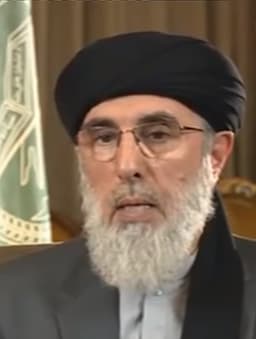
Gulbuddin Hekmatyar
Revolutionary · Modern
38.3Total

Julius Caesar
General · Ancient
82.8Total
Basic Information
Born
1947
-100
Died
—
-44
Era
Modern
Ancient
Nationality
Afghanistan
Roman Republic
Occupation
Revolutionary
General
Civilization
Middle Eastern
Western
Score Comparison
Military (10%)
35.0
88.0
Political (20%)
26.4
78.0
Influence (20%)
47.1
85.0
Legacy (20%)
36.7
82.0
Leadership (15%)
40.4
80.0
Strategy (15%)
38.3
85.0
TOTAL
38.3
82.8
Gulbuddin Hekmatyar — Complete Timeline
1975 AD
Founding of Hezb-e Islami (1975)Political Action◆ Major
Gulbuddin Hekmatyar founded the Hezb-e Islami political party, an Islamist faction that became one of the most powerful mujahideen groups during the Soviet-Afghan War. The party received significant support from Pakistan's ISI and foreign Islamist donors.
MujahideenIslamist PartyCold War
Impact: national
1993 AD
Prime Minister during Civil War (1993-1994)Political Action◆ Major
Hekmatyar served as Prime Minister of Afghanistan from 1993 to 1994 under President Burhanuddin Rabbani. His tenure was marked by intense factional fighting, including rocket attacks on Kabul that caused thousands of civilian casualties, contributing to the devastation of the city.
Civil WarKabulRocket Attacks
Impact: nationaldestructive
1996 AD
Alliance with Taliban (1996-2001)Political Action
After the Taliban captured Kabul in 1996, Hekmatyar initially fled to Iran. He later aligned with the Taliban regime, though his influence waned. He remained in Afghanistan until the US-led invasion in 2001, after which he fled to Pakistan.
TalibanExileAlliance
Impact: national
2016 AD
Peace Agreement with Afghan Government (2016)Political Action◆ Major
Hekmatyar signed a peace agreement with the Afghan government of President Ashraf Ghani in 2016. The deal allowed him to return to Afghanistan from exile, with his party recognized as a political entity and his fighters integrated into state security forces.
Peace DealReconciliationGhani
Impact: nationalconstructive
Julius Caesar — Complete Timeline
58 BC
Gallic WarsWar◆ Major
Caesar, as proconsul of Gaul, launched a series of campaigns that conquered all of Gaul (modern France, Belgium, and parts of Switzerland). He fought numerous battles, including against the Helvetii, the Belgae, and the Gallic chieftain Vercingetorix. The wars brought immense wealth and a loyal army to Caesar.
Gallic WarsConquestRoman Expansion
Impact: regional
49 BC
Crossing the RubiconPolitical Action◆ Major
Caesar led Legio XIII across the Rubicon River into Italy, defying the Roman Senate's order to disband his army. This act triggered a civil war against Pompey and the Optimates, ultimately leading to Caesar's dictatorship and the end of the Roman Republic.
Roman Civil WarEnd of RepublicPower Struggle
Impact: global
48 BC
Battle of PharsalusWar◆ Major
Caesar's outnumbered army defeated the larger forces of Pompey the Great at Pharsalus in Greece. Caesar's tactical use of a reserve line to counter Pompey's cavalry charge proved decisive. Pompey fled to Egypt, where he was assassinated, leaving Caesar as the undisputed master of the Roman world.
Roman Civil WarBattleDecisive Victory
Impact: regional
44 BC
Appointment as Dictator for LifePolitical Action◆ Major
The Roman Senate appointed Caesar dictator perpetuo (dictator for life), granting him unprecedented personal power. This move concentrated military, legislative, and judicial authority in one person, effectively ending the Roman Republic's traditional system of checks and balances and alarming many senators.
DictatorshipEnd of RepublicPower Consolidation
Impact: regionaldestructive
Assassination on the Ides of MarchPolitical Action◆ Major
A group of Roman senators, led by Marcus Junius Brutus and Gaius Cassius Longinus, stabbed Caesar to death at a meeting of the Senate in the Theatre of Pompey. The assassination was intended to restore the Republic, but instead triggered another civil war that led to the rise of the Roman Empire.
AssassinationRoman PoliticsEnd of Republic
Impact: globaldestructive
Expert Analysis
gulbuddin-hekmatyar-vs-julius-caesar
# The Dictator and the Warlord: Two Paths to Power, Two Eternities of Ruin
On a winter morning in 49 BCE, a middle-aged Roman general stood at the banks of a small stream in northern Italy. The Rubicon River was little more than a muddy ditch, but it marked the boundary between lawful command and treason. Julius Caesar paused, then crossed. On a spring morning in 1996, another man—gaunt, bearded, burning with religious certainty—watched from a hillside as Taliban fighters rolled into Kabul. Gulbuddin Hekmatyar had just been driven from the same capital he had once ruled as prime minister. Both men had sought absolute power. One reshaped the world for a millennium. The other became a footnote in a tragedy still unfolding.
Origins
Caesar was born into the twilight of the Roman Republic, a world of senatorial intrigue, slave armies, and endless frontier wars. His family, the Julii, claimed descent from the goddess Venus, but they were political outsiders in a system dominated by a few wealthy clans. He learned early that in Rome, reputation was currency—and that debt, patronage, and military glory could buy anything. His youth was marked by exile, piracy, and a desperate climb through the ranks of a crumbling aristocracy.
Hekmatyar was born in 1947 in the northern Afghan province of Kunduz, into a Pashtun family of modest means. His world was one of tribal loyalties, Soviet expansion, and a monarchy that barely governed beyond Kabul. He studied engineering at Kabul University, but found his true calling in Islamist politics. Where Caesar inherited a tradition of senatorial ambition, Hekmatyar inherited a tradition of jihad—holy struggle against foreign influence and domestic corruption. Both men were products of their time, but their times could not have been more different: Caesar’s Rome was ascending; Hekmatyar’s Afghanistan was already disintegrating.
Rise to Power
Caesar’s path was methodical, brilliant, and ruthless. He served as a military tribune, then quaestor, then aedile—spending fortunes on games and public works to win the love of the Roman mob. He formed the First Triumvirate with Pompey and Crassus, a backroom deal that gave him command of Gaul. There, over eight years, he conquered a territory larger than Italy itself, slaughtering perhaps a million people and enslaving another million. When his political enemies in Rome tried to strip him of command, he crossed the Rubicon and ignited a civil war. He was fifty-one years old.
Hekmatyar’s rise was equally ambitious but far more fragmented. In 1975, he founded Hezb-e Islami, an Islamist party that attracted young men radicalized by the secular, Soviet-backed government in Kabul. When the Soviet Union invaded in 1979, Hekmatyar became a key mujahideen commander, receiving weapons from the CIA and Pakistan’s ISI. But unlike Caesar, who united his enemies through conquest, Hekmatyar spent as much time fighting rival Afghan factions as he did the Soviets. His rockets rained down on Kabul during the 1990s civil war, killing thousands of civilians. In 1993, he became prime minister—but the position was hollow, his capital a ruin, his authority contested by every warlord with a gun.
Leadership & Governance
Caesar governed like a man building an empire for eternity. As dictator, he reformed the calendar, granted citizenship to provincials, launched public works projects, and centralized tax collection. He was merciful to defeated enemies—pardoning Brutus and Cassius, who would later kill him—and ruthless to those who resisted. His military genius lay in speed, logistics, and personal courage: he often fought in the front lines, inspiring his legions to impossible victories. His political wisdom, however, was flawed. He accumulated powers so rapidly that he frightened the very class he needed to govern.
Hekmatyar governed like a man fighting a war that never ended. As prime minister, he failed to deliver basic services, secure the capital, or build any lasting institution. His strategy was entirely destructive: shelling rival positions, cutting deals with the Taliban, and fleeing when the tide turned. His 2016 peace agreement with the Afghan government was a surrender disguised as reconciliation—a final acknowledgment that his revolution had failed. Where Caesar built aqueducts, Hekmatyar left craters.
Triumph & Tragedy
Caesar’s greatest moment was his triumph over Gaul—a conquest that doubled Rome’s territory and made him the richest man in the Republic. His most devastating failure was his assassination on the Ides of March, 44 BCE, when sixty senators stabbed him to death at the foot of Pompey’s statue. He died with twenty-three wounds, betrayed by men he had pardoned and promoted.
Hekmatyar’s greatest moment was arguably his survival. He outlasted the Soviets, the civil war, the Taliban, and the American invasion—dying of natural causes (wherever he is now) rather than in battle or prison. His tragedy was irrelevance. By the time he signed the 2016 peace deal, he was a ghost of the 1980s, a man whose name once terrified Kabul but now barely registered in a country exhausted by war.
Character & Destiny
Caesar was driven by an insatiable need for glory—*ambitio*, the Romans called it, the relentless pursuit of public honor. He was calculating yet impulsive, generous yet manipulative, a man who believed his destiny was to rule. That belief became self-fulfilling: his assassination did not restore the Republic but launched the empire he had envisioned.
Hekmatyar was driven by ideology and grievance. He saw himself as a pure Islamist, untainted by compromise. That purity became his prison: he could never build, only destroy. His character—suspicious, inflexible, paranoid—prevented him from forming the alliances that might have given him lasting power. Caesar died because he trusted too much; Hekmatyar survived because he trusted no one.
Legacy
Caesar’s legacy is the Western world itself. His name became synonymous with emperor—*Kaiser* in German, *Tsar* in Russian. His writings, especially the *Commentaries on the Gallic War*, are still studied in military academies. He transformed Rome from a republic into an empire, and that empire shaped law, language, religion, and politics for two thousand years.
Hekmatyar’s legacy is rubble. He is remembered, if at all, as a symbol of the Afghan civil war’s futility—a man who could have been a statesman but chose to be a warlord. His score of 51.6 out of 100, compared to Caesar’s 83.3, is not just a number; it is a judgment on a life that promised much and delivered only destruction.
Conclusion
Standing at the Rubicon, Caesar knew that history would remember him. Hekmatyar, shelling Kabul from the hills, probably believed the same. But history is not a mirror; it is a sieve. It catches the builders and the destroyers alike, but it only amplifies those who built something that lasted. Caesar built an empire. Hekmatyar built a graveyard. The difference between them is not talent or opportunity—it is the choice to create rather than consume, to unite rather than divide. That choice, made in the heat of ambition, is what separates a Julius Caesar from a Gulbuddin Hekmatyar. One crossed his Rubicon and remade the world. The other crossed nothing but the bodies of his countrymen.
Rankings
🥇
Julius CaesarLeader
Mil: 88.0Pol: 78.0Inf: 85.0
82.8
🥈
Gulbuddin Hekmatyar
Mil: 35.0Pol: 26.4Inf: 47.1
38.3
+44.5 behind
How This Comparison Works
Algorithm
Each figure is scored on 6 dimensions (0—100 scale) based on structured historical data: Military (10%), Political (20%), Influence (20%), Legacy (20%), Leadership (15%), Strategy (15%). The weighted total produces the final ranking.
Data Sources
Scores are computed from structured sub-indicators in the database. Scale factors adjust for era (Ancient ×0.85, Modern ×1.0) and civilization size (Eastern ×1.05, Other ×0.80) to account for differences in population and military scale.
Maximum 3 Figures
Comparisons are limited to 2—3 figures to ensure readability and statistical meaningfulness.
Error Margins
±5 points per dimension — Sub-scores are derived from historical records with inherent uncertainty. Two figures within 5 points on a dimension should be considered roughly equivalent in that area.
Total Score Accuracy
±3 points overall — The weighted combination of 6 dimensions produces a total score with approximately ±3 points of uncertainty. Differences of less than 3 points are not statistically significant— the figures are effectively tied.
Known Limitations
- Historical records are incomplete and uneven across civilizations
- Figures from oral-tradition societies may be underrepresented
- Occupation labels can misclassify multi-role figures
- Scores measure capability and impact, not moral character
- Quantitative scoring is a comparison tool, not absolute truth
Capability Radar
Military (10%) — Battles & Warfare
Battles
45
95
Win Rate
30
92
Expansion
25
97
Political (20%) — Governance & Reform
Reform
15
90
Diplomacy
20
85
Economy
10
82
Influence (20%) — Cultural & Global Reach
Cultural
25
88
Global
25
94
Legacy (20%) — Historical Impact
Historical
30
95
Longevity
20
96
Leadership (15%) — Power & Stability
Tenure
30
75
Stability
5
60
Strategy (15%) — Tactics & Innovation
Strategy
35
94
Tactics
40
96
Reform
20
88
Similar Comparisons
Comments & Discussion
Emperor's Ghost6/17/2026
Caesar crossed the Rubicon with one legion — that's about 5,000 men. Hekmatyar commanded thousands of mujahideen, yet Caesar carved a path from Gaul to Egypt in a decade while Hekmatyar couldn't hold Kabul for a year. Military logistics don't lie: Caesar's speed and discipline eclipse any warlord's chaos. Hekmatyar's a footnote; Caesar rewrote history's spine.
老书虫6/17/2026
拿凯撒跟希克马蒂亚尔比?凯撒写《高卢战记》时,字字句句都是宣传——把自己塑造成共和国的救星。希克马蒂亚尔连本自传都没留下,只有暗杀令和火箭弹。一个是经典作家,一个是恐怖分子的清单。学问上,凯撒甩他十条街。希克马蒂亚尔的历史价值,顶多是监狱档案里的名字。
Data Skeptic6/17/2026
Comparing body counts is grim but revealing. Caesar's Gallic Wars killed an estimated 1 million Gauls — systematic, efficient, empire-building. Hekmatyar's civil war killed perhaps 50,000 in Kabul alone, but it was indiscriminate shelling, not strategy. Statistically, Caesar's brutality had purpose; Hekmatyar's was just noise. One shaped demographics, the other shattered a city. Scale matters in history's ledger.
巷战老兵6/17/2026
战略上,凯撒懂围城——阿莱西亚之战,双环工事饿死高卢人。希克马蒂亚尔只会炸喀布尔,连自己的总理府都守不住。凯撒的胜利靠纪律和工程,希克马蒂亚尔的失败靠冲动和缺粮。一个是大将,一个是地痞。阿富汗人叫他“屠夫”,罗马人叫凯撒“征服者”——这里面有质的差别。
Revisionist Edge6/17/2026
Both men were power-hungry chaos agents, but let's stop romanticizing Caesar as a "genius." He plunged Rome into civil war for personal ambition, destroyed the Republic, and his "mercy" was just PR. Hekmatyar's brutality was honest — he never pretended to be a reformer. Caesar's legacy is a poisoned gift; Hekmatyar's is a straight-up bomb crater. At least the Afghan didn't write his own propaganda.