Loading...
Gulbuddin Hekmatyar vs Jose Rizal
Jose Rizal leads by 8.4 pts · 2 figures compared
…
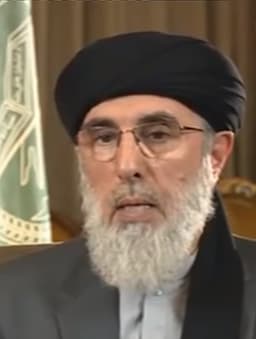
Gulbuddin Hekmatyar
Revolutionary · Modern
38.3Total
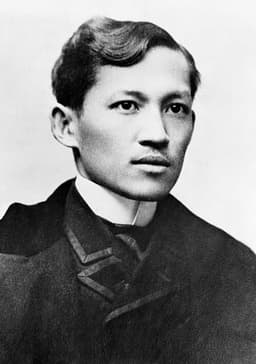
Jose Rizal
Revolutionary · Modern
46.7Total
Basic Information
Born
1947
1861
Died
—
1896
Era
Modern
Modern
Nationality
Afghanistan
Philippines
Occupation
Revolutionary
Revolutionary
Civilization
Middle Eastern
Eastern
Score Comparison
Military (10%)
35.0
11.9
Political (20%)
26.4
33.6
Influence (20%)
47.1
62.0
Legacy (20%)
36.7
58.0
Leadership (15%)
40.4
40.4
Strategy (15%)
38.3
44.5
TOTAL
38.3
46.7
Gulbuddin Hekmatyar — Complete Timeline
1975 AD
Founding of Hezb-e Islami (1975)Political Action◆ Major
Gulbuddin Hekmatyar founded the Hezb-e Islami political party, an Islamist faction that became one of the most powerful mujahideen groups during the Soviet-Afghan War. The party received significant support from Pakistan's ISI and foreign Islamist donors.
MujahideenIslamist PartyCold War
Impact: national
1993 AD
Prime Minister during Civil War (1993-1994)Political Action◆ Major
Hekmatyar served as Prime Minister of Afghanistan from 1993 to 1994 under President Burhanuddin Rabbani. His tenure was marked by intense factional fighting, including rocket attacks on Kabul that caused thousands of civilian casualties, contributing to the devastation of the city.
Civil WarKabulRocket Attacks
Impact: nationaldestructive
1996 AD
Alliance with Taliban (1996-2001)Political Action
After the Taliban captured Kabul in 1996, Hekmatyar initially fled to Iran. He later aligned with the Taliban regime, though his influence waned. He remained in Afghanistan until the US-led invasion in 2001, after which he fled to Pakistan.
TalibanExileAlliance
Impact: national
2016 AD
Peace Agreement with Afghan Government (2016)Political Action◆ Major
Hekmatyar signed a peace agreement with the Afghan government of President Ashraf Ghani in 2016. The deal allowed him to return to Afghanistan from exile, with his party recognized as a political entity and his fighters integrated into state security forces.
Peace DealReconciliationGhani
Impact: nationalconstructive
Jose Rizal — Complete Timeline
1887 AD
Publication of Noli Me TangereCultural
Rizal published his first novel, Noli Me Tangere, in Berlin. The book exposed the corruption and abuses of Spanish colonial rule and the Catholic Church in the Philippines, sparking nationalist sentiment among Filipinos.
LiteratureNationalismColonial Critique
Impact: nationalprogressive
1891 AD
Publication of El FilibusterismoCultural◆ Major
Rizal published his second novel, El Filibusterismo, in Ghent, Belgium. A darker sequel to Noli Me Tangere, it advocated for revolution and further criticized Spanish oppression, intensifying calls for reform and independence.
LiteratureRevolutionColonial Critique
Impact: nationalprogressive
1892 AD
Exile to DapitanPolitical Action◆ Major
Rizal was exiled by Spanish authorities to Dapitan in Mindanao for his alleged involvement in revolutionary activities. During his four-year exile, he practiced medicine, taught, and conducted scientific research, but remained under surveillance.
ExileSpanish ColonialismDapitan
Impact: nationaltragic
1896 AD
Execution of José RizalPolitical Action
Rizal was executed by firing squad in Manila on charges of sedition and rebellion, following a trial by Spanish military court. His martyrdom galvanized the Philippine Revolution, making him a national hero and symbol of resistance.
ExecutionMartyrdomPhilippine Revolution
Impact: nationaltragic
Expert Analysis
Jose Rizal vs Gulbuddin Hekmatyar
# The Pen and the Sword: Two Revolutions, Two Destinies
On a gray December morning in 1896, a man in a black suit stood before a Spanish firing squad in Manila. He refused the blindfold, turned to face his executioners, and died with the dignity of a martyr. A century later, in the mountains of Afghanistan, another revolutionary watched his rockets rain down on his own capital city, fighting not for liberation but for power in a civil war that would never truly end. Both men called themselves revolutionaries. Both sought to reshape their nations. But one would become a symbol of peaceful resistance, the other a cautionary tale of ambition and violence. What made the difference? Was it character, circumstance, or something deeper?
Origins
José Rizal was born in 1861 to a prosperous family in Calamba, a town on the island of Luzon. His parents were educated, landowning Filipinos—*ilustrados*—who could afford to send him to the best schools in Manila and eventually to Europe. He studied medicine, philosophy, and languages, mastering over a dozen tongues. He was a poet, a sculptor, an ophthalmologist, and a novelist. His world was one of ideas: Enlightenment philosophy, liberal reformism, and the belief that reason could conquer oppression.
Gulbuddin Hekmatyar entered the world in 1947 in the village of Imam Sahib, in northern Afghanistan. His family was Pashtun, part of a tribal society where honor, clan loyalty, and Islam governed life. He studied engineering at Kabul University, but his real education came in the streets and prisons of a country torn by coups, Soviet influence, and ideological struggle. Where Rizal read Rousseau and Voltaire, Hekmatyar absorbed the fiery writings of the Muslim Brotherhood and Sayyid Qutb. His world was one of grievance: the humiliation of Afghanistan under foreign domination, the corruption of the monarchy, and the betrayal of secular nationalism.
Rise to Power
Rizal's path to revolution was through the written word. In 1887, he published *Noli Me Tangere* in Berlin—a novel that laid bare the abuses of Spanish friars and colonial officials. The book was smuggled into the Philippines, read in secret, and passed from hand to hand. It did not call for armed rebellion; it called for reform, for justice, for the recognition of Filipinos as human beings. A second novel, *El Filibusterismo*, published in Ghent in 1891, was darker, more urgent. It hinted at revolution but stopped short of advocating violence. Rizal believed in the power of education, not bullets.
Hekmatyar's rise was forged in violence. In 1975, he founded Hezb-e Islami, an Islamist faction that rejected both Soviet communism and Afghan traditionalism. He was a student leader who turned to guerrilla warfare, training his men in the mountains of Pakistan, receiving weapons from the CIA and Saudi Arabia, and building a reputation for ruthlessness. Where Rizal wrote in cafes, Hekmatyar fought in trenches. Where Rizal sought to persuade, Hekmatyar sought to conquer.
Leadership & Governance
Rizal never held political office. He led no army, commanded no followers in battle. His leadership was moral and intellectual. He organized the La Liga Filipina, a civic association that promoted unity and reform, but it was quickly suppressed. He was exiled to Dapitan in 1892, where he practiced medicine, taught children, and built a water system—a quiet, practical resistance. His strategy was one of patience: change minds, and the structures of oppression would eventually crumble.
Hekmatyar, by contrast, became Prime Minister of Afghanistan in 1993 during the civil war that followed the Soviet withdrawal. His tenure was a disaster. Rockets fell on Kabul, killing thousands of civilians. His forces were accused of atrocities. He governed through fear and alliance, shifting loyalties as easily as changing clothes. In 1996, when the Taliban captured Kabul, he fled to Iran. Later, he aligned with the very Taliban he had once fought. His strategy was one of survival: power first, principles second.
Triumph & Tragedy
Rizal's greatest moment was his death. On December 30, 1896, he was executed by firing squad in Bagumbayan, now Luneta Park. His last poem, "Mi Último Adiós," was hidden in an alcohol burner and smuggled out. His martyrdom electrified the Philippine Revolution, making him a symbol more powerful than any living leader. Andrés Bonifacio, the revolutionary general, said, "The death of Rizal is the birth of the nation."
Hekmatyar's greatest moment was his peace agreement with the Afghan government in 2016, allowing him to return from exile. But it was a hollow triumph. By then, he was an old man, remembered not as a liberator but as a warlord who had destroyed his own capital. His rockets had killed more Afghans than any foreign invader. His tragedy was not a martyr's death but a long, slow irrelevance.
Character & Destiny
Rizal was a man of contradictions: a revolutionary who rejected violence, a nationalist who wrote in Spanish, a Catholic who criticized the Church. He believed that the pen was mightier than the sword—and he was right, but only because the sword was wielded by others. His character was shaped by optimism, by a faith in human progress that seems almost naive today. He once wrote, "I die without seeing the dawn brighten over my native land. You, who are to see it, welcome it—and do not forget those who fell during the night."
Hekmatyar was a man of singular focus: power, for its own sake. He was called the "Engineer" by his followers, but his engineering was of destruction, not construction. His character was shaped by paranoia, by a belief that the world was a zero-sum game where only the ruthless survived. He once said, "We have no choice but to fight. The enemy understands only force."
Legacy
Rizal's legacy is written in bronze and stone. His face is on the Philippine one-peso coin. His novels are required reading in every Filipino school. His execution date is a national holiday. He is remembered as a martyr, a hero, a father of the nation. His influence score of 70.6 and legacy score of 72.2 reflect a man who changed a country without firing a shot.
Hekmatyar's legacy is written in rubble and regret. He is remembered as a spoiler, a man who could destroy but never build. His influence score of 61.9 and legacy score of 47.8 reflect a revolutionary who became a warlord, a leader who outlived his relevance. In Afghanistan, he is a footnote in a larger tragedy.
Conclusion
Two revolutionaries, two paths. Rizal chose the pen, and it made him immortal. Hekmatyar chose the sword, and it made him forgotten. The difference was not in their circumstances—both faced oppression, both sought change. It was in their character: Rizal believed in the power of ideas, Hekmatyar in the power of force. One died for his country, the other lived to see it burn. History remembers the martyr, not the warlord. It always does.
Rankings
🥇
Jose RizalLeader
Mil: 11.9Pol: 33.6Inf: 62.0
46.7
🥈
Gulbuddin Hekmatyar
Mil: 35.0Pol: 26.4Inf: 47.1
38.3
+8.4 behind
How This Comparison Works
Algorithm
Each figure is scored on 6 dimensions (0—100 scale) based on structured historical data: Military (10%), Political (20%), Influence (20%), Legacy (20%), Leadership (15%), Strategy (15%). The weighted total produces the final ranking.
Data Sources
Scores are computed from structured sub-indicators in the database. Scale factors adjust for era (Ancient ×0.85, Modern ×1.0) and civilization size (Eastern ×1.05, Other ×0.80) to account for differences in population and military scale.
Maximum 3 Figures
Comparisons are limited to 2—3 figures to ensure readability and statistical meaningfulness.
Error Margins
±5 points per dimension — Sub-scores are derived from historical records with inherent uncertainty. Two figures within 5 points on a dimension should be considered roughly equivalent in that area.
Total Score Accuracy
±3 points overall — The weighted combination of 6 dimensions produces a total score with approximately ±3 points of uncertainty. Differences of less than 3 points are not statistically significant— the figures are effectively tied.
Known Limitations
- Historical records are incomplete and uneven across civilizations
- Figures from oral-tradition societies may be underrepresented
- Occupation labels can misclassify multi-role figures
- Scores measure capability and impact, not moral character
- Quantitative scoring is a comparison tool, not absolute truth
Capability Radar
Military (10%) — Battles & Warfare
Battles
45
14
Win Rate
30
21
Expansion
25
22
Political (20%) — Governance & Reform
Reform
15
15
Diplomacy
20
20
Economy
10
5
Influence (20%) — Cultural & Global Reach
Cultural
25
75
Global
25
65
Legacy (20%) — Historical Impact
Historical
30
80
Longevity
20
75
Leadership (15%) — Power & Stability
Tenure
30
0
Stability
5
5
Strategy (15%) — Tactics & Innovation
Strategy
35
27
Tactics
40
28
Reform
20
28
Similar Comparisons
Comments & Discussion
No comments yet. Be the first to share your thoughts!