Loading...
Gulbuddin Hekmatyar vs Jose Maria Sison
Jose Maria Sison leads by 10.0 pts · 2 figures compared
…
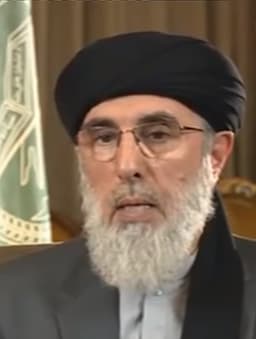
Gulbuddin Hekmatyar
Revolutionary · Modern
38.3Total
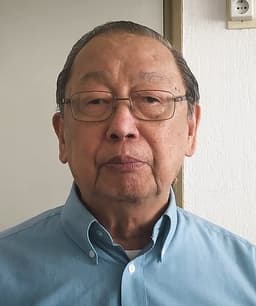
Jose Maria Sison
Revolutionary · Modern
48.3Total
Basic Information
Born
1947
1939
Died
—
—
Era
Modern
Modern
Nationality
Afghanistan
Philippines
Occupation
Revolutionary
Revolutionary
Civilization
Middle Eastern
Eastern
Score Comparison
Military (10%)
35.0
41.6
Political (20%)
26.4
35.1
Influence (20%)
47.1
53.3
Legacy (20%)
36.7
45.0
Leadership (15%)
40.4
58.8
Strategy (15%)
38.3
54.6
TOTAL
38.3
48.3
Gulbuddin Hekmatyar — Complete Timeline
1975 AD
Founding of Hezb-e Islami (1975)Political Action◆ Major
Gulbuddin Hekmatyar founded the Hezb-e Islami political party, an Islamist faction that became one of the most powerful mujahideen groups during the Soviet-Afghan War. The party received significant support from Pakistan's ISI and foreign Islamist donors.
MujahideenIslamist PartyCold War
Impact: national
1993 AD
Prime Minister during Civil War (1993-1994)Political Action◆ Major
Hekmatyar served as Prime Minister of Afghanistan from 1993 to 1994 under President Burhanuddin Rabbani. His tenure was marked by intense factional fighting, including rocket attacks on Kabul that caused thousands of civilian casualties, contributing to the devastation of the city.
Civil WarKabulRocket Attacks
Impact: nationaldestructive
1996 AD
Alliance with Taliban (1996-2001)Political Action
After the Taliban captured Kabul in 1996, Hekmatyar initially fled to Iran. He later aligned with the Taliban regime, though his influence waned. He remained in Afghanistan until the US-led invasion in 2001, after which he fled to Pakistan.
TalibanExileAlliance
Impact: national
2016 AD
Peace Agreement with Afghan Government (2016)Political Action◆ Major
Hekmatyar signed a peace agreement with the Afghan government of President Ashraf Ghani in 2016. The deal allowed him to return to Afghanistan from exile, with his party recognized as a political entity and his fighters integrated into state security forces.
Peace DealReconciliationGhani
Impact: nationalconstructive
Jose Maria Sison — Complete Timeline
1968 AD
Founded the Communist Party of the PhilippinesPolitical Action◆ Major
Sison re-established the Communist Party of the Philippines (CPP) along Maoist lines, breaking from the old Partido Komunista ng Pilipinas. The CPP launched a protracted people's war against the Philippine state, becoming one of Asia's longest-running insurgencies.
CommunismMaoismInsurgency
Impact: nationaldestructive
1969 AD
Founded the New People's ArmyPolitical Action◆ Major
Sison established the New People's Army (NPA) as the armed wing of the CPP. The NPA began guerrilla operations in rural areas, targeting government forces and infrastructure. The group has been designated a terrorist organization by the Philippines and the US.
GuerrillaInsurgencyArmed Struggle
Impact: nationaldestructive
1977 AD
Arrested and imprisoned under MarcosPolitical Action◆ Major
Sison was arrested by the Marcos regime and imprisoned for seven years. During his detention, he continued to direct the CPP/NPA through written orders smuggled out of prison. He was released in 1986 after the People Power Revolution.
ImprisonmentMartial LawMarcos
Impact: nationaltragic
1987 AD
Exiled to the NetherlandsPolitical Action◆ Major
After the 1986 revolution, Sison went into self-exile in the Netherlands. From there, he continued to lead the CPP/NPA, issuing directives and negotiating peace talks with the Philippine government. He remains in exile as of 2024.
ExilePeace TalksLeadership
Impact: national
Expert Analysis
Gulbuddin Hekmatyar vs Jose Maria Sison
# The Revolutionary’s Dilemma: Two Lives, Two Legacies
In 1996, as Gulbuddin Hekmatyar’s rockets rained down on Kabul, killing thousands of civilians in a desperate bid for power, Jose Maria Sison sat in a modest apartment in Utrecht, Netherlands, directing a guerrilla army from a laptop. One man was inside the inferno, the other watching from a distance. Both were revolutionaries who had spent decades fighting for their visions of a new society. Yet their paths diverged so sharply that they seem to belong to different species of political animal. What explains the difference between the man who became a byword for destruction and the man who became a patient, enduring symbol of resistance?
Origins
Hekmatyar was born in 1947 in the northern Afghan province of Kunduz, into a Pashtun family with roots in the Ghor region. He studied engineering at Kabul University in the 1960s, where he fell under the spell of Islamist thinkers like Sayyid Qutb and Hassan al-Banna. Afghanistan in the 1970s was a cauldron of competing ideologies—communism, nationalism, and political Islam—and Hekmatyar chose the path of fire. He was expelled from university for killing a leftist student, an act that launched his reputation as a man willing to use violence without hesitation.
Sison, born in 1939 in Ilocos Sur in the Philippines, came from a landowning family. He studied at the University of the Philippines, where he encountered Marxism-Leninism and the writings of Mao Zedong. The Philippines under Ferdinand Marcos was a place of growing inequality and repression, but Sison’s revolution was intellectual before it was violent. He read, wrote, and organized, gradually building a movement from the ground up. Where Hekmatyar’s path began with a murder, Sison’s began with a manifesto.
The difference in their eras is crucial. Hekmatyar came of age during the Cold War’s final, violent convulsion in Afghanistan, where the Soviet invasion of 1979 turned every faction into a proxy of superpowers. Sison’s Philippines was a different kind of battlefield—a protracted, low-intensity conflict where ideology mattered as much as bullets.
Rise to Power
Hekmatyar founded Hezb-e Islami in 1975, a party that would become one of the most powerful mujahideen factions during the Soviet-Afghan War. He received massive support from Pakistan’s Inter-Services Intelligence (ISI) and the United States, who saw him as an effective, ruthless fighter. By the late 1980s, he commanded thousands of men and controlled significant territory. But his rise was built on a foundation of shifting alliances and extreme brutality. He was known for attacking other mujahideen groups almost as often as he fought the Soviets, earning a reputation as a man who would burn down the village to save it.
Sison’s rise was slower and more methodical. He founded the Communist Party of the Philippines (CPP) in 1968, re-establishing it along Maoist lines, and then the New People’s Army (NPA) in 1969. He was arrested in 1977 and spent seven years in prison under Marcos, but even from a cell, he continued to direct the movement. His imprisonment became a badge of honor, and his writings—especially his analysis of Philippine society—became foundational texts. When he went into exile in the Netherlands in 1987, he did not abandon the struggle; he simply changed its venue.
The key turning point for both men came in the 1990s. For Hekmatyar, the Soviet withdrawal and the collapse of the Najibullah government in 1992 opened a vacuum. He entered Kabul in 1993 as Prime Minister under President Burhanuddin Rabbani, but his tenure was a disaster. He spent more time shelling the city than governing it, reducing much of the capital to rubble. For Sison, the 1990s were a period of consolidation. The CPP/NPA continued its guerrilla war, but Sison remained in the Netherlands, issuing directives and maintaining ideological purity.
Leadership & Governance
Hekmatyar’s leadership style was that of a warlord, not a statesman. As Prime Minister from 1993 to 1994, he had no coherent economic policy, no plan for reconstruction, and no interest in compromise. His military strategy, scored at 63.7, was effective in destruction but useless in creation. He governed through fear, and his political score of 45.9 reflects a man who could not build coalitions or inspire loyalty beyond his own faction. When the Taliban captured Kabul in 1996, Hekmatyar fled to Iran, then later allied with the very regime that had displaced him—a move that revealed his pragmatism as mere survival instinct.
Sison’s leadership was the opposite in form, if not in ultimate outcome. He governed from exile, but his political score of 54.4 and leadership score of 73.0 indicate a man who could inspire long-term commitment. The CPP/NPA became a sophisticated organization with a clear ideology, a system of local governance in rural areas, and a network of supporters in the diaspora. Yet Sison’s strategy score of 30.0 is telling. For all his intellectual rigor, he never came close to seizing power. The NPA’s guerrilla war dragged on for decades without achieving a strategic breakthrough.
Triumph & Tragedy
Hekmatyar’s greatest moment was also his worst. He led one of the most effective mujahideen factions against the Soviet Union, a superpower that eventually withdrew in defeat. But his triumph was pyrrhic. He turned on his allies, destroyed his own capital, and ended up a marginal figure, signing a peace agreement with the Afghan government in 2016 that allowed him to return to Kabul—a city he had once tried to level. His legacy score of 47.8 is a testament to a life that ended in irrelevance.
Sison’s tragedy is different. He founded a movement that outlasted him, but he never saw it succeed. The CPP/NPA remains active today, but it has been weakened by splits, military defeats, and the changing nature of Philippine society. Sison died in exile in 2022, still writing, still theorizing, still waiting for a revolution that never came. His influence score of 74.8 and legacy score of 63.2 reflect a man who shaped a movement but could not shape history.
Character & Destiny
Hekmatyar was a man of action without a moral compass. He was brave, ruthless, and utterly amoral. His decisions were driven by a hunger for power that consumed everything it touched. Sison was a man of thought who could not translate theory into victory. He was patient, disciplined, and principled, but his principles became a cage. He could not adapt, could not compromise, and could not win.
Their different fates are not just about individual character—they are about the eras they inhabited. Hekmatyar’s Afghanistan was a land of total war, where the only law was the gun. Sison’s Philippines was a democracy, however flawed, where revolution had to compete with elections, media, and civil society. One man’s world allowed for no other path than destruction; the other’s world demanded a patience that ultimately became paralysis.
Legacy
Hekmatyar is remembered as a destroyer, a man who contributed to the wreckage of Afghanistan. His name is synonymous with the civil war that killed tens of thousands and paved the way for the Taliban. Sison is remembered as a thinker, a man who gave a generation of Filipinos a language for their grievances. But both legacies are incomplete. Hekmatyar’s violence was not mindless—it was a strategy that failed. Sison’s patience was not wisdom—it was a strategy that also failed.
Conclusion
Standing in the ruins of Kabul in 1994, Hekmatyar might have looked at the sky and seen a future that never arrived. Sitting in his Dutch apartment in 2022, Sison might have looked at his laptop and seen a revolution that never came. Both men believed they were fighting for a better world. Both were wrong. Their lives are a reminder that revolution is not just about will or ideology—it is about the strange, cruel alchemy of time and place. Some men are born to destroy, others to dream. The tragedy is that the destroyers often end up more powerful, and the dreamers more remembered, but neither ever sees the world they imagined.
Rankings
🥇
Jose Maria SisonLeader
Mil: 41.6Pol: 35.1Inf: 53.3
48.3
🥈
Gulbuddin Hekmatyar
Mil: 35.0Pol: 26.4Inf: 47.1
38.3
+10.0 behind
How This Comparison Works
Algorithm
Each figure is scored on 6 dimensions (0—100 scale) based on structured historical data: Military (10%), Political (20%), Influence (20%), Legacy (20%), Leadership (15%), Strategy (15%). The weighted total produces the final ranking.
Data Sources
Scores are computed from structured sub-indicators in the database. Scale factors adjust for era (Ancient ×0.85, Modern ×1.0) and civilization size (Eastern ×1.05, Other ×0.80) to account for differences in population and military scale.
Maximum 3 Figures
Comparisons are limited to 2—3 figures to ensure readability and statistical meaningfulness.
Error Margins
±5 points per dimension — Sub-scores are derived from historical records with inherent uncertainty. Two figures within 5 points on a dimension should be considered roughly equivalent in that area.
Total Score Accuracy
±3 points overall — The weighted combination of 6 dimensions produces a total score with approximately ±3 points of uncertainty. Differences of less than 3 points are not statistically significant— the figures are effectively tied.
Known Limitations
- Historical records are incomplete and uneven across civilizations
- Figures from oral-tradition societies may be underrepresented
- Occupation labels can misclassify multi-role figures
- Scores measure capability and impact, not moral character
- Quantitative scoring is a comparison tool, not absolute truth
Capability Radar
Military (10%) — Battles & Warfare
Battles
45
5
Win Rate
30
5
Expansion
25
10
Political (20%) — Governance & Reform
Reform
15
40
Diplomacy
20
30
Economy
10
20
Influence (20%) — Cultural & Global Reach
Cultural
25
40
Global
25
40
Legacy (20%) — Historical Impact
Historical
30
50
Longevity
20
40
Leadership (15%) — Power & Stability
Tenure
30
60
Stability
5
15
Strategy (15%) — Tactics & Innovation
Strategy
35
10
Tactics
40
10
Reform
20
15
Similar Comparisons
Comments & Discussion
No comments yet. Be the first to share your thoughts!