Loading...
Gulbuddin Hekmatyar vs Ho Chi Minh
Ho Chi Minh leads by 24.6 pts · 2 figures compared
…
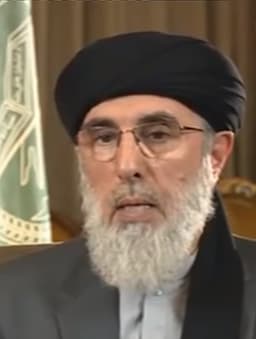
Gulbuddin Hekmatyar
Revolutionary · Modern
38.3Total
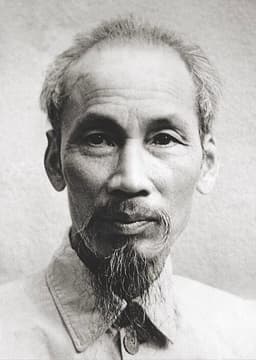
Ho Chi Minh
Revolutionary · Modern
62.9Total
Basic Information
Born
1947
1890
Died
—
1969
Era
Modern
Modern
Nationality
Afghanistan
Vietnam
Occupation
Revolutionary
Revolutionary
Civilization
Middle Eastern
Eastern
Score Comparison
Military (10%)
35.0
55.0
Political (20%)
26.4
72.0
Influence (20%)
47.1
62.0
Legacy (20%)
36.7
58.0
Leadership (15%)
40.4
72.0
Strategy (15%)
38.3
58.0
TOTAL
38.3
62.9
Gulbuddin Hekmatyar — Complete Timeline
1975 AD
Founding of Hezb-e Islami (1975)Political Action◆ Major
Gulbuddin Hekmatyar founded the Hezb-e Islami political party, an Islamist faction that became one of the most powerful mujahideen groups during the Soviet-Afghan War. The party received significant support from Pakistan's ISI and foreign Islamist donors.
MujahideenIslamist PartyCold War
Impact: national
1993 AD
Prime Minister during Civil War (1993-1994)Political Action◆ Major
Hekmatyar served as Prime Minister of Afghanistan from 1993 to 1994 under President Burhanuddin Rabbani. His tenure was marked by intense factional fighting, including rocket attacks on Kabul that caused thousands of civilian casualties, contributing to the devastation of the city.
Civil WarKabulRocket Attacks
Impact: nationaldestructive
1996 AD
Alliance with Taliban (1996-2001)Political Action
After the Taliban captured Kabul in 1996, Hekmatyar initially fled to Iran. He later aligned with the Taliban regime, though his influence waned. He remained in Afghanistan until the US-led invasion in 2001, after which he fled to Pakistan.
TalibanExileAlliance
Impact: national
2016 AD
Peace Agreement with Afghan Government (2016)Political Action◆ Major
Hekmatyar signed a peace agreement with the Afghan government of President Ashraf Ghani in 2016. The deal allowed him to return to Afghanistan from exile, with his party recognized as a political entity and his fighters integrated into state security forces.
Peace DealReconciliationGhani
Impact: nationalconstructive
Ho Chi Minh — Complete Timeline
1941 AD
Establishment of the Viet MinhPolitical Action◆ Major
Ho Chi Minh founded the Viet Minh (League for the Independence of Vietnam) in southern China. This coalition of nationalist and communist groups became the primary force for Vietnamese independence, fighting both Japanese occupation and French colonialism.
Viet MinhIndependence MovementWorld War II
Impact: nationalconstructive
1945 AD
Declaration of Independence of VietnamPolitical Action
Ho Chi Minh proclaimed the Democratic Republic of Vietnam in Hanoi's Ba Dinh Square, citing the US Declaration of Independence. This established the Viet Minh government and began the struggle for independence from French colonial rule.
IndependenceVietnamDecolonization
Impact: nationalconstructive
1954 AD
Battle of Dien Bien PhuWar
Ho Chi Minh's Viet Minh forces, under General Giap, defeated the French garrison at Dien Bien Phu. This victory ended French colonial rule in Indochina and led to the Geneva Accords dividing Vietnam at the 17th parallel.
Vietnam WarDecolonizationFrench Indochina
Impact: regional
Geneva AccordsPolitical Action◆ Major
Ho Chi Minh's delegation signed the Geneva Accords, temporarily dividing Vietnam at the 17th parallel. The agreement promised nationwide elections in 1956, which were never held, leading to the permanent division of Vietnam.
Geneva ConferenceDivision of VietnamDiplomacy
Impact: regional
1959 AD
Start of the Vietnam WarWar
Ho Chi Minh's government in North Vietnam authorized armed struggle against the US-backed South Vietnamese regime. This escalated into the Vietnam War, a prolonged conflict that resulted in millions of deaths and US withdrawal in 1973.
Vietnam WarCold WarCommunism
Impact: globaldestructive
Expert Analysis
Gulbuddin Hekmatyar vs Ho Chi Minh
# The Revolutionary’s Crossroads: Ho Chi Minh and Gulbuddin Hekmatyar
In the autumn of 1954, Ho Chi Minh stood in Hanoi, his slight figure draped in a simple khaki suit, watching French colonial flags lower for the last time after the triumph at Dien Bien Phu. He was sixty-four years old, a man who had spent half his life in exile, prisons, and jungles. Half a world away and two decades later, in the rubble-strewn streets of Kabul in 1993, Gulbuddin Hekmatyar, a bearded commander in his mid-forties, took the oath of office as Prime Minister—only to find his capital torn apart by rockets fired by his own allies. Both men were revolutionaries. Both sought to reshape their nations. But one became a father of his country, the other a fragmenter of his. Why?
Origins
Ho Chi Minh was born in 1890 in a village in central Vietnam, the son of a Confucian scholar-official who resisted French rule. The colonial world shaped him: he watched French administrators humiliate his father, saw Vietnamese peasants starve while French plantations thrived. He left Vietnam at twenty-one, working as a cook, a photographer, a stoker on ships, wandering through London, New York, and Paris. In France, he joined the Socialist Party; in Moscow, he studied Leninism; in China, he learned the art of guerrilla organization. He was a man forged by global currents—colonialism, communism, nationalism—and he absorbed them all with a patient, almost ascetic discipline.
Gulbuddin Hekmatyar was born in 1947 in Kunduz, northern Afghanistan, into a Pashtun family of some standing. His era was different: the Cold War was in full swing, and Afghanistan was a feudal kingdom awakening to modernity. He studied engineering at Kabul University, but the 1960s and 1970s were turbulent years—student protests, Marxist agitation, and the creeping influence of the Soviet Union. Hekmatyar was drawn not to Marxism but to the Islamist movements emerging in Egypt and Pakistan. He was expelled from university for throwing acid at a Marxist student; the act was a harbinger of the ferocity that would define his career.
The difference in their origins is not merely biographical but epochal. Ho Chi Minh grew up in a world where colonialism was the enemy, and the path to liberation seemed to run through organized, disciplined mass movements. Hekmatyar came of age when the enemy was internal—a corrupt monarchy, then a communist coup, then a Soviet invasion—and the response was fragmented, sectarian, and personal.
Rise to Power
Ho Chi Minh’s rise was slow, patient, and deeply strategic. He spent decades building networks, writing pamphlets, and studying revolutionary theory. In 1941, he returned to Vietnam after thirty years abroad and founded the Viet Minh, a coalition that united Communists, nationalists, and peasants under the single banner of independence. His genius was in framing the struggle not as a class war but as a national war. When he declared Vietnam’s independence in September 1945, he deliberately quoted the American Declaration of Independence, hoping to win U.S. support. It was a masterstroke of political theater.
Hekmatyar’s rise was faster and more violent. In 1975, he founded Hezb-e Islami, an Islamist party that attracted young, radicalized Afghans, especially Pashtuns. During the Soviet-Afghan War (1979–1989), he received massive support from Pakistan’s ISI and the CIA, becoming one of the most powerful mujahideen commanders. But unlike Ho, who built coalitions, Hekmatyar fought other resistance groups nearly as fiercely as he fought the Soviets. He was known for assassinating rival commanders, hoarding weapons, and using aid to consolidate personal power. Where Ho united, Hekmatyar divided.
Leadership & Governance
Ho Chi Minh’s leadership style was ascetic and symbolic. He lived simply, refused luxurious quarters, and was often seen walking barefoot among peasants. He was not a military commander—that role fell to General Vo Nguyen Giap—but he was the moral and political anchor. His political wisdom lay in patience: he accepted the 1954 Geneva Accords that divided Vietnam, believing that unification would come later through political struggle. He was wrong about the timeline, but his long view allowed North Vietnam to survive and eventually triumph.
Hekmatyar’s leadership was the opposite. He was a micromanager, suspicious of allies, and prone to violence. As Prime Minister from 1993 to 1994, he presided over a Kabul that was being shelled by his own Hezb-e Islami forces as part of a power struggle with President Rabbani. He never controlled the city he was supposed to govern. His tenure was a study in failed statecraft: he could fight but not build, destroy but not govern.
Triumph & Tragedy
Ho Chi Minh’s greatest moment was the victory at Dien Bien Phu in 1954, a battle that ended French colonial rule in Indochina. His greatest tragedy was that he died in 1969, six years before the fall of Saigon, never seeing the unified Vietnam he had dreamed of. Yet his death became a martyrdom that fueled the struggle.
Hekmatyar’s greatest moment was perhaps his survival. He outlasted the Soviet war, the civil war, the Taliban, and the American invasion. In 2016, he signed a peace agreement with the Afghan government and returned to Kabul, a relic of a bygone era. But his greatest tragedy was that he never achieved the power he craved—and when he briefly held it, he destroyed what little was left of his country.
Character & Destiny
Ho Chi Minh’s character was shaped by exile and hardship. He had no family of his own, no children, no private wealth. His identity was entirely merged with the revolution. This selflessness gave him a kind of moral authority that even his enemies acknowledged. Hekmatyar, by contrast, was driven by ambition and grievance. He was brilliant, ruthless, and utterly unable to compromise. His personality made him a formidable insurgent but a catastrophic leader.
Legacy
Ho Chi Minh’s legacy is monumental. He is revered as the father of modern Vietnam, his face on currency, his name on streets, his mausoleum a pilgrimage site. His total score of 69.3 reflects this: high leadership (84.8) and influence (70.6), moderate military (55.0). Hekmatyar’s total of 51.6 tells a different story: low leadership (41.3), moderate influence (61.9), and a legacy (47.8) that is ambiguous at best. He is remembered not as a founder but as a spoiler, a man who helped destroy his country and then, decades later, made peace with the wreckage.
Conclusion
Ho Chi Minh and Gulbuddin Hekmatyar both fought for what they believed was liberation. But one built a nation; the other helped tear one apart. The difference lies not in their goals but in their methods, their character, and the historical currents that carried them. Ho Chi Minh learned from the world and adapted; Hekmatyar learned from war and never left it. In the end, revolutionaries are judged not by how they fight, but by what they leave behind. Ho Chi Minh left a country. Hekmatyar left a question.
Rankings
🥇
Ho Chi MinhLeader
Mil: 55.0Pol: 72.0Inf: 62.0
62.9
🥈
Gulbuddin Hekmatyar
Mil: 35.0Pol: 26.4Inf: 47.1
38.3
+24.6 behind
How This Comparison Works
Algorithm
Each figure is scored on 6 dimensions (0—100 scale) based on structured historical data: Military (10%), Political (20%), Influence (20%), Legacy (20%), Leadership (15%), Strategy (15%). The weighted total produces the final ranking.
Data Sources
Scores are computed from structured sub-indicators in the database. Scale factors adjust for era (Ancient ×0.85, Modern ×1.0) and civilization size (Eastern ×1.05, Other ×0.80) to account for differences in population and military scale.
Maximum 3 Figures
Comparisons are limited to 2—3 figures to ensure readability and statistical meaningfulness.
Error Margins
±5 points per dimension — Sub-scores are derived from historical records with inherent uncertainty. Two figures within 5 points on a dimension should be considered roughly equivalent in that area.
Total Score Accuracy
±3 points overall — The weighted combination of 6 dimensions produces a total score with approximately ±3 points of uncertainty. Differences of less than 3 points are not statistically significant— the figures are effectively tied.
Known Limitations
- Historical records are incomplete and uneven across civilizations
- Figures from oral-tradition societies may be underrepresented
- Occupation labels can misclassify multi-role figures
- Scores measure capability and impact, not moral character
- Quantitative scoring is a comparison tool, not absolute truth
Capability Radar
Military (10%) — Battles & Warfare
Battles
45
65
Win Rate
30
60
Expansion
25
55
Political (20%) — Governance & Reform
Reform
15
85
Diplomacy
20
90
Economy
10
40
Influence (20%) — Cultural & Global Reach
Cultural
25
75
Global
25
75
Legacy (20%) — Historical Impact
Historical
30
85
Longevity
20
70
Leadership (15%) — Power & Stability
Tenure
30
70
Stability
5
50
Strategy (15%) — Tactics & Innovation
Strategy
35
80
Tactics
40
70
Reform
20
75
Similar Comparisons
Comments & Discussion
RebelFarmer6/16/2026
Ho Chi Minh was a statesman who understood the slow grind of nation-building; Hekmatyar was a warlord who mistook chaos for strategy. Uncle Ho spent decades learning from Paris and Moscow, tailoring Marxism to Vietnamese rice paddies. Hekmatyar? He got a U.S. scholarship but chose to fire rockets into Kabul rather than build schools. One unified a peasantry against a foreign invader; the other shelled his own capital for personal power. That’s not a comparison—it’s a cautionary tale.
火箭教授6/16/2026
把海科马蒂亚尔和胡志明放一起比较,简直是对历史智慧的一种亵渎。胡志明在1969年逝世时,越南人民哀悼的是一位真正终结法国殖民统治的领袖;而海科马蒂亚尔现在83岁还在谈和平,却被塔利班边缘化。一个在日内瓦谈判桌上赢得国际承认,另一个用火箭弹在喀布尔写下自己的“政绩”——这就是战略家与暴徒的区别。别被“革命者”标签迷惑了。
HistorySkeptic6/16/2026
Let’s pump the brakes on the hagiography. Ho Chi Minh’s “father of his country” image glosses over serious land collectivization failures that led to the 1956 famine in North Vietnam—thousands died. Meanwhile, Hekmatyar’s 1993 shelling of Kabul, while brutal, was part of a fragmented civil war, not a unified movement like Ho’s. The comparison is apples and oranges: one had a party machine and Soviet backing, the other had Soviet-backed factions pulling him apart. Context matters more than romant
兵书匠6/16/2026
作为军事史爱好者,我看这两个人的战术风格天差地别。胡志明在奠边府战役中用的是武元甲的天才炮兵部署,把法军要塞炸成废墟,那是教科书式的围点打援;海科马蒂亚尔在1990年代却沉迷于无差别火箭袭击,连自己的盟友都打。一个打的是国家独立战争,一个打的是军阀互撕内斗。别拿游击战当万能标签——策略和目的才是分水岭。
ClassicsNerd6/16/2026
Ho Chi Minh had the patience of a Stoic philosopher, quoting Confucius while dodging French bullets. Hekmatyar reads like a failed Greek tyrant from Thucydides—someone who achieves power only to watch his city implode. Uncle Ho’s 1954 victory at Dien Bien Phu was a masterpiece of logistics and diplomacy, forcing Geneva concessions. Hekmatyar’s 1993 rocket salvoes from his own hilltop made him the architect of Kabul’s ruin, not its salvation. One was a liberator, the other a liability.