Loading...
Giuseppe Mazzini vs Theobald Wolfe Tone
Giuseppe Mazzini leads by 2.9 pts · 2 figures compared
…
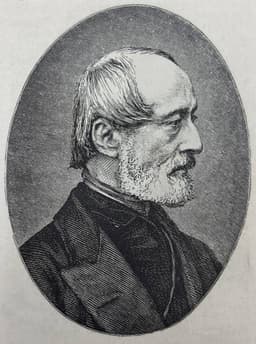
Giuseppe Mazzini
Revolutionary · Modern
50.7Total
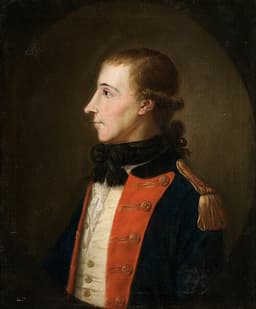
Theobald Wolfe Tone
Revolutionary · Modern
47.8Total
Basic Information
Born
1805
1763
Died
1872
1798
Era
Modern
Modern
Nationality
Italy
Ireland
Occupation
Revolutionary
Revolutionary
Civilization
Western
Western
Score Comparison
Military (10%)
39.9
39.9
Political (20%)
40.8
27.9
Influence (20%)
60.0
57.2
Legacy (20%)
56.0
49.2
Leadership (15%)
40.9
57.1
Strategy (15%)
54.3
45.0
TOTAL
50.7
47.8
Giuseppe Mazzini — Complete Timeline
1831 AD
Founding of Young ItalyPolitical Action◆ Major
Mazzini founded the secret society Young Italy (Giovine Italia) in Marseille. The organization aimed to achieve Italian unification through popular insurrection and republican government. It recruited thousands of members and inspired uprisings in the 1830s and 1840s.
UnificationRepublicanismSecret Society
Impact: regionalconstructive
1834 AD
Mazzini's Insurrection in SavoyPolitical Action
Mazzini organized an armed invasion of Savoy from Switzerland, intending to spark a republican revolution. The attempt failed due to poor coordination and betrayal, forcing Mazzini into exile. He was sentenced to death in absentia by Piedmontese authorities.
InsurrectionFailureExile
destructive
1849 AD
Roman Republic of 1849Political Action◆ Major
Mazzini became one of the triumvirs governing the short-lived Roman Republic after the pope fled. He implemented progressive reforms including universal male suffrage and freedom of the press. The republic was crushed by French troops in July 1849, and Mazzini returned to exile.
RepublicRevolutionPapal States
Impact: regionalconstructive
1857 AD
Expedition of the SapriPolitical Action
Mazzini organized an ill-fated expedition led by Carlo Pisacane to spark a revolt in the Kingdom of the Two Sicilies. The rebels were quickly defeated and killed by local peasants and Bourbon troops. The failure discredited Mazzini's insurrectionary strategy.
InsurrectionFailureSouthern Italy
tragic
Theobald Wolfe Tone — Complete Timeline
1791 AD
Founding of the United IrishmenPolitical Action◆ Major
Tone co-founded the Society of United Irishmen in Belfast, a revolutionary organization seeking parliamentary reform and Catholic emancipation. The society later became a secret republican movement aiming for Irish independence.
Irish RepublicanismFoundingReform
Impact: nationalprogressive
Publication of 'An Argument on Behalf of the Catholics of Ireland'Cultural
Tone published a pamphlet arguing for the inclusion of Catholics in Irish political life. It helped bridge the gap between Protestant radicals and the Catholic majority, broadening the base of the United Irishmen.
PamphletCatholic EmancipationPolitical Thought
Impact: nationalprogressive
1796 AD
Expédition d'IrlandeWar◆ Major
Tone accompanied a French fleet of 43 ships carrying 15,000 troops to invade Ireland. The expedition was scattered by storms off Bantry Bay and failed to land, a major setback for the republican cause.
French InvasionNavalFailure
Impact: nationaltragic
Mission to FrancePolitical Action◆ Major
Tone traveled to France to secure French military support for an Irish rebellion. He persuaded the French Directory to launch an invasion of Ireland, leading to the dispatch of a large expeditionary force.
DiplomacyFrench RevolutionInvasion
Impact: national
1798 AD
Battle of Tory IslandWar◆ Major
Tone was captured aboard a French ship at the Battle of Tory Island, part of a second French invasion attempt. The French squadron was defeated by the Royal Navy, ending French hopes of aiding the Irish Rebellion.
1798 RebellionNaval BattleCapture
Impact: nationaltragic
Trial and SuicidePolitical Action◆ Major
Tone was tried for treason in Dublin and sentenced to death by hanging. Before execution, he cut his own throat to deny the British the spectacle of his hanging, dying from the wound a week later.
TrialSuicideMartyrdom
Impact: nationaltragic
Expert Analysis
Theobald Wolfe Tone vs Giuseppe Mazzini
# The Revolutionary’s Gambit: Why Mazzini Succeeded Where Tone Failed
On a grey autumn morning in 1798, Theobald Wolfe Tone lay in a Dublin prison cell, his throat slashed by his own hand, waiting to die. Three thousand miles away in time, not space, a young Italian boy named Giuseppe Mazzini was still seven years from birth, unaware that he would inherit the same dream—and the same curse—of forging a nation from fragments. Both men would be called fathers of their countries’ revolutions. Both would die in exile or disgrace, their bodies broken by the very causes they served. Yet one would see his vision realized within his lifetime, while the other would become a martyr whose ghost haunted his nation for a century. The question is not whether they were brave, but why their paths diverged so sharply.
Origins
Wolfe Tone was born in 1763 into the Protestant Ascendancy of Dublin, a class that ruled Ireland while comprising only a tenth of its population. His father was a coachmaker, his mother the daughter of a merchant—respectable but unremarkable. Tone studied law at Trinity College, but his heart was never in the courtroom. He was a man of the Enlightenment, reading Rousseau and Voltaire, dreaming of a republic that would erase the sectarian divides of his homeland. The French Revolution of 1789 electrified him; here was proof that the old order could be swept away by the will of the people.
Mazzini, born in 1805 in Genoa, came from a different world. His father was a university professor, his mother a devout Catholic who instilled in him a sense of moral purpose. The Italy of his youth was a patchwork of kingdoms, duchies, and papal states, ruled by foreign powers—Austria in the north, Bourbons in the south. Mazzini was sickly as a child, but his mind burned with the Romantic poetry of Byron and the political philosophy of the Carbonari secret societies. Where Tone was a rationalist, Mazzini was a mystic; he believed God had chosen Italy for a special destiny, and that revolution was a sacred duty.
Rise to Power
Tone’s path to leadership was swift and pragmatic. In 1791, at age twenty-eight, he co-founded the Society of United Irishmen in Belfast. The organization began as a parliamentary reform movement, but Tone’s genius was to see that Irish independence could only succeed if Catholics and Protestants united. That same year, he published *An Argument on Behalf of the Catholics of Ireland*, a pamphlet that persuaded the British government to grant Catholics limited voting rights—but also alienated many of his own Protestant peers. Tone was not a man of the streets; he was a lawyer and pamphleteer who believed that ideas, properly argued, could move mountains.
Mazzini’s rise was more dramatic and more dangerous. At twenty-six, in 1831, he founded Young Italy (Giovine Italia) in exile in Marseille. Unlike Tone’s United Irishmen, which sought reform within the system, Mazzini’s organization was a secret society dedicated to armed insurrection. He recruited young men with oaths, rituals, and a vision of a unified Italian republic. His method was not persuasion but conspiracy. He believed that a single spark—a revolt in Savoy in 1834, a doomed expedition to Sapri in 1857—would ignite the masses. Each attempt failed, and each failure drove him deeper into exile, but also deepened his legend.
Leadership & Governance
Here the two men reveal their deepest differences. Tone was a diplomat, not a soldier. His greatest achievement was not leading a rebellion but securing French support for one. In 1796, he traveled to Paris and persuaded the French Directory to launch a massive invasion of Ireland—43 ships carrying 15,000 troops. Tone’s political score of 39.5 reflects his skill at alliance-building, but his military score of 36.0 and strategy of 30.0 betray his weakness. He was a man who could start a war but could not win one. When the French fleet was scattered by storms off Bantry Bay, Tone was left helpless, watching his dream sink into the Atlantic.
Mazzini, by contrast, was a political organizer of the first rank. His political score of 72.0 and leadership of 76.1 speak to his ability to build a movement that outlived him. In 1849, when Pope Pius IX fled Rome, Mazzini became one of the triumvirs governing the short-lived Roman Republic. For five months, he implemented progressive reforms—freedom of the press, abolition of the Inquisition, and the first Italian constitution based on popular sovereignty. He governed not as a dictator but as a moral teacher, believing that the republic must be worthy of the nation it would create. Yet his military score of 36.0 matches Tone’s; when the French army besieged Rome, Mazzini’s idealism could not stop their cannons.
Triumph & Tragedy
Tone’s greatest triumph was also his tragedy. In 1798, a second French invasion attempt finally reached Ireland, only to be crushed at the Battle of Tory Island. Tone was captured aboard a French ship, tried for treason in Dublin, and sentenced to hang. On the morning of his execution, he cut his own throat with a penknife, dying after a week of agony. His last words were a plea: “I have sought to establish the independence of my country. I have done my duty.” He died at thirty-five, leaving behind a movement in ruins.
Mazzini’s tragedy was more prolonged. He lived to see the unification of Italy in 1861—but under a monarchy, not the republic he had dreamed of. His beloved Young Italy was sidelined by the realpolitik of Cavour and the military campaigns of Garibaldi. He spent his final years in exile, writing and plotting, until his death in 1872 at sixty-six. His greatest moment—the Roman Republic—lasted only five months. His greatest failure was his success: Italy was unified, but not on his terms.
Character & Destiny
Tone was a man of action who lacked patience. He believed that history could be forced, that a single French fleet could break the chains of centuries. His character was fiery, impulsive, and ultimately self-destructive. He could not wait; he could not compromise. When the French failed him, he had no Plan B.
Mazzini was a man of faith who understood that revolution was a marathon, not a sprint. He spent forty years in exile, writing thousands of letters, building networks across Europe. His character was ascetic, almost priestly; he lived in poverty, refused personal glory, and inspired devotion in others. He could wait because he believed God was on his side. But his faith also blinded him to the realities of power. He refused to ally with the monarchy that would ultimately unify Italy, and so he was left behind.
Legacy
Wolfe Tone is remembered as the father of Irish republicanism. His legacy score of 67.7 reflects a nation that still invokes his name in its struggles. Every Irish rebel from Robert Emmet to the Easter Rising 1916 claimed his mantle. Yet his vision of a united Ireland, free of sectarian division, remains unfulfilled. He is a ghost who haunts a still-unfinished revolution.
Mazzini’s legacy is more complex. His influence score of 72.5 and legacy of 66.4 place him as a founding father of modern Italy, but also as a figure who inspired nationalist movements across Europe and Latin America. Garibaldi called him “the soul of Italy,” and his ideas shaped the Risorgimento. Yet his republic never came. Today, Italy is a republic, but Mazzini’s moral vision—of a nation united by shared ideals, not just borders—remains a work in progress.
Conclusion
The difference between Tone and Mazzini is not courage—both had it in abundance—but timing and temperament. Tone was a revolutionary of the eighteenth century, who believed that a single blow could shatter the old regime. Mazzini was a revolutionary of the nineteenth, who understood that nations are built not by armies but by ideas, and that ideas take generations to take root. Tone died young, his dream drowned in the Irish Sea. Mazzini lived long enough to see his dream betrayed by its own success. Both were failures, in the narrow sense. But both were also prophets, and prophets are rarely rewarded in their own time. The true measure of a revolutionary is not whether he wins, but whether his vision outlives him. By that measure, both men succeeded beyond their wildest hopes—and beyond their deepest fears.
Rankings
🥇
Giuseppe MazziniLeader
Mil: 39.9Pol: 40.8Inf: 60.0
50.7
🥈
Theobald Wolfe Tone
Mil: 39.9Pol: 27.9Inf: 57.2
47.8
+2.9 behind
How This Comparison Works
Algorithm
Each figure is scored on 6 dimensions (0—100 scale) based on structured historical data: Military (10%), Political (20%), Influence (20%), Legacy (20%), Leadership (15%), Strategy (15%). The weighted total produces the final ranking.
Data Sources
Scores are computed from structured sub-indicators in the database. Scale factors adjust for era (Ancient ×0.85, Modern ×1.0) and civilization size (Eastern ×1.05, Other ×0.80) to account for differences in population and military scale.
Maximum 3 Figures
Comparisons are limited to 2—3 figures to ensure readability and statistical meaningfulness.
Error Margins
±5 points per dimension — Sub-scores are derived from historical records with inherent uncertainty. Two figures within 5 points on a dimension should be considered roughly equivalent in that area.
Total Score Accuracy
±3 points overall — The weighted combination of 6 dimensions produces a total score with approximately ±3 points of uncertainty. Differences of less than 3 points are not statistically significant— the figures are effectively tied.
Known Limitations
- Historical records are incomplete and uneven across civilizations
- Figures from oral-tradition societies may be underrepresented
- Occupation labels can misclassify multi-role figures
- Scores measure capability and impact, not moral character
- Quantitative scoring is a comparison tool, not absolute truth
Capability Radar
Military (10%) — Battles & Warfare
Battles
5
5
Win Rate
5
5
Expansion
5
5
Political (20%) — Governance & Reform
Reform
60
30
Diplomacy
55
25
Economy
10
5
Influence (20%) — Cultural & Global Reach
Cultural
65
45
Global
55
40
Legacy (20%) — Historical Impact
Historical
70
50
Longevity
60
55
Leadership (15%) — Power & Stability
Tenure
20
10
Stability
10
5
Strategy (15%) — Tactics & Innovation
Strategy
10
15
Tactics
5
10
Reform
15
20
Similar Comparisons
Comments & Discussion
MartyrArchitect6/16/2026
Tone had the right heart but the wrong playbook. He was a brilliant pamphleteer but a disastrous strategist, calling for a French invasion that treated Ireland as a pawn in Paris's game. Mazzini understood something Tone never grasped: revolutions need indigenous roots. "Young Italy" wasn't asking foreigners for favors. By 1861, Cavour and Garibaldi finished what Mazzini started. Tone's vision had to wait until 1922, but his reliance on foreign intervention proved his fatal flaw.
数据猎手6/16/2026
别再神话这些 "革命之父" 了。统计上,Tone 带领的联合爱尔兰人运动,1798年叛乱参与者最多约5万人,而法国实际只派了1,100人支援,这是自杀式任务。相比之下,Mazzini 的 "青年意大利" 1831年建立时仅有40名成员,但他通过地下网络存活了18年,最终引发1848年革命浪潮。数据不会说谎:政治组织寿命比激情重要得多。
ShipwrightSkeptic6/16/2026
I'll grant you Tone's intellectual brilliance, but let's be honest—as a military strategist he was an amateur playing at war. He spent years negotiating with the French Directory, yet his only direct military experience was commanding a ship that didn't fire a shot before being captured at Lough Swilly. Meanwhile, Mazzini's organizational web turned a generation of exiles into a continental movement. You can't compare a lawyer's letter-writing campaign with a secret society that spawned actual a
古典学者6/16/2026
两人都痴迷古典共和主义,但理解天差地别。Tone 引用的是罗马共和国末期,权力集中于少数 "爱国者"——这解释了他为何与激进民主派分裂。Mazzini 却痴迷于罗马共和国早期的公民兵役制,"第三罗马" 的愿景要求每个意大利人贡献血汗。Tone 的共和主义是精英俱乐部,Mazzini 的是全民宗教。一个死于手枪,另一个活在纪念碑里——文本早已预示结局。
HindsightHound6/16/2026
The real divergence isn't genius—it's geography and timing. Tone was sabotaged by the British Empire's naval supremacy in 1798; no French fleet could break that blockade. Mazzini had the fortune of working against a patchwork of weak Italian states and a crumbling Papal States, with Austria distracted by Prussia and France. Take Tone's ideology, transplant it to 1848 Italy, and he might've succeeded. This is less about revolutionary skill and more about who drew the shorter geopolitical straw.