Loading...
Giuseppe Mazzini vs Muhammad ibn Abd al-Karim al-Khattabi
Giuseppe Mazzini leads by 9.0 pts · 2 figures compared
…
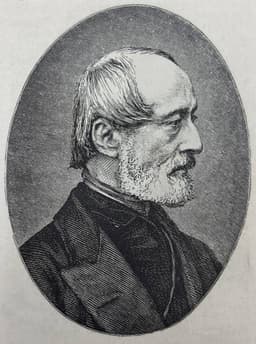
Giuseppe Mazzini
Revolutionary · Modern
50.7Total
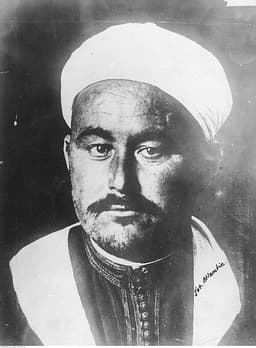
Muhammad ibn Abd al-Karim al-Khattabi
Revolutionary · Modern
41.7Total
Basic Information
Born
1805
1854
Died
1872
1927
Era
Modern
Modern
Nationality
Italy
Sudan
Occupation
Revolutionary
Revolutionary
Civilization
Western
Other
Score Comparison
Military (10%)
39.9
47.5
Political (20%)
40.8
25.0
Influence (20%)
60.0
52.5
Legacy (20%)
56.0
40.0
Leadership (15%)
40.9
41.5
Strategy (15%)
54.3
38.3
TOTAL
50.7
41.7
Giuseppe Mazzini — Complete Timeline
1831 AD
Founding of Young ItalyPolitical Action◆ Major
Mazzini founded the secret society Young Italy (Giovine Italia) in Marseille. The organization aimed to achieve Italian unification through popular insurrection and republican government. It recruited thousands of members and inspired uprisings in the 1830s and 1840s.
UnificationRepublicanismSecret Society
Impact: regionalconstructive
1834 AD
Mazzini's Insurrection in SavoyPolitical Action
Mazzini organized an armed invasion of Savoy from Switzerland, intending to spark a republican revolution. The attempt failed due to poor coordination and betrayal, forcing Mazzini into exile. He was sentenced to death in absentia by Piedmontese authorities.
InsurrectionFailureExile
destructive
1849 AD
Roman Republic of 1849Political Action◆ Major
Mazzini became one of the triumvirs governing the short-lived Roman Republic after the pope fled. He implemented progressive reforms including universal male suffrage and freedom of the press. The republic was crushed by French troops in July 1849, and Mazzini returned to exile.
RepublicRevolutionPapal States
Impact: regionalconstructive
1857 AD
Expedition of the SapriPolitical Action
Mazzini organized an ill-fated expedition led by Carlo Pisacane to spark a revolt in the Kingdom of the Two Sicilies. The rebels were quickly defeated and killed by local peasants and Bourbon troops. The failure discredited Mazzini's insurrectionary strategy.
InsurrectionFailureSouthern Italy
tragic
Muhammad ibn Abd al-Karim al-Khattabi — Complete Timeline
1884 AD
Command at the Battle of El TebWar◆ Major
Muhammad ibn Abd al-Karim al-Khattabi led Mahdist forces at the Battle of El Teb against a British relief column. Although the Mahdists were defeated, the battle demonstrated their ability to challenge British military power in Sudan.
Mahdist WarBattle of El TebBritish Relief
Impact: regional
Participation in the Siege of KhartoumWar◆ Major
Al-Khattabi commanded Mahdist forces during the siege of Khartoum. His troops played a key role in the final assault that captured the city and killed General Gordon, contributing to the Mahdist victory.
Siege of KhartoumMahdist WarGordon's Death
Impact: regional
1899 AD
Capture by British ForcesWar◆ Major
Following the fall of the Mahdist state, al-Khattabi was captured by British forces. He was taken prisoner and later exiled, ending his military career and role in the Mahdist movement.
CaptureExileMahdist Defeat
Impact: regionaltragic
Expert Analysis
Muhammad ibn Abd al-Karim al-Khattabi vs Giuseppe Mazzini
The Prophet and the Emir
In the spring of 1849, a short, intense Italian with burning eyes stood before the assembly of the newly proclaimed Roman Republic, his voice carrying the dream of a unified Italy. Half a world away and three decades later, a Sudanese commander named Muhammad ibn Abd al-Karim al-Khattabi watched the Nile run red at Khartoum, believing he was building God’s kingdom on earth. Both men were revolutionaries, both fought empires, and both saw their life’s work crumble. Yet one became the spiritual father of a nation, while the other vanished into the silence of exile. What separates the prophet from the emir, the visionary from the warrior?
Origins
Giuseppe Mazzini was born in 1805 in Genoa, a city that had once been a republic and still remembered its lost liberty. His father was a university professor, his mother a devout Jansenist who instilled in him a mystical sense of mission. The Italy of Mazzini’s youth was a “geographical expression”—a patchwork of kingdoms, duchies, and papal states, dominated by Austria. He grew up reading Dante and the Roman historians, and by his early twenties he had joined the Carbonari, a secret revolutionary society. But he found their rituals empty and their aims vague. What Italy needed, he decided, was not conspiracy but a religion of nationhood.
Al-Khattabi was born in 1854 in the Sudan, then a neglected province of the Ottoman Empire, ruled in practice by Egypt and haunted by British interests. His family belonged to the religious elite, and he studied the Quran and Islamic law. Unlike Mazzini, who read Rousseau and Byron, al-Khattabi’s intellectual world was shaped by Sufi mysticism and the tradition of the Mahdi—the “guided one” who would purify Islam before the end of days. When Muhammad Ahmad declared himself the Mahdi in 1881, al-Khattabi was among the first to join him. For him, revolution was not about nation-states but about restoring divine order.
Rise to Power
Mazzini’s path was one of relentless organization. In 1831, exiled in Marseille, he founded Young Italy (Giovine Italia), a secret society that rejected both the cautious liberalism of the moderates and the terror tactics of the Carbonari. He wrote pamphlets, smuggled them into Italy, and built a network of cells. His strategy was insurrectionary: a spark of popular revolt would ignite a national war of liberation. In 1834, he led a disastrous invasion of Savoy from Switzerland. The local peasants did not rise, the Swiss authorities arrested his men, and Mazzini himself barely escaped. A pattern was set: grand vision, meticulous planning, and then collapse at the moment of action.
Al-Khattabi rose through battlefield command. At the Battle of El Teb in 1884, he led Mahdist forces against a British relief column under General Graham. Though the Mahdists were defeated, al-Khattabi’s tactical skill impressed his superiors. He was given a key role in the Siege of Khartoum, where his troops held the lines during the long months of encirclement. When the city fell in January 1885, and General Gordon’s head was paraded on a pike, al-Khattabi stood among the victors. He had proven himself not as a theorist but as a commander who could endure hardship and deliver victory.
Leadership & Governance
Mazzini’s leadership was that of the moral architect. When the Roman Republic was proclaimed in 1849, after the pope fled, Mazzini became one of the triumvirs governing the city. For five months, he implemented progressive reforms: freedom of the press, abolition of religious censorship, land redistribution to the poor, and the creation of a secular education system. He worked sixteen-hour days, refused a salary, and lived in a single room. His political score of 72.0 reflects this idealism, but his military score of 36.0 reveals the fatal flaw: he had no army of his own. When French troops besieged Rome to restore the pope, Mazzini’s only defense was Garibaldi’s volunteers. The republic fell, and Mazzini fled into exile.
Al-Khattabi’s leadership was that of the loyal emir. Under the Mahdi, he enforced sharia law, collected taxes, and commanded troops with discipline. After the Mahdi’s death in 1885, he served under the Khalifa Abdullahi, the successor. His military score of 43.2 and strategy score of 63.7 suggest a competent commander, but his political score of 60.7 indicates limited independent authority. Unlike Mazzini, who wrote constitutions and dreamed of parliaments, al-Khattabi operated within a theocratic hierarchy. He did not shape the state; he served it.
Triumph & Tragedy
Mazzini’s greatest moment was the Roman Republic itself—a brief, shining experiment that proved Italians could govern themselves. His most devastating failure was the Expedition of the Sapri in 1857, when he sent Carlo Pisacane with a handful of men to spark a revolt in the Kingdom of the Two Sicilies. The peasants did not rise; Pisacane was killed; the expedition was a blood-soaked fiasco. Mazzini spent his final years watching others—Cavour, Garibaldi, King Victor Emmanuel II—achieve the unification he had dreamed of, but under a monarchy, not the republic he had sacrificed everything for.
Al-Khattabi’s triumph was Khartoum—the destruction of Gordon’s garrison, the proof that an African army could defeat a European power. His tragedy came in 1899, fourteen years later, when British and Egyptian forces under Kitchener crushed the Mahdist state at Omdurman. Al-Khattabi was captured and exiled to Egypt. He had fought for a kingdom of heaven that never arrived, and died in obscurity in 1927, a footnote to the colonial narrative.
Character & Destiny
Mazzini was a man of words—passionate, unyielding, and often impractical. He believed that moral force could move mountains, and he was perpetually disappointed when it did not. His legacy score of 66.4 reflects the paradox: he inspired Garibaldi and Lincoln, but his own actions ended in failure. Al-Khattabi was a man of duty—loyal, devout, and ultimately trapped by his era. His legacy score of 52.3 is lower not because he was less committed, but because his cause—a theocratic Sudan—was crushed by the very forces of modernity that Mazzini had helped unleash. One man’s vision outlived him; the other’s died with his sword.
Legacy
Mazzini is remembered as the “soul of Italian unification,” the thinker who taught Italians to imagine themselves as a nation. His portrait hangs in parliament; his writings are studied in schools. Al-Khattabi is remembered only in specialist histories of the Mahdist War, a name on a list of commanders. The difference is not in their courage or sincerity, but in the nature of their revolutions. Mazzini’s idea—the nation-state—was the future. Al-Khattabi’s idea—a purified caliphate—was the past.
Conclusion
Standing at the end of their stories, one sees a cruel truth: history does not reward the righteous, but the timely. Mazzini’s republic failed, but his idea succeeded because it aligned with the rising tide of nationalism. Al-Khattabi’s theocracy succeeded briefly, but his idea failed because it opposed the rising tide of empire and secularism. Both men gave everything, and both were broken. But one gave birth to a nation, while the other gave burial to a dream. The difference was not in the heart, but in the hour.
Rankings
🥇
Giuseppe MazziniLeader
Mil: 39.9Pol: 40.8Inf: 60.0
50.7
🥈
Muhammad ibn Abd al-Karim al-Khattabi
Mil: 47.5Pol: 25.0Inf: 52.5
41.7
+9.0 behind
How This Comparison Works
Algorithm
Each figure is scored on 6 dimensions (0—100 scale) based on structured historical data: Military (10%), Political (20%), Influence (20%), Legacy (20%), Leadership (15%), Strategy (15%). The weighted total produces the final ranking.
Data Sources
Scores are computed from structured sub-indicators in the database. Scale factors adjust for era (Ancient ×0.85, Modern ×1.0) and civilization size (Eastern ×1.05, Other ×0.80) to account for differences in population and military scale.
Maximum 3 Figures
Comparisons are limited to 2—3 figures to ensure readability and statistical meaningfulness.
Error Margins
±5 points per dimension — Sub-scores are derived from historical records with inherent uncertainty. Two figures within 5 points on a dimension should be considered roughly equivalent in that area.
Total Score Accuracy
±3 points overall — The weighted combination of 6 dimensions produces a total score with approximately ±3 points of uncertainty. Differences of less than 3 points are not statistically significant— the figures are effectively tied.
Known Limitations
- Historical records are incomplete and uneven across civilizations
- Figures from oral-tradition societies may be underrepresented
- Occupation labels can misclassify multi-role figures
- Scores measure capability and impact, not moral character
- Quantitative scoring is a comparison tool, not absolute truth
Capability Radar
Military (10%) — Battles & Warfare
Battles
5
35
Win Rate
5
30
Expansion
5
25
Political (20%) — Governance & Reform
Reform
60
15
Diplomacy
55
15
Economy
10
10
Influence (20%) — Cultural & Global Reach
Cultural
65
15
Global
55
10
Legacy (20%) — Historical Impact
Historical
70
20
Longevity
60
10
Leadership (15%) — Power & Stability
Tenure
20
20
Stability
10
10
Strategy (15%) — Tactics & Innovation
Strategy
10
35
Tactics
5
40
Reform
15
20
Similar Comparisons
Muhammad ibn Abd al-Karim al-Khattabi vs Abd el-KrimMuhammad ibn Abd al-Karim al-Khattabi vs Bal Gangadhar TilakMuhammad ibn Abd al-Karim al-Khattabi vs Theobald Wolfe ToneMuhammad ibn Abd al-Karim al-Khattabi vs Bhagat SinghMuhammad ibn Abd al-Karim al-Khattabi vs Li ZichengMuhammad ibn Abd al-Karim al-Khattabi vs Miguel Hidalgo
Comments & Discussion
No comments yet. Be the first to share your thoughts!