Loading...
Giuseppe Mazzini vs Miguel Hidalgo
Giuseppe Mazzini leads by 3.7 pts · 2 figures compared
…
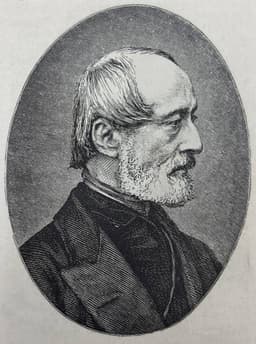
Giuseppe Mazzini
Revolutionary · Modern
50.7Total
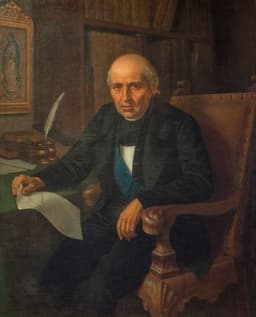
Miguel Hidalgo
Revolutionary · Modern
47.0Total
Basic Information
Born
1805
1753
Died
1872
1811
Era
Modern
Modern
Nationality
Italy
Mexico
Occupation
Revolutionary
Revolutionary
Civilization
Western
Western
Score Comparison
Military (10%)
39.9
50.0
Political (20%)
40.8
36.5
Influence (20%)
60.0
55.0
Legacy (20%)
56.0
52.0
Leadership (15%)
40.9
39.0
Strategy (15%)
54.3
39.6
TOTAL
50.7
47.0
Giuseppe Mazzini — Complete Timeline
1831 AD
Founding of Young ItalyPolitical Action◆ Major
Mazzini founded the secret society Young Italy (Giovine Italia) in Marseille. The organization aimed to achieve Italian unification through popular insurrection and republican government. It recruited thousands of members and inspired uprisings in the 1830s and 1840s.
UnificationRepublicanismSecret Society
Impact: regionalconstructive
1834 AD
Mazzini's Insurrection in SavoyPolitical Action
Mazzini organized an armed invasion of Savoy from Switzerland, intending to spark a republican revolution. The attempt failed due to poor coordination and betrayal, forcing Mazzini into exile. He was sentenced to death in absentia by Piedmontese authorities.
InsurrectionFailureExile
destructive
1849 AD
Roman Republic of 1849Political Action◆ Major
Mazzini became one of the triumvirs governing the short-lived Roman Republic after the pope fled. He implemented progressive reforms including universal male suffrage and freedom of the press. The republic was crushed by French troops in July 1849, and Mazzini returned to exile.
RepublicRevolutionPapal States
Impact: regionalconstructive
1857 AD
Expedition of the SapriPolitical Action
Mazzini organized an ill-fated expedition led by Carlo Pisacane to spark a revolt in the Kingdom of the Two Sicilies. The rebels were quickly defeated and killed by local peasants and Bourbon troops. The failure discredited Mazzini's insurrectionary strategy.
InsurrectionFailureSouthern Italy
tragic
Miguel Hidalgo — Complete Timeline
1810 AD
Captured Guanajuato and massacred SpaniardsWar◆ Major
Hidalgo's army of 80,000 captured the city of Guanajuato on September 28, 1810. After taking the Alh
BattleMassacreViolence
Impact: regionaldestructive
Issued the Grito de DoloresPolitical Action
On September 16, 1810, Father Miguel Hidalgo rang the church bell in Dolores and called for rebellion against Spanish colonial rule. His speech, known as the Grito de Dolores, urged Mexicans to rise up against the Spanish and marked the beginning of the Mexican War of Independence.
IndependenceRebellionGrito de Dolores
Impact: nationalconstructive
1811 AD
Defeated at the Battle of Calderón BridgeWar◆ Major
Hidalgo's poorly trained army was decisively defeated by a smaller Spanish royalist force at the Battle of Calder
DefeatSpanish RoyalistsTurning Point
Impact: regionaltragic
Executed by Spanish authoritiesPolitical Action◆ Major
Hidalgo was captured in Acatita de Baj
ExecutionMartyrdomIndependence Movement
Impact: nationaltragic
Expert Analysis
Miguel Hidalgo vs Giuseppe Mazzini
### The Priest and the Prophet: Two Roads to a Nation
In the autumn of 1810, an aging priest in a dusty Mexican town rang a church bell and unleashed a torrent of rage that would, within hours, become a bloody, directionless mob. Sixty years later and an ocean away, a frail, black-clad exile in London, surrounded by pamphlets and conspiracies, would never fire a shot in battle, yet his ideas would march across the Italian peninsula like an invisible army. Miguel Hidalgo and Giuseppe Mazzini both dreamt of forging nations from the wreckage of empires. One led a stampede that ended in his own execution; the other lit a fuse that took decades to burn. Why did one path end in a firing squad and the other in a unified kingdom? The answer lies not in their goals, but in their souls.
### Origins
Hidalgo was a creature of the Old World’s twilight. Born in 1753 to a Creole family on a hacienda in Guanajuato, he was a man of the Enlightenment—a voracious reader of banned French philosophy, a freethinker who questioned the Church even as he wore its collar. His world was a rigid caste system: Spanish-born *peninsulares* at the top, Creoles like himself beneath them, and a vast, simmering underclass of Indigenous and mestizo peasants at the bottom. Hidalgo felt the injustice not as an abstraction, but as a daily humiliation. He was a man of his time—impatient, learned, and deeply frustrated.
Mazzini, born in 1805 in Genoa, came of age in a different kind of twilight. Italy was not a colony but a “geographical expression”—a patchwork of Austrian-controlled states, papal territories, and petty kingdoms. His father was a doctor, his mother a devout Jansenist who instilled in him a fierce moral certainty. Where Hidalgo was a product of the Enlightenment, Mazzini was a child of Romanticism. He read Byron, not Voltaire. He believed in duty, sacrifice, and the sacred mission of the people. His grievance was not economic exploitation but political nonexistence: Italy had no voice, no soul, no nation.
### Rise to Power
Hidalgo’s rise was accidental. He was a respected priest and a mediocre administrator, but in 1810, at age fifty-seven, he was drawn into a conspiracy of Creole elites who had grown tired of Spanish rule. When the plot was betrayed, he faced a choice: flee or fight. On September 16, 1810, he chose to fight. The *Grito de Dolores* was not a speech; it was a cry. “Long live Our Lady of Guadalupe! Death to the Spaniards!” He called for a holy war, and the poor responded. Within weeks, he commanded 80,000 men—farmers, miners, and muleteers armed with machetes, slings, and fury.
Mazzini’s rise was deliberate and ideological. He joined the Carbonari secret society as a young man, was betrayed, imprisoned, and exiled by 1831. In Marseille, at age twenty-six, he founded *Young Italy* (*Giovine Italia*). It was not a rebellion but a movement. He wrote, printed, and smuggled pamphlets. He recruited young men to a cause, not an army. His weapon was the word, and his strategy was patience. “Ideas ripen quickly when nourished by the blood of martyrs,” he wrote. He organized failed uprisings—in Savoy in 1834, in the Sapri expedition of 1857—each one a catastrophe, each one planting a seed in the Italian imagination.
### Leadership & Governance
Hidalgo was a terrible general and a reluctant politician. At the Battle of Guanajuato on September 28, 1810, his mob captured the city’s granary fortress, but only after a brutal slaughter of Spanish civilians. He could not control his army; he could only ride its wave. At the Battle of Calderón Bridge on January 17, 1811, a disciplined Spanish force of 6,000 routed his 100,000 men. His military score of 42.0 and strategic score of 45.0 reflect a leader who inspired devotion but could not command a battlefield. He never built a government, never issued a constitution, never even defined a clear political program beyond “death to the Spaniards.” His political score of 63.2 was a byproduct of his martyrdom, not his governance.
Mazzini, by contrast, was a leader who never held a sword but shaped a state. When the Roman Republic was declared in 1849, Mazzini became one of its three triumvirs. For five months, he governed Rome with a vision that stunned Europe: he abolished the death penalty, established freedom of the press, and enacted land reforms. His political score of 72.0 reflects a man who could turn an idea into a law. But he was a poor strategist: his military score of 36.0 and strategy of 43.6 show that he could inspire a revolution but not win a war. The Roman Republic fell to French cannons, and Mazzini returned to exile.
### Triumph & Tragedy
Hidalgo’s triumph was the *Grito* itself—a moment of pure, defiant hope. His tragedy was everything that followed. After Calderón Bridge, he fled north, hoping to reach the United States. He was betrayed, captured at Acatita de Baján on March 21, 1811, defrocked by the Inquisition, and executed by firing squad. His head was displayed in Guanajuato for ten years as a warning. He died a failure. Yet his death became his victory: the *Grito* is now Mexico’s Independence Day, and Hidalgo is the “Father of the Nation.”
Mazzini’s triumphs were fragile and fleeting. The Roman Republic of 1849 was his masterpiece—a government of ideas that lasted barely five months. His tragedies were his life: perpetual exile, constant failure, watching younger, more pragmatic men like Cavour and Garibaldi achieve what he had only dreamed. He died in 1872 in Pisa, under a false name, still plotting a revolution that had already been stolen by monarchists. He never saw a unified Italy, yet every Italian who marched behind Garibaldi carried Mazzini’s creed in their heart.
### Character & Destiny
Hidalgo was a man of action, not reflection. He was impulsive, charismatic, and dangerously naïve. He believed that a cry could replace a strategy, that a mob could substitute for an army. His character was his destiny: he could start a fire, but he could not control it. Mazzini was a man of conscience, not calculation. He was ascetic, relentless, and morally inflexible. He believed that the purity of the cause mattered more than the timing of the victory. His character was also his destiny: he could plant a garden, but he could not harvest it.
### Legacy
Hidalgo’s legacy is direct and monumental. He is the face of Mexican independence, a saint of the people. His *Grito* is reenacted every year by the president of Mexico. His total score of 58.4 belies his influence: he is not a great military mind, but he is a great symbol. Mazzini’s legacy is quieter but deeper. He is the “Soul of Italy,” the man who taught Italians to imagine themselves as a nation. His influence score of 72.5 and legacy of 66.4 reflect a thinker whose ideas outlived his failures. Cavour built the state, Garibaldi won the battles, but Mazzini gave them the dream.
### Conclusion
In the end, Hidalgo and Mazzini represent two archetypes of revolution. One was a priest who became a warrior, the other a prophet who never stopped writing. Hidalgo’s failure was immediate and spectacular; Mazzini’s was slow and patient. But both understood a truth that history often forgets: nations are not born from treaties or battles alone. They are born from a cry in the dark, from a pamphlet smuggled across a border, from a man willing to die for an idea. Hidalgo rang a bell, and Mexico rose. Mazzini whispered a word, and Italy listened. The bell and the whisper—both still echo.
Rankings
🥇
Giuseppe MazziniLeader
Mil: 39.9Pol: 40.8Inf: 60.0
50.7
🥈
Miguel Hidalgo
Mil: 50.0Pol: 36.5Inf: 55.0
47.0
+3.7 behind
How This Comparison Works
Algorithm
Each figure is scored on 6 dimensions (0—100 scale) based on structured historical data: Military (10%), Political (20%), Influence (20%), Legacy (20%), Leadership (15%), Strategy (15%). The weighted total produces the final ranking.
Data Sources
Scores are computed from structured sub-indicators in the database. Scale factors adjust for era (Ancient ×0.85, Modern ×1.0) and civilization size (Eastern ×1.05, Other ×0.80) to account for differences in population and military scale.
Maximum 3 Figures
Comparisons are limited to 2—3 figures to ensure readability and statistical meaningfulness.
Error Margins
±5 points per dimension — Sub-scores are derived from historical records with inherent uncertainty. Two figures within 5 points on a dimension should be considered roughly equivalent in that area.
Total Score Accuracy
±3 points overall — The weighted combination of 6 dimensions produces a total score with approximately ±3 points of uncertainty. Differences of less than 3 points are not statistically significant— the figures are effectively tied.
Known Limitations
- Historical records are incomplete and uneven across civilizations
- Figures from oral-tradition societies may be underrepresented
- Occupation labels can misclassify multi-role figures
- Scores measure capability and impact, not moral character
- Quantitative scoring is a comparison tool, not absolute truth
Capability Radar
Military (10%) — Battles & Warfare
Battles
5
30
Win Rate
5
25
Expansion
5
20
Political (20%) — Governance & Reform
Reform
60
60
Diplomacy
55
30
Economy
10
20
Influence (20%) — Cultural & Global Reach
Cultural
65
70
Global
55
60
Legacy (20%) — Historical Impact
Historical
70
75
Longevity
60
70
Leadership (15%) — Power & Stability
Tenure
20
15
Stability
10
10
Strategy (15%) — Tactics & Innovation
Strategy
10
25
Tactics
5
20
Reform
15
10
Similar Comparisons
Comments & Discussion
Bell-Curve Skeptic6/16/2026
Sorry, but comparing Hidalgo's rabble to Mazzini's philosophy is like comparing a bonfire to a blueprint. Hidalgo got 80,000 peasants killed in six months with zero strategic gains—total blood cost, zero nations built. Meanwhile, Mazzini founded Young Italy in 1831, wrote the playbook for 19th-century nationalism, and inspired Garibaldi. One created a riot, the other a revolution. Not the same league.
土星观察员6/16/2026
说Hidalgo和Mazzini都是民族主义先知?拜托,Hidalgo那“独立万岁”的口号喊得震天响,结果呢?他连个像样的政府都没搭出来,起义十周就被西班牙军队砍了头。Mazzini好歹在罗马共和国撑了几个月,流亡时还影响了半个欧洲。一个靠嗓门,一个靠脑子——这对比就像拿龙舌兰酒比陈年红酒,都醉了,但层次差远了。
Classics Scholar6/16/2026
Both men fancied themselves heirs to Roman republicanism, but only one actually read Cicero. Hidalgo's Grito de Dolores borrowed Catholic imagery and vague Enlightenment grievances—a spiritual hodgepodge. Mazzini, however, literally published a treatise arguing that Italy's destiny was to resurrect ancient Roman virtue, complete with civic duty and sacrifice. Hidalgo inspired a mob; Mazzini inspired a movement that made Machiavelli's Prince look amateur. That's the difference between anger and p
晚清观察者6/16/2026
有意思的是,Mazzini的“民族使命”论传到中国晚清时,梁启超疯狂追捧;而Hidalgo的墨西哥起义在东亚几乎无人知晓。为什么?因为Mazzini给了知识分子一套可复制的国家建设公式——选票、秘密结社、跨国宣传。Hidalgo呢?他搞的是局部暴动,没留下一章理论。一个影响了世界历史,一个只改变了墨西哥地图。谁更“成功”,不用我说了吧?
Revisionist Critic6/16/2026
Both were elitists pretending to speak for the masses. Hidalgo's mob was mostly Indigenous people he never consulted beforehand; Mazzini's "Italia del Popolo" was written in French for expats in London. Hidalgo's army looted Guanajuato granary and massacred Spaniards—but also mistreated Indigenous allies. Mazzini's purges of moderates in 1849 Rome led to fratricide. Neither was a saint. They were two ambitious men who used nationalism as a tool for personal legacy. History just chose to romantic