Loading...
Abd el-Krim vs Giuseppe Mazzini
Abd el-Krim leads by 11.1 pts · 2 figures compared
…
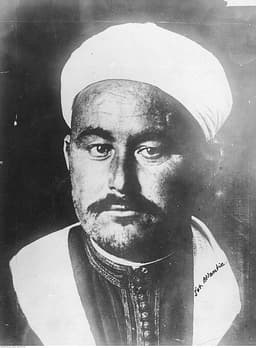
Abd el-Krim
Revolutionary · Modern
61.8Total
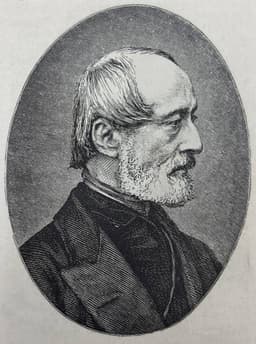
Giuseppe Mazzini
Revolutionary · Modern
50.7Total
Basic Information
Born
1882
1805
Died
1963
1872
Era
Modern
Modern
Nationality
Morocco
Italy
Occupation
Revolutionary
Revolutionary
Civilization
Middle Eastern
Western
Score Comparison
Military (10%)
75.0
39.9
Political (20%)
72.0
40.8
Influence (20%)
59.0
60.0
Legacy (20%)
50.0
56.0
Leadership (15%)
72.0
40.9
Strategy (15%)
55.0
54.3
TOTAL
61.8
50.7
Abd el-Krim — Complete Timeline
1921 AD
Battle of AnnualWar
Abd el-Krim's Riffian forces decisively defeated a Spanish army at Annual in Spanish Morocco. The Spanish suffered thousands of casualties and lost vast amounts of equipment. This victory established Abd el-Krim as a major military leader and led to the proclamation of the Rif Republic.
Rif WarSpanish ColonialismBattle
Impact: regional
1923 AD
Proclamation of the Rif RepublicPolitical Action◆ Major
Abd el-Krim formally proclaimed the independent Rif Republic in northern Morocco. He established a government and administrative system, challenging Spanish and French colonial rule. The republic was not internationally recognized but functioned as a de facto state.
Rif RepublicIndependenceAnti-Colonialism
Impact: regionalconstructive
1925 AD
Rif War against FranceWar◆ Major
Abd el-Krim's forces attacked French positions in Morocco, expanding the conflict beyond Spanish territory. The French responded with a massive military campaign, using superior firepower and chemical weapons. This led to the eventual defeat of the Rif Republic.
Rif WarFrench ColonialismChemical Weapons
Impact: regional
1926 AD
Surrender and Exile to RéunionWar◆ Major
After a prolonged campaign, Abd el-Krim surrendered to French forces. He was exiled to the island of R
Rif WarExileDefeat
Impact: regionaltragic
1947 AD
Release and Move to EgyptPolitical Action
Abd el-Krim was released by the French and allowed to move to Egypt. He settled in Cairo, where he continued to advocate for North African independence and became a symbolic figure for anti-colonial movements.
ExileAnti-ColonialismSymbol
Impact: regionalconstructive
Giuseppe Mazzini — Complete Timeline
1831 AD
Founding of Young ItalyPolitical Action◆ Major
Mazzini founded the secret society Young Italy (Giovine Italia) in Marseille. The organization aimed to achieve Italian unification through popular insurrection and republican government. It recruited thousands of members and inspired uprisings in the 1830s and 1840s.
UnificationRepublicanismSecret Society
Impact: regionalconstructive
1834 AD
Mazzini's Insurrection in SavoyPolitical Action
Mazzini organized an armed invasion of Savoy from Switzerland, intending to spark a republican revolution. The attempt failed due to poor coordination and betrayal, forcing Mazzini into exile. He was sentenced to death in absentia by Piedmontese authorities.
InsurrectionFailureExile
destructive
1849 AD
Roman Republic of 1849Political Action◆ Major
Mazzini became one of the triumvirs governing the short-lived Roman Republic after the pope fled. He implemented progressive reforms including universal male suffrage and freedom of the press. The republic was crushed by French troops in July 1849, and Mazzini returned to exile.
RepublicRevolutionPapal States
Impact: regionalconstructive
1857 AD
Expedition of the SapriPolitical Action
Mazzini organized an ill-fated expedition led by Carlo Pisacane to spark a revolt in the Kingdom of the Two Sicilies. The rebels were quickly defeated and killed by local peasants and Bourbon troops. The failure discredited Mazzini's insurrectionary strategy.
InsurrectionFailureSouthern Italy
tragic
Expert Analysis
Abd el-Krim vs Giuseppe Mazzini
### The Prophet and the Emir: Two Revolutions, Two Fates
In the spring of 1849, a mild-mannered Italian in a black coat stood at the gates of a reborn republic, his vision of a unified Italy flickering like a candle in a storm. Half a century later and a continent away, a Berber chieftain in the Rif Mountains watched Spanish columns march into a trap, his own dream of independence growing as sharp as the peaks around him. Giuseppe Mazzini and Abd el-Krim never met, yet their lives pose a haunting question: why do some revolutionaries shape a nation’s destiny, while others are crushed by the forces they provoke? The answer lies not in the purity of their ideals, but in the brutal arithmetic of power, timing, and terrain.
### Origins
Giuseppe Mazzini was born in 1805 in Genoa, a city that had once been a republic but now languished under foreign rule. His mother, a devout woman, instilled in him a moral fervor that would never fade. Coming of age in the shadow of Napoleon’s fall, Mazzini absorbed the Romantic nationalism sweeping Europe—the belief that each people, like each individual, had a God-given mission. He was a thinker who became an activist, a man who wrote first and fought second.
Abd el-Krim, born in 1882 in Ajdir, Morocco, grew up in a world where tradition and resistance were one. His father was a qadi, a judge, and his family belonged to the Ait Waryaghar tribe, the most powerful in the Rif. Unlike Mazzini, Abd el-Krim was schooled in both Islamic jurisprudence and the Spanish colonial system; he worked as a translator and journalist before the war. Where Mazzini saw nations as spiritual communities, Abd el-Krim saw them as clans that needed a state. Their origins explain much: one man believed in the power of ideas, the other in the power of blood and loyalty.
### Rise to Power
Mazzini’s path was that of the exile. In 1831, at age 26, he founded Young Italy in Marseille, a secret society that swore to liberate and unify the peninsula under a republic. The oath was dramatic, the membership clandestine, and the risk constant. Mazzini lived on the run, writing pamphlets, organizing cells, and waiting for the spark. His insurrection in Savoy in 1834 failed before it began—Swiss authorities dispersed his ragtag army. Yet failure only deepened his mystique. He became the “soul of Italy,” a figure whose moral authority outran his political reach.
Abd el-Krim’s rise was forged in fire. After World War I, Spain’s grip on northern Morocco was weak, its army demoralized. In 1921, at the Battle of Annual, Abd el-Krim’s forces annihilated a Spanish column, killing thousands and capturing vast stores of weapons. It was not a revolt but a rout. Overnight, he became the master of the Rif. Two years later, in 1923, he proclaimed the Rif Republic, complete with a cabinet, a flag, and a postal service. He had not inherited power; he had seized it from the debris of an empire.
### Leadership & Governance
Mazzini governed only once, and briefly. As one of the triumvirs of the Roman Republic in 1849, he had 100 days to implement his ideals: freedom of the press, universal male suffrage, the abolition of clerical courts. He was a moral leader, not a military one—his political score of 72.0 reflects a man who could inspire but not command. He believed in the people but struggled to organize them. When French troops besieged Rome, Mazzini’s republic fell, and he fled into exile again.
Abd el-Krim was a different kind of ruler. His leadership score of 86.5 and strategy score of 72.0 reveal a commander who combined tribal loyalty with modern tactics. He built a disciplined army, used captured Spanish rifles, and employed guerrilla warfare that confounded two European powers. His Rif Republic was not a debating society; it was a war machine. He levied taxes, enforced law, and negotiated with foreign powers. Where Mazzini dreamed, Abd el-Krim drilled.
### Triumph & Tragedy
Mazzini’s greatest moment was also his greatest failure. The Roman Republic of 1849 was a beacon—a government of the people, by the people, in the heart of the Papal States. But it was isolated, outgunned, and abandoned by the French republicans who should have been its allies. Mazzini’s tragedy was that his vision outran his resources. He could spark a flame but not sustain a fire.
Abd el-Krim’s triumph was Annual, a victory so complete that it shook Spanish morale for a generation. His tragedy came when he overreached. In 1925, he attacked French Morocco, believing he could force Paris to negotiate. Instead, France and Spain united against him, deploying 300,000 troops, tanks, and aircraft. By 1926, his republic was crushed, and he was exiled to Réunion, a speck in the Indian Ocean. His strategy was brilliant, but his enemy was an empire.
### Character & Destiny
Mazzini was a prophet without a sword. He wrote endlessly, exhorted constantly, and died in 1872 still believing in a republic that would never come in his lifetime. His character was his destiny: pure, uncompromising, and ultimately powerless. He shaped Italy’s soul but not its state—that was left to Cavour and Garibaldi.
Abd el-Krim was a pragmatist with a warrior’s heart. He surrendered in 1926 not because he was broken, but because his people were starving. In exile, he lived until 1963, released to Egypt in 1947, where he became a symbol of anti-colonial resistance. His character—proud, calculating, resilient—allowed him to survive his defeat. Mazzini died in exile too, but Abd el-Krim died free.
### Legacy
Mazzini’s legacy is written in stone: Italy’s unification, the awakening of European nationalism, the template for every revolutionary who believes ideas can move mountains. His influence score of 72.5 is a testament to a man who never held power but changed the world.
Abd el-Krim’s legacy is more fragile. His Rif Republic was erased, his people scattered. Yet his struggle inspired anti-colonial movements from Algeria to Vietnam. His leadership score of 86.5 is a reminder that the greatest generals are sometimes those who lose.
### Conclusion
Mazzini and Abd el-Krim were both revolutionaries, but they fought different wars. Mazzini fought for a nation that did not yet exist; Abd el-Krim defended a nation that already was. One believed in the future, the other in the past. One wrote constitutions, the other commanded armies. In the end, Mazzini’s Italy became a reality; Abd el-Krim’s Rif Republic became a memory. But both men teach the same lesson: revolutions are not won by dreams alone, nor by weapons alone, but by the strange alchemy of character, circumstance, and the will to endure.
Rankings
🥇
Abd el-KrimLeader
Mil: 75.0Pol: 72.0Inf: 59.0
61.8
🥈
Giuseppe Mazzini
Mil: 39.9Pol: 40.8Inf: 60.0
50.7
+11.1 behind
How This Comparison Works
Algorithm
Each figure is scored on 6 dimensions (0—100 scale) based on structured historical data: Military (10%), Political (20%), Influence (20%), Legacy (20%), Leadership (15%), Strategy (15%). The weighted total produces the final ranking.
Data Sources
Scores are computed from structured sub-indicators in the database. Scale factors adjust for era (Ancient ×0.85, Modern ×1.0) and civilization size (Eastern ×1.05, Other ×0.80) to account for differences in population and military scale.
Maximum 3 Figures
Comparisons are limited to 2—3 figures to ensure readability and statistical meaningfulness.
Error Margins
±5 points per dimension — Sub-scores are derived from historical records with inherent uncertainty. Two figures within 5 points on a dimension should be considered roughly equivalent in that area.
Total Score Accuracy
±3 points overall — The weighted combination of 6 dimensions produces a total score with approximately ±3 points of uncertainty. Differences of less than 3 points are not statistically significant— the figures are effectively tied.
Known Limitations
- Historical records are incomplete and uneven across civilizations
- Figures from oral-tradition societies may be underrepresented
- Occupation labels can misclassify multi-role figures
- Scores measure capability and impact, not moral character
- Quantitative scoring is a comparison tool, not absolute truth
Capability Radar
Military (10%) — Battles & Warfare
Battles
75
5
Win Rate
70
5
Expansion
60
5
Political (20%) — Governance & Reform
Reform
70
60
Diplomacy
65
55
Economy
50
10
Influence (20%) — Cultural & Global Reach
Cultural
60
65
Global
55
55
Legacy (20%) — Historical Impact
Historical
70
70
Longevity
55
60
Leadership (15%) — Power & Stability
Tenure
55
20
Stability
45
10
Strategy (15%) — Tactics & Innovation
Strategy
80
10
Tactics
85
5
Reform
65
15
Similar Comparisons
Comments & Discussion
RifRebelSoul6/16/2026
Mazzini preached unity from European salons; Abd el-Krim bled for it on mountain slopes. The difference? Mazzini got Garibaldi’s thousands of redshirts; Abd el-Krim faced 100,000 Spanish troops with tribesmen wielding old muskets. One wrote manifestos that inspired a kingdom; the other built a functional republic with its own currency and postal service. History favors the survivor, not the saint.
数据斗士6/16/2026
说两人都是革命者?扯淡。Mazzini的意大利统一靠的是皮埃蒙特军队和外交阴谋,不是他那些小册子。Abd el-Krim在1921年安瓦尔战役中用500人打死2万西班牙兵,这才是硬实力。但都输在资源上。Mazzini有英国流亡避难,Abd el-Krim被逼到绝路才投降。数据不会撒谎:胜利需要枪炮,不是诗歌。
ClassicsSnob6/16/2026
Mazzini was a romantic fool who thought God wrote history. Abd el-Krim was a pragmatist who built a state from tribal law and Quranic justice. Mazzini’s "Young Italy" died in the streets of Rome in 1849; Abd el-Krim’s Rif Republic lasted from 1921 to 1926 and fought off two European empires. The Italian dreamed of ancient glory; the Berber actually achieved temporary sovereignty. One was a candle, the other a wildfire.
历史侦探6/16/2026
别被浪漫化叙事骗了。Mazzini的共和理想在1848年彻底破产,法国人进来当教皇保护者,意大利统一其实是萨丁王国吞并别人。Abd el-Krim更实际:他懂得火炮布局和堑壕战,连西班牙陆军元帅都说他是"北非最难对付的敌人"。但两人都犯了一个错——Mazzini轻视了王朝政治,Abd el-Krim低估了化学武器。1916年德国毒气弹和1925年西班牙毒气弹,都是现代性对理想主义的屠杀。
GlobalEyeView6/16/2026
Every revolution is a gamble with geography. Mazzini gambled on Italian cities with allies like France and Britain; he lost repeatedly but eventually won because the great powers wanted a buffer against Austria. Abd el-Krim gambled on the Rif Mountains against Spain and France simultaneously—and won battles, but lost the war. Rif was a strategic backwater; Italy was a chessboard. The Emir’s tragedy wasn’t his vision; it was his zip code.