Loading...
Giuseppe Mazzini vs Li Zicheng
Giuseppe Mazzini leads by 7.2 pts · 2 figures compared
…
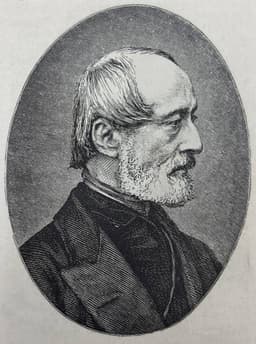
Giuseppe Mazzini
Revolutionary · Modern
50.7Total
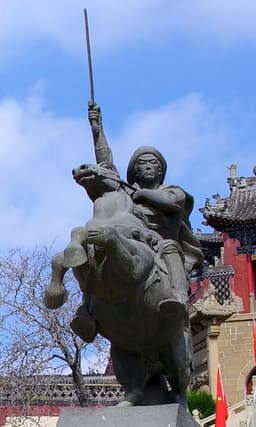
Li Zicheng
Revolutionary · Modern
43.5Total
Basic Information
Born
1805
1606
Died
1872
1645
Era
Modern
Modern
Nationality
Italy
China
Occupation
Revolutionary
Revolutionary
Civilization
Western
Eastern
Score Comparison
Military (10%)
39.9
50.0
Political (20%)
40.8
27.9
Influence (20%)
60.0
52.5
Legacy (20%)
56.0
44.2
Leadership (15%)
40.9
39.0
Strategy (15%)
54.3
43.3
TOTAL
50.7
43.5
Giuseppe Mazzini — Complete Timeline
1831 AD
Founding of Young ItalyPolitical Action◆ Major
Mazzini founded the secret society Young Italy (Giovine Italia) in Marseille. The organization aimed to achieve Italian unification through popular insurrection and republican government. It recruited thousands of members and inspired uprisings in the 1830s and 1840s.
UnificationRepublicanismSecret Society
Impact: regionalconstructive
1834 AD
Mazzini's Insurrection in SavoyPolitical Action
Mazzini organized an armed invasion of Savoy from Switzerland, intending to spark a republican revolution. The attempt failed due to poor coordination and betrayal, forcing Mazzini into exile. He was sentenced to death in absentia by Piedmontese authorities.
InsurrectionFailureExile
destructive
1849 AD
Roman Republic of 1849Political Action◆ Major
Mazzini became one of the triumvirs governing the short-lived Roman Republic after the pope fled. He implemented progressive reforms including universal male suffrage and freedom of the press. The republic was crushed by French troops in July 1849, and Mazzini returned to exile.
RepublicRevolutionPapal States
Impact: regionalconstructive
1857 AD
Expedition of the SapriPolitical Action
Mazzini organized an ill-fated expedition led by Carlo Pisacane to spark a revolt in the Kingdom of the Two Sicilies. The rebels were quickly defeated and killed by local peasants and Bourbon troops. The failure discredited Mazzini's insurrectionary strategy.
InsurrectionFailureSouthern Italy
tragic
Li Zicheng — Complete Timeline
1644 AD
Captured Beijing and Ended the Ming DynastyWar
Li Zicheng led his rebel army to capture Beijing. The Chongzhen Emperor committed suicide, ending the Ming dynasty. Li Zicheng proclaimed the Shun dynasty and briefly ruled from the Forbidden City before being defeated by Qing forces.
Ming-Qing TransitionRebellionBeijing
Impact: globaldestructive
Defeated at the Battle of Shanhai PassWar◆ Major
Li Zicheng's army was defeated by the combined forces of Wu Sangui and the Manchus at the Battle of Shanhai Pass. The defeat forced him to abandon Beijing and retreat westward, effectively ending his control over northern China.
Ming-Qing TransitionBattleDefeat
Impact: globaltragic
Proclaimed the Shun DynastyPolitical Action◆ Major
After capturing Beijing, Li Zicheng formally proclaimed the establishment of the Shun dynasty in Xi'an. He adopted the title of emperor and began implementing his own administrative policies, though his rule was short-lived.
Shun DynastyProclamationRebellion
Impact: nationalconstructive
1645 AD
Killed in Jiugong MountainWar◆ Major
Li Zicheng was killed by a local militia while fleeing through Jiugong Mountain in Hubei province. His death marked the end of the Shun dynasty and the collapse of his rebellion, though some accounts claim he survived and became a monk.
Shun DynastyDeathRebellion
Impact: nationaltragic
Expert Analysis
Li Zicheng vs Giuseppe Mazzini
# The Revolutionary’s Gamble: Why Li Zicheng Burned Bright and Mazzini Built to Last
In the spring of 1644, Li Zicheng rode through the gates of Beijing at the head of a ragged army that had marched across China like a plague of locusts. The Ming emperor, alone and despairing, had hanged himself on a hill behind the Forbidden City. Li Zicheng, a former postal worker turned rebel king, stood at the pinnacle of his power. Half a world away and two centuries later, Giuseppe Mazzini sat in a Marseille garret in 1831, ink-stained fingers drafting the constitution of a secret society called Young Italy. He had no army, no city, no throne—only an idea. One man seized an empire and lost it in forty-two days. The other never held a sword but planted a seed that grew into a nation. Their stories, so different in outcome, reveal the deepest fault lines of revolutionary leadership: the difference between conquering a city and conquering a future.
Origins
Li Zicheng was born in 1606 into a China buckling under the weight of the Little Ice Age, bureaucratic corruption, and a collapsed postal system that threw thousands of petty officials onto the road. He grew up in Shaanxi province, a region ravaged by drought and famine. When his wife was unfaithful and he killed her, Li became a fugitive, then a soldier, then a bandit. His world was one of survival, where loyalty was measured in grain and power in heads taken.
Mazzini, by contrast, was born in 1805 in Genoa, a city that had once been a maritime republic but now chafed under the rule of the Kingdom of Sardinia. His father was a physician, his mother a devout woman who instilled in him a burning sense of moral purpose. Mazzini grew up reading the works of Dante and the French Revolutionaries. His enemy was not hunger but humiliation—the humiliation of a peninsula divided into a patchwork of foreign-controlled states, where Italians were subjects, not citizens.
Li Zicheng’s revolution was born of desperation. Mazzini’s was born of aspiration.
Rise to Power
Li Zicheng rose through the ranks of rebel armies that had been fighting the Ming for a decade. He was not the first peasant leader, nor the most educated, but he possessed a cold pragmatism. He won followers by promising land and tax relief, and by projecting an image of discipline—his soldiers were forbidden from looting villages, a radical departure from the chaos of other rebel bands. By 1643, he had captured Xi’an and proclaimed himself the King of the Shun dynasty. The next year, he marched on Beijing. The Ming defenses crumbled not because Li was a brilliant strategist, but because the dynasty had already rotted from within. His military score of 55.5 reflects a commander competent enough to exploit weakness, but not to win against a real foe.
Mazzini’s path was utterly different. He never commanded an army. His “rise” was a slow accumulation of moral authority. After joining the Carbonari, a secret revolutionary society, he was arrested in 1830 and exiled. In Marseille, he founded Young Italy in 1831, a secret organization that aimed to unify Italy as a republic through education and insurrection. His method was not conquest but conversion. He wrote pamphlets, smuggled them into Italy, and built networks of young idealists willing to die for the cause. His political score of 72.0 and leadership of 76.1 reflect a man who understood that the hardest fortress to breach is the human mind.
Leadership & Governance
Li Zicheng’s rule in Beijing lasted exactly forty-two days. He proclaimed the Shun dynasty, but he had no administrative apparatus, no loyal bureaucracy, and no plan to feed the city. His soldiers, once disciplined, began looting. He tried to win over Ming officials but failed to understand the psychology of power: he tortured the former emperor’s family to extract wealth, alienating the very elites he needed. When Wu Sangui, the Ming general guarding the Great Wall, hesitated to surrender, Li mishandled the negotiation. Wu defected to the Manchus, and the combined army met Li at Shanhai Pass. Li’s forces were shattered. He fled Beijing, and within a year he was dead, killed by a militia while foraging for food in Jiugong Mountain. His leadership score of 33.8 is not an insult but a verdict: he could tear down a dynasty but could not build a state.
Mazzini, by contrast, governed for mere months—as one of the triumvirs of the Roman Republic in 1849. In that brief window, he abolished the death penalty, instituted progressive taxation, and granted freedom of the press. He governed not with an iron fist but with moral fervor. The republic fell to French troops, but Mazzini’s ideas survived. He failed again and again—the Savoy insurrection of 1834, the Sapri expedition of 1857—yet each failure inspired a new generation. His strategy score of 43.6 is low, but his political and leadership scores are high because he understood that revolutions are not won in a single battle but in the long war for hearts.
Triumph & Tragedy
Li Zicheng’s triumph was his tragedy. Capturing Beijing was the greatest moment of his life and the beginning of his end. He had no capacity to govern what he had conquered. His death in 1645, shot by peasants in a mountain ambush, was inglorious. The Shun dynasty vanished with him, a footnote in the Ming-Qing transition.
Mazzini’s tragedy was that he never saw Italy unified under a republic. When unification finally came in 1861, it was under a monarchy led by Cavour and Garibaldi—men who used Mazzini’s fire but rejected his politics. He spent his last years in exile, still writing, still hoping. He died in 1872, a prophet without a nation. Yet his legacy score of 66.4 and influence of 72.5 testify that his failure was more fruitful than Li’s success.
Character & Destiny
Li Zicheng was a man of the moment. He had no long-term vision, no ideology beyond survival and revenge. His personality—pragmatic, ruthless, but ultimately short-sighted—shaped a destiny of flash and collapse. Mazzini was a man of the future. He lived for an idea so powerful that it outlived him. “Ideas grow quickly when watered by the blood of martyrs,” he wrote. He was willing to be a martyr, but not a king.
Legacy
Li Zicheng is remembered in China as a cautionary tale—the peasant who became emperor for a month, a figure in folklore and opera, but not a founder. His total score of 54.9 places him as a minor figure in the sweep of Chinese history.
Mazzini is remembered as the “Soul of Italy,” the man who gave the Risorgimento its moral compass. Streets, squares, and schools bear his name. He is not a saint—his tactical failures were real—but he is a father of modern democracy and nationalism. His total score of 63.7 reflects a different kind of greatness: not the greatness of conquest, but of conviction.
Conclusion
What separates the man who takes a city from the man who builds a nation? Not courage, not opportunity, but vision. Li Zicheng saw the Forbidden City and thought, “This is mine.” Mazzini saw a divided Italy and thought, “This must become one.” The first ended in a ditch; the second ended in the pantheon of history. Their stories remind us that the most dangerous moment for any revolutionary is not the struggle, but the victory—and that the deepest revolutions are not of thrones, but of minds.
Rankings
🥇
Giuseppe MazziniLeader
Mil: 39.9Pol: 40.8Inf: 60.0
50.7
🥈
Li Zicheng
Mil: 50.0Pol: 27.9Inf: 52.5
43.5
+7.2 behind
How This Comparison Works
Algorithm
Each figure is scored on 6 dimensions (0—100 scale) based on structured historical data: Military (10%), Political (20%), Influence (20%), Legacy (20%), Leadership (15%), Strategy (15%). The weighted total produces the final ranking.
Data Sources
Scores are computed from structured sub-indicators in the database. Scale factors adjust for era (Ancient ×0.85, Modern ×1.0) and civilization size (Eastern ×1.05, Other ×0.80) to account for differences in population and military scale.
Maximum 3 Figures
Comparisons are limited to 2—3 figures to ensure readability and statistical meaningfulness.
Error Margins
±5 points per dimension — Sub-scores are derived from historical records with inherent uncertainty. Two figures within 5 points on a dimension should be considered roughly equivalent in that area.
Total Score Accuracy
±3 points overall — The weighted combination of 6 dimensions produces a total score with approximately ±3 points of uncertainty. Differences of less than 3 points are not statistically significant— the figures are effectively tied.
Known Limitations
- Historical records are incomplete and uneven across civilizations
- Figures from oral-tradition societies may be underrepresented
- Occupation labels can misclassify multi-role figures
- Scores measure capability and impact, not moral character
- Quantitative scoring is a comparison tool, not absolute truth
Capability Radar
Military (10%) — Battles & Warfare
Battles
5
55
Win Rate
5
60
Expansion
5
65
Political (20%) — Governance & Reform
Reform
60
15
Diplomacy
55
20
Economy
10
10
Influence (20%) — Cultural & Global Reach
Cultural
65
40
Global
55
35
Legacy (20%) — Historical Impact
Historical
70
55
Longevity
60
30
Leadership (15%) — Power & Stability
Tenure
20
20
Stability
10
5
Strategy (15%) — Tactics & Innovation
Strategy
10
55
Tactics
5
50
Reform
15
30
Similar Comparisons
Comments & Discussion
历史筛子6/16/2026
这两位根本没可比性。李自成是气候崩溃下的流寇产物,1640年代陕西旱灾饿死几百万人,他不过是把绝望装进了口号里。马志尼生在半岛分裂的精英圈子里,玩的是国际协奏曲。说李自成“烧得亮”纯属美化——他攻下北京后立刻向吴三桂要钱要女人,这哪是革命家,分明是换了身官服的土匪。马志尼至少让欧洲列强记住了“意大利”三个字。一个毁于贪婪,一个死于理想。
ChronoCritic6/16/2026
The analysis romanticizes Mazzini as some pure ideologue, but let’s not forget his actual legacy: Young Italy was a secret society that inspired a few hundred failed insurrections and got him exiled three times. Meanwhile, Li Zicheng’s rebellion killed millions and shattered the Ming dynasty, clearing space for the Qing—whose first emperor, Shunzhi, was literally a child when Li died. Mazzini’s “seed” needed Garibaldi’s swords and Cavour’s bribes to sprout. Li’s failure was immediate and colossa
地缘刀客6/16/2026
李自成的败亡有个常被忽略的地缘因素:他选错了敌人顺序。1644年他应该先打张献忠整合流民,再腾出手收拾关外清军。结果他直接冲北京,明廷一垮,吴三桂立刻反水,清军顺着山海关长驱直入。马志尼聪明得多,知道意大利的统一不能单干,必须牵住法国和英国的外交线。一个在棋盘上横冲直撞,另一个在局外布子。打仗就是拼地理,李自成连地图都没读透。
LegacyLens6/16/2026
Mazzini’s real triumph wasn’t military—it was linguistic. He forged a *Italian* identity out of dialects that barely understood each other. Li Zicheng never did that for China; the Ming loyalists in the south despised him as much as the Manchus did. By 1650, Mazz
Historian3886/16/2026
Comparing Li Zicheng to Mazzini is like comparing a wildfire to a slow-burning fuse. Li had the military instinct but zero strategic patience—his 42-day collapse in Beijing proves that seizing a throne without building legitimacy is just armed tourism. Mazzini, though he never fired a shot, understood that revolutions need a soul. Young Italy’s 60,000 members by the 1840s didn’t come from looting; they came from Mazzini’s vision of *Risorgimento*. One took the capital; the other captured the ima