Loading...
Giuseppe Mazzini vs Gulbuddin Hekmatyar
Giuseppe Mazzini leads by 12.4 pts · 2 figures compared
…
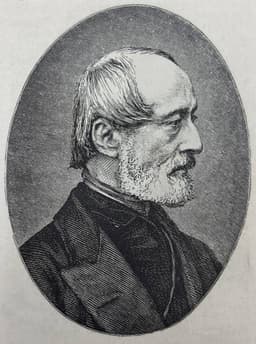
Giuseppe Mazzini
Revolutionary · Modern
50.7Total
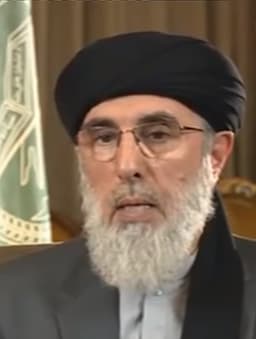
Gulbuddin Hekmatyar
Revolutionary · Modern
38.3Total
Basic Information
Born
1805
1947
Died
1872
—
Era
Modern
Modern
Nationality
Italy
Afghanistan
Occupation
Revolutionary
Revolutionary
Civilization
Western
Middle Eastern
Score Comparison
Military (10%)
39.9
35.0
Political (20%)
40.8
26.4
Influence (20%)
60.0
47.1
Legacy (20%)
56.0
36.7
Leadership (15%)
40.9
40.4
Strategy (15%)
54.3
38.3
TOTAL
50.7
38.3
Giuseppe Mazzini — Complete Timeline
1831 AD
Founding of Young ItalyPolitical Action◆ Major
Mazzini founded the secret society Young Italy (Giovine Italia) in Marseille. The organization aimed to achieve Italian unification through popular insurrection and republican government. It recruited thousands of members and inspired uprisings in the 1830s and 1840s.
UnificationRepublicanismSecret Society
Impact: regionalconstructive
1834 AD
Mazzini's Insurrection in SavoyPolitical Action
Mazzini organized an armed invasion of Savoy from Switzerland, intending to spark a republican revolution. The attempt failed due to poor coordination and betrayal, forcing Mazzini into exile. He was sentenced to death in absentia by Piedmontese authorities.
InsurrectionFailureExile
destructive
1849 AD
Roman Republic of 1849Political Action◆ Major
Mazzini became one of the triumvirs governing the short-lived Roman Republic after the pope fled. He implemented progressive reforms including universal male suffrage and freedom of the press. The republic was crushed by French troops in July 1849, and Mazzini returned to exile.
RepublicRevolutionPapal States
Impact: regionalconstructive
1857 AD
Expedition of the SapriPolitical Action
Mazzini organized an ill-fated expedition led by Carlo Pisacane to spark a revolt in the Kingdom of the Two Sicilies. The rebels were quickly defeated and killed by local peasants and Bourbon troops. The failure discredited Mazzini's insurrectionary strategy.
InsurrectionFailureSouthern Italy
tragic
Gulbuddin Hekmatyar — Complete Timeline
1975 AD
Founding of Hezb-e Islami (1975)Political Action◆ Major
Gulbuddin Hekmatyar founded the Hezb-e Islami political party, an Islamist faction that became one of the most powerful mujahideen groups during the Soviet-Afghan War. The party received significant support from Pakistan's ISI and foreign Islamist donors.
MujahideenIslamist PartyCold War
Impact: national
1993 AD
Prime Minister during Civil War (1993-1994)Political Action◆ Major
Hekmatyar served as Prime Minister of Afghanistan from 1993 to 1994 under President Burhanuddin Rabbani. His tenure was marked by intense factional fighting, including rocket attacks on Kabul that caused thousands of civilian casualties, contributing to the devastation of the city.
Civil WarKabulRocket Attacks
Impact: nationaldestructive
1996 AD
Alliance with Taliban (1996-2001)Political Action
After the Taliban captured Kabul in 1996, Hekmatyar initially fled to Iran. He later aligned with the Taliban regime, though his influence waned. He remained in Afghanistan until the US-led invasion in 2001, after which he fled to Pakistan.
TalibanExileAlliance
Impact: national
2016 AD
Peace Agreement with Afghan Government (2016)Political Action◆ Major
Hekmatyar signed a peace agreement with the Afghan government of President Ashraf Ghani in 2016. The deal allowed him to return to Afghanistan from exile, with his party recognized as a political entity and his fighters integrated into state security forces.
Peace DealReconciliationGhani
Impact: nationalconstructive
Expert Analysis
Gulbuddin Hekmatyar vs Giuseppe Mazzini
# The Revolutionary's Dilemma: Mazzini and Hekmatyar
On a spring morning in 1849, Giuseppe Mazzini stood in the Palazzo della Cancelleria in Rome, drafting laws for a republic that would last barely five months. He believed, with the fervor of a prophet, that a united Italy would redeem humanity. A century and a half later, on a dusty road outside Kabul, Gulbuddin Hekmatyar watched his own dream crumble—not from foreign invasion, but from the betrayal of allies he had once called brothers. Both men were revolutionaries. Both sought to remake their worlds. Yet one became the soul of a nation, the other a ghost haunting its ruins. What separates a founding father from a warlord?
Origins
Giuseppe Mazzini was born in 1805 in Genoa, a city then under French control, into a family of modest means and deep intellectual ambition. His mother, Maria, was a woman of fierce moral conviction who instilled in him a love of liberty and literature. The son of a physician, Mazzini grew up reading Dante and Alfieri, absorbing the Romantic nationalism that swept Europe after Napoleon. He was a child of the Enlightenment, shaped by the belief that reason and virtue could forge a better world. When he joined the Carbonari secret society at twenty-two, he was already dreaming not just of Italian independence, but of a republic that would lead all peoples to freedom.
Gulbuddin Hekmatyar was born in 1947 in Imam Sahib, a village in northern Afghanistan, into a Pashtun family of the Kharoti tribe. His father was a landowner and former army officer, but Hekmatyar grew up in a world of Cold War rivalry and Islamic revival. He studied engineering at Kabul University, where he encountered the Muslim Brotherhood’s ideas, translated into Pashto and Dari. Where Mazzini saw the nation as a spiritual community, Hekmatyar saw it as a field for jihad. Where Mazzini’s God was a distant, liberal deity, Hekmatyar’s was a commanding presence demanding obedience. The difference in their eras—Europe’s springtime of nations versus the Middle East’s autumn of empires—set the stage for their divergent paths.
Rise to Power
Mazzini’s rise was the work of a pen, not a sword. In 1831, exiled in Marseille, he founded Young Italy (Giovine Italia), a secret society that spread like wildfire among disaffected youth. Its method was insurrection: small, dramatic uprisings meant to ignite a popular revolution. Mazzini himself was a poor organizer of violence—his 1834 invasion of Savoy collapsed before it began, leaving him in Swiss exile—but he was a master of moral suasion. His letters, pamphlets, and manifestos turned Italian unification from a literary fantasy into a political demand. He did not need to win battles; he needed to win hearts.
Hekmatyar rose through the barrel of a gun. In 1975, he founded Hezb-e Islami, an Islamist party that combined anti-Soviet fervor with a ruthless drive for power. The Soviet invasion of 1979 gave him his opportunity: he became a key recipient of CIA and Pakistani intelligence funding, channelling weapons to mujahideen fighters. But unlike Mazzini, who inspired loyalty through idealism, Hekmatyar commanded through fear. He was known for executing rivals, even within his own party. By the 1980s, he was one of the most powerful warlords in Afghanistan, his name synonymous with both resistance and terror.
Leadership & Governance
Mazzini governed only once, and briefly. As one of three triumvirs of the Roman Republic in 1849, he implemented progressive reforms: freedom of the press, universal suffrage, and the abolition of the death penalty. He was a poor administrator but a brilliant symbol, his presence alone inspiring the city’s defense against French and Austrian armies. When the republic fell, he did not cling to power; he accepted defeat with dignity, writing, “We have planted the tree; others will water it.”
Hekmatyar’s moment of governance came in 1993, when he became Prime Minister of Afghanistan during the civil war that followed the Soviet withdrawal. His tenure was a catastrophe. He ordered rockets fired into Kabul, killing thousands of civilians, in a bid to unseat President Rabbani. His strategic score of 63.7 reflects a tactical cunning that never matured into statecraft. Where Mazzini sought to build institutions, Hekmatyar sought to destroy opponents. His political score of 45.9—far below Mazzini’s 72.0—tells the story: he was a revolutionary who could not govern.
Triumph & Tragedy
Mazzini’s greatest triumph was invisible: he made Italian unification inevitable. Though he died in 1872, before the kingdom of Italy was completed, his ideas had shaped Cavour’s diplomacy and Garibaldi’s sword. “I am the heart,” he once said, “they are the arms.” His tragedy was that the Italy he dreamed of—a democratic republic—never came to pass. The monarchy he despised united the peninsula, and his followers were marginalized. Yet he died with his faith intact, convinced that history would vindicate him.
Hekmatyar’s triumph was equally fleeting. He helped drive the Soviets from Afghanistan, a victory that seemed to vindicate his methods. But his tragedy was deeper: he became the architect of his own country’s destruction. In 1996, when the Taliban captured Kabul, he fled to Iran. Later, he allied with the very regime he had once fought, signing a peace agreement in 2016 that allowed him to return to Afghanistan—a broken man in a broken land. His legacy score of 47.8 reflects a life that ended not in martyrdom or redemption, but in irrelevance.
Character & Destiny
Mazzini was a man of unwavering principle, almost to a fault. He refused compromise, rejected monarchy, and insisted on republican purity. This made him a moral beacon but a political failure. His leadership score of 76.1 reflects the charisma that moved thousands, but his strategy score of 43.6 exposes the weakness: he could inspire, but he could not organize. Hekmatyar was the opposite: a strategist who understood power but not purpose. His military score of 46.8 and strategy score of 63.7 show a man who could plan a campaign but not build a peace. One died in exile, beloved; the other lives in obscurity, despised.
Legacy
Mazzini’s legacy is carved into the foundations of modern Italy. His name adorns streets, squares, and schools. He is remembered as the “Soul of Italy,” the man who taught a people to dream of unity. Hekmatyar’s legacy is more ambiguous. In Afghanistan, he is a symbol of the civil war’s futility, a reminder that revolution without statecraft breeds only ruin. The West remembers him as a proxy turned pariah, a cautionary tale about the costs of arming extremists.
Conclusion
Mazzini and Hekmatyar both believed they were fighting for liberation. But Mazzini liberated an idea; Hekmatyar destroyed a country. The difference lies not in their goals, but in their means. Mazzini wrote letters; Hekmatyar launched rockets. Mazzini built a movement; Hekmatyar built a militia. Both were revolutionaries, but revolution is a double-edged sword: it can forge a nation or shatter it. In the end, the revolutionary’s true legacy is not the power he seizes, but the world he leaves behind.
Rankings
🥇
Giuseppe MazziniLeader
Mil: 39.9Pol: 40.8Inf: 60.0
50.7
🥈
Gulbuddin Hekmatyar
Mil: 35.0Pol: 26.4Inf: 47.1
38.3
+12.4 behind
How This Comparison Works
Algorithm
Each figure is scored on 6 dimensions (0—100 scale) based on structured historical data: Military (10%), Political (20%), Influence (20%), Legacy (20%), Leadership (15%), Strategy (15%). The weighted total produces the final ranking.
Data Sources
Scores are computed from structured sub-indicators in the database. Scale factors adjust for era (Ancient ×0.85, Modern ×1.0) and civilization size (Eastern ×1.05, Other ×0.80) to account for differences in population and military scale.
Maximum 3 Figures
Comparisons are limited to 2—3 figures to ensure readability and statistical meaningfulness.
Error Margins
±5 points per dimension — Sub-scores are derived from historical records with inherent uncertainty. Two figures within 5 points on a dimension should be considered roughly equivalent in that area.
Total Score Accuracy
±3 points overall — The weighted combination of 6 dimensions produces a total score with approximately ±3 points of uncertainty. Differences of less than 3 points are not statistically significant— the figures are effectively tied.
Known Limitations
- Historical records are incomplete and uneven across civilizations
- Figures from oral-tradition societies may be underrepresented
- Occupation labels can misclassify multi-role figures
- Scores measure capability and impact, not moral character
- Quantitative scoring is a comparison tool, not absolute truth
Capability Radar
Military (10%) — Battles & Warfare
Battles
5
45
Win Rate
5
30
Expansion
5
25
Political (20%) — Governance & Reform
Reform
60
15
Diplomacy
55
20
Economy
10
10
Influence (20%) — Cultural & Global Reach
Cultural
65
25
Global
55
25
Legacy (20%) — Historical Impact
Historical
70
30
Longevity
60
20
Leadership (15%) — Power & Stability
Tenure
20
30
Stability
10
5
Strategy (15%) — Tactics & Innovation
Strategy
10
35
Tactics
5
40
Reform
15
20
Similar Comparisons
Comments & Discussion
GulbuddinHeckler6/16/2026
As a military historian, I say don't kid yourselves—Hekmatyar was a tactician, Mazzini a theologian of revolution. Hekmatyar actually won battles, like the 1992 siege of Kabul that killed tens of thousands. Mazzini never commanded an army, just wrote manifestos that got kids killed. One fought with RPGs and body parts; the other with essays and exile. Who spilled more blood for their cause? The Afghan. Who united a nation? Neither, really—Mazzini died before Italy was whole, and Hekmatyar's lega
古典学怀疑论者6/16/2026
别被Mazzini那张脸的工艺骗了。数据很清楚:意大利统一时,Mazzini的共和梦被Savoy王朝偷走了,他只在罗马共和国活了一百天。Hekmatyar更诚实——他说自己是暴力革命者,做到了,打了十年苏联,炸了喀布尔。你把两人对比太欧洲中心了。Mazzini活在书本和情书里,Hekmatyar活在战争和血仇里。谁更能改变现实?问阿富汗人吧。
NationBuilder016/16/2026
As a history buff who loves the "what if" game, here's my take: Mazzini was a romantic meme that went viral in the 19th century—he inspired Garibaldi, fed European nationalism, but died as a footnote. Hekmatyar was a warlord CEO who ran a dark empire of rockets and ideology, but he's still alive to see his failure. One's a ghost in a museum; the other's a ghost in a ditch. I'd rather read Mazzini's letters than negotiate with Hekmatyar, but the Afghan's impact on his country's chaos is far more
修正派批评者6/16/2026
你们都在粉饰Mazzini。他鼓吹道德胜利,却亲手把意大利统一推向王室和墨索里尼。Hekmatyar至少承认了权力是肉食游戏——他用火箭筒和毒品赚钱,从不装圣人。Mazzini的"青年意大利"有秘密警察风格,Hekmatyar的Hizb-e-Islami也一样。区别在于:意大利人把Mazzini做成教科书英雄,阿富汗人把Hekmatyar当成被遗忘的毒瘤。两种都是历史宣传。别骗自己了。