Loading...
George Washington vs Lazare Carnot
George Washington leads by 8.6 pts · 2 figures compared
…
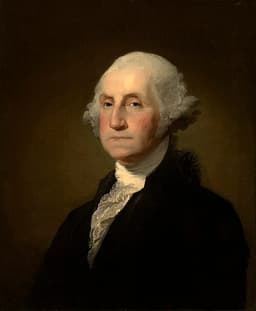
George Washington
Politician · Modern
76.8Total
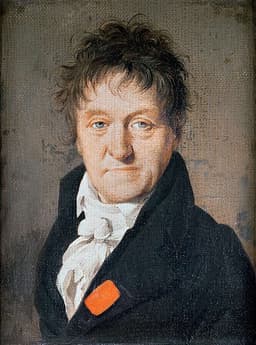
Lazare Carnot
Politician · Modern
68.2Total
Basic Information
Born
1732
1753
Died
1799
1823
Era
Modern
Modern
Nationality
United States
France
Occupation
Politician
Politician
Civilization
Western
Western
Score Comparison
Military (10%)
75.0
61.7
Political (20%)
82.0
72.0
Influence (20%)
75.0
68.0
Legacy (20%)
80.0
65.0
Leadership (15%)
85.0
72.0
Strategy (15%)
55.0
72.0
TOTAL
76.8
68.2
George Washington — Complete Timeline
1775 AD
Appointed Commander-in-Chief of the Continental ArmyOther◆ Major
The Second Continental Congress appointed Washington as commander-in-chief of the Continental Army on June 15, 1775. He accepted the position without pay, taking command of the forces besieging Boston at the start of the American Revolutionary War.
American RevolutionMilitary Leadership
Impact: national
1776 AD
Crossed the Delaware RiverOther◆ Major
On the night of December 25-26, 1776, Washington led 2,400 troops across the ice-choked Delaware River. The surprise attack on Hessian forces at Trenton resulted in a decisive American victory, capturing nearly 1,000 prisoners and reviving Patriot morale after a series of defeats.
American RevolutionBattleTurning Point
Impact: nationalconstructive
1787 AD
Presided over the Constitutional ConventionPolitical Action◆ Major
Washington served as president of the Constitutional Convention in Philadelphia from May to September 1787. His presence lent legitimacy to the proceedings, and he formally signed the final draft of the U.S. Constitution, though he contributed little to the debates.
ConstitutionFounding Father
Impact: national
1789 AD
Inaugurated as First President of the United StatesPolitical Action◆ Major
Washington was unanimously elected by the Electoral College and inaugurated on April 30, 1789, at Federal Hall in New York City. He established numerous executive branch precedents, including the cabinet system, the inaugural address, and the title 'Mr. President'.
PresidencyFounding Father
Impact: national
1793 AD
Issued the Proclamation of NeutralityOther◆ Major
Washington issued the Proclamation of Neutrality on April 22, 1793, declaring the United States neutral in the conflict between France and Great Britain. This decision established the precedent of American isolationism and avoided entanglement in European wars.
Foreign PolicyNeutrality
Impact: national
1796 AD
Delivered the Farewell AddressOther◆ Major
Washington published his Farewell Address on September 19, 1796, announcing his decision not to seek a third term. The address warned against political factionalism, permanent foreign alliances, and the influence of the military in government, shaping American political culture.
PresidencyLegacy
Impact: national
Lazare Carnot — Complete Timeline
1793 AD
Directed the Victory at the Battle of WattigniesWar◆ Major
Carnot personally directed French forces at the Battle of Wattignies, a key victory that relieved the siege of Maubeuge. His strategic planning helped turn the tide against the Austrian army.
French RevolutionBattleVictory
Impact: regionalconstructive
Organized the Levée en MasseReform◆ Major
Carnot helped implement the lev
French RevolutionConscriptionMilitary Reform
Impact: globalconstructive
Appointed to the Committee of Public SafetyPolitical Action◆ Major
Carnot was appointed to the Committee of Public Safety, where he took charge of military organization. He reorganized the French army, introduced mass conscription, and coordinated the war effort against foreign coalitions.
French RevolutionCommittee of Public SafetyMilitary
Impact: nationalconstructive
1815 AD
Exiled as a RegicidePolitical Action
After the Bourbon restoration, Carnot was exiled as a regicide for having voted for the execution of Louis XVI. He spent his remaining years in Germany and died in Magdeburg.
ExileRegicideBourbon
Impact: nationaltragic
Expert Analysis
George Washington vs Lazare Carnot
### The Organizer and the Icon
On a winter morning in 1793, two men faced radically different versions of the same crisis. George Washington, now in his sixties, sat at Mount Vernon, watching his plantation fall into disrepair while the fledgling American republic struggled under the Articles of Confederation. Across the Atlantic, Lazare Carnot, a forty-year-old engineer, entered the cramped meeting rooms of the Committee of Public Safety in Paris, surrounded by the chaos of a revolution devouring itself. Both men were products of an age of upheaval, yet their paths could not have diverged more sharply. Washington would become the father of a nation, his face carved into its identity; Carnot would become the "Organizer of Victory," then die in exile, his name known only to history’s specialists. What drove these two men—both politicians, both military organizers, both products of the Enlightenment—to such different fates?
### Origins
Their beginnings shaped their instincts. Washington was born in 1732 into Virginia’s planter aristocracy, a world of measured gentility and land ownership. His father died when he was eleven, forcing him to learn self-reliance and the art of command young. He was a surveyor first—a man who mapped the wilderness, who understood that order must be imposed on chaos. The French and Indian War taught him that war was brutal, that men died for mistakes, and that patience often outlasted brilliance.
Carnot, born in 1753 in Burgundy, was the son of a lawyer and notary. He trained as a military engineer, a profession of precision and calculation. The ancient régime’s army was rigid, hierarchical, and corrupt; Carnot learned to work within systems he despised. While Washington absorbed the values of Virginia’s slaveholding gentry—honor, duty, and a deep suspicion of mob rule—Carnot absorbed the rationalism of the Enlightenment: mathematics, fortification, the belief that society could be redesigned. Where Washington saw the world as something to be managed, Carnot saw it as something to be remade.
### Rise to Power
Washington rose through the colonial elite. His military reputation, though mixed, gave him credibility. When the Second Continental Congress needed a commander-in-chief in 1775, they chose him not for genius but for character: he was Virginian, unifying North and South; he was wealthy, beyond bribery; he was patient, and the rebellion needed a man who would not crack. His rise was slow, deliberate, built on reputation and presence.
Carnot’s rise was sudden and violent. In 1793, the Revolution was under siege—foreign armies at the borders, civil war in the Vendée, and the guillotine busy in Paris. The Committee of Public Safety needed a man who could organize armies from nothing. Carnot, then a deputy to the National Convention, was appointed to the Committee that August. He took charge of military affairs, and within weeks, he implemented the *levée en masse*—a mass conscription that mobilized hundreds of thousands of French citizens. It was a radical act, unprecedented in scale, driven by ideology and desperation. Washington had commanded an army of volunteers and militia; Carnot invented a new kind of army, one where every citizen was a soldier.
### Leadership & Governance
Their styles were mirror opposites. Washington led by example. At Valley Forge in 1777–78, he shared his men’s suffering, refused to abandon them, and held the Continental Army together through sheer force of will. His military score of 70 reflects competence, not brilliance; his political score of 80 reflects a deeper wisdom. He understood that the Revolution was not a war of conquest but a war of endurance. He fought cautiously, avoiding decisive defeats, waiting for the British to tire.
Carnot, with a leadership score of 83.5, was more dynamic. He personally directed the Battle of Wattignies in October 1793, riding to the front to rally troops and coordinate artillery. He reorganized the army into divisions, improved logistics, and purged incompetent generals. Where Washington delegated and consulted, Carnot commanded and calculated. Yet his genius was organizational, not strategic—his strategy score of 65 matches Washington’s 65. Both men were better at building systems than winning battles. Washington built a nation’s trust; Carnot built a nation’s army.
### Triumph & Tragedy
Washington’s greatest moment came in 1783, when he resigned his commission to Congress. He could have been king; he chose to be a citizen. That act, more than any victory, defined American democracy. His presidency (1789–1797) established the cabinet system, the two-term precedent, and the principle of civilian control of the military. His tragedy was personal: he never freed his slaves, and his vision of America excluded most of its people.
Carnot’s triumph was 1793–94, when France’s armies drove back the invaders. He was the architect of victory, the man who turned revolutionary fervor into military power. But his tragedy was political. In 1794, he helped overthrow Robespierre, only to be purged himself. He survived the Directory and Napoleon, but after the Bourbon restoration in 1815, he was exiled as a regicide for having voted to execute Louis XVI. He died in 1823 in Magdeburg, Prussia, far from the France he had saved.
### Character & Destiny
Washington’s character was his destiny. He was reserved, almost cold, but his self-control gave him authority. He feared chaos more than tyranny, and so he built a government of checks and balances. Carnot’s character was more volatile. He was an idealist who believed in reason, yet he served a revolution that devoured its children. He was a republican who voted to kill a king, and that vote haunted him forever. Washington died at home, surrounded by family, mourned by a nation. Carnot died in exile, his body buried in a foreign land, his name fading.
### Legacy
Washington’s legacy is everywhere: the capital city, the dollar bill, the myth of the cherry tree. He is remembered as the father of his country, a figure of almost religious veneration. His political score of 80 and legacy of 78 reflect a man who shaped institutions that lasted.
Carnot’s legacy is quieter but profound. His organizational reforms created the model for modern mass armies—conscription, logistics, and citizen-soldiers. Napoleon built on his work. The French Republic owes him a debt it rarely acknowledges. His legacy score of 75 is close to Washington’s, but it is a legacy of systems, not symbols.
### Conclusion
Both men faced the same problem: how to build a new order from the ruins of the old. Washington succeeded because he was cautious, because he understood that power must be restrained, and because he had the good fortune to lead a revolution that did not eat its own. Carnot succeeded because he was brilliant, because he understood that the old world had to be destroyed, and because he was willing to sacrifice everything—including his own peace—for the cause. In the end, Washington gave America a nation; Carnot gave France an army. One became an icon; the other became a footnote. The difference was not in their ability but in their revolutions: one sought to preserve liberty, the other to create it. And that, perhaps, is the deepest lesson of their lives.
Rankings
🥇
George WashingtonLeader
Mil: 75.0Pol: 82.0Inf: 75.0
76.8
🥈
Lazare Carnot
Mil: 61.7Pol: 72.0Inf: 68.0
68.2
+8.6 behind
How This Comparison Works
Algorithm
Each figure is scored on 6 dimensions (0—100 scale) based on structured historical data: Military (10%), Political (20%), Influence (20%), Legacy (20%), Leadership (15%), Strategy (15%). The weighted total produces the final ranking.
Data Sources
Scores are computed from structured sub-indicators in the database. Scale factors adjust for era (Ancient ×0.85, Modern ×1.0) and civilization size (Eastern ×1.05, Other ×0.80) to account for differences in population and military scale.
Maximum 3 Figures
Comparisons are limited to 2—3 figures to ensure readability and statistical meaningfulness.
Error Margins
±5 points per dimension — Sub-scores are derived from historical records with inherent uncertainty. Two figures within 5 points on a dimension should be considered roughly equivalent in that area.
Total Score Accuracy
±3 points overall — The weighted combination of 6 dimensions produces a total score with approximately ±3 points of uncertainty. Differences of less than 3 points are not statistically significant— the figures are effectively tied.
Known Limitations
- Historical records are incomplete and uneven across civilizations
- Figures from oral-tradition societies may be underrepresented
- Occupation labels can misclassify multi-role figures
- Scores measure capability and impact, not moral character
- Quantitative scoring is a comparison tool, not absolute truth
Capability Radar
Military (10%) — Battles & Warfare
Battles
75
60
Win Rate
70
65
Expansion
60
80
Political (20%) — Governance & Reform
Reform
90
90
Diplomacy
85
60
Economy
65
75
Influence (20%) — Cultural & Global Reach
Cultural
85
60
Global
85
75
Legacy (20%) — Historical Impact
Historical
95
85
Longevity
90
70
Leadership (15%) — Power & Stability
Tenure
70
70
Stability
85
50
Strategy (15%) — Tactics & Innovation
Strategy
80
85
Tactics
65
70
Reform
85
95
Similar Comparisons
Comments & Discussion
No comments yet. Be the first to share your thoughts!