Loading...
Fuad Chehab vs Tokugawa Ieyasu
Tokugawa Ieyasu leads by 31.9 pts · 2 figures compared
…
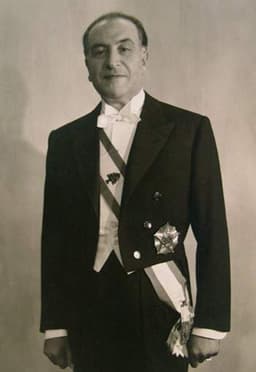
Fuad Chehab
General · Modern
49.9Total
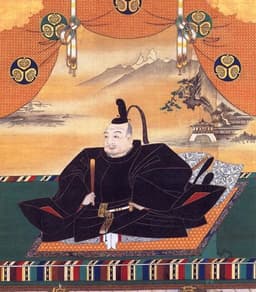
Tokugawa Ieyasu
General · Modern
81.8Total
Basic Information
Born
1902
1543
Died
1973
1616
Era
Modern
Modern
Nationality
Lebanon
Japan
Occupation
General
General
Civilization
Middle Eastern
Eastern
Score Comparison
Military (10%)
10.2
78.0
Political (20%)
70.0
82.0
Influence (20%)
54.1
88.0
Legacy (20%)
44.2
75.0
Leadership (15%)
72.0
85.0
Strategy (15%)
30.3
82.0
TOTAL
49.9
81.8
Fuad Chehab — Complete Timeline
1958 AD
Launched Chehabist reforms and modernizationReform◆ Major
President Chehab implemented a series of reforms known as Chehabism, including administrative modernization, economic planning, and strengthening state institutions. He established the Central Bank of Lebanon and the Civil Service Board.
ReformModernizationState Building
Impact: nationalconstructive
Elected President of LebanonPolitical Action◆ Major
Fuad Chehab was elected President of Lebanon on September 23, 1958, succeeding Camille Chamoun. His election ended the 1958 crisis and was supported by both Christian and Muslim factions seeking stability.
PresidencyElectionStabilization
Impact: nationalconstructive
Created the Deuxième Bureau intelligence agencyPolitical Action
Chehab expanded the role of the Deuxi
IntelligenceSecurityAuthoritarianism
Impact: national
1960 AD
Presided over the 1960s economic boomOther
Under Chehab's presidency, Lebanon experienced a period of economic growth and stability, with Beirut becoming a major financial and tourism hub. His policies attracted foreign investment and expanded the middle class.
Economic GrowthBeirutProsperity
Impact: nationalconstructive
1964 AD
Refused to amend constitution for a second termPolitical Action
Chehab declined to seek a second term as president, respecting the constitutional limit. He retired from politics in 1964, setting a precedent for peaceful transitions of power in Lebanon.
ConstitutionTerm LimitRetirement
Impact: nationalconstructive
Tokugawa Ieyasu — Complete Timeline
1600 AD
Battle of SekigaharaWar
Tokugawa Ieyasu led the Eastern Army to victory over Ishida Mitsunari's Western Army at Sekigahara. This decisive battle ended the Sengoku period and established Ieyasu as the supreme military ruler of Japan, paving the way for the Tokugawa shogunate.
Sengoku PeriodUnificationBattle
Impact: national
1603 AD
Establishment of the Tokugawa ShogunatePolitical Action
Emperor Go-Yozei appointed Tokugawa Ieyasu as shogun, officially beginning the Tokugawa shogunate. Ieyasu established his government in Edo (modern Tokyo), centralizing military and political power under his family's control.
ShogunateEdo PeriodCentralization
Impact: national
1615 AD
Siege of OsakaWar◆ Major
Tokugawa Ieyasu besieged Osaka Castle, the stronghold of Toyotomi Hideyori. The castle fell, and Hideyori committed suicide. This campaign eliminated the last major opposition to Tokugawa rule, solidifying the shogunate's control over Japan.
Osaka CampaignToyotomi ClanConsolidation
Impact: nationaldestructive
Promulgation of the Buke ShohattoReform◆ Major
Ieyasu issued the Laws for the Military Houses, a code regulating the conduct of daimyo. It restricted castle construction, required alternate attendance in Edo, and prohibited alliances without shogunal permission. This law helped control the feudal lords.
Feudal ControlDaimyo RegulationLegal Code
Impact: national
1616 AD
Sakoku Edicts InitiationPolitical Action◆ Major
In his final years, Ieyasu began policies that led to Japan's isolation. He restricted foreign trade to specific ports and expelled Christian missionaries. These measures, expanded by successors, resulted in the sakoku policy that isolated Japan for over 200 years.
IsolationismForeign PolicyChristianity
Impact: national
Expert Analysis
Tokugawa Ieyasu vs Fuad Chehab
The Unifier and the Reformer
In the smoldering aftermath of the Battle of Sekigahara, Tokugawa Ieyasu stood before a field littered with the ambitions of rival warlords. The year was 1600, and Japan’s future hung on the edge of a sword. Across the world, more than three centuries later, another general faced a different kind of battlefield. Fuad Chehab, a quiet Lebanese officer, took the oath of office as president in 1958, not after a clash of armies, but after a political crisis that had brought his country to the brink of civil war. Both men rose from military careers to become the architects of peace—but the peace each built, and the price each demanded, could not have been more different. What drove a Japanese shogun to seal his nation off from the world, and a Lebanese president to refuse a second term in the name of stability?
Origins
Tokugawa Ieyasu was born into the chaos of Japan’s Warring States period in 1543. His childhood was a crucible of betrayal and survival: his father’s alliance with the powerful Imagawa clan forced the young Ieyasu into a hostage exchange, a common practice in a land where loyalty was currency and life was cheap. He learned early that power was a game of patience, not passion. His era demanded ruthless pragmatism; the samurai code of *bushidō* coexisted with the brutal reality that only the cunning survived.
Fuad Chehab entered the world in 1902, in a Lebanon still part of the Ottoman Empire. Born into a prominent Maronite Christian family, he was raised in a society fragmented by sectarian loyalties—Maronites, Sunnis, Shia, Druze, and others—each community a fortress unto itself. Chehab’s upbringing in a French-mandate territory taught him the language of bureaucracy and order. Where Ieyasu’s world was shaped by the sword, Chehab’s was shaped by the ledger and the treaty.
Rise to Power
Ieyasu’s path to power was a long game of calculated moves. He allied with Oda Nobunaga, then with Toyotomi Hideyoshi, always positioning himself as the indispensable partner. His patience paid off at Sekigahara in 1600, where he led the Eastern Army to a decisive victory over Ishida Mitsunari’s Western forces. That battle, the largest samurai clash in history, gave him de facto control of Japan. Three years later, in 1603, Emperor Go-Yozei formally appointed him shogun, legitimizing his rule.
Chehab’s rise was quieter but no less strategic. A career officer in the French-trained Lebanese army, he became commander of the military in 1945. During the 1958 political crisis—a rebellion against President Camille Chamoun’s pro-Western policies—Chehab refused to order the army to crush the insurgents. His restraint earned him trust across sectarian lines. When Chamoun stepped down, Chehab was elected president on September 23, 1958, as a compromise candidate. He entered office not as a conqueror, but as a mediator.
Leadership & Governance
Tokugawa Ieyasu governed through control. After the Siege of Osaka in 1615, which destroyed the last rival stronghold of Toyotomi Hideyori, he issued the Laws for the Military Houses, the *Buke Shohatto*. These regulations restricted castle construction, controlled daimyo marriages, and mandated alternate-year attendance in Edo—a system of hostage-taking disguised as hospitality. His political genius lay in making peace a prison: the samurai class, once a source of chaos, became salaried bureaucrats. He also initiated the *Sakoku* edicts, restricting foreign trade to Nagasaki and limiting contact with the West. Isolation became stability.
Fuad Chehab’s philosophy, known as Chehabism, sought to modernize Lebanon’s state without breaking its fragile sectarian balance. He created the *Deuxième Bureau* intelligence agency to monitor political opponents, a tool of surveillance that drew criticism. Yet he also launched economic planning and administrative reforms, overseeing a boom in the 1960s that made Beirut a financial capital. His approach was one of guided growth: he strengthened the state’s hand, but always within the framework of Lebanon’s consociational democracy. Where Ieyasu centralized power by force, Chehab centralized it by bureaucracy.
Triumph & Tragedy
Ieyasu’s greatest triumph was the peace he imposed: 250 years of the Edo period, during which Japan saw no major war. But this peace came at a cost. The *Sakoku* policies froze Japanese society, cutting it off from the gunpowder revolutions and scientific advances of the West. When Commodore Perry’s black ships arrived in 1853, Japan was technologically two centuries behind. Ieyasu’s success was also his nation’s vulnerability.
Chehab’s triumph was the 1960s economic boom and the prevention of a full-scale civil war in 1958. Yet his reliance on the *Deuxième Bureau* planted seeds of mistrust. Many Lebanese saw the intelligence agency as a tool of Maronite dominance, and Chehab’s refusal to amend the constitution for a second term in 1964—his greatest act of principle—left his reforms incomplete. The state he strengthened proved too brittle to survive the sectarian explosion of 1975.
Character & Destiny
Ieyasu was a man of iron patience. A famous saying attributed to him captures his philosophy: “The strong man is the one who overcomes his own anger.” He outlived his rivals, outmaneuvered his allies, and outlasted his era. His personality—cold, calculating, and deliberate—shaped a Japan that valued order above all else.
Chehab was more introspective, a soldier who disliked politics but felt duty-bound to serve. He once said, “I am not a man of power, but a man of conscience.” His refusal to seek a second term reflected a deep respect for constitutional limits—a rare quality in a region of strongmen. But his caution also meant he never fully dismantled the sectarian system that would later tear Lebanon apart.
Legacy
Tokugawa Ieyasu is remembered as the founder of a dynasty that gave Japan its longest period of peace. His legacy is the Edo period: a time of cultural flowering, economic growth, and social stability. Yet it is also a legacy of isolation, a cautionary tale about the price of security.
Fuad Chehab is remembered as the “father of modern Lebanon,” a reformer who tried to build a state above sects. His presidency is seen as a golden age of stability, but his institutions—especially the *Deuxième Bureau*—left a mixed legacy. In Lebanon’s collective memory, he is a figure of what might have been.
Conclusion
One general closed his nation’s doors to the world; the other opened a window to reform. Ieyasu built a peace that lasted centuries but froze his country in time. Chehab built a peace that lasted only a decade but pointed toward a different future. Their lives remind us that the same instinct—a soldier’s desire for order—can produce radically different outcomes, depending not on the man alone, but on the world he inherits and the choices he makes within it. Both sought to end chaos; the question that lingers is what they were willing to sacrifice in its place.
Rankings
🥇
Tokugawa IeyasuLeader
Mil: 78.0Pol: 82.0Inf: 88.0
81.8
🥈
Fuad Chehab
Mil: 10.2Pol: 70.0Inf: 54.1
49.9
+31.9 behind
How This Comparison Works
Algorithm
Each figure is scored on 6 dimensions (0—100 scale) based on structured historical data: Military (10%), Political (20%), Influence (20%), Legacy (20%), Leadership (15%), Strategy (15%). The weighted total produces the final ranking.
Data Sources
Scores are computed from structured sub-indicators in the database. Scale factors adjust for era (Ancient ×0.85, Modern ×1.0) and civilization size (Eastern ×1.05, Other ×0.80) to account for differences in population and military scale.
Maximum 3 Figures
Comparisons are limited to 2—3 figures to ensure readability and statistical meaningfulness.
Error Margins
±5 points per dimension — Sub-scores are derived from historical records with inherent uncertainty. Two figures within 5 points on a dimension should be considered roughly equivalent in that area.
Total Score Accuracy
±3 points overall — The weighted combination of 6 dimensions produces a total score with approximately ±3 points of uncertainty. Differences of less than 3 points are not statistically significant— the figures are effectively tied.
Known Limitations
- Historical records are incomplete and uneven across civilizations
- Figures from oral-tradition societies may be underrepresented
- Occupation labels can misclassify multi-role figures
- Scores measure capability and impact, not moral character
- Quantitative scoring is a comparison tool, not absolute truth
Capability Radar
Military (10%) — Battles & Warfare
Battles
5
85
Win Rate
5
90
Expansion
5
75
Political (20%) — Governance & Reform
Reform
65
90
Diplomacy
60
85
Economy
50
88
Influence (20%) — Cultural & Global Reach
Cultural
30
85
Global
25
70
Legacy (20%) — Historical Impact
Historical
35
90
Longevity
30
95
Leadership (15%) — Power & Stability
Tenure
55
95
Stability
45
95
Strategy (15%) — Tactics & Innovation
Strategy
10
92
Tactics
10
88
Reform
20
80
Similar Comparisons
Comments & Discussion
SHOGUN\_BAN6/16/2026
Ieyasu's response to war was to exit it entirely—he didn't just unify Japan, he fossilized it with sakoku. Chehab was flexible: he balanced Christians, Muslims, Druze without shutting the doors. One built a prison cell of peace, the other a sofa of consensus. Different contexts I get, but give me the reformer over the fortress-builder any day.
情报侦探6/16/2026
说Chehab是"黎巴嫩化的先知"有点过吧?他1958年搞的那些改革数据上根本没改善经济不平等,基督徒精英照样吃肉,什叶派还是喝汤。历史不能光看意愿,得看实际结果。Ieyasu至少用参勤交代制度把大名制得服服帖帖,Chehab那套"调和"到最后还不是内战收场?
BUSHIDO\_BOOKWORM6/16/2026
Comparing a Sengoku pragmatist to a Cold War micro-manager is apples to oranges. Ieyasu operated in a world where power was held by the sword and won by patience—his careful neutralization of Toyotomi loyalists is a textbook of strategic deception. Chehab's soft-power presidency is fascinating, but lacks the brutal edge of true state-building. Give me the fox of Mikawa any day.
沉默的档案员6/16/2026
功能上两人都是"秩序维护者",但手法天差地别。Ieyasu用刀和土地分配让大名闭嘴;Chehab用情报机构和宪法修修补补。黎巴嫩1958年没变成叙利亚内战全靠他个人声望,这点得认。但说他比Ieyasu更"统一"的人,大概忘了日本两百多年没打仗——那不是和平,是窒息式安稳。
EQUINOX\_ANALYST6/16/2026
Fact check: Chehab signed the 1960 Banking Secrecy Law that birthed Lebanon's offshore economy, directly fueling the very inequality "情报侦探" flags. Meanwhile, Ieyasu's 1615 sankin-kotai system drained daimyo treasuries and centralized power—both pushed stability via control. The real difference? One built a nation that lasted 250 years; the other's legacy collapsed into civil war within 15.