Loading...
Francisco Morazan vs Fuad Chehab
Francisco Morazan leads by 8.1 pts · 2 figures compared
…
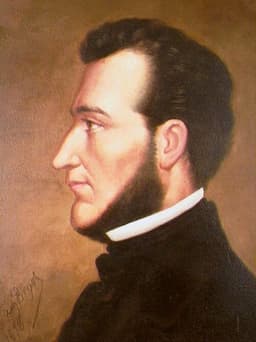
Francisco Morazan
General · Modern
58.0Total
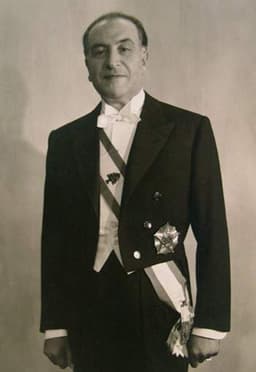
Fuad Chehab
General · Modern
49.9Total
Basic Information
Born
1792
1902
Died
1842
1973
Era
Modern
Modern
Nationality
Honduras
Lebanon
Occupation
General
General
Civilization
Western
Middle Eastern
Score Comparison
Military (10%)
52.5
10.2
Political (20%)
60.0
70.0
Influence (20%)
62.0
54.1
Legacy (20%)
50.0
44.2
Leadership (15%)
68.0
72.0
Strategy (15%)
55.0
30.3
TOTAL
58.0
49.9
Francisco Morazan — Complete Timeline
1824 AD
Abolition of slavery in Central AmericaReform◆ Major
As a key leader in the liberal movement, Moraz
AbolitionSlaveryLiberal Reform
Impact: regionalprogressive
1827 AD
Battle of La TrinidadWar◆ Major
Morazán led a liberal army to victory against conservative forces at La Trinidad, Honduras. This battle was a key turning point in the Central American civil war, allowing Morazán to consolidate power and eventually become president of the federation.
BattleLiberal VictoryCivil War
Impact: regional
1830 AD
Presidency of the Federal Republic of Central AmericaPolitical Action
Morazán was elected president of the Federal Republic of Central America, a union of Guatemala, El Salvador, Honduras, Nicaragua, and Costa Rica. He pursued liberal reforms including separation of church and state, free trade, and land reform, facing opposition from conservatives.
Federal RepublicLiberal ReformsCentral America
Impact: regionalconstructive
1842 AD
Execution by firing squadPolitical Action
After a failed attempt to restore the Federal Republic, Moraz
ExecutionEnd of FederationLiberal Defeat
Impact: regionaltragic
Fuad Chehab — Complete Timeline
1958 AD
Launched Chehabist reforms and modernizationReform◆ Major
President Chehab implemented a series of reforms known as Chehabism, including administrative modernization, economic planning, and strengthening state institutions. He established the Central Bank of Lebanon and the Civil Service Board.
ReformModernizationState Building
Impact: nationalconstructive
Elected President of LebanonPolitical Action◆ Major
Fuad Chehab was elected President of Lebanon on September 23, 1958, succeeding Camille Chamoun. His election ended the 1958 crisis and was supported by both Christian and Muslim factions seeking stability.
PresidencyElectionStabilization
Impact: nationalconstructive
Created the Deuxième Bureau intelligence agencyPolitical Action
Chehab expanded the role of the Deuxi
IntelligenceSecurityAuthoritarianism
Impact: national
1960 AD
Presided over the 1960s economic boomOther
Under Chehab's presidency, Lebanon experienced a period of economic growth and stability, with Beirut becoming a major financial and tourism hub. His policies attracted foreign investment and expanded the middle class.
Economic GrowthBeirutProsperity
Impact: nationalconstructive
1964 AD
Refused to amend constitution for a second termPolitical Action
Chehab declined to seek a second term as president, respecting the constitutional limit. He retired from politics in 1964, setting a precedent for peaceful transitions of power in Lebanon.
ConstitutionTerm LimitRetirement
Impact: nationalconstructive
Expert Analysis
Francisco Morazan vs Fuad Chehab
### The General Who Would Be Reformer: Fuad Chehab and Francisco Morazán
In the autumn of 1958, as the guns of a brief but bitter civil war fell silent in Beirut, a reluctant general named Fuad Chehab accepted the presidency of a fractured Lebanon. Just over a century earlier, in the summer of 1842, another general, Francisco Morazán, stood before a firing squad in San José, Costa Rica, his dream of a united Central America dying with him. Both men were soldiers who believed in the power of the state to reform society. Yet one would end his days in quiet retirement, his legacy a cautious, bureaucratic peace; the other would end in a hail of bullets, his name a banner for generations of liberals. What drove these two military reformers down such divergent paths? The answer lies not just in their characters, but in the very different storms of history they were born into.
### Origins
Fuad Chehab was a product of the old world, born in 1902 into a family of the Maronite Christian aristocracy in Lebanon, then part of the Ottoman Empire. His lineage was one of feudal privilege, but his education was French, his worldview shaped by the mandarin discipline of a colonial officer. He joined the French-officered *Troupes Spéciales du Levant*, a path that taught him order, hierarchy, and the mechanics of power. His era was one of fragile independence, of a multi-sectarian state built on a delicate, often violent, confessional balance. Chehab’s deepest instinct was for stability.
Francisco Morazán, born a decade after the American Revolution in 1792, came from a different world entirely. He was a *criollo* in Spanish Honduras, part of a generation that inherited the chaos of independence from Spain. His family were landowners, but his heart was with the Enlightenment ideals of liberty, reason, and progress that had swept across the Atlantic. Where Chehab saw a complex mosaic to be preserved, Morazán saw a backward system to be torn down. His era was one of revolution, of grand ideological battles between Liberals and Conservatives, Church and State, Centralism and Federalism.
### Rise to Power
Chehab’s rise was a study in institutional patience. He climbed the ranks of the Lebanese army, becoming its commander-in-chief in 1945. He was no fiery orator; he was a quiet, almost ascetic technocrat. His moment came in 1958, when President Camille Chamoun’s attempt to amend the constitution for a second term triggered a sectarian uprising. The army, under Chehab, refused to be drawn into the fighting, positioning itself as the neutral arbiter of the nation. When Chamoun was forced to step down, the parliament elected Chehab president, a compromise figure who promised to heal the wounds. His path was one of crisis management, not conquest.
Morazán’s rise was forged in the crucible of war. In 1827, a young officer, he led a ragged liberal army to a stunning victory at the Battle of La Trinidad in Honduras. It was a turning point. The battle was not just a military engagement; it was a declaration of ideological war against the conservative, clerical establishment. Morazán’s military genius was his ability to inspire men with a vision of a modern, secular republic. He swept through Central America, capturing Guatemala City in 1829, and by 1830, he was elected President of the Federal Republic of Central America. His path was one of revolutionary triumph, won on the battlefield.
### Leadership & Governance
Chehab’s leadership was defined by what became known as "Chehabism." It was a philosophy of guided, state-led modernization. He created the *Deuxième Bureau*, a powerful intelligence agency, to monitor the sectarian factions he saw as threats to the state. He launched ambitious economic plans, building infrastructure and modernizing the bureaucracy. Beirut boomed, becoming a financial capital of the Middle East. Yet his rule was paternalistic, even authoritarian. He believed the Lebanese, divided by religion, could not be trusted with unfettered democracy. His reforms were top-down, designed to manage conflict, not resolve it.
Morazán’s governance was a radical, liberal assault on the old order. He abolished slavery in 1824, ended the privileges of the Catholic Church, established trial by jury, and promoted public education. He was a whirlwind of reform, a legislative revolutionary. But he governed a federation of fiercely independent states—Guatemala, El Salvador, Honduras, Nicaragua, and Costa Rica—each with its own powerful regional caudillos. His military genius was tactical, not strategic. He could win battles, but he could not build the durable institutions of a nation. His political wisdom was in his ideals; his tragedy was in his inability to compromise.
### Triumph & Tragedy
Chehab’s greatest triumph was his exit. In 1964, with the constitution barring a second consecutive term, he refused to amend it. He retired to his home, a model of constitutional propriety. His presidency had given Lebanon a decade of relative peace and prosperity. His tragedy was that his system of managed sectarianism—the *Deuxième Bureau*, the patronage networks, the careful balancing—sowed the seeds of future collapse. The state he built was a house of cards, and when the cards fell in 1975, the civil war would be far bloodier than the one he had ended.
Morazán’s triumph was his vision. He dreamed of a United States of Central America, a single, progressive republic. For a few years, it seemed possible. But the conservative forces he had crushed in battle regrouped. The federation dissolved into civil war. Exiled, he launched a final, desperate invasion of Costa Rica in 1842, hoping to spark a new revolution. He was captured and, on September 15, 1842—the anniversary of Central American independence—he was executed by firing squad. His tragedy was to live and die for a union that his own people were not ready to embrace.
### Character & Destiny
Chehab was a man of restraint. His leadership score of 75.4 reflects a commander who understood that in a divided society, the greatest strength is often forbearance. He was a technocrat, not a visionary. He did not seek to transform Lebanon’s soul; he sought to manage its contradictions. His destiny was to be the reluctant father of a fragile peace.
Morazán was a man of conviction. His leadership score of 76.7 is a testament to his ability to inspire, but his political score of 72.0 could not overcome the centrifugal forces of Central America. He was a revolutionary, not a manager. He believed in the perfectibility of man and society. His destiny was to be a martyr, a symbol of a lost cause.
### Legacy
Chehab’s legacy is a quiet one. He is remembered as a well-meaning reformer whose methods—the secret police, the top-down control—are now seen as a precursor to the authoritarianism that would later grip Lebanon. In history’s ledger, his legacy score of 57.9 reflects a man who was more of a caretaker than a founder.
Morazán’s legacy is thunderous. He is a national hero in Honduras, his face on currency, his name on streets. For Latin American liberals, he is the patron saint of reform. His legacy score of 68.9 reflects the enduring power of a dream, even a failed one. He died for a union that never was, but his ideals—secularism, federalism, liberty—still echo.
### Conclusion
Standing at the edge of Beirut in 1964, Fuad Chehab might have looked at the city he had calmed and felt a cautious pride. Standing before the firing squad in 1842, Francisco Morazán might have looked at the sky and felt a burning regret. One man preserved the present; the other gambled on the future. The difference between them is the difference between a general who learns to live with the world as it is, and a general who dies trying to remake it. Both were soldiers. Only one was a revolutionary. And history, as always, is still deciding which is the higher calling.
Rankings
🥇
Francisco MorazanLeader
Mil: 52.5Pol: 60.0Inf: 62.0
58.0
🥈
Fuad Chehab
Mil: 10.2Pol: 70.0Inf: 54.1
49.9
+8.1 behind
How This Comparison Works
Algorithm
Each figure is scored on 6 dimensions (0—100 scale) based on structured historical data: Military (10%), Political (20%), Influence (20%), Legacy (20%), Leadership (15%), Strategy (15%). The weighted total produces the final ranking.
Data Sources
Scores are computed from structured sub-indicators in the database. Scale factors adjust for era (Ancient ×0.85, Modern ×1.0) and civilization size (Eastern ×1.05, Other ×0.80) to account for differences in population and military scale.
Maximum 3 Figures
Comparisons are limited to 2—3 figures to ensure readability and statistical meaningfulness.
Error Margins
±5 points per dimension — Sub-scores are derived from historical records with inherent uncertainty. Two figures within 5 points on a dimension should be considered roughly equivalent in that area.
Total Score Accuracy
±3 points overall — The weighted combination of 6 dimensions produces a total score with approximately ±3 points of uncertainty. Differences of less than 3 points are not statistically significant— the figures are effectively tied.
Known Limitations
- Historical records are incomplete and uneven across civilizations
- Figures from oral-tradition societies may be underrepresented
- Occupation labels can misclassify multi-role figures
- Scores measure capability and impact, not moral character
- Quantitative scoring is a comparison tool, not absolute truth
Capability Radar
Military (10%) — Battles & Warfare
Battles
55
5
Win Rate
60
5
Expansion
40
5
Political (20%) — Governance & Reform
Reform
70
65
Diplomacy
45
60
Economy
50
50
Influence (20%) — Cultural & Global Reach
Cultural
45
30
Global
35
25
Legacy (20%) — Historical Impact
Historical
50
35
Longevity
40
30
Leadership (15%) — Power & Stability
Tenure
55
55
Stability
30
45
Strategy (15%) — Tactics & Innovation
Strategy
55
10
Tactics
50
10
Reform
45
20
Similar Comparisons
Comments & Discussion
GovernanceEye6/16/2026
Chehab was a bureaucrat in epaulets, Morazán a revolutionary in uniform. Morazán died firing squad because he actually tried to break the oligarchies; Chehab died in bed because he just managed them. Morazán’s 1842 execution shows what happens when reform threatens landowners—Chehab’s 1958 “reforms” were just Catholic welfare with a military leash. Give me the man who lost fighting for something real over the one who won by doing nothing.|zh|车哈布不过是个穿军装的官僚,莫拉桑才是穿制服的革命者。莫拉桑被枪决是因为他真想打破寡头统治;车哈布寿终正寝是