Loading...
Fuad Chehab vs Muhammadu Buhari
Muhammadu Buhari leads by 1.6 pts · 2 figures compared
…
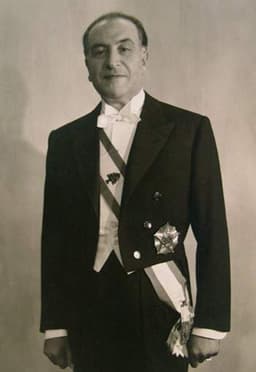
Fuad Chehab
General · Modern
49.9Total
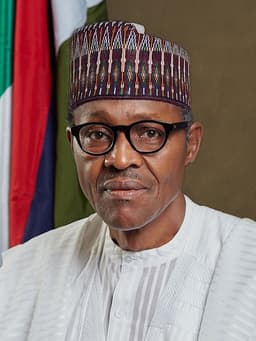
Muhammadu Buhari
General · Modern
51.5Total
Basic Information
Born
1902
1942
Died
1973
—
Era
Modern
Modern
Nationality
Lebanon
Nigeria
Occupation
General
General
Civilization
Middle Eastern
Other
Score Comparison
Military (10%)
10.2
22.6
Political (20%)
70.0
68.0
Influence (20%)
54.1
53.3
Legacy (20%)
44.2
43.3
Leadership (15%)
72.0
72.0
Strategy (15%)
30.3
41.0
TOTAL
49.9
51.5
Fuad Chehab — Complete Timeline
1958 AD
Launched Chehabist reforms and modernizationReform◆ Major
President Chehab implemented a series of reforms known as Chehabism, including administrative modernization, economic planning, and strengthening state institutions. He established the Central Bank of Lebanon and the Civil Service Board.
ReformModernizationState Building
Impact: nationalconstructive
Elected President of LebanonPolitical Action◆ Major
Fuad Chehab was elected President of Lebanon on September 23, 1958, succeeding Camille Chamoun. His election ended the 1958 crisis and was supported by both Christian and Muslim factions seeking stability.
PresidencyElectionStabilization
Impact: nationalconstructive
Created the Deuxième Bureau intelligence agencyPolitical Action
Chehab expanded the role of the Deuxi
IntelligenceSecurityAuthoritarianism
Impact: national
1960 AD
Presided over the 1960s economic boomOther
Under Chehab's presidency, Lebanon experienced a period of economic growth and stability, with Beirut becoming a major financial and tourism hub. His policies attracted foreign investment and expanded the middle class.
Economic GrowthBeirutProsperity
Impact: nationalconstructive
1964 AD
Refused to amend constitution for a second termPolitical Action
Chehab declined to seek a second term as president, respecting the constitutional limit. He retired from politics in 1964, setting a precedent for peaceful transitions of power in Lebanon.
ConstitutionTerm LimitRetirement
Impact: nationalconstructive
Muhammadu Buhari — Complete Timeline
1983 AD
1983 Nigerian coup d'étatPolitical Action
Major General Muhammadu Buhari led a military coup that overthrew the civilian government of President Shehu Shagari. Buhari cited corruption and economic mismanagement as justifications, and he became the head of state.
CoupMilitary RuleCorruption
Impact: nationaldestructive
1984 AD
War Against Indiscipline (WAI)Reform◆ Major
Buhari launched the War Against Indiscipline, a campaign to enforce discipline and order in Nigerian society. It included harsh penalties for minor offenses, such as queue-jumping, and was criticized for human rights abuses.
DisciplineSocial PolicyHuman Rights
Impact: nationaldestructive
1985 AD
Overthrow by Ibrahim BabangidaPolitical Action◆ Major
Buhari was overthrown in a palace coup led by his Chief of Army Staff, Ibrahim Babangida. Babangida cited Buhari's authoritarian style and failure to address the economy as reasons for the coup.
CoupOverthrowBabangida
Impact: national
2015 AD
Anti-corruption campaignReform◆ Major
Buhari launched a high-profile anti-corruption campaign, targeting government officials and recovering stolen assets. The campaign was praised internationally but criticized for being selective and politically motivated.
Anti-CorruptionReformGovernance
Impact: nationalconstructive
Election as President of NigeriaPolitical Action
Buhari won the 2015 Nigerian presidential election, defeating incumbent Goodluck Jonathan. This was the first time an opposition candidate had defeated a sitting president in Nigeria's history, marking a democratic milestone.
ElectionDemocracyOpposition Victory
Impact: nationalprogressive
Expert Analysis
Muhammadu Buhari vs Fuad Chehab
# The General as Reformer: Fuad Chehab and Muhammadu Buhari
In the summer of 1958, Beirut was a city under siege. Barricades lined the streets, gunfire echoed between the limestone buildings, and Lebanon teetered on the edge of civil war. Into this chaos stepped a tall, austere general with a reputation for incorruptibility. Fuad Chehab, the commander of the Lebanese army, had spent decades watching politicians tear his country apart. Now, reluctantly, he would take power himself. Half a century later and half a world away, another general stood before a very different crisis. Muhammadu Buhari had just seized control of Nigeria in a bloodless coup, promising to rescue Africa's most populous nation from the "grave economic and social predicament" created by corrupt civilians. Both men believed that military discipline could cure democracy's diseases. Both would discover that the cure could be as dangerous as the illness.
Origins
Fuad Chehab was born into Lebanon's Maronite Christian aristocracy in 1902, a descendant of a princely family that had ruled Mount Lebanon for centuries. He grew up under the French Mandate, a period that taught him the bitter lessons of foreign domination and sectarian division. The young Chehab joined the French-trained Troupes Spéciales du Levant, rising through the ranks with a quiet efficiency that earned him respect across Lebanon's fractious communities. By the time Lebanon achieved independence in 1943, Chehab had become the country's first native commander of the army—a position that forced him to navigate the treacherous waters of sectarian politics while maintaining the military's neutrality.
Muhammadu Buhari was born forty years later in 1942, in the northern Nigerian town of Daura. His father was a Fulani chieftain, and Buhari grew up in a world of traditional authority and Islamic piety. The British colonial system had already stamped its mark on Nigeria, and young Buhari entered the military academy in Kaduna, then trained in India, Ethiopia, and the United States. He was a product of the post-colonial moment—a time when young officers across Africa believed they could sweep away the corruption of civilian politicians and build modern nations from the rubble of empire.
Rise to Power
Chehab's path to power was reluctant and defensive. In 1958, when President Camille Chamoun tried to amend the constitution to secure a second term, Lebanon erupted. Muslim factions, backed by Egypt's Gamal Abdel Nasser, took up arms. The army, under Chehab's command, refused to take sides—a decision that preserved its integrity but infuriated both camps. When the crisis ended with American mediation, a compromise emerged: Chehab would become president. He accepted only after securing a promise that he could pursue genuine reform. His inauguration on September 23, 1958, marked not a military takeover but a desperate bargain among exhausted factions.
Buhari's rise was swift and brutal. On December 31, 1983, as Nigerians celebrated the New Year, tanks rolled into Lagos. Major General Buhari's coup overthrew President Shehu Shagari's civilian government, which had presided over economic collapse and rampant corruption. Unlike Chehab, Buhari seized power without invitation, driven by a conviction that only military discipline could save Nigeria from itself. His was the classic African coup—a moment of rupture, not compromise.
Leadership & Governance
Chehabism, as his philosophy came to be called, was a delicate balancing act. Chehab strengthened the state's institutions—creating the Central Bank, reforming the civil service, and expanding the Deuxième Bureau intelligence agency to monitor political extremists. He invested heavily in infrastructure and rural development, trying to bridge the gap between Beirut's glittering coast and the impoverished mountains. The 1960s economic boom that made Beirut the "Paris of the Middle East" was largely his doing. But Chehab governed through consensus, not coercion. He refused to crush his opponents, even when they plotted against him. His reforms were gradual, designed to heal rather than transform.
Buhari's governance was a hammer, not a scalpel. His War Against Indiscipline, launched in 1984, was a nationwide campaign of forced order: civil servants who arrived late were publicly humiliated, people who jumped queues were arrested, and those who littered faced military tribunals. The campaign had a grim moral clarity—Buhari genuinely believed that Nigeria's problems stemmed from a lack of discipline, not structural injustice. He jailed journalists, banned strikes, and detained politicians without trial. The economy, meanwhile, continued to deteriorate under falling oil prices. His rule was efficient but suffocating.
Triumph & Tragedy
Chehab's greatest triumph was his refusal to cling to power. In 1964, when his supporters urged him to amend the constitution for a second term, he declined. He had seen what happened when presidents overstayed their welcome. By stepping down, he preserved the fragile peace he had built and set a precedent for peaceful transition. His tragedy was that his reforms did not outlast him. The Deuxième Bureau, which he created to monitor extremists, became a tool of oppression under his successors. The sectarian tensions he tried to manage would explode into civil war just eleven years after his death.
Buhari's triumph came decades later. In 2015, after multiple failed attempts, he won the Nigerian presidency in a democratic election—the first time in Nigeria's history that an opposition candidate had defeated an incumbent. It was a remarkable redemption for a man who had once been overthrown for authoritarianism. His anti-corruption campaign, launched with genuine fervor, recovered billions of dollars in stolen assets. But his tragedy was the same as Chehab's: his methods undermined his goals. His administration became mired in accusations of selective justice, and his health declined visibly. By his second term, the reformer had become a symbol of the system he had once sought to destroy.
Character & Destiny
Chehab was a man of quiet dignity, a Maronite mystic who read philosophy and distrusted power. He once said, "I do not want to be a president who governs with a whip." His personality—reserved, cautious, principled—shaped a presidency that prioritized stability over transformation. He understood that Lebanon's sectarian mosaic could not be forced into unity.
Buhari was harder, more certain. His Fulani heritage gave him a sense of aristocratic duty, and his military training gave him a belief in orders. "I think Nigeria has a lot of problems," he said in 1984, "and the only way to solve them is to be firm." That firmness made him effective in the short term but inflexible in the long term. He could not adapt to democracy's messiness, and his second presidency suffered for it.
Legacy
Chehab is remembered as Lebanon's most honest president, a rare figure who put country above sect. His name still carries weight—"Chehabism" remains a term for reformist centrism in Lebanese politics. But his legacy is a cautionary tale: good intentions, without deep structural change, can be swept away by the tides of history.
Buhari's legacy is more contested. In Nigeria, he is both a hero who fought corruption and a symbol of missed opportunities. His anti-corruption campaign inspired hope but delivered uneven results. His military past haunted his democratic presidency. He leaves behind a nation still struggling with the same problems he tried to solve forty years ago.
Conclusion
Two generals, two nations, two attempts to impose order on chaos. Chehab and Buhari both believed that discipline could heal democracy's wounds. Chehab tried to heal gently, and his reforms faded. Buhari tried to heal forcefully, and his methods broke what they touched. Perhaps the lesson is that no general—no matter how honest or determined—can solve political problems with military tools. The hardest discipline is not the discipline of orders, but the discipline of compromise, patience, and democratic mess. That is a lesson neither man fully learned, and their nations are still paying the price.
Rankings
🥇
Muhammadu BuhariLeader
Mil: 22.6Pol: 68.0Inf: 53.3
51.5
🥈
Fuad Chehab
Mil: 10.2Pol: 70.0Inf: 54.1
49.9
+1.6 behind
How This Comparison Works
Algorithm
Each figure is scored on 6 dimensions (0—100 scale) based on structured historical data: Military (10%), Political (20%), Influence (20%), Legacy (20%), Leadership (15%), Strategy (15%). The weighted total produces the final ranking.
Data Sources
Scores are computed from structured sub-indicators in the database. Scale factors adjust for era (Ancient ×0.85, Modern ×1.0) and civilization size (Eastern ×1.05, Other ×0.80) to account for differences in population and military scale.
Maximum 3 Figures
Comparisons are limited to 2—3 figures to ensure readability and statistical meaningfulness.
Error Margins
±5 points per dimension — Sub-scores are derived from historical records with inherent uncertainty. Two figures within 5 points on a dimension should be considered roughly equivalent in that area.
Total Score Accuracy
±3 points overall — The weighted combination of 6 dimensions produces a total score with approximately ±3 points of uncertainty. Differences of less than 3 points are not statistically significant— the figures are effectively tied.
Known Limitations
- Historical records are incomplete and uneven across civilizations
- Figures from oral-tradition societies may be underrepresented
- Occupation labels can misclassify multi-role figures
- Scores measure capability and impact, not moral character
- Quantitative scoring is a comparison tool, not absolute truth
Capability Radar
Military (10%) — Battles & Warfare
Battles
5
10
Win Rate
5
10
Expansion
5
5
Political (20%) — Governance & Reform
Reform
65
30
Diplomacy
60
25
Economy
50
20
Influence (20%) — Cultural & Global Reach
Cultural
30
25
Global
25
25
Legacy (20%) — Historical Impact
Historical
35
30
Longevity
30
20
Leadership (15%) — Power & Stability
Tenure
55
45
Stability
45
15
Strategy (15%) — Tactics & Innovation
Strategy
10
15
Tactics
10
15
Reform
20
20
Similar Comparisons
Comments & Discussion
No comments yet. Be the first to share your thoughts!