Loading...
Fuad Chehab vs Sitiveni Rabuka
Sitiveni Rabuka leads by 1.8 pts · 2 figures compared
…
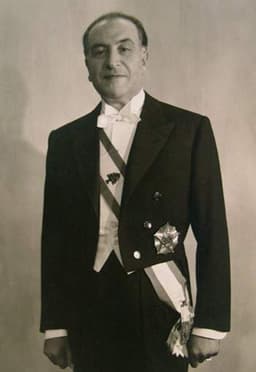
Fuad Chehab
General · Modern
49.9Total
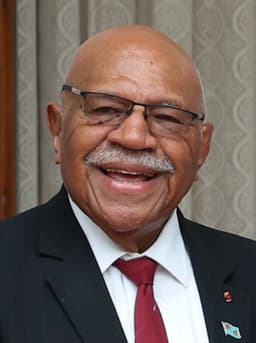
Sitiveni Rabuka
General · Modern
51.7Total
Basic Information
Born
1902
1948
Died
1973
—
Era
Modern
Modern
Nationality
Lebanon
Fiji
Occupation
General
General
Civilization
Middle Eastern
Other
Score Comparison
Military (10%)
10.2
10.2
Political (20%)
70.0
60.0
Influence (20%)
54.1
53.3
Legacy (20%)
44.2
46.7
Leadership (15%)
72.0
85.0
Strategy (15%)
30.3
39.6
TOTAL
49.9
51.7
Fuad Chehab — Complete Timeline
1958 AD
Launched Chehabist reforms and modernizationReform◆ Major
President Chehab implemented a series of reforms known as Chehabism, including administrative modernization, economic planning, and strengthening state institutions. He established the Central Bank of Lebanon and the Civil Service Board.
ReformModernizationState Building
Impact: nationalconstructive
Elected President of LebanonPolitical Action◆ Major
Fuad Chehab was elected President of Lebanon on September 23, 1958, succeeding Camille Chamoun. His election ended the 1958 crisis and was supported by both Christian and Muslim factions seeking stability.
PresidencyElectionStabilization
Impact: nationalconstructive
Created the Deuxième Bureau intelligence agencyPolitical Action
Chehab expanded the role of the Deuxi
IntelligenceSecurityAuthoritarianism
Impact: national
1960 AD
Presided over the 1960s economic boomOther
Under Chehab's presidency, Lebanon experienced a period of economic growth and stability, with Beirut becoming a major financial and tourism hub. His policies attracted foreign investment and expanded the middle class.
Economic GrowthBeirutProsperity
Impact: nationalconstructive
1964 AD
Refused to amend constitution for a second termPolitical Action
Chehab declined to seek a second term as president, respecting the constitutional limit. He retired from politics in 1964, setting a precedent for peaceful transitions of power in Lebanon.
ConstitutionTerm LimitRetirement
Impact: nationalconstructive
Sitiveni Rabuka — Complete Timeline
1987 AD
1987 Fijian Coup d'étatPolitical Action
Rabuka, as a colonel in the Fijian military, led a coup overthrowing the elected government of Timoci Bavadra. The coup was motivated by ethnic Fijian opposition to Indo-Fijian political influence. Rabuka declared Fiji a republic.
CoupMilitary InterventionEthnic Tension
Impact: nationaldestructive
1992 AD
1992 Election as Prime MinisterPolitical Action◆ Major
Rabuka transitioned from military leader to civilian politician, winning the 1992 general election as leader of the Fijian Political Party. He became Prime Minister, serving until 1999.
ElectionCivilian GovernmentPolitical Transition
Impact: national
1997 AD
1997 Constitution ReformReform◆ Major
Rabuka's government oversaw the adoption of a new constitution that removed ethnic-based voting and provided for a multi-ethnic government. The constitution aimed to reduce ethnic tensions and promote national unity.
ConstitutionReformEthnic Reconciliation
Impact: nationalconstructive
1999 AD
1999 General Election DefeatPolitical Action◆ Major
Rabuka's government was defeated in the general election by the Labour Party led by Mahendra Chaudhry. Rabuka stepped down as Prime Minister, marking the end of his first period in power.
Election DefeatGovernment ChangeChaudhry
Impact: national
2022 AD
2022 Return as Prime MinisterPolitical Action◆ Major
Rabuka led the People's Alliance to victory in the 2022 general election, forming a coalition government. He became Prime Minister again, 23 years after his previous tenure, promising democratic reforms.
ElectionReturn to PowerCoalition Government
Impact: national
Expert Analysis
Sitiveni Rabuka vs Fuad Chehab
# The General Who Governed: Two Paths from Military Command to National Leadership
On a September morning in 1958, Fuad Chehab stood before the Lebanese parliament, a reluctant general accepting the presidency of a nation bleeding from civil strife. Half a world away and three decades later, in May 1987, Sitiveni Rabuka, a Fijian colonel still in his military fatigues, announced on national radio that he had overthrown his country’s elected government. One man inherited a crisis; the other created one. Both were generals who became heads of state, yet their trajectories could hardly have diverged more sharply. What drove a man to seize power, and another to have it thrust upon him? The answer lies not merely in their personalities, but in the worlds that shaped them.
Origins
Fuad Chehab was born in 1902 into a family of Lebanon’s Maronite Christian aristocracy, a lineage that traced its roots to the Ottoman-era emirs of Mount Lebanon. He came of age under French mandate rule, a time when Lebanon’s fragile sectarian balance was being codified into a political system. Chehab entered the French-officered Troupes Spéciales du Levant, learning command in an environment where military professionalism meant staying above the ethnic and religious fray. His Lebanon was a mosaic of eighteen recognized sects, a country where a general’s duty was not conquest but equilibrium.
Sitiveni Rabuka, born in 1948, grew up in a Fiji still under British colonial administration, where indigenous Fijians, Indo-Fijians, and other communities coexisted under an uneasy racial hierarchy. He joined the Royal Fiji Military Forces, rising through the ranks during the Cold War era, serving as a United Nations peacekeeper in Lebanon and Sinai. Unlike Chehab, Rabuka’s military career was forged in postcolonial tensions, where ethnic identity and political power were increasingly combustible. By 1987, when a coalition government led by Timoci Bavadra—dominated by Indo-Fijian politicians—took office, Rabuka saw not democracy but a threat to indigenous Fijian supremacy.
Rise to Power
Chehab’s ascent was reluctant and reactive. In 1958, Lebanon erupted in a brief but brutal civil war between pro-Western President Camille Chamoun and Arab nationalist factions. The United States intervened with Marines; the crisis demanded a neutral figure. Chehab, then army commander, had kept his forces out of the fighting, earning trust across sects. On September 23, 1958, he was elected president—not by coup, but by parliamentary consensus. His power came from being the man no one could agree to hate.
Rabuka’s rise was the opposite: deliberate and forceful. On May 14, 1987, he led a bloodless coup, storming parliament and arresting Bavadra. His stated goal was to protect indigenous Fijian land rights and political dominance. Within months, he staged a second coup to ensure a constitution that enshrined ethnic Fijian control. He then transformed himself from colonel to prime minister, winning the 1992 election as leader of the Soqosoqo ni Vakavulewa ni Taukei party. Where Chehab entered politics through the door of consensus, Rabuka smashed through the window of force.
Leadership & Governance
Chehab’s presidency, from 1958 to 1964, defined an era known as Chehabism—a reformist ideology that sought to modernize the state while preserving sectarian balance. He created the Central Inspection Bureau to fight corruption, expanded the public school system, and launched economic planning that fueled Beirut’s golden age as the “Paris of the Middle East.” But his methods had a dark edge: he empowered the Deuxième Bureau, military intelligence, to monitor politicians, journalists, and activists. His leadership was a paradox—reform paired with surveillance, unity enforced from above.
Rabuka’s governance was a journey of transformation. As prime minister from 1992 to 1999, he initially upheld the ethnocentric constitution he had imposed. But by 1997, he surprised the world: he championed a new constitution that removed race-based voting, created a multi-ethnic parliament, and guaranteed equal rights. It was a remarkable reversal, born perhaps from the weight of leadership itself. Yet his political career faltered; he lost the 1999 election to Mahendra Chaudhry, an Indo-Fijian, and retreated from politics for over two decades. In 2022, at age 74, he staged a political comeback, leading the People’s Alliance to victory and returning as prime minister—a testament to his enduring influence and Fiji’s unsettled ethnic politics.
Triumph & Tragedy
Chehab’s greatest triumph was steering Lebanon through the 1960s economic boom, making Beirut a financial hub and a cultural crossroads. His tragedy was that his system of controlled stability could not outlast him. When he refused to amend the constitution for a second term in 1964, he retired in principle but left behind a state dependent on intelligence networks and sectarian patronage. Within a decade, Lebanon would descend into a fifteen-year civil war that Chehabism could not prevent.
Rabuka’s triumph was his 1997 constitution, a document that earned him international praise and a place in history as a leader who could undo his own mistakes. His tragedy was the original sin of the coup itself. The ethnic wounds he opened in 1987 never fully healed; another coup in 2000, and ongoing political instability, showed that democracy in Fiji remained fragile. Rabuka’s redemption arc remains incomplete.
Character & Destiny
Chehab was a stoic, almost ascetic figure—a general who disliked politics but believed in duty. He once said, “I am not a politician; I am a soldier who loves his country.” His caution and respect for constitutional limits defined his destiny: he was a reformer who refused to become a strongman, even when many wanted him to stay. Rabuka was more mercurial—a man capable of both authoritarianism and reconciliation. His 1997 constitution was a confession that his coup had been wrong, a rare act of political humility. Yet his return in 2022 suggests a man who never fully let go of power.
Legacy
Chehab is remembered in Lebanon as a symbol of what the country could have been—a modern, secular state built on reform and rule of law. His name graces streets and institutions, but his legacy is bittersweet; Chehabism failed to take root. His total score of 61.2 reflects a leader of moderate impact, overshadowed by the chaos that followed.
Rabuka’s legacy is more contested. To indigenous Fijians, he is a defender of their rights; to Indo-Fijians, a symbol of ethnic injustice. His total score of 61.0 is nearly identical to Chehab’s, yet the two men could not be more different. One built; the other broke, then rebuilt. One was a reluctant president; the other, a willing coup-maker who evolved.
Conclusion
In the end, Fuad Chehab and Sitiveni Rabuka teach us that the uniform does not define the leader. Chehab shows that military men can be reluctant guardians of democracy; Rabuka shows they can be its destroyers and, perhaps, its restorers. Their nearly identical scores mask a profound truth: history judges not by the power one seizes, but by the responsibility one assumes. One general preserved a nation’s peace for six years; another shattered it, then spent decades trying to piece it back together. Which is the greater legacy? That question lingers, like a ghost in the corridors of power.
Rankings
🥇
Sitiveni RabukaLeader
Mil: 10.2Pol: 60.0Inf: 53.3
51.7
🥈
Fuad Chehab
Mil: 10.2Pol: 70.0Inf: 54.1
49.9
+1.8 behind
How This Comparison Works
Algorithm
Each figure is scored on 6 dimensions (0—100 scale) based on structured historical data: Military (10%), Political (20%), Influence (20%), Legacy (20%), Leadership (15%), Strategy (15%). The weighted total produces the final ranking.
Data Sources
Scores are computed from structured sub-indicators in the database. Scale factors adjust for era (Ancient ×0.85, Modern ×1.0) and civilization size (Eastern ×1.05, Other ×0.80) to account for differences in population and military scale.
Maximum 3 Figures
Comparisons are limited to 2—3 figures to ensure readability and statistical meaningfulness.
Error Margins
±5 points per dimension — Sub-scores are derived from historical records with inherent uncertainty. Two figures within 5 points on a dimension should be considered roughly equivalent in that area.
Total Score Accuracy
±3 points overall — The weighted combination of 6 dimensions produces a total score with approximately ±3 points of uncertainty. Differences of less than 3 points are not statistically significant— the figures are effectively tied.
Known Limitations
- Historical records are incomplete and uneven across civilizations
- Figures from oral-tradition societies may be underrepresented
- Occupation labels can misclassify multi-role figures
- Scores measure capability and impact, not moral character
- Quantitative scoring is a comparison tool, not absolute truth
Capability Radar
Military (10%) — Battles & Warfare
Battles
5
5
Win Rate
5
5
Expansion
5
5
Political (20%) — Governance & Reform
Reform
65
50
Diplomacy
60
45
Economy
50
40
Influence (20%) — Cultural & Global Reach
Cultural
30
30
Global
25
20
Legacy (20%) — Historical Impact
Historical
35
40
Longevity
30
30
Leadership (15%) — Power & Stability
Tenure
55
55
Stability
45
35
Strategy (15%) — Tactics & Innovation
Strategy
10
10
Tactics
10
10
Reform
20
5
Similar Comparisons
Comments & Discussion
No comments yet. Be the first to share your thoughts!