Loading...
Fuad Chehab vs J. B. M. Hertzog
J. B. M. Hertzog leads by 6.2 pts · 2 figures compared
…
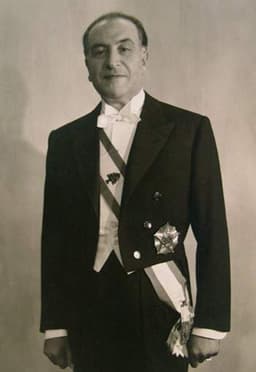
Fuad Chehab
General · Modern
49.9Total
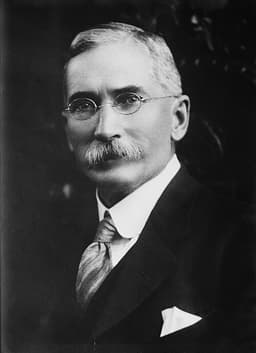
J. B. M. Hertzog
General · Modern
56.1Total
Basic Information
Born
1902
1866
Died
1973
1942
Era
Modern
Modern
Nationality
Lebanon
South Africa
Occupation
General
General
Civilization
Middle Eastern
Other
Score Comparison
Military (10%)
10.2
25.0
Political (20%)
70.0
60.0
Influence (20%)
54.1
56.7
Legacy (20%)
44.2
50.0
Leadership (15%)
72.0
79.8
Strategy (15%)
30.3
60.0
TOTAL
49.9
56.1
Fuad Chehab — Complete Timeline
1958 AD
Launched Chehabist reforms and modernizationReform◆ Major
President Chehab implemented a series of reforms known as Chehabism, including administrative modernization, economic planning, and strengthening state institutions. He established the Central Bank of Lebanon and the Civil Service Board.
ReformModernizationState Building
Impact: nationalconstructive
Elected President of LebanonPolitical Action◆ Major
Fuad Chehab was elected President of Lebanon on September 23, 1958, succeeding Camille Chamoun. His election ended the 1958 crisis and was supported by both Christian and Muslim factions seeking stability.
PresidencyElectionStabilization
Impact: nationalconstructive
Created the Deuxième Bureau intelligence agencyPolitical Action
Chehab expanded the role of the Deuxi
IntelligenceSecurityAuthoritarianism
Impact: national
1960 AD
Presided over the 1960s economic boomOther
Under Chehab's presidency, Lebanon experienced a period of economic growth and stability, with Beirut becoming a major financial and tourism hub. His policies attracted foreign investment and expanded the middle class.
Economic GrowthBeirutProsperity
Impact: nationalconstructive
1964 AD
Refused to amend constitution for a second termPolitical Action
Chehab declined to seek a second term as president, respecting the constitutional limit. He retired from politics in 1964, setting a precedent for peaceful transitions of power in Lebanon.
ConstitutionTerm LimitRetirement
Impact: nationalconstructive
J. B. M. Hertzog — Complete Timeline
1899 AD
Boer War GeneralWar◆ Major
Hertzog served as a Boer general in the Second Boer War, commanding forces in the Orange Free State. He participated in several battles and became a prominent Afrikaner military leader.
Second Boer WarGeneralMilitary
Impact: regional
1914 AD
Founded the National PartyPolitical Action
Hertzog broke away from the South African Party and founded the National Party, which championed Afrikaner nationalism and opposed British imperial influence. The party would later implement apartheid.
National PartyAfrikaner NationalismFounding
Impact: nationalconstructive
1924 AD
Prime Minister of South AfricaPolitical Action◆ Major
Hertzog became Prime Minister after his National Party won the general election in coalition with the Labour Party. His government implemented policies to protect white workers and promote Afrikaner interests, including the 'civilized labour' policy.
Prime MinisterAfrikaner RightsLabour Policy
Impact: national
1934 AD
Merged with Smuts to Form United PartyPolitical Action◆ Major
Hertzog merged his National Party with Jan Smuts' South African Party to form the United Party. The coalition aimed to address the economic crisis of the Great Depression and promote national unity, but it alienated hardline Afrikaner nationalists.
United PartyCoalitionNational Unity
Impact: nationalconstructive
1936 AD
Passed the Representation of Natives ActReform◆ Major
Hertzog's government passed the Representation of Natives Act, which removed Black voters from the common voters' roll in the Cape Province and allowed them to elect white representatives instead. This further entrenched racial segregation.
SegregationDisenfranchisementLegislation
Impact: nationaldestructive
1939 AD
Resigned Over Neutrality in WWIIPolitical Action◆ Major
Hertzog advocated for South African neutrality in World War II, but his cabinet voted to enter the war on the Allied side. He resigned as Prime Minister and was succeeded by Jan Smuts, splitting the United Party.
World War IINeutralityResignation
Impact: national
Expert Analysis
J. B. M. Hertzog vs Fuad Chehab
### The General Who Forged a Nation, the General Who Divided One
On a warm September evening in 1958, Fuad Chehab took the oath of office in Beirut, inheriting a Lebanon shattered by months of civil strife. A general who had refused to order his troops to fire on protesters, he stepped into the presidency as a reluctant savior. Half a world away and decades earlier, another general, J. B. M. Hertzog, had ridden out of the South African veld in 1899, a Boer commander with a rifle in his hand and a vision of Afrikaner supremacy burning in his chest. Both men wore military uniforms, both rose to lead their nations, but their paths diverged like rivers from the same mountain—one flowing toward unity, the other toward division. What made the difference between a reformer who refused power and a nationalist who clung to it?
### Origins
Fuad Chehab was born in 1902 into a family of Lebanese aristocrats, the Chehabs, who had once ruled as emirs. His world was a mosaic of sects—Maronites, Sunnis, Shia, Druze—each clinging to its own history. Lebanon was then part of the Ottoman Empire, a place where identity was measured in religion, not nation. Chehab grew up speaking French and Arabic, schooled by Jesuits, trained in the French military academy. He was a creature of the mandate system, a soldier who learned that order came from above.
Hertzog, born in 1866, came from a different soil. His family were Boers, Dutch-speaking farmers who had trekked into the interior of South Africa to escape British rule. His childhood was shaped by the bitter memory of the Great Trek and the Anglo-Boer wars. He studied law in the Netherlands, but his heart stayed on the veld. Where Chehab saw a Lebanon that needed stitching together, Hertzog saw an Afrikaner volk that needed liberating from British imperialism and Black majority rule. The era defined them: Chehab emerged from the collapse of empires and the cold war, Hertzog from the clash of white settlers and colonial powers.
### Rise to Power
Chehab’s ascent was reluctant. In 1958, Lebanon was burning. President Camille Chamoun’s attempt to amend the constitution for a second term had ignited a Muslim uprising backed by Egypt’s Gamal Abdel Nasser. The army, under Chehab, refused to crush the rebellion. Instead, Chehab brokered a deal: he would become president, but only as a compromise candidate. His election on September 23, 1958, ended the crisis, but he entered office not as a conqueror but as a mediator. The turning point was his refusal to use force—a decision that defined his presidency.
Hertzog’s rise was a conquest of words and votes. After serving as a Boer general in the Second Boer War, where he fought the British to a stalemate, he entered politics. In 1914, he broke from the South African Party to found the National Party, a vehicle for Afrikaner nationalism. His moment came in 1924, when his party won the general election, and he became Prime Minister. Unlike Chehab, who inherited a crisis, Hertzog created one: he promised to put Afrikaners first, to strip Black South Africans of their rights, and to stand up to London.
### Leadership & Governance
Chehab governed through what became known as Chehabism—a philosophy of state-led modernization and sectarian balance. He created the Deuxième Bureau, a military intelligence agency, to monitor extremists from all sides. He launched economic reforms that turned Beirut into a financial hub, building roads, schools, and a central bank. His leadership was technocratic, cautious, and inclusive. He believed that a strong state could transcend Lebanon’s sectarian divides. Yet his reliance on the intelligence service made him a surveillance chief as much as a president.
Hertzog governed through division. His first major act as prime minister was to pass the 1926 South African Flag Act, replacing the British Union Jack with a new flag that honored the Boer republics. In 1936, his government passed the Representation of Natives Act, removing Black voters from the common roll in the Cape Province—a cornerstone of apartheid before the word existed. He merged his party with Jan Smuts’ South African Party in 1934 to form the United Party, a coalition that promised unity but delivered white supremacy. Where Chehab built institutions, Hertzog built walls.
### Triumph & Tragedy
Chehab’s greatest triumph was his refusal to seek a second term. In 1964, despite popular pressure, he declined to amend the constitution, stepping down peacefully. It was an act of self-restraint rare in Middle Eastern politics. His tragedy was that his reforms did not outlast him. The Deuxième Bureau became a tool of repression under later presidents, and the sectarian system he tried to tame eventually tore Lebanon apart in the civil war of 1975.
Hertzog’s triumph was the 1931 Statute of Westminster, which granted South Africa full sovereignty from Britain—a victory for Afrikaner nationalism. His tragedy came in 1939, when he advocated for South African neutrality in World War II. His cabinet voted to join the Allies, and Hertzog resigned, his vision of a neutral, independent South Africa shattered. He died in 1942, a bitter man watching his country fight for the British empire he had spent his life resisting.
### Character & Destiny
Chehab was a stoic, almost monkish figure. He lived simply, refused to enrich himself, and spoke in measured tones. His personality was shaped by the trauma of Lebanon’s 1958 crisis: he saw violence as a failure of politics. This made him a cautious reformer, but also a man who could not imagine a Lebanon without its sectarian pillars. His destiny was to be a caretaker, not a transformer.
Hertzog was a firebrand. He was stubborn, proud, and unyielding—traits that served him as a Boer general but doomed him as a politician. He believed that Afrikaner identity was under siege, and he fought with the same intensity against British imperialism and Black suffrage. His destiny was to be a founder of apartheid, a system he helped create but did not live to see fully implemented.
### Legacy
Chehab is remembered as Lebanon’s most honest president, a symbol of what might have been. His name is invoked by reformers, but his legacy is ambiguous: he strengthened the state but also its security apparatus. Today, he is a footnote in a country that has forgotten his lesson.
Hertzog is a contested figure. To Afrikaners, he is a hero who defended their language and culture. To most South Africans, he is an architect of racial oppression. His statue in Pretoria was removed in 2020, a symbol of a past the nation is trying to bury.
### Conclusion
Standing at the end of their lives, the two generals faced opposite mirrors. Chehab looked back and saw a Lebanon he had held together but could not heal. Hertzog looked back and saw a South Africa he had remade in his own image—proud, divided, and doomed. One man refused power; the other could not let it go. Their stories ask a question that haunts every leader: Is it better to build a house that shelters everyone, even if it leaks, or to build a fortress that protects your own, even if it imprisons others? The answer, perhaps, is that the house can always be repaired, but the fortress can only be torn down.
Rankings
🥇
J. B. M. HertzogLeader
Mil: 25.0Pol: 60.0Inf: 56.7
56.1
🥈
Fuad Chehab
Mil: 10.2Pol: 70.0Inf: 54.1
49.9
+6.2 behind
How This Comparison Works
Algorithm
Each figure is scored on 6 dimensions (0—100 scale) based on structured historical data: Military (10%), Political (20%), Influence (20%), Legacy (20%), Leadership (15%), Strategy (15%). The weighted total produces the final ranking.
Data Sources
Scores are computed from structured sub-indicators in the database. Scale factors adjust for era (Ancient ×0.85, Modern ×1.0) and civilization size (Eastern ×1.05, Other ×0.80) to account for differences in population and military scale.
Maximum 3 Figures
Comparisons are limited to 2—3 figures to ensure readability and statistical meaningfulness.
Error Margins
±5 points per dimension — Sub-scores are derived from historical records with inherent uncertainty. Two figures within 5 points on a dimension should be considered roughly equivalent in that area.
Total Score Accuracy
±3 points overall — The weighted combination of 6 dimensions produces a total score with approximately ±3 points of uncertainty. Differences of less than 3 points are not statistically significant— the figures are effectively tied.
Known Limitations
- Historical records are incomplete and uneven across civilizations
- Figures from oral-tradition societies may be underrepresented
- Occupation labels can misclassify multi-role figures
- Scores measure capability and impact, not moral character
- Quantitative scoring is a comparison tool, not absolute truth
Capability Radar
Military (10%) — Battles & Warfare
Battles
5
45
Win Rate
5
40
Expansion
5
20
Political (20%) — Governance & Reform
Reform
65
60
Diplomacy
60
55
Economy
50
50
Influence (20%) — Cultural & Global Reach
Cultural
30
50
Global
25
45
Legacy (20%) — Historical Impact
Historical
35
55
Longevity
30
40
Leadership (15%) — Power & Stability
Tenure
55
65
Stability
45
45
Strategy (15%) — Tactics & Innovation
Strategy
10
50
Tactics
10
45
Reform
20
30
Similar Comparisons
Comments & Discussion
BoerButcher6/16/2026
Hertzog was a ruthless architect of segregation who literally wrote apartheid's blueprint with the 1913 Natives Land Act. Comparing him to Chehab is like comparing a lion to a lamb. Chehab REFUSED to shoot protesters; Hertzog applauded when his police gunned down black miners. One built institutions, the other built walls. History should stop romanticizing these "nation-building generals." Hertzog was a separatist, not a statesman. Period.
统计真相捕手6/16/2026
这比较完全忽略了选举数据的核心矛盾。Hertzog在1933年以"联合政府"名义赢得绝对多数,但那是因为白人男性票数占比不到全国人口的20%。Chehab更讽刺,1958年他的总统选举根本不算民主投票——黎巴嫩议会直接任命他,连形式上的公投都没有。两个"强人"都是制度漏洞的产物,不是什么改革家或分裂者。别美化他们了。
ClassicsScholarCicero6/16/2026
Chehab’s "reluctant savior" act is overplayed. He was a French-trained aristocrat who centralized power under the Deuxième Bureau, Lebanon’s intelligence service, turning it into a sectarian surveillance state. Hertzog, at least, was honest about his Afrikaner nationalism. Chehab pretended to be above the fray while rigging elections behind closed doors. Both were authoritarian, just with different PR teams. The real difference? One admitted his biases.
醉心兵马俑6/16/2026
从军事史角度,两人的战争哲学天差地别。Hertzog在第二次布尔战争中是游击战天才,马背上打完帝国军队,这塑造了他终生崇尚武力独裁。Chehab呢?他1952年拒绝镇压抗税农民时说"军队是国家的仆人,不是主人"。这位将军甚至想解散军队干政——他1974年立法禁止军官参选总统。一个把刺刀当权杖,一个把刺刀当拐杖。高下立判。
LionOfTheVeldt6/16/2026
You revisionists are insulting a Boer hero. Hertzog fought the British Empire tooth and nail, then built the Union of South Africa into a functioning state with its own language rights and infrastructure. Chehab couldn’t even keep Beirut’s water running without French engineers. The "apartheid" smear is lazy—Hertzog's policies were about preserving Afrikaner culture, not hate. Show some respect for a man who saved his people from British extinction.