Loading...
Fuad Chehab vs To Lam
To Lam leads by 0.7 pts · 2 figures compared
…
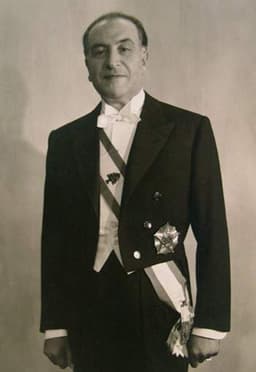
Fuad Chehab
General · Modern
49.9Total
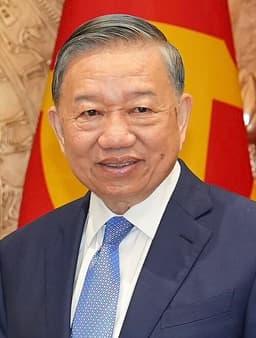
To Lam
General · Modern
50.6Total
Basic Information
Born
1902
1957
Died
1973
—
Era
Modern
Modern
Nationality
Lebanon
Vietnam
Occupation
General
General
Civilization
Middle Eastern
Eastern
Score Comparison
Military (10%)
10.2
25.9
Political (20%)
70.0
68.0
Influence (20%)
54.1
51.8
Legacy (20%)
44.2
41.7
Leadership (15%)
72.0
72.0
Strategy (15%)
30.3
36.8
TOTAL
49.9
50.6
Fuad Chehab — Complete Timeline
1958 AD
Launched Chehabist reforms and modernizationReform◆ Major
President Chehab implemented a series of reforms known as Chehabism, including administrative modernization, economic planning, and strengthening state institutions. He established the Central Bank of Lebanon and the Civil Service Board.
ReformModernizationState Building
Impact: nationalconstructive
Elected President of LebanonPolitical Action◆ Major
Fuad Chehab was elected President of Lebanon on September 23, 1958, succeeding Camille Chamoun. His election ended the 1958 crisis and was supported by both Christian and Muslim factions seeking stability.
PresidencyElectionStabilization
Impact: nationalconstructive
Created the Deuxième Bureau intelligence agencyPolitical Action
Chehab expanded the role of the Deuxi
IntelligenceSecurityAuthoritarianism
Impact: national
1960 AD
Presided over the 1960s economic boomOther
Under Chehab's presidency, Lebanon experienced a period of economic growth and stability, with Beirut becoming a major financial and tourism hub. His policies attracted foreign investment and expanded the middle class.
Economic GrowthBeirutProsperity
Impact: nationalconstructive
1964 AD
Refused to amend constitution for a second termPolitical Action
Chehab declined to seek a second term as president, respecting the constitutional limit. He retired from politics in 1964, setting a precedent for peaceful transitions of power in Lebanon.
ConstitutionTerm LimitRetirement
Impact: nationalconstructive
To Lam — Complete Timeline
2016 AD
Appointed Minister of Public SecurityPolitical Action◆ Major
To Lam was appointed Minister of Public Security of Vietnam, overseeing the country's police and internal security forces. He played a key role in maintaining public order and combating crime.
Ministerial AppointmentSecurity Leadership
Impact: national
2024 AD
Elected President of VietnamPolitical Action◆ Major
To Lam was elected President of Vietnam by the National Assembly, succeeding Vo Van Thuong. He transitioned from security chief to head of state, continuing his influence in national politics.
PresidencyGovernment Leadership
Impact: national
Expert Analysis
Fuad Chehab vs To Lam
# The General as President: Fuad Chehab and To Lam
On a warm September morning in 1958, Fuad Chehab stood before the Lebanese parliament, a reluctant general about to become president. Across the chamber, politicians who had just emerged from a bloody civil war watched warily. Chehab, known for his quiet demeanor and impeccable uniform, had spent his career avoiding politics. Now he was being asked to save a country that seemed determined to tear itself apart. Sixty-six years later, on the other side of the world, another general named To Lam stepped before Vietnam’s National Assembly in Hanoi. Unlike Chehab, he was not reluctant. He was a master of security politics, a man who had spent decades building networks of power from the shadows. Both men were generals who became presidents. But their paths, their goals, and their legacies could not have been more different.
Origins
Fuad Chehab was born in 1902 into a family of Lebanese aristocrats, descendants of a line of emirs who had once ruled Mount Lebanon. He grew up under the French Mandate, a period that shaped his deep skepticism of foreign intervention and his belief in a strong, centralized state. The son of a military family, he attended the French military academy at Saint-Cyr, where he absorbed European ideas of order and discipline but never lost his Lebanese identity. His era was one of fragile independence, sectarian tension, and the constant threat of collapse.
To Lam was born in 1957 in Hưng Yên province, northern Vietnam, into a family of communist revolutionaries. His father had fought against the French and later against the Americans. Lam grew up in a country at war, where loyalty to the party and the state was not a choice but a condition of survival. He joined the Ministry of Public Security in his youth, rising through the ranks during the 1980s and 1990s, a period when Vietnam was opening its economy but keeping its politics tightly closed. His era was one of consolidation—of communist rule, of economic reform, and of state power.
Rise to Power
Chehab’s rise was reluctant. In 1958, Lebanon was engulfed in a crisis that pitted pro-Western Christians against Arab nationalist Muslims. President Camille Chamoun had called in U.S. Marines to restore order. The army, under Chehab’s command, refused to take sides. Chehab’s neutrality made him the only acceptable candidate to both factions. On September 23, 1958, he was elected president. He did not campaign. He did not seek power. Power sought him.
To Lam’s rise was calculated. Appointed Minister of Public Security in 2016, he oversaw the police and internal security forces of a one-party state. He used this position to build a network of loyalists, to consolidate control over the party’s internal security apparatus, and to eliminate rivals. In 2024, when President Vo Van Thuong resigned amid a corruption crackdown, Lam was the natural successor. He was elected by the National Assembly on a wave of anti-corruption fervor, but his real power came from his mastery of the security state. Unlike Chehab, Lam did not wait for power to find him. He built the machine that delivered it.
Leadership & Governance
Chehab governed through a philosophy that came to be called Chehabism. It was a blend of reform, modernization, and state-building. He created the Deuxième Bureau, Lebanon’s military intelligence agency, to monitor political opponents and maintain stability. He launched economic planning, invested in infrastructure, and tried to build a civil service independent of sectarian loyalties. Under his presidency, Beirut became a financial hub, and Lebanon experienced an economic boom in the early 1960s. But Chehabism was also authoritarian. The Deuxième Bureau spied on journalists, politicians, and activists. Chehab believed that Lebanon’s fragile sectarian system needed a strong, neutral state to hold it together. He was a reformer, but a cautious one.
To Lam governs through a philosophy of security first. As president, he has continued the anti-corruption campaign that brought him to power, purging party officials who threaten his position. His leadership style is opaque, bureaucratic, and ruthless. Unlike Chehab, who tried to build institutions that would outlast him, Lam focuses on consolidating personal control. He has not launched major economic reforms or modernization projects. His priority is stability—the stability of the party, the state, and his own position.
Triumph & Tragedy
Chehab’s greatest moment was also his most revealing. In 1964, at the height of his popularity, he refused to amend the constitution to allow himself a second term. He stepped down, retired from politics, and returned to private life. It was an act of self-restraint almost unheard of in modern politics. His tragedy was that his reforms did not survive him. The Deuxième Bureau became a tool of repression under later presidents. The sectarian system he tried to reform remained intact. Lebanon’s civil war, which began in 1975, destroyed much of what he had built.
To Lam’s triumph is his rise itself. He has reached the highest office in Vietnam without a military background or a record of battlefield command. His tragedy may yet unfold. The anti-corruption campaign he leads has created an atmosphere of fear within the party, stifling dissent and innovation. By centralizing power, he may be weakening the very institutions that have kept Vietnam stable.
Character & Destiny
Chehab was a man of restraint. He did not seek power, and he did not cling to it. His personality—reserved, principled, cautious—shaped his decisions. He believed that a leader’s duty was to serve, not to rule. This made him a good president but a poor builder of lasting power. He could not imagine a future in which his enemies would undo his work.
To Lam is a man of ambition. He has spent his life accumulating power, and he will not let it go easily. His personality—calculating, patient, ruthless—shapes every decision. He believes that a leader’s duty is to control, not to serve. This makes him an effective politician but a dangerous one. He can imagine a future in which he holds power forever.
Legacy
Chehab is remembered as Lebanon’s most principled president. His name is invoked by reformers who dream of a strong, neutral state. But his legacy is ambiguous. He tried to fix a broken system without breaking it, and the system broke anyway. His scores—political 68.8, leadership 75.4, legacy 57.9—reflect a man who was respected but not transformative.
To Lam’s legacy is still being written. His political score of 74.6 and leadership score of 81.0 suggest a man who is effective in his own context. But his legacy score of 58.4 hints at the uncertainty that surrounds him. Will he be remembered as a reformer who cleaned up the party, or as a strongman who crushed it?
Conclusion
Two generals, two presidencies, two worlds. Fuad Chehab tried to build a state that could hold a fractured society together. To Lam is trying to hold a party together that controls a unified society. Chehab’s tragedy was that he was too principled to hold power. To Lam’s tragedy may be that he is too ruthless to let it go. Both men remind us that the hardest thing for a general-president is not to win power, but to know what to do with it.
Rankings
🥇
To LamLeader
Mil: 25.9Pol: 68.0Inf: 51.8
50.6
🥈
Fuad Chehab
Mil: 10.2Pol: 70.0Inf: 54.1
49.9
+0.7 behind
How This Comparison Works
Algorithm
Each figure is scored on 6 dimensions (0—100 scale) based on structured historical data: Military (10%), Political (20%), Influence (20%), Legacy (20%), Leadership (15%), Strategy (15%). The weighted total produces the final ranking.
Data Sources
Scores are computed from structured sub-indicators in the database. Scale factors adjust for era (Ancient ×0.85, Modern ×1.0) and civilization size (Eastern ×1.05, Other ×0.80) to account for differences in population and military scale.
Maximum 3 Figures
Comparisons are limited to 2—3 figures to ensure readability and statistical meaningfulness.
Error Margins
±5 points per dimension — Sub-scores are derived from historical records with inherent uncertainty. Two figures within 5 points on a dimension should be considered roughly equivalent in that area.
Total Score Accuracy
±3 points overall — The weighted combination of 6 dimensions produces a total score with approximately ±3 points of uncertainty. Differences of less than 3 points are not statistically significant— the figures are effectively tied.
Known Limitations
- Historical records are incomplete and uneven across civilizations
- Figures from oral-tradition societies may be underrepresented
- Occupation labels can misclassify multi-role figures
- Scores measure capability and impact, not moral character
- Quantitative scoring is a comparison tool, not absolute truth
Capability Radar
Military (10%) — Battles & Warfare
Battles
5
10
Win Rate
5
10
Expansion
5
10
Political (20%) — Governance & Reform
Reform
65
40
Diplomacy
60
40
Economy
50
30
Influence (20%) — Cultural & Global Reach
Cultural
30
20
Global
25
20
Legacy (20%) — Historical Impact
Historical
35
20
Longevity
30
20
Leadership (15%) — Power & Stability
Tenure
55
50
Stability
45
40
Strategy (15%) — Tactics & Innovation
Strategy
10
10
Tactics
10
10
Reform
20
10
Similar Comparisons
Comments & Discussion
历史观察家6/16/2026
Chehab被迫上位时,黎巴嫩刚死6000人;Lam当选时,越南稳定了30年。但关键不是数字,是心态。Chehab想走,Lam想留。一个把总统权力分给议会,一个把政治局权力收归自己。一样穿军装上任,一个脱了,一个死死穿着。
Chehab'sSword6/16/2026
Chehab was a reluctant hero; To Lam is a willing apparatchik. Chehab quelled a civil war by building bridges, while Lam tightens a security state that has jailed 200 political prisoners since 2021. One gave his people a new constitution; the other gives them surveillance. Apples and hand grenades.
数据侦探6/16/2026
把黎巴嫩1958年GDP增长率(-2.3%)和越南2023年(5.05%)放在一起看,根本是不同物种。Chehab接手的是个战后烂摊子,Lam接班的是个增长机器。用同样标尺量不同国情,就像拿菜刀比手术刀——都是刀,但用处天差地别。
HerodotusReborn6/16/2026
Fascinating juxtaposition: Chehab, the quiet aristocrat from a French military academy, versus Lam, the provincial boy from Hưng Yên. One ruled a multi-sect mosaic, the other a single-party monolith. Chehab’s “No victor, no vanquished” policy contrasts sharply with Lam’s “anti-corruption” campaigns that netted over 1,000 officials. Different power dynamics entirely.