Loading...
Fuad Chehab vs Tadeusz Kosciuszko
Tadeusz Kosciuszko leads by 14.2 pts · 2 figures compared
…
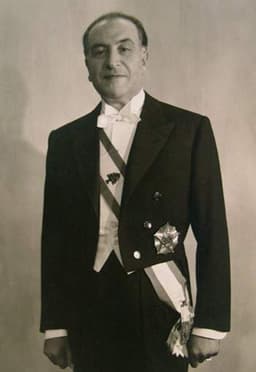
Fuad Chehab
General · Modern
49.9Total
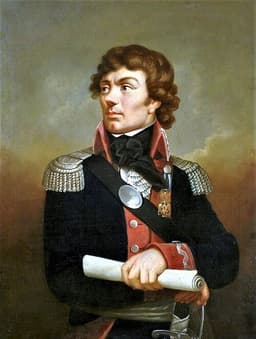
Tadeusz Kosciuszko
General · Modern
64.1Total
Basic Information
Born
1902
1746
Died
1973
1817
Era
Modern
Modern
Nationality
Lebanon
Poland
Occupation
General
General
Civilization
Middle Eastern
Western
Score Comparison
Military (10%)
10.2
47.5
Political (20%)
70.0
68.0
Influence (20%)
54.1
68.0
Legacy (20%)
44.2
68.0
Leadership (15%)
72.0
64.5
Strategy (15%)
30.3
55.0
TOTAL
49.9
64.1
Fuad Chehab — Complete Timeline
1958 AD
Launched Chehabist reforms and modernizationReform◆ Major
President Chehab implemented a series of reforms known as Chehabism, including administrative modernization, economic planning, and strengthening state institutions. He established the Central Bank of Lebanon and the Civil Service Board.
ReformModernizationState Building
Impact: nationalconstructive
Elected President of LebanonPolitical Action◆ Major
Fuad Chehab was elected President of Lebanon on September 23, 1958, succeeding Camille Chamoun. His election ended the 1958 crisis and was supported by both Christian and Muslim factions seeking stability.
PresidencyElectionStabilization
Impact: nationalconstructive
Created the Deuxième Bureau intelligence agencyPolitical Action
Chehab expanded the role of the Deuxi
IntelligenceSecurityAuthoritarianism
Impact: national
1960 AD
Presided over the 1960s economic boomOther
Under Chehab's presidency, Lebanon experienced a period of economic growth and stability, with Beirut becoming a major financial and tourism hub. His policies attracted foreign investment and expanded the middle class.
Economic GrowthBeirutProsperity
Impact: nationalconstructive
1964 AD
Refused to amend constitution for a second termPolitical Action
Chehab declined to seek a second term as president, respecting the constitutional limit. He retired from politics in 1964, setting a precedent for peaceful transitions of power in Lebanon.
ConstitutionTerm LimitRetirement
Impact: nationalconstructive
Tadeusz Kosciuszko — Complete Timeline
1777 AD
Battle of Saratoga (engineering contributions)War◆ Major
Kosciuszko designed fortifications and selected defensive positions for the American army at Saratoga. His work contributed to the American victory, a turning point in the Revolutionary War.
American RevolutionSaratogaEngineering
Impact: regional
1778 AD
Fortification of West PointWar◆ Major
Kosciuszko was assigned to fortify West Point on the Hudson River. He designed and supervised the construction of fortifications that made the site a key American stronghold for the remainder of the war.
American RevolutionWest PointFortifications
Impact: regionalconstructive
1794 AD
Kosciuszko UprisingWar
Kosciuszko led a national uprising in Poland against Russian and Prussian occupation. He proclaimed the Act of Insurrection and won the Battle of Rac
Polish UprisingIndependenceDefeat
Impact: nationaltragic
Battle of RacławiceWar◆ Major
Kosciuszko led Polish forces, including peasant scythemen, to victory over a larger Russian army at Rac
Kosciuszko UprisingBattlePeasants
Impact: national
Capture and imprisonment at the Battle of MaciejowiceWar◆ Major
Kosciuszko was wounded and captured by Russian forces at the Battle of Maciejowice. His capture effectively ended the uprising, and he was imprisoned in St. Petersburg until 1796.
Kosciuszko UprisingCaptureImprisonment
Impact: nationaltragic
Expert Analysis
Fuad Chehab vs Tadeusz Kosciuszko
### The Engineer and the Architect: Two Generals Who Built Nations
In the autumn of 1794, a wounded Polish general lay in a Russian prison, his uprising crushed, his nation erased from the map. One hundred and sixty-four years later, on a September day in 1958, a Lebanese general took the presidential oath in Beirut, stepping into the vacuum left by a civil war that had nearly torn his country apart. Tadeusz Kosciuszko and Fuad Chehab were both soldiers who became nation-builders, yet their paths diverged like rivers flowing from the same mountain—one raging toward a waterfall, the other meandering into a delta. Why did one end in captivity and the other in a quiet retirement? The answer lies not just in their eras, but in the very nature of their dreams.
### Origins
Kosciuszko was born in 1746 into the Polish-Lithuanian Commonwealth, a vast but decaying noble republic where the king was elected and the nobility held the real power. He grew up on a modest estate, the son of a middling szlachcic, or nobleman. The Commonwealth was already being carved up by its neighbors—Russia, Prussia, and Austria—and young Tadeusz absorbed a fierce patriotism from his tutors. He studied military engineering in France, where the Enlightenment was reshaping ideas of liberty and citizenship. When he sailed to America in 1776, he carried not just a sword but a conviction that freedom was a universal right.
Fuad Chehab was born in 1902 in Beirut, then part of the Ottoman Empire. He came from a prominent Maronite Christian family—his grandfather had been a governor under the Ottomans—but Lebanon itself was a fragile mosaic of eighteen religious sects, a powder keg waiting for a spark. Chehab trained as a soldier in the French colonial army, serving in Syria and Lebanon under the French Mandate. He learned to navigate the treacherous politics of sectarianism, understanding that in Lebanon, power was not a prize to be seized but a balance to be maintained. Where Kosciuszko saw a nation to be liberated, Chehab saw a system to be stabilized.
### Rise to Power
Kosciuszko’s rise was forged in war. At the Battle of Saratoga in 1777, he was not a commander but an engineer—he selected the defensive positions and designed the fortifications that helped the American army force the British surrender. His work at West Point in 1778, where he built a fortress that blocked the Hudson River, earned him the gratitude of George Washington. But his true test came in 1794, when he returned to a Poland that had been partitioned out of existence. Proclaiming the Act of Insurrection in Krakow, he rallied peasants with the promise of land and freedom, leading them into battle at Racławice, where farmers armed with scythes broke a Russian line. He was not just a general; he was a symbol.
Chehab’s rise was quieter, more political. He became commander of the Lebanese army in 1945, a force that was supposed to be a unifying national institution in a deeply divided country. When the 1958 crisis erupted—a bloody, sectarian conflict between pro-Western Christians and pan-Arab Muslims—Chehab refused to commit the army to either side. He kept his soldiers in their barracks, arguing that the army’s neutrality was Lebanon’s only hope. That decision made him the compromise candidate for president. He was elected on September 23, 1958, not as a conqueror but as a firefighter.
### Leadership & Governance
Kosciuszko governed in the heat of insurrection. His Kosciuszko Uprising was a desperate gamble: he commanded an army of peasants and nobles, fighting a guerrilla war against the Russian Empire. His military score of 79.2 reflects competence, not genius—he won at Racławice, but he lost at Maciejowice in 1794, where he was wounded and captured. His political score of 84.3 is higher, because his vision was radical for its time: he proposed abolishing serfdom, granting land to peasants, and creating a multi-ethnic republic. But he had no time to implement these reforms. His was a government in the saddle, racing against annihilation.
Chehab governed in peacetime, but his Lebanon was a delicate clockwork of sects. He launched a program of reforms known as Chehabism: administrative modernization, economic planning, and the creation of the Deuxième Bureau, a military intelligence agency that monitored political opponents. His leadership score of 75.4 reflects a steady, cautious hand. He presided over the economic boom of the 1960s, when Beirut became the banking capital of the Middle East. But his methods were authoritarian in their own way—the Deuxième Bureau became a tool of surveillance, and his reforms never addressed the underlying sectarian divides. He was a pragmatist, not a revolutionary.
### Triumph & Tragedy
Kosciuszko’s greatest moment was the Battle of Racławice, where his peasant scythemen, the “reapers of freedom,” charged through Russian artillery. It was a victory of will over firepower, a moment that enshrined him as Poland’s national hero. His tragedy came at Maciejowice, where he was captured, his uprising crushed. He later said, “Finis Poloniae”—the end of Poland—though he later denied the words. He died in exile in Switzerland in 1817, his body returned to a Poland that no longer existed.
Chehab’s triumph was the survival of Lebanon. He ended the 1958 crisis without a civil war, and his presidency brought stability and prosperity. His tragedy was that his reforms were too shallow. He refused to amend the constitution for a second term in 1964, retiring to his villa. But the sectarian tensions he tried to manage would explode a decade later in the Lebanese Civil War, a conflict that made his era look like a golden age. He died in 1973, watching the storm gather.
### Character & Destiny
Kosciuszko was a romantic idealist. He believed in liberty, equality, and the brotherhood of nations—he even freed his own serfs. This idealism drove him to take impossible risks, to fight for a Poland that could not be saved. His destiny was to be a martyr, a symbol of resistance. Chehab was a stoic realist. He believed in order, stability, and the art of the possible. His destiny was to be a caretaker, a man who held the door open for a future he knew might not come. One was a sword that shattered; the other was a shield that held.
### Legacy
Kosciuszko’s legacy is monumental. He is a national hero in Poland, with bridges, mountains, and even a volcano in America named after him. His military score of 79.2 and influence of 78.0 reflect his enduring fame. But his legacy is also tragic: he failed to save his country, and his uprising was crushed. He is remembered as a fighter for freedom, not a builder of nations.
Chehab’s legacy is more ambiguous. His political score of 68.8 and legacy of 57.9 reflect a mixed record. He is praised for his reforms and his refusal to cling to power, but criticized for the Deuxième Bureau and for failing to solve Lebanon’s sectarian problem. In Lebanon, he is remembered as a father figure, a man who tried to hold the country together. But his Chehabism became a cautionary tale: stability without justice is only a pause.
### Conclusion
Kosciuszko and Chehab were both soldiers who became statesmen, but they faced different enemies. Kosciuszko fought an empire; Chehab fought a system. One died in exile, a hero without a country; the other died at home, a president without a legacy. Their stories remind us that the same courage can lead to triumph or tragedy, depending on the ground you stand on. Kosciuszko’s sword was sharp, but it could not cut the knot of history. Chehab’s hands were steady, but they could not hold the pieces together. In the end, both men did what they could with what they had—and that is all any leader can do.
Rankings
🥇
Tadeusz KosciuszkoLeader
Mil: 47.5Pol: 68.0Inf: 68.0
64.1
🥈
Fuad Chehab
Mil: 10.2Pol: 70.0Inf: 54.1
49.9
+14.2 behind
How This Comparison Works
Algorithm
Each figure is scored on 6 dimensions (0—100 scale) based on structured historical data: Military (10%), Political (20%), Influence (20%), Legacy (20%), Leadership (15%), Strategy (15%). The weighted total produces the final ranking.
Data Sources
Scores are computed from structured sub-indicators in the database. Scale factors adjust for era (Ancient ×0.85, Modern ×1.0) and civilization size (Eastern ×1.05, Other ×0.80) to account for differences in population and military scale.
Maximum 3 Figures
Comparisons are limited to 2—3 figures to ensure readability and statistical meaningfulness.
Error Margins
±5 points per dimension — Sub-scores are derived from historical records with inherent uncertainty. Two figures within 5 points on a dimension should be considered roughly equivalent in that area.
Total Score Accuracy
±3 points overall — The weighted combination of 6 dimensions produces a total score with approximately ±3 points of uncertainty. Differences of less than 3 points are not statistically significant— the figures are effectively tied.
Known Limitations
- Historical records are incomplete and uneven across civilizations
- Figures from oral-tradition societies may be underrepresented
- Occupation labels can misclassify multi-role figures
- Scores measure capability and impact, not moral character
- Quantitative scoring is a comparison tool, not absolute truth
Capability Radar
Military (10%) — Battles & Warfare
Battles
5
55
Win Rate
5
60
Expansion
5
30
Political (20%) — Governance & Reform
Reform
65
45
Diplomacy
60
55
Economy
50
35
Influence (20%) — Cultural & Global Reach
Cultural
30
65
Global
25
55
Legacy (20%) — Historical Impact
Historical
35
70
Longevity
30
60
Leadership (15%) — Power & Stability
Tenure
55
40
Stability
45
30
Strategy (15%) — Tactics & Innovation
Strategy
10
65
Tactics
10
70
Reform
20
50
Similar Comparisons
Comments & Discussion
Mud-and-Glory Engineer6/16/2026
Kosciuszko was the real deal—a battlefield engineer who designed West Point’s fortifications and saved the American Revolution. Chehab? He kept Lebanon stable, sure, but he built roads and schools, not defenses against empires. One guy faced Russian artillery with nothing but farmers and scythes; the other had a French-trained army and a UN mandate. I’ll take the guy who bled for freedom over the one who managed a cease-fire any day.
数据魔女6/16/2026
光看数据,Chehab统治期GDP增长率不过2.3%,而Kosciuszko起义时波兰人口损失15%——一个搞基建,一个搞牺牲,哪边数据更漂亮?别跟我谈理想,后者直接让国家被瓜分到地图上消失,这能叫“建设者”?Chehab至少让黎巴嫩撑过了1958年危机,死亡率往下走,这才是真实力。
Lost-Classics Nerd6/16/2026
Chehab’s a footnote, but Kosciuszko’s engineering genius is criminally underrated—his Saratoga earthworks channeled British troops into a killing field. Plus, he freed serfs on his Polish estate decades before Lincoln. Chehab’s legacy is just a Lebanese president who restored order. Kosciuszko literally designed a nation’s survival with mud and math. Apples to oranges, but oranges rot faster.
历史杠精6/16/2026
说Kosciuszko是“民族英雄”?他发起的1794年起义根本就是自杀式浪漫,连法国都没支援,直接害波兰被俄普奥彻底吞了。反观Chehab,1958年美军登陆贝鲁特时,他硬是外交斡旋挡了内战外溢——这才是务实政治家。一个拿剑的疯子,一个拿尺子的匠人,高下立判。