Loading...
Fuad Chehab vs Suharto
Suharto leads by 7.3 pts · 2 figures compared
…
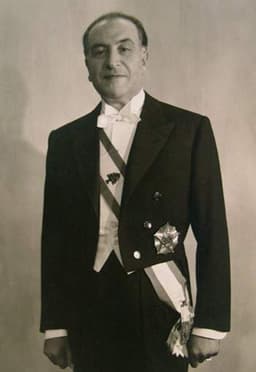
Fuad Chehab
General · Modern
49.9Total
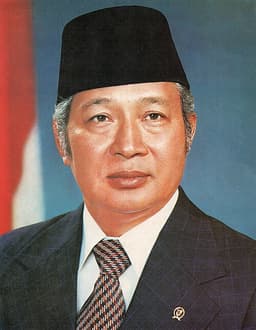
Suharto
General · Modern
57.2Total
Basic Information
Born
1902
1921
Died
1973
—
Era
Modern
Modern
Nationality
Lebanon
Indonesia
Occupation
General
General
Civilization
Middle Eastern
Eastern
Score Comparison
Military (10%)
10.2
20.0
Political (20%)
70.0
59.3
Influence (20%)
54.1
60.0
Legacy (20%)
44.2
52.0
Leadership (15%)
72.0
82.0
Strategy (15%)
30.3
60.0
TOTAL
49.9
57.2
Fuad Chehab — Complete Timeline
1958 AD
Launched Chehabist reforms and modernizationReform◆ Major
President Chehab implemented a series of reforms known as Chehabism, including administrative modernization, economic planning, and strengthening state institutions. He established the Central Bank of Lebanon and the Civil Service Board.
ReformModernizationState Building
Impact: nationalconstructive
Elected President of LebanonPolitical Action◆ Major
Fuad Chehab was elected President of Lebanon on September 23, 1958, succeeding Camille Chamoun. His election ended the 1958 crisis and was supported by both Christian and Muslim factions seeking stability.
PresidencyElectionStabilization
Impact: nationalconstructive
Created the Deuxième Bureau intelligence agencyPolitical Action
Chehab expanded the role of the Deuxi
IntelligenceSecurityAuthoritarianism
Impact: national
1960 AD
Presided over the 1960s economic boomOther
Under Chehab's presidency, Lebanon experienced a period of economic growth and stability, with Beirut becoming a major financial and tourism hub. His policies attracted foreign investment and expanded the middle class.
Economic GrowthBeirutProsperity
Impact: nationalconstructive
1964 AD
Refused to amend constitution for a second termPolitical Action
Chehab declined to seek a second term as president, respecting the constitutional limit. He retired from politics in 1964, setting a precedent for peaceful transitions of power in Lebanon.
ConstitutionTerm LimitRetirement
Impact: nationalconstructive
Suharto — Complete Timeline
1966 AD
Supersemar and Transfer of PowerPolitical Action
President Sukarno signed the Supersemar order, delegating authority to General Suharto to restore order after the 30 September Movement. Suharto used this to ban the Communist Party, purge leftists, and gradually assume executive power, effectively beginning his New Order regime.
SupersemarNew OrderIndonesia
Impact: nationaldestructive
1967 AD
New Order Economic DevelopmentReform◆ Major
Suharto implemented the New Order's economic policies, focusing on foreign investment, agricultural self-sufficiency, and industrialization. The government achieved high growth rates, reduced poverty, and stabilized the economy, but also fostered crony capitalism and corruption.
Economic GrowthDevelopmentIndonesia
Impact: nationalconstructive
1975 AD
Invasion of East TimorWar◆ Major
Suharto ordered the invasion of East Timor after Portugal withdrew. Indonesian forces occupied the territory, leading to a 24-year occupation marked by widespread human rights abuses, including massacres and forced displacement, resulting in an estimated 100,000-200,000 deaths.
East TimorOccupationHuman Rights
Impact: regionaldestructive
1998 AD
Asian Financial Crisis and Fall from PowerPolitical Action
The Asian Financial Crisis devastated Indonesia's economy, leading to massive unemployment and food shortages. Widespread protests and riots forced Suharto to resign in May 1998 after 31 years in power, ending his authoritarian rule and ushering in the Reformasi era.
Financial CrisisResignationReformasi
Impact: nationaltragic
Expert Analysis
Fuad Chehab vs Suharto
# The General and the Reformer: Two Paths from Military Command to National Leadership
In the summer of 1966, on the sweltering island of Java, a general stood at a crossroads. President Sukarno, the charismatic father of Indonesian independence, had just signed the Supersemar order, delegating authority to General Suharto to restore order after the bloody upheavals of the 30 September Movement. Half a world away, eight years earlier, another general had taken a different path. In September 1958, Fuad Chehab was elected President of Lebanon, ending a bitter civil crisis that had threatened to tear his country apart. Both men were military commanders who stepped into political vacuums. Both promised stability, reform, and national unity. Yet their journeys—and their legacies—could not have diverged more sharply.
Origins
Suharto was born in 1921 into a humble Javanese peasant family in the village of Kemusuk, near Yogyakarta. His father was a minor irrigation official, his mother a woman of modest means. The young Suharto grew up in a world of Dutch colonial rule, where opportunities for indigenous Indonesians were scarce. He joined the Dutch colonial army, then the Japanese-sponsored militia during World War II, learning the hard lessons of survival and obedience in an era of occupation and war. His world was one of hierarchy, deference, and the constant threat of violence.
Fuad Chehab, born in 1902, came from a very different Lebanon. He was a Maronite Christian from a prominent political family in the mountains of Keserwan. His uncle was a patriarch of the Maronite Church, and his lineage connected him to the feudal aristocracy of Mount Lebanon. Chehab studied at the French military academy in Damascus and served in the French colonial forces, rising through the ranks with a discipline and professionalism that earned him respect across Lebanon's fractious sectarian landscape. Where Suharto's world was one of peasant struggle and colonial subjugation, Chehab's was one of aristocratic privilege and French-educated sophistication.
Rise to Power
Suharto's rise was slow, methodical, and ultimately violent. He survived the Japanese occupation, the Indonesian revolution, and the chaotic years of Sukarno's Guided Democracy. He commanded troops in the campaign to annex West Irian and suppressed regional rebellions. But his decisive moment came in 1965–66, when the failed coup of the 30 September Movement plunged Indonesia into chaos. Suharto, then commander of the Army Strategic Reserve, moved with ruthless efficiency. He blamed the Communist Party of Indonesia for the coup, and over the following months, an anti-communist purge swept the country. Hundreds of thousands were killed. Suharto emerged as the strongman who had saved the nation from communism.
Chehab's path was more peaceful but no less dramatic. In 1958, Lebanon was in the grip of a civil war between pro-Western President Camille Chamoun and Arab nationalist opposition factions backed by Egypt and Syria. The United States intervened militarily, landing Marines on Beirut's beaches. Chehab, then army commander, refused to commit his forces to either side, preserving the military's neutrality. His restraint made him the only figure acceptable to all factions. On September 23, 1958, he was elected president, ending the crisis. He had not seized power; he had been handed it by a country desperate for a unifier.
Leadership & Governance
Suharto's New Order was a project of authoritarian development. He centralized power, suppressed dissent, and built a vast patronage network that rewarded loyalty and crushed opposition. His economic policies—opening Indonesia to foreign investment, achieving agricultural self-sufficiency in rice, and stabilizing inflation—brought impressive growth. By the 1990s, Indonesia was a rising Asian tiger. But this prosperity came at a terrible cost. Corruption was institutionalized, political freedom was nonexistent, and in 1975, Suharto ordered the invasion of East Timor after Portugal withdrew, leading to a brutal occupation that would last a quarter-century and claim tens of thousands of lives.
Chehab's governance was fundamentally different. His philosophy, known as Chehabism, sought to modernize Lebanon's state institutions while preserving its fragile sectarian balance. He created the Deuxième Bureau, a military intelligence agency that monitored political opponents and suppressed extremists, but he also launched ambitious reforms: administrative modernization, economic planning, and infrastructure development. Under his presidency, Lebanon experienced an economic boom in the early 1960s, with Beirut becoming a glittering financial hub. Yet Chehab's approach was cautious and consensual. He did not eliminate his rivals; he co-opted them. He did not build a cult of personality; he built institutions.
Triumph & Tragedy
Suharto's greatest triumph was Indonesia's transformation from a chaotic, impoverished nation into a stable, growing economy. By the mid-1990s, his rule seemed unshakeable. But the Asian Financial Crisis of 1997–98 was his undoing. The economy collapsed, unemployment soared, and food shortages sparked riots. In May 1998, after months of protests, Suharto resigned, his 31-year rule ending in ignominy. He died under a cloud of accusations, his legacy tarnished by corruption and human rights abuses.
Chehab's tragedy was more subtle. His reforms were genuine, but his reliance on the Deuxième Bureau to enforce stability created a security state that would later be weaponized by his successors. When he refused to amend the constitution to seek a second term in 1964, retiring from politics as he had promised, he left a power vacuum. Lebanon's fragile consensus collapsed in the 1970s, descending into a devastating civil war. His vision of a unified, modern Lebanon was never fully realized.
Character & Destiny
Suharto was a man of iron will and cold calculation. He saw politics as war by other means, and he governed accordingly. His Javanese upbringing taught him the art of *sabung*—patient endurance—and he wielded power with a quiet, unyielding ruthlessness. Chehab was a man of duty and restraint. He believed that a leader's role was to mediate, not to dominate. He once said, "The state is not a booty to be divided among the victors." That difference in character—one driven by ambition, the other by service—shaped their destinies.
Legacy
Suharto's legacy is deeply contested. His military score of 45.5 reflects his mixed record as a commander, while his leadership score of 80.7 speaks to his iron grip on power. His total score of 67.7 places him as a significant but flawed figure. In Indonesia, he is remembered as both a developer and a dictator, a man who lifted millions from poverty while crushing freedom.
Chehab's legacy is more wistful. His political score of 68.8 matches Suharto's, but his lower military score of 19.9 reflects his preference for diplomacy over force. His total score of 61.2 is lower, but his influence score of 71.3 is almost as high. In Lebanon, he is remembered as the "father of the modern state"—a leader who could have been, had his successors followed his path.
Conclusion
Two generals, two nations, two destinies. Suharto seized power and held it for three decades, building a nation on foundations of blood and steel. Chehab accepted power as a duty and relinquished it when his time was done, building institutions that outlasted him. One ended in disgrace, the other in quiet retirement. Yet both faced the same fundamental challenge: how to lead a fractured, post-colonial society toward stability and prosperity. Their answers—one authoritarian, one consensual—reveal not just the men, but the worlds that shaped them. In the end, history judges not only by outcomes, but by the paths chosen. And the paths could not have been more different.
Rankings
🥇
SuhartoLeader
Mil: 20.0Pol: 59.3Inf: 60.0
57.2
🥈
Fuad Chehab
Mil: 10.2Pol: 70.0Inf: 54.1
49.9
+7.3 behind
How This Comparison Works
Algorithm
Each figure is scored on 6 dimensions (0—100 scale) based on structured historical data: Military (10%), Political (20%), Influence (20%), Legacy (20%), Leadership (15%), Strategy (15%). The weighted total produces the final ranking.
Data Sources
Scores are computed from structured sub-indicators in the database. Scale factors adjust for era (Ancient ×0.85, Modern ×1.0) and civilization size (Eastern ×1.05, Other ×0.80) to account for differences in population and military scale.
Maximum 3 Figures
Comparisons are limited to 2—3 figures to ensure readability and statistical meaningfulness.
Error Margins
±5 points per dimension — Sub-scores are derived from historical records with inherent uncertainty. Two figures within 5 points on a dimension should be considered roughly equivalent in that area.
Total Score Accuracy
±3 points overall — The weighted combination of 6 dimensions produces a total score with approximately ±3 points of uncertainty. Differences of less than 3 points are not statistically significant— the figures are effectively tied.
Known Limitations
- Historical records are incomplete and uneven across civilizations
- Figures from oral-tradition societies may be underrepresented
- Occupation labels can misclassify multi-role figures
- Scores measure capability and impact, not moral character
- Quantitative scoring is a comparison tool, not absolute truth
Capability Radar
Military (10%) — Battles & Warfare
Battles
5
40
Win Rate
5
45
Expansion
5
30
Political (20%) — Governance & Reform
Reform
65
55
Diplomacy
60
60
Economy
50
65
Influence (20%) — Cultural & Global Reach
Cultural
30
40
Global
25
50
Legacy (20%) — Historical Impact
Historical
35
55
Longevity
30
45
Leadership (15%) — Power & Stability
Tenure
55
85
Stability
45
50
Strategy (15%) — Tactics & Innovation
Strategy
10
40
Tactics
10
35
Reform
20
50
Similar Comparisons
Comments & Discussion
IRONCHIEF6/16/2026
Calling Chehab a "reformer" next to Suharto is romantic nonsense. Sure, Chehab modernized Lebanon's bureaucracy, but he was still a Maronite general imposing a sectarian status quo, not breaking it. Suharto's Order Baru was brutal, but he actually crushed the PKI and integrated a fractured archipelago through military force and economic growth—GDP hit 7% annually in the 1980s. Chehab got a decade of stability; Suharto got thirty years. One reformed a system, the other built a machine. I know whi
硬核数据控6/16/2026
你们这些历史粉真会挑对比。苏哈托1966年接手时印尼人均GDP才70美元,到1996年涨到1100美元,通货膨胀从650%压到个位数。谢哈布呢?1958年黎巴嫩还是中东金融中心,他卸任后没几年内战就爆发了。苏哈托的威权至少给老百姓带来了米饭和公路,谢哈布的"改革"更像在火药桶上跳芭蕾——好看,但迟早要炸。数据不会撒谎,增长的代价有时就是牺牲自由。|
BYZANTIUM_NADIA6/16/2026
Classics scholar here: comparing a Syrian-trained French colonial officer with a Japanese-trained Javanese sergeant? Apples and hand grenades. Chehab graduated from Saint-Cyr—he absorbed French republicanism, even if Lebanon's confessionalism broke it. He imposed presidential term limits in 1958! Voluntarily! Name one dictator who did that. Suharto rewrote the constitution to give himself seven terms. Chehab wrote books on military ethics; Suharto wrote secret memos on massacring communists. One
微笑的镰刀6/16/2026
作为黎巴嫩人我笑了。你们把谢哈布吹成圣人,可他当总统时就纵容情报机构监控反对派,1975年内战的火药桶就是他留下的教派权力结构。苏哈托用枪杆子镇压印尼共,谢哈布用法律条文给马龙派特权——手段不同,本质一样。区别?苏哈托至少公开承认"九三零事件"是转折点,谢哈布的"改革"至今被黎巴嫩人骂成表面功夫。都是军人治国,别给穿西装的那个镀金。