Loading...
Fuad Chehab vs Sengge Rinchen
Sengge Rinchen leads by 7.0 pts · 2 figures compared
…
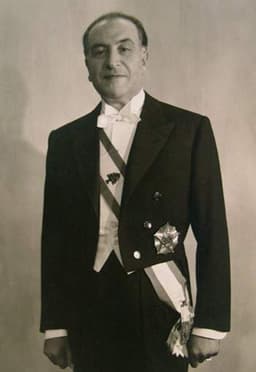
Fuad Chehab
General · Modern
49.9Total
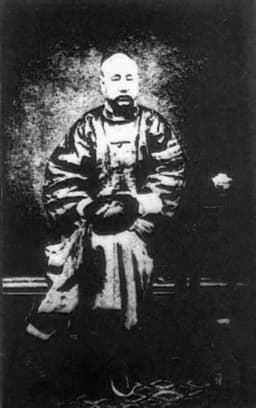
Sengge Rinchen
General · Modern
56.9Total
Basic Information
Born
1902
1811
Died
1973
1865
Era
Modern
Modern
Nationality
Lebanon
China
Occupation
General
General
Civilization
Middle Eastern
Eastern
Score Comparison
Military (10%)
10.2
70.0
Political (20%)
70.0
43.7
Influence (20%)
54.1
55.0
Legacy (20%)
44.2
54.0
Leadership (15%)
72.0
67.0
Strategy (15%)
30.3
60.7
TOTAL
49.9
56.9
Fuad Chehab — Complete Timeline
1958 AD
Launched Chehabist reforms and modernizationReform◆ Major
President Chehab implemented a series of reforms known as Chehabism, including administrative modernization, economic planning, and strengthening state institutions. He established the Central Bank of Lebanon and the Civil Service Board.
ReformModernizationState Building
Impact: nationalconstructive
Elected President of LebanonPolitical Action◆ Major
Fuad Chehab was elected President of Lebanon on September 23, 1958, succeeding Camille Chamoun. His election ended the 1958 crisis and was supported by both Christian and Muslim factions seeking stability.
PresidencyElectionStabilization
Impact: nationalconstructive
Created the Deuxième Bureau intelligence agencyPolitical Action
Chehab expanded the role of the Deuxi
IntelligenceSecurityAuthoritarianism
Impact: national
1960 AD
Presided over the 1960s economic boomOther
Under Chehab's presidency, Lebanon experienced a period of economic growth and stability, with Beirut becoming a major financial and tourism hub. His policies attracted foreign investment and expanded the middle class.
Economic GrowthBeirutProsperity
Impact: nationalconstructive
1964 AD
Refused to amend constitution for a second termPolitical Action
Chehab declined to seek a second term as president, respecting the constitutional limit. He retired from politics in 1964, setting a precedent for peaceful transitions of power in Lebanon.
ConstitutionTerm LimitRetirement
Impact: nationalconstructive
Sengge Rinchen — Complete Timeline
1859 AD
Battle of Dagu FortsWar◆ Major
Sengge Rinchen commanded Qing forces defending the Dagu Forts against a British and French naval attack. His forces repelled the assault, sinking several enemy ships and inflicting heavy casualties, a rare Qing victory in the Second Opium War.
Second Opium WarBattleVictory
Impact: regional
1860 AD
Battle of PalikaoWar◆ Major
Sengge Rinchen commanded Qing cavalry at the Battle of Palikao against Anglo-French forces. His forces were decisively defeated by superior firepower, leading to the fall of Beijing and the burning of the Old Summer Palace.
Second Opium WarBattleDefeat
Impact: regionaltragic
1863 AD
Suppression of the Nian RebellionWar◆ Major
Sengge Rinchen led Qing forces against the Nian rebels in northern China. He achieved several victories but was ultimately killed in battle against the Nian in 1865, marking a turning point in the rebellion.
Nian RebellionCampaignDeath
Impact: regionaltragic
Expert Analysis
Fuad Chehab vs Sengge Rinchen
### The Prince and the General: Two Paths from Battlefield to Statecraft
On a summer morning in 1859, the muddy banks of the Hai River near Tianjin erupted in a roar of cannon fire. A Mongol prince named Sengge Rinchen, commanding the forts guarding the approach to Beijing, watched as British and French gunboats struggled against his improvised defenses. He had chained the river, sunk junks, and trained his gunners to aim low, shattering hulls. The enemy withdrew, humiliated. It was a rare moment of Chinese triumph over the West. Less than a century later, in 1958, another general—a Maronite Christian from the mountains of Lebanon—took the presidential oath in Beirut. Fuad Chehab had just navigated his country through a civil war that threatened to tear it apart. Unlike Sengge Rinchen, he would not fight foreign invaders. He would fight his own people’s divisions, with bureaucracy and intelligence, not cavalry charges. Both men were soldiers who became custodians of fragile empires. But one died in a ditch, his head displayed in a cage; the other retired peacefully, leaving behind a political doctrine. Why such different fates?
### Origins
Sengge Rinchen was born in 1811 into the Mongol aristocracy of the Horqin Banner, a world of horsemen and nomadic tradition that had long served the Qing dynasty. The Manchu emperors trusted Mongol princes to guard the northern steppes, and Sengge Rinchen grew up in the saddle, learning the arts of war as his ancestors had for centuries. By contrast, Fuad Chehab was born in 1902 in Ghazir, Lebanon, into a family of feudal landowners with deep roots in the Ottoman Empire. His great-grandfather had been a governor; his uncle was a patriarch of the Maronite Church. Chehab’s world was one of religious sects, foreign consuls, and shifting alliances—a place where survival depended on negotiation, not brute force. The nineteenth century demanded of Sengge Rinchen a warrior’s courage; the twentieth demanded of Chehab a diplomat’s patience.
### Rise to Power
Sengge Rinchen’s ascent followed the classic path of a Qing military commander. He proved himself in campaigns against bandits and rebels, earning the favor of the Xianfeng Emperor. By 1859, he was the empire’s foremost general, entrusted with the defense of the capital. His great moment came at the Dagu Forts, where he repelled the Anglo-French fleet—a victory that shocked the Western powers and briefly restored Qing pride. But the triumph was fleeting. In 1860, at the Battle of Palikao, his Mongol cavalry charged into British and French infantry armed with rifles and artillery. The result was a slaughter. Sengge Rinchen watched his warriors cut down in minutes. His reputation never recovered.
Chehab’s rise was quieter but more strategic. A graduate of the French military academy at Saint-Cyr, he served as a commander in the Lebanese army, a force created by the French Mandate. In 1952, during a political crisis, he refused to use the army to suppress protesters, earning a reputation for integrity. By 1958, when Lebanon’s sectarian factions erupted into civil war over President Camille Chamoun’s pro-Western policies, Chehab was the only figure trusted by both Christians and Muslims. He was elected president as a compromise candidate—a general who promised to disarm the militias and rebuild the state.
### Leadership & Governance
Their styles of rule could not have been more different. Sengge Rinchen governed like a Mongol khan: personal, direct, and brutal. He led from the front, charging with his cavalry, sharing their hardships. His strategy was simple—overwhelm the enemy with speed and shock—and it worked against the Nian rebels, whom he suppressed with relentless campaigns in 1863. But he had no patience for logistics, intelligence, or diplomacy. When the British and French returned in 1860, he refused to adapt, relying on the same tactics that had failed at Palikao. His political wisdom was negligible; he saw the world as a series of battles, not negotiations.
Chehab, by contrast, governed like a French technocrat. He created the Deuxième Bureau, a military intelligence agency that monitored politicians, journalists, and dissidents. He launched economic reforms, built infrastructure, and courted foreign investment. His philosophy—Chehabism—sought to balance Lebanon’s sectarian communities through a strong, neutral state. He refused to seek a second term in 1964, respecting the constitution even when his supporters begged him to stay. Where Sengge Rinchen saw enemies to destroy, Chehab saw factions to manage.
### Triumph & Tragedy
Sengge Rinchen’s greatest triumph was the defense of Dagu in 1859. For a few hours, he made the Qing empire feel invincible again. His greatest tragedy came a year later, when his cavalry was annihilated at Palikao. But the final blow was the Nian Rebellion. In 1865, while pursuing the rebels through Shandong, he was ambushed and killed. His body was mutilated, his head sent to the Nian leader as a trophy. The Qing court mourned him, but his death marked the end of an era: the old Mongol cavalry could no longer save the dynasty.
Chehab’s triumph was the 1958 crisis itself. By refusing to take sides, he prevented a full-scale civil war and gave Lebanon a decade of stability. His tragedy was the unintended consequence of his rule: the Deuxième Bureau became a tool of political repression, and his reforms could not heal the deep sectarian wounds. By the time he left office in 1964, the seeds of Lebanon’s future civil war (1975–1990) were already sown. He died in 1973, watching his legacy crumble from a distance.
### Character & Destiny
Sengge Rinchen was a man of the steppe—proud, courageous, and inflexible. He believed in honor, loyalty, and the sword. His character made him a beloved commander but a doomed strategist. He could not adapt because adaptation felt like betrayal. Chehab was a man of the mountain—cautious, calculating, and elusive. He believed in institutions, intelligence, and compromise. His character made him a successful president but a distant, cold leader. He could not inspire love because he never showed his heart.
Their destinies flowed from these traits. Sengge Rinchen’s inflexibility led him to a violent death. Chehab’s caution led him to a quiet retirement. One died for his empire; the other died watching his empire die.
### Legacy
Sengge Rinchen is remembered in China as a tragic hero—a symbol of resistance against Western imperialism. His statue stands in Tianjin, and his name appears in textbooks. But his legacy is ambiguous: he failed, and his failures hastened the Qing’s collapse. Chehab is remembered in Lebanon as a founding father of the modern state. His “Chehabist” reforms shaped Lebanese politics for decades, and his refusal to cling to power set a rare example of constitutionalism. But his legacy is also ambiguous: his intelligence state bred corruption, and his reforms could not prevent civil war.
### Conclusion
Standing at the Dagu Forts today, you can still see the Hai River, now placid, flowing past the old batteries. In Beirut, the presidential palace sits on a hill, overlooking a city that has rebuilt itself many times. Two generals, two centuries, two worlds. Sengge Rinchen fought the enemy at the gate; Fuad Chehab fought the enemy within. One died with a sword in his hand; the other died with a dossier on his desk. Both tried to save their countries. Both, in the end, could not. Perhaps that is the only lesson history offers: that courage and caution alike are no match for the currents of time.
Rankings
🥇
Sengge RinchenLeader
Mil: 70.0Pol: 43.7Inf: 55.0
56.9
🥈
Fuad Chehab
Mil: 10.2Pol: 70.0Inf: 54.1
49.9
+7.0 behind
How This Comparison Works
Algorithm
Each figure is scored on 6 dimensions (0—100 scale) based on structured historical data: Military (10%), Political (20%), Influence (20%), Legacy (20%), Leadership (15%), Strategy (15%). The weighted total produces the final ranking.
Data Sources
Scores are computed from structured sub-indicators in the database. Scale factors adjust for era (Ancient ×0.85, Modern ×1.0) and civilization size (Eastern ×1.05, Other ×0.80) to account for differences in population and military scale.
Maximum 3 Figures
Comparisons are limited to 2—3 figures to ensure readability and statistical meaningfulness.
Error Margins
±5 points per dimension — Sub-scores are derived from historical records with inherent uncertainty. Two figures within 5 points on a dimension should be considered roughly equivalent in that area.
Total Score Accuracy
±3 points overall — The weighted combination of 6 dimensions produces a total score with approximately ±3 points of uncertainty. Differences of less than 3 points are not statistically significant— the figures are effectively tied.
Known Limitations
- Historical records are incomplete and uneven across civilizations
- Figures from oral-tradition societies may be underrepresented
- Occupation labels can misclassify multi-role figures
- Scores measure capability and impact, not moral character
- Quantitative scoring is a comparison tool, not absolute truth
Capability Radar
Military (10%) — Battles & Warfare
Battles
5
75
Win Rate
5
60
Expansion
5
20
Political (20%) — Governance & Reform
Reform
65
20
Diplomacy
60
50
Economy
50
20
Influence (20%) — Cultural & Global Reach
Cultural
30
40
Global
25
35
Legacy (20%) — Historical Impact
Historical
35
55
Longevity
30
30
Leadership (15%) — Power & Stability
Tenure
55
40
Stability
45
30
Strategy (15%) — Tactics & Innovation
Strategy
10
70
Tactics
10
80
Reform
20
30
Similar Comparisons
Comments & Discussion
SADDLE-SORE SAGE6/16/2026
Sengge Rinchen’s river chains showed brilliant tactical improvisation—but where was the strategic vision? He humiliated the British at Taku Forts in 1859, yet within a year the same powers burned the Summer Palace. Fuad Chehab institutionalized stability via Lebanon’s Deuxième Bureau, creating an intelligence state that outlasted him. Sengge Rinchen won battles; Chehab built systems. Victory without follow-through is just theater.|蒙元铁骑侠|zh|僧格林沁的骑兵冲锋再猛,也敌不过历史大潮。他守着大沽炮台打退英法联军,看起来痛快,可后来呢?第二次鸦片战争签《北