Loading...
Fuad Chehab vs Saladin
Saladin leads by 14.2 pts · 2 figures compared
…
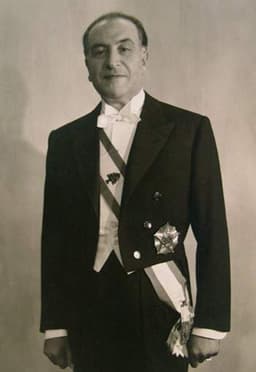
Fuad Chehab
General · Modern
49.9Total
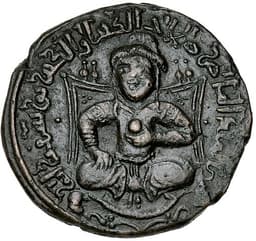
Saladin
General · Medieval
64.1Total
Basic Information
Born
1902
1137
Died
1973
1193
Era
Modern
Medieval
Nationality
Lebanon
Ayyubid Sultanate
Occupation
General
General
Civilization
Middle Eastern
Middle Eastern
Score Comparison
Military (10%)
10.2
75.0
Political (20%)
70.0
69.6
Influence (20%)
54.1
65.2
Legacy (20%)
44.2
52.0
Leadership (15%)
72.0
62.0
Strategy (15%)
30.3
76.0
TOTAL
49.9
64.1
Fuad Chehab — Complete Timeline
1958 AD
Launched Chehabist reforms and modernizationReform◆ Major
President Chehab implemented a series of reforms known as Chehabism, including administrative modernization, economic planning, and strengthening state institutions. He established the Central Bank of Lebanon and the Civil Service Board.
ReformModernizationState Building
Impact: nationalconstructive
Elected President of LebanonPolitical Action◆ Major
Fuad Chehab was elected President of Lebanon on September 23, 1958, succeeding Camille Chamoun. His election ended the 1958 crisis and was supported by both Christian and Muslim factions seeking stability.
PresidencyElectionStabilization
Impact: nationalconstructive
Created the Deuxième Bureau intelligence agencyPolitical Action
Chehab expanded the role of the Deuxi
IntelligenceSecurityAuthoritarianism
Impact: national
1960 AD
Presided over the 1960s economic boomOther
Under Chehab's presidency, Lebanon experienced a period of economic growth and stability, with Beirut becoming a major financial and tourism hub. His policies attracted foreign investment and expanded the middle class.
Economic GrowthBeirutProsperity
Impact: nationalconstructive
1964 AD
Refused to amend constitution for a second termPolitical Action
Chehab declined to seek a second term as president, respecting the constitutional limit. He retired from politics in 1964, setting a precedent for peaceful transitions of power in Lebanon.
ConstitutionTerm LimitRetirement
Impact: nationalconstructive
Saladin — Complete Timeline
1187 AD
Battle of HattinWar
Saladin's forces defeated the Crusader army at Hattin, near Tiberias. He captured King Guy of Jerusalem and the True Cross relic. The victory decimated the Crusader military and opened the way for the recapture of Jerusalem.
BattleCrusadesVictory
Impact: regional
Recapture of JerusalemWar
Saladin's army besieged and captured Jerusalem from the Crusaders after 88 years of Christian rule. He allowed the inhabitants to leave peacefully or be ransomed, contrasting with the Crusaders' massacre in 1099. This event triggered the Third Crusade.
ConquestJerusalemCrusades
Impact: global
1189 AD
Siege of AcreWar◆ Major
Saladin faced a prolonged siege of Acre by Crusader forces under Richard the Lionheart and Philip Augustus. After nearly two years, the city fell to the Crusaders. Saladin's inability to relieve the siege was a major setback.
SiegeCrusadesDefeat
Impact: regional
1191 AD
Battle of ArsufWar◆ Major
Saladin's forces attacked Richard the Lionheart's army marching south from Acre. Richard's disciplined infantry repelled the attacks, inflicting heavy losses on Saladin's troops. The battle ended in a tactical Crusader victory, but Saladin's army remained intact.
BattleCrusadesRichard the Lionheart
Impact: regional
1192 AD
Treaty of RamlaPolitical Action◆ Major
Saladin and Richard the Lionheart signed the Treaty of Ramla, ending the Third Crusade. The treaty granted Crusaders control of a coastal strip from Jaffa to Acre, while Muslims retained Jerusalem. Christian pilgrims were allowed access to holy sites.
TreatyCrusadesDiplomacy
Impact: regional
Expert Analysis
Saladin vs Fuad Chehab
# The Sultan and the General: Two Paths to Power in the Middle East
On a hot July afternoon in 1187, Saladin stood on the slopes of the Horns of Hattin, watching the Crusader army collapse into chaos. The True Cross, holiest relic of Christendom, was about to fall into Muslim hands. Seven centuries later and a thousand miles away, another general would face his own moment of crisis. In 1958, Fuad Chehab watched Beirut burn as factions tore Lebanon apart. Both men were soldiers who became rulers. Both sought to unite fractured lands. Yet one became a legend of chivalry, the other a footnote in textbooks. The difference lies not in their ambitions, but in the worlds they inherited.
Origins
Saladin was born in 1137 in Tikrit, present-day Iraq, into a Kurdish family serving the Zengid dynasty. The Middle East of his youth was a chessboard of warring Muslim emirs, with Crusader kingdoms clinging to the coast. His uncle Shirkuh, a fierce warrior, taught him the art of war. But Saladin absorbed more than tactics. He learned that Muslim disunity was the Crusaders’ greatest ally. His world was one of holy war and dynastic ambition, where a single victory could reshape history.
Fuad Chehab entered the world in 1902, in a very different Middle East. Lebanon was then part of the Ottoman Empire, but its soul was a mosaic of Maronite Christians, Sunni Muslims, Druze, and Greek Orthodox. Chehab came from a prominent Maronite family, but his upbringing was shaped by French military academies and the ethos of modern statecraft. His world was one of sectarian balance and colonial influence, where power meant not conquest but compromise.
Rise to Power
Saladin’s ascent was forged in battle. In 1169, he accompanied Shirkuh to Egypt, then a weakened Shiite caliphate. When Shirkuh died, Saladin, at 32, seized control. He spent years consolidating power, suppressing revolts, and slowly uniting Syria and Egypt under his banner. His key turning point came not on a battlefield but in a mosque: by championing Sunni orthodoxy, he won the loyalty of scholars and merchants, the backbone of Muslim society.
Chehab’s rise was quieter but no less decisive. A career soldier, he became commander of the Lebanese army in 1945, during the fragile early years of independence. He refused to use the military to crush political rivals, earning a reputation for neutrality. When civil war erupted in 1958 between pro-Western President Camille Chamoun and Arab nationalist rebels, Chehab—then army chief—held the military back. His restraint made him the only acceptable compromise candidate. He was elected president on September 23, 1958, not by conquest but by consensus.
Leadership & Governance
Saladin ruled as a medieval sultan, blending military genius with political wisdom. His strategy at Hattin in 1187 was a masterpiece: he lured the Crusaders into a waterless plain, then set the dry grass ablaze, choking them with smoke and thirst. After capturing Jerusalem, he famously spared its Christian inhabitants, a stark contrast to the Crusaders’ massacre of Muslims and Jews in 1099. He fought Richard the Lionheart to a standstill at Arsuf in 1191, then negotiated the Treaty of Ramla in 1192, which preserved Muslim control of Jerusalem while allowing Christian pilgrims access. His leadership was personal, charismatic, and absolute.
Chehab governed as a modern reformer, not a conqueror. His “Chehabism” was a philosophy of state-building: he created a modern civil service, expanded education, and launched infrastructure projects. He established the Deuxième Bureau, a military intelligence agency, to monitor sectarian extremists—a tool that kept peace but also stifled dissent. Under his watch, Beirut boomed as a financial hub. Yet his power was constrained by Lebanon’s delicate confessional system, where every decision required balancing Christians, Muslims, Druze, and others. He could not command; he could only negotiate.
Triumph & Tragedy
Saladin’s greatest triumph was the recapture of Jerusalem in 1187, ending 88 years of Crusader rule. His greatest tragedy came at the Siege of Acre from 1189 to 1191, where he lost the city after a grueling two-year siege. Worse, when Richard executed 2,700 Muslim prisoners outside the walls, Saladin could only watch, powerless. His dream of expelling all Crusaders from the Holy Land remained unfulfilled.
Chehab’s triumph was preventing Lebanon’s collapse in 1958 and presiding over a golden age of stability and growth. His tragedy was that his reforms could not heal Lebanon’s deeper wounds. The Deuxième Bureau became a tool of surveillance, breeding resentment. When he refused a second term in 1964, respecting the constitution, he left a vacuum. A decade after his death in 1973, Lebanon plunged into a 15-year civil war that made his achievements seem fragile.
Character & Destiny
Saladin was driven by a sense of religious duty and personal honor. He wept at his dying son’s bedside and gave gifts to his enemies. His chivalry was not propaganda; it was the expression of a man who believed that how you fought mattered as much as why. That character turned a regional warlord into a symbol of justice, still invoked today.
Chehab was a man of discipline and restraint, a soldier who hated war. He once said, “I do not want to be a president who rules over ruins.” His caution saved Lebanon in 1958 but also limited his vision. He could stabilize, but he could not transform. Where Saladin reshaped history with a sword, Chehab could only manage it with a ledger.
Legacy
Saladin’s legacy is monumental. He is remembered as the chivalrous enemy of Richard the Lionheart, a hero of Islamic history, and a symbol of resistance to colonialism. His Ayyubid dynasty lasted only decades, but his name endures in streets, films, and poems from Cairo to Damascus.
Chehab’s legacy is quieter. He is revered in Lebanon as a rare honest leader, but his reforms were undone by the civil war. His name survives in “Chehabism,” a term for technocratic reform, but few outside Lebanon know it. His total score of 61.2 reflects a solid but unspectacular career—a man who did his duty in impossible circumstances.
Conclusion
Standing at Hattin, Saladin could see a future he could shape with his own hands. Standing in Beirut, Chehab saw a future he could only hold together with patient diplomacy. Both were generals in the Middle East, but one commanded armies, the other commanded balance. One conquered Jerusalem; the other held Beirut together. Their stories remind us that leadership is not a single quality but a response to circumstance. Saladin’s world demanded a sword; Chehab’s demanded a scale. And history, in its impartial way, remembers the sword better than the scale.
Rankings
🥇
SaladinLeader
Mil: 75.0Pol: 69.6Inf: 65.2
64.1
🥈
Fuad Chehab
Mil: 10.2Pol: 70.0Inf: 54.1
49.9
+14.2 behind
How This Comparison Works
Algorithm
Each figure is scored on 6 dimensions (0—100 scale) based on structured historical data: Military (10%), Political (20%), Influence (20%), Legacy (20%), Leadership (15%), Strategy (15%). The weighted total produces the final ranking.
Data Sources
Scores are computed from structured sub-indicators in the database. Scale factors adjust for era (Ancient ×0.85, Modern ×1.0) and civilization size (Eastern ×1.05, Other ×0.80) to account for differences in population and military scale.
Maximum 3 Figures
Comparisons are limited to 2—3 figures to ensure readability and statistical meaningfulness.
Error Margins
±5 points per dimension — Sub-scores are derived from historical records with inherent uncertainty. Two figures within 5 points on a dimension should be considered roughly equivalent in that area.
Total Score Accuracy
±3 points overall — The weighted combination of 6 dimensions produces a total score with approximately ±3 points of uncertainty. Differences of less than 3 points are not statistically significant— the figures are effectively tied.
Known Limitations
- Historical records are incomplete and uneven across civilizations
- Figures from oral-tradition societies may be underrepresented
- Occupation labels can misclassify multi-role figures
- Scores measure capability and impact, not moral character
- Quantitative scoring is a comparison tool, not absolute truth
Capability Radar
Military (10%) — Battles & Warfare
Battles
5
78
Win Rate
5
72
Expansion
5
82
Political (20%) — Governance & Reform
Reform
65
68
Diplomacy
60
88
Economy
50
65
Influence (20%) — Cultural & Global Reach
Cultural
30
85
Global
25
78
Legacy (20%) — Historical Impact
Historical
35
82
Longevity
30
80
Leadership (15%) — Power & Stability
Tenure
55
75
Stability
45
70
Strategy (15%) — Tactics & Innovation
Strategy
10
85
Tactics
10
80
Reform
20
70
Similar Comparisons
Comments & Discussion
折纸将军6/16/2026
别把萨拉丁和谢哈布放一起比,根本不是一个量级。萨拉丁从一个小小的赞吉王朝军官起步,靠血战和外交吞并了埃及、叙利亚,最后连十字军都打碎。谢哈布呢?黎巴嫩那巴掌大的地方,到处是教派割据,他当了六年总统连个真正军队都不敢组建——怕得罪基督徒。一个是有剑有胆的苏丹,一个是举着宪法盾牌的将军。教科书懒得提他,不是没道理。
贝鲁特不眠6/16/2026
谢哈布的问题不是能力弱,是生错了时代。1958年的黎巴嫩已经是一个被美英势力绞烂的棋盘——美军刚登陆贝鲁特海滩,谢哈布坐在总统府里连军队调令都得看美国大使脸色。萨拉丁的幸运在于,他的敌人只有十字军,没有超级大国在背后操控教派。换成谢哈布站在哈丁山脚下,对面不是居伊国王,而是中央情报局和第六舰队,他也赢不了。时代选人,不是人选时代。
Chronicler54796/16/2026
Historians love to contrast Saladin’s pan-Islamic dream with Chehab’s sectarian balancing act, but let’s check the numbers. Saladin spent 16 years fighting other Muslims—Zengids, Artuqids, even his own brother—before he ever took Jerusalem. His “united front” was a fragile patchwork of fear and patronage. Chehab’s Lebanon, for all its flaws, had a functioning parliament, a free press, and no mass executions of prisoners
Chronicler41586/16/2026
You’re all romanticizing Saladin’s “chivalry” while ignoring the human cost. Hattin was a massacre—not just of knights, but of thousands of common soldiers and camp followers. Saladin’s own chronicler Imad ad-Din records he personally ordered the execution of the Knights Templar and Hospitaller afterward. That’s 200+ men beheaded in cold blood. Chehab’s Lebanon saw maybe a few hundred die in the 1958 crisis, and he pulled the army back from sectarian violence. Lower body count, smarter strategy.
Chronicler86876/16/2026
Saladin’s victory at Hattin wasn’t just about military brilliance—it was psychological warfare. By cutting off the Crusaders from water, he broke their will before the first sword swung. Chehab, by contrast, had to use politics as his weapon. His “no victor, no vanquished” approach in 1958 was shrewd, but it avoided true reform. Saladin annihilated his enemy’s army; Chehab just kicked the can down the road. One chose conquest, the other compromise—history favors the bold.