Loading...
Fuad Chehab vs Ranoji Scindia
Ranoji Scindia leads by 7.1 pts · 2 figures compared
…
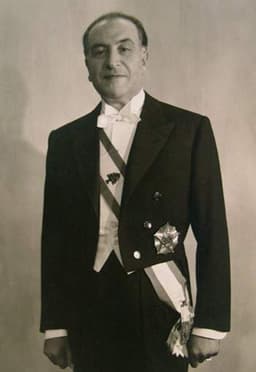
Fuad Chehab
General · Modern
49.9Total
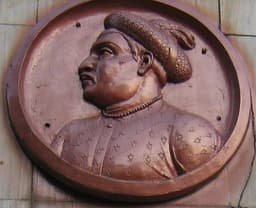
Ranoji Scindia
General · Modern
57.0Total
Basic Information
Born
1902
1700
Died
1973
1745
Era
Modern
Modern
Nationality
Lebanon
India
Occupation
General
General
Civilization
Middle Eastern
Indian
Score Comparison
Military (10%)
10.2
50.0
Political (20%)
70.0
54.7
Influence (20%)
54.1
58.0
Legacy (20%)
44.2
54.0
Leadership (15%)
72.0
65.0
Strategy (15%)
30.3
60.0
TOTAL
49.9
57.0
Fuad Chehab — Complete Timeline
1958 AD
Launched Chehabist reforms and modernizationReform◆ Major
President Chehab implemented a series of reforms known as Chehabism, including administrative modernization, economic planning, and strengthening state institutions. He established the Central Bank of Lebanon and the Civil Service Board.
ReformModernizationState Building
Impact: nationalconstructive
Elected President of LebanonPolitical Action◆ Major
Fuad Chehab was elected President of Lebanon on September 23, 1958, succeeding Camille Chamoun. His election ended the 1958 crisis and was supported by both Christian and Muslim factions seeking stability.
PresidencyElectionStabilization
Impact: nationalconstructive
Created the Deuxième Bureau intelligence agencyPolitical Action
Chehab expanded the role of the Deuxi
IntelligenceSecurityAuthoritarianism
Impact: national
1960 AD
Presided over the 1960s economic boomOther
Under Chehab's presidency, Lebanon experienced a period of economic growth and stability, with Beirut becoming a major financial and tourism hub. His policies attracted foreign investment and expanded the middle class.
Economic GrowthBeirutProsperity
Impact: nationalconstructive
1964 AD
Refused to amend constitution for a second termPolitical Action
Chehab declined to seek a second term as president, respecting the constitutional limit. He retired from politics in 1964, setting a precedent for peaceful transitions of power in Lebanon.
ConstitutionTerm LimitRetirement
Impact: nationalconstructive
Ranoji Scindia — Complete Timeline
1726 AD
Appointed Subedar of MalwaPolitical Action◆ Major
Ranoji Scindia was appointed as the Maratha subedar of Malwa by Peshwa Baji Rao I. This gave him control over a large territory and laid the foundation for the Scindia dynasty of Gwalior.
Maratha EmpireMalwaScindia Dynasty
Impact: regionalconstructive
1737 AD
Battle of DelhiWar◆ Major
Ranoji Scindia participated in the Maratha raid on Delhi under Baji Rao I. The attack on the Mughal capital demonstrated Maratha power and led to the extraction of tribute.
Maratha-Mughal WarsDelhiRaid
Impact: national
1739 AD
Battle of VasaiWar
Ranoji Scindia fought alongside Malhar Rao Holkar in the siege of Vasai against the Portuguese. The victory ended Portuguese control in the Konkan region.
Maratha-Portuguese WarsSiegeKonkan
Impact: regional
1740 AD
Founded Gwalior as CapitalPolitical Action◆ Major
Ranoji Scindia established his capital at Gwalior, fortifying the Gwalior Fort and building a palace. This city became the center of Scindia power for over a century.
FoundingGwaliorScindia Dynasty
Impact: regionalconstructive
1745 AD
Death in BattleWar
Ranoji Scindia was killed in a battle against the Nizam of Hyderabad's forces near the Narmada River. His death occurred during a Maratha campaign to expand into the Deccan.
DeathBattleMaratha-Nizam Wars
Impact: regionaltragic
Expert Analysis
Fuad Chehab vs Ranoji Scindia
# The General and the Reformer: Two Paths to Power in a Fractured World
On September 23, 1958, Fuad Chehab stood before the Lebanese parliament in Beirut, a military uniform still clinging to a man who had spent his career avoiding the very office he now accepted. Half a world away and two centuries earlier, in 1745, Ranoji Scindia fell near the banks of the Narmada River, his body pierced by the weapons of the Nizam of Hyderabad's army. One man died in battle, his dynasty just beginning. The other died in bed, decades later, having refused to cling to power. Both were generals. Both shaped nations. Yet their stories could hardly have diverged more sharply—and the reasons lie not in destiny, but in the soil from which they grew.
Origins
Fuad Chehab was born in 1902 into a Lebanese Maronite family with deep roots in the Ottoman military aristocracy. His grandfather had served as a general under the Ottoman sultan, and young Fuad absorbed the discipline of a fading empire. Lebanon itself was a patchwork of sects—Maronites, Druze, Shia, Sunni, Greek Orthodox—each suspicious of the others. Chehab grew up in a world where the state was weak and loyalties ran to family and faith. He joined the French colonial army, then the Lebanese army after independence, learning early that a soldier's duty was to hold the center when everything else pulled apart.
Ranoji Scindia, born in 1700, emerged from a very different chaos. The Maratha Empire was rising against Mughal decline, and power belonged to those who could seize it. Ranoji came from a humble family of hereditary village heads, but his ambition caught the eye of Peshwa Baji Rao I, the brilliant Brahmin commander who saw in this young man a tool for expansion. In the Maratha world, there was no fixed hierarchy—only the sword and the will to use it. Ranoji learned that loyalty to a patron mattered more than any abstract nation.
Rise to Power
Chehab's path to the presidency was reluctant. In 1958, Lebanon exploded into civil war when President Camille Chamoun tried to amend the constitution for a second term. Muslim factions took up arms; the United States Marines landed on Beirut's beaches. Chehab, as army commander, refused to deploy troops against either side. He kept the military neutral, a decision that made him the only acceptable compromise. On September 23, 1958, he was elected president—not because he sought power, but because he was the one man no faction hated enough to kill.
Ranoji Scindia rose differently. In 1726, the Peshwa appointed him subedar of Malwa, a vast territory wrested from Mughal control. He did not negotiate; he conquered. He fought at the Battle of Delhi in 1737, where Maratha horsemen raided the Mughal capital itself, proving that the old empire was hollow. He besieged Vasai with Malhar Rao Holkar in 1739, driving the Portuguese from their last stronghold on the western coast. Every victory expanded his personal domain. By 1740, he had founded Gwalior as his capital, fortifying its ancient hill fortress and building a palace that would house his descendants for generations. Power, for Ranoji, was something you took with blood and held with steel.
Leadership & Governance
Chehab governed through what became known as Chehabism—a philosophy of state-led modernization that aimed to transcend sectarian divisions. He created the Deuxième Bureau, an intelligence agency that monitored political opponents, but he also launched economic planning, built infrastructure, and strengthened the army as a national institution. During the 1960s economic boom, Beirut became the banking capital of the Middle East, and Chehab's reforms gave the state a role it had never possessed. Yet his methods were paternalistic: he believed the people could not be trusted with democracy until they learned to see themselves as Lebanese first.
Ranoji Scindia ruled as a Maratha chieftain, not a nation-builder. His governance was personal and feudal. He collected tribute, commanded loyalty, and expanded his territory through marriage alliances and military campaigns. He did not create institutions; he created a dynasty. The Gwalior fort became the seat of a family that would later challenge the British, but in Ranoji's time, the state was his household writ large. His strategy was simple: keep the Peshwa's favor, crush your enemies, and leave your sons a bigger domain than you inherited.
Triumph & Tragedy
Chehab's greatest triumph was his refusal to break the constitution. In 1964, with his popularity high and many begging him to stay, he stepped down. He had stabilized a fractured country, given it a decade of peace, and proved that a Lebanese president could leave office voluntarily. His tragedy was that his reforms did not outlive him. The Deuxième Bureau became a tool of repression under his successors; the sectarian system he tried to weaken only grew stronger. He died in 1973, two years before Lebanon's civil war would destroy everything he built.
Ranoji's triumph was Gwalior itself. He died in battle in 1745, fighting the Nizam's forces, but his capital endured. The Scindia dynasty would become one of the most powerful in India, ruling until independence. His tragedy was that he never saw it. He fell at forty-five, his work unfinished, his sons left to fight for the inheritance. Yet in a way, his death was fitting: he was a warrior who died as he lived.
Character & Destiny
Chehab was cautious, introspective, and suspicious of his own ambition. He once said, "I do not want to be a dictator, and I do not want to be a savior." His personality shaped his decisions: he refused power until it was forced on him, then used it sparingly. He believed that a leader's duty was to hold the ring, not to dominate it. This made him effective in crisis but weak in building lasting change—his caution prevented him from confronting the sectarian leaders who would later tear Lebanon apart.
Ranoji was bold, ambitious, and utterly pragmatic. He did not question whether his actions were just; he asked only if they would succeed. His personality drove him to take risks—raiding Delhi, besieging Vasai, founding a capital in hostile territory—and those risks paid off. But the same ambition made him a tool of the Peshwa's expansion, not an independent architect. He was great within his system, not beyond it.
Legacy
Chehab is remembered as Lebanon's most honest president, the one who could have been a dictator but chose not to. His name is still invoked by reformers, and his era is seen as a golden age of stability. Yet his legacy is bittersweet: he proved that a good leader could not save a bad system. The Chehabist dream died with him.
Ranoji Scindia is remembered as the founder of a dynasty that ruled Gwalior for two centuries. The Scindia family survived the British, the Maratha Confederacy's collapse, and India's independence. His name lives in the fort he built, the palace he raised, and the power he passed down. His legacy is tangible, physical, and enduring.
Conclusion
Two generals, two worlds. Chehab tried to build a nation from the wreckage of sectarian hatred, and he failed because the hatred was stronger than the state. Ranoji built a dynasty from the wreckage of an empire, and he succeeded because the dynasty was more real than the nation. One man refused power and was forgotten by history's tide; the other seized it and founded a line that still bears his name. In the end, the difference between them is not talent or courage—it is the soil in which they planted their dreams. Lebanon was not ready for Chehab's vision. India was ready for Ranoji's sword. And history, as always, gave each man what his time demanded.
Rankings
🥇
Ranoji ScindiaLeader
Mil: 50.0Pol: 54.7Inf: 58.0
57.0
🥈
Fuad Chehab
Mil: 10.2Pol: 70.0Inf: 54.1
49.9
+7.1 behind
How This Comparison Works
Algorithm
Each figure is scored on 6 dimensions (0—100 scale) based on structured historical data: Military (10%), Political (20%), Influence (20%), Legacy (20%), Leadership (15%), Strategy (15%). The weighted total produces the final ranking.
Data Sources
Scores are computed from structured sub-indicators in the database. Scale factors adjust for era (Ancient ×0.85, Modern ×1.0) and civilization size (Eastern ×1.05, Other ×0.80) to account for differences in population and military scale.
Maximum 3 Figures
Comparisons are limited to 2—3 figures to ensure readability and statistical meaningfulness.
Error Margins
±5 points per dimension — Sub-scores are derived from historical records with inherent uncertainty. Two figures within 5 points on a dimension should be considered roughly equivalent in that area.
Total Score Accuracy
±3 points overall — The weighted combination of 6 dimensions produces a total score with approximately ±3 points of uncertainty. Differences of less than 3 points are not statistically significant— the figures are effectively tied.
Known Limitations
- Historical records are incomplete and uneven across civilizations
- Figures from oral-tradition societies may be underrepresented
- Occupation labels can misclassify multi-role figures
- Scores measure capability and impact, not moral character
- Quantitative scoring is a comparison tool, not absolute truth
Capability Radar
Military (10%) — Battles & Warfare
Battles
5
45
Win Rate
5
50
Expansion
5
55
Political (20%) — Governance & Reform
Reform
65
30
Diplomacy
60
45
Economy
50
35
Influence (20%) — Cultural & Global Reach
Cultural
30
30
Global
25
30
Legacy (20%) — Historical Impact
Historical
35
50
Longevity
30
55
Leadership (15%) — Power & Stability
Tenure
55
40
Stability
45
40
Strategy (15%) — Tactics & Innovation
Strategy
10
45
Tactics
10
40
Reform
20
35
Similar Comparisons
Comments & Discussion
SteppeSage6/16/2026
Fuad Chehab is vastly overrated by nostalgic Lebanese elites who mistake his indecision for wisdom. The man literally had to be dragged into the presidency and spent his term trying to please everyone—ending up pleasing no one. Compare that to Ranoji Scindia, who died building a dynasty from scratch on a battlefield. Chehab couldn't even secure his own reforms; his tenure is remembered mostly for being a pause between crises. Real power isn't reluctant—it's seized.
沉默分析者6/16/2026
数据不会说谎:切哈布执政六年,黎巴嫩GDP年均增长不到1.6%,而辛迪亚家族在其死后三十年控制了德里以北几乎全部商路。所谓"改革者"面对经济停滞和教派冲突,交出的答卷不过是一纸空文。更讽刺的是,切哈布被吹捧为"中立将军",但他解雇了超过四成高级军官——这算哪门子中立?辛迪亚至少让敌人的头颅滚落瓦达宫台阶。
ClassicsChaser6/16/2026
The real tragedy here is that we're comparing a constitutional figurehead to a warlord. Chehab had parliament, a constitution, and a modern state apparatus—yet he's remembered as "reluctant." Scindia had a horse and a sword, built a kingdom, and died like a Maratha: on his feet. One created the Deuxième Bureau intelligence agency; the other created a dynasty that lasted 150 years. Give me the man who builds, not the man who hesitates.
绿洲守护者6/16/2026
作为贝鲁特人,我必须说:切哈布是黎巴嫩少有的清醒者。他拒绝教派军阀邀请,试图建立国家认同,甚至秘密创建了情报机构来反制外部干涉。辛迪亚?他只是众多掠夺北印度的土邦主之一,靠背叛盟友扩大地盘。切哈布的遗产不是军事胜利,而是"黎巴嫩必须超越教派"的理念——这比任何攻城略地都难。谁都能当军阀,但不是谁都能拒绝王冠。
SpearpointDreamer6/16/2026
Let's not romanticize either man too much. Chehab's Deuxième Bureau became a tool of Maronite dominance that poisoned Lebanese politics for decades. Scindia's Maratha campaigns deliberately burned Mughal libraries and massacred civilians in Delhi in 1753. Both were men of their violent eras, and both failed their highest ideals. But at least Scindia had the honesty to die for his ambition. Chehab kept his uniform, his reputation, and his doubts—while leaving Lebanon no stronger than he found it.