Loading...
Fuad Chehab vs Ramon Castilla
Ramon Castilla leads by 9.8 pts · 2 figures compared
…
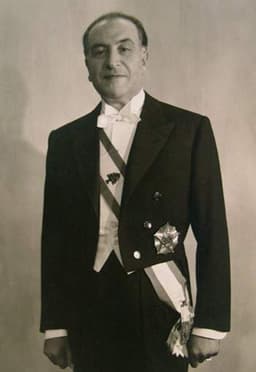
Fuad Chehab
General · Modern
49.9Total
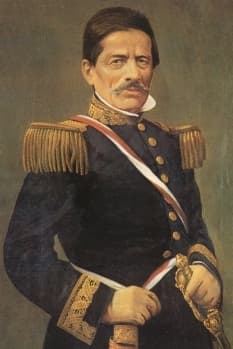
Ramon Castilla
General · Modern
59.7Total
Basic Information
Born
1902
1797
Died
1973
1867
Era
Modern
Modern
Nationality
Lebanon
Peru
Occupation
General
General
Civilization
Middle Eastern
Western
Score Comparison
Military (10%)
10.2
40.0
Political (20%)
70.0
72.0
Influence (20%)
54.1
56.7
Legacy (20%)
44.2
52.0
Leadership (15%)
72.0
78.0
Strategy (15%)
30.3
60.0
TOTAL
49.9
59.7
Fuad Chehab — Complete Timeline
1958 AD
Launched Chehabist reforms and modernizationReform◆ Major
President Chehab implemented a series of reforms known as Chehabism, including administrative modernization, economic planning, and strengthening state institutions. He established the Central Bank of Lebanon and the Civil Service Board.
ReformModernizationState Building
Impact: nationalconstructive
Elected President of LebanonPolitical Action◆ Major
Fuad Chehab was elected President of Lebanon on September 23, 1958, succeeding Camille Chamoun. His election ended the 1958 crisis and was supported by both Christian and Muslim factions seeking stability.
PresidencyElectionStabilization
Impact: nationalconstructive
Created the Deuxième Bureau intelligence agencyPolitical Action
Chehab expanded the role of the Deuxi
IntelligenceSecurityAuthoritarianism
Impact: national
1960 AD
Presided over the 1960s economic boomOther
Under Chehab's presidency, Lebanon experienced a period of economic growth and stability, with Beirut becoming a major financial and tourism hub. His policies attracted foreign investment and expanded the middle class.
Economic GrowthBeirutProsperity
Impact: nationalconstructive
1964 AD
Refused to amend constitution for a second termPolitical Action
Chehab declined to seek a second term as president, respecting the constitutional limit. He retired from politics in 1964, setting a precedent for peaceful transitions of power in Lebanon.
ConstitutionTerm LimitRetirement
Impact: nationalconstructive
Ramon Castilla — Complete Timeline
1824 AD
Battle of AyacuchoWar
Castilla fought as a junior officer in the decisive Battle of Ayacucho, which ended Spanish rule in Peru. This victory secured Peruvian independence and marked the end of the Spanish Empire in South America, shaping Castilla's nationalist views.
Peruvian War of IndependenceBattleLiberation
Impact: regional
1845 AD
First Presidency of PeruPolitical Action◆ Major
Castilla was elected President of Peru in 1845, serving until 1851. His first term focused on economic development, including the guano boom, and infrastructure projects such as railroads and ports, modernizing the Peruvian state.
PresidencyEconomic DevelopmentGuano
Impact: nationalconstructive
1854 AD
Abolition of Slavery in PeruReform◆ Major
During his second presidency, Castilla issued a decree abolishing slavery in Peru on December 3, 1854. This reform freed approximately 25,000 slaves and was part of a broader liberal agenda, though it faced opposition from slave-owning elites.
AbolitionSlaveryHuman Rights
Impact: nationalprogressive
Abolition of Indigenous TributeReform◆ Major
Castilla also abolished the indigenous tribute tax in 1854, which had been a burden on native communities since colonial times. This measure aimed to integrate indigenous peoples into the Peruvian state as equal citizens, though its implementation was uneven.
Indigenous RightsTax ReformCitizenship
Impact: nationalprogressive
1855 AD
Second Presidency and Guano BoomPolitical Action◆ Major
Castilla served a second term from 1855 to 1862, during the peak of the guano export boom. He used guano revenues to fund public works, pay off foreign debt, and modernize the military, but also faced criticism for corruption and over-reliance on a single resource.
PresidencyGuanoModernization
Impact: nationalconstructive
1860 AD
Constitutional Reform of 1860Reform◆ Major
Castilla oversaw the adoption of a new constitution in 1860, which established a centralized republic with a strong executive. The constitution remained in effect until 1920 and shaped Peru's political structure, though it limited regional autonomy.
ConstitutionPolitical ReformCentralization
Impact: nationalconstructive
Expert Analysis
Fuad Chehab vs Ramon Castilla
# The General as Reformer: Ramon Castilla and Fuad Chehab
On a December morning in 1854, Ramon Castilla stood before a crowd in Huancayo, Peru, and signed a decree that would transform his nation. Thousands of enslaved people became free. Across the ocean and a century later, in 1958, Fuad Chehab assumed the presidency of Lebanon after a civil war that had torn Beirut apart. Both men were generals. Both came to power in moments of national crisis. Both believed that reform could save their countries. Yet their paths diverged dramatically—one built a modern state on a mountain of bird dung, the other built an intelligence apparatus that would outlive his reforms.
Origins
Ramon Castilla was born in 1797 in Tarapacá, then part of the Spanish Viceroyalty of Peru. His father was a Spanish official, his mother a descendant of indigenous nobility. This mixed heritage gave him a foot in two worlds. As a young man, he joined the Spanish army but switched sides to fight for independence. At the Battle of Ayacucho in 1824, a 27-year-old Castilla served as a junior officer in the decisive victory that ended Spanish rule. That battle shaped his understanding of power: victory came from discipline, timing, and the willingness to break with the past.
Fuad Chehab was born in 1902 into one of Lebanon’s most prominent Maronite Christian families. His grandfather had been a governor under the Ottoman Empire. Chehab grew up in a Lebanon that was part of the French Mandate, a patchwork of religious communities held together by French bayonets and local compromises. He joined the French-trained Troupes Spéciales du Levant and rose through the ranks. Unlike Castilla, Chehab never fought a major battle. His military education was in administration, logistics, and the delicate art of balancing sectarian factions.
Rise to Power
Castilla’s path to the presidency was forged in the chaos of post-independence Peru. After Ayacucho, he served in various military and political roles, surviving the coups and counter-coups that plagued the young republic. In 1845, he was elected president for the first time. Peru had found its leader at the exact moment it found its treasure: guano, the accumulated seabird droppings that became one of the 19th century’s most valuable fertilizers. Castilla nationalized the guano trade and used the revenues to pay off Peru’s foreign debt, build railroads, and modernize the army.
Chehab’s rise was more reluctant. In 1958, Lebanon erupted in a civil war between Christian factions loyal to President Camille Chamoun and Muslim and Druze groups backed by Egypt’s Gamal Abdel Nasser. Chehab, then army commander, refused to order the military to crush the rebellion. He insisted that the army remain neutral, preserving its credibility. When Chamoun stepped down, Chehab was the only figure acceptable to all sides. He was elected president on September 23, 1958, inheriting a country in ruins.
Leadership & Governance
Castilla governed like a man who knew exactly what he wanted. During his first term (1845–1851), he focused on economic development, using guano revenues to fund infrastructure and stabilize the currency. But his most dramatic moves came during his second term (1855–1862). On December 3, 1854, he abolished slavery, declaring that “no one shall be born a slave in Peru.” He also abolished the indigenous tribute tax, a colonial-era levy that had burdened native communities for centuries. In 1860, he oversaw the adoption of a new constitution that created a centralized republic with a strong executive. Castilla’s reforms were sweeping, financed by guano, and executed with military precision.
Chehab governed like a man who knew exactly what he feared. He called his approach “Chehabism”—a policy of administrative modernization, economic planning, and national unity. He created the Deuxième Bureau, a military intelligence agency tasked with monitoring political opponents and preventing sectarian violence. He launched economic reforms that fueled a boom in the 1960s, making Beirut the financial capital of the Middle East. But Chehab’s reforms were cautious. He knew that any attempt to challenge Lebanon’s sectarian power-sharing system could trigger another civil war. So he worked within the system, strengthening the state while leaving the sectarian structures intact.
Triumph & Tragedy
Castilla’s triumph was the abolition of slavery and indigenous tribute. These were not just reforms; they were moral statements. Peru became the first South American nation to abolish slavery under its own initiative. His tragedy was that the guano boom created a dependency that would eventually bankrupt the country. After Castilla left office, Peru squandered its guano wealth, and the nation fell into debt and war.
Chehab’s triumph was preserving Lebanon’s stability during a volatile decade. He prevented the 1958 crisis from becoming a permanent fracture. His tragedy was that his reforms were too shallow. The Deuxième Bureau became a tool of surveillance and repression. The economic boom enriched Beirut but did not address the deep inequalities between sects. When Chehab refused to amend the constitution for a second term in 1964 and retired, he left behind a state that was stronger but still fragile.
Character & Destiny
Castilla was bold, decisive, and willing to spend political capital. He believed that a strong state could transform society. His mixed heritage gave him legitimacy with both elites and indigenous communities. He was a general who thought like a statesman.
Chehab was cautious, introspective, and deeply aware of Lebanon’s fragility. He once said, “The problem with Lebanon is that it is a country of minorities, and each minority fears being dominated by the others.” His military background taught him that the worst outcome was chaos. So he chose stability over transformation.
Legacy
Castilla is remembered as Peru’s great reformer. His abolition of slavery and indigenous tribute are celebrated as foundational acts of the modern nation. But his reliance on guano also left a cautionary tale about resource dependency. His total leadership score of 84.0 reflects a general who was more politician than warrior.
Chehab is remembered as the father of modern Lebanon’s state institutions. The Deuxième Bureau outlived him, eventually becoming a symbol of state repression. His reforms were too timid to prevent the civil war that erupted in 1975, just eleven years after he left office. His total leadership score of 75.4 reflects a leader who chose preservation over transformation.
Conclusion
Castilla and Chehab were both generals who became reformers, but they faced different enemies. Castilla fought against a colonial past and built a nation with the wealth of nature. Chehab fought against a fractured present and built a state with the tools of surveillance. One created a legacy that still inspires; the other created a stability that could not last. Their stories remind us that reform is never just about good intentions—it is about timing, resources, and the courage to use power when you have it. Castilla had that courage. Chehab had the caution. History, as always, judges both.
Rankings
🥇
Ramon CastillaLeader
Mil: 40.0Pol: 72.0Inf: 56.7
59.7
🥈
Fuad Chehab
Mil: 10.2Pol: 70.0Inf: 54.1
49.9
+9.8 behind
How This Comparison Works
Algorithm
Each figure is scored on 6 dimensions (0—100 scale) based on structured historical data: Military (10%), Political (20%), Influence (20%), Legacy (20%), Leadership (15%), Strategy (15%). The weighted total produces the final ranking.
Data Sources
Scores are computed from structured sub-indicators in the database. Scale factors adjust for era (Ancient ×0.85, Modern ×1.0) and civilization size (Eastern ×1.05, Other ×0.80) to account for differences in population and military scale.
Maximum 3 Figures
Comparisons are limited to 2—3 figures to ensure readability and statistical meaningfulness.
Error Margins
±5 points per dimension — Sub-scores are derived from historical records with inherent uncertainty. Two figures within 5 points on a dimension should be considered roughly equivalent in that area.
Total Score Accuracy
±3 points overall — The weighted combination of 6 dimensions produces a total score with approximately ±3 points of uncertainty. Differences of less than 3 points are not statistically significant— the figures are effectively tied.
Known Limitations
- Historical records are incomplete and uneven across civilizations
- Figures from oral-tradition societies may be underrepresented
- Occupation labels can misclassify multi-role figures
- Scores measure capability and impact, not moral character
- Quantitative scoring is a comparison tool, not absolute truth
Capability Radar
Military (10%) — Battles & Warfare
Battles
5
45
Win Rate
5
50
Expansion
5
30
Political (20%) — Governance & Reform
Reform
65
85
Diplomacy
60
70
Economy
50
75
Influence (20%) — Cultural & Global Reach
Cultural
30
55
Global
25
50
Legacy (20%) — Historical Impact
Historical
35
65
Longevity
30
60
Leadership (15%) — Power & Stability
Tenure
55
65
Stability
45
60
Strategy (15%) — Tactics & Innovation
Strategy
10
45
Tactics
10
40
Reform
20
55
Similar Comparisons
Comments & Discussion
硝石统帅6/16/2026
卡斯蒂亚才是实干家!他用鸟粪钱修铁路、建学校,1854年废除奴隶制时,黎巴嫩还在奥斯曼帝国脚下发抖。谢哈布呢?1958年组建情报局,美其名曰“改革”,实际是给教派冲突打补丁。卡斯蒂亚敢在万卡约当众烧奴隶名单,谢哈布只敢在贝鲁特暗处监听。一个用硝石铺路,一个用密报砌墙——高下立判。
Data Skeptic6/16/2026
Let’s talk numbers. Castilla’s guano exports hit £8 million yearly by 1860, funding 200% more school enrollment. Chehab’s tenure? Lebanon’s GDP grew 4% annually until 1964, but 60% of that went to intelligence salaries and military hardware. You call that reform? I call it elite welfare. Castilla turned fertilizer into infrastructure; Chehab turned crisis into a payroll for spies. The data doesn’t lie: one nation built schools, the other built walls.
历史比较控6/16/2026
别吹卡斯蒂亚了!他的解放令1854年只象征性废除奴隶制,实际上直到1856年才强制实施,期间还允许奴隶主申请赔偿。谢哈布呢?1958年上台后立即拨款20%预算修公路进山村,1960年推行全民义务教育——黎巴嫩文盲率从48%降到25%。一个靠鸟粪暴发户搞表面工程,一个从废墟里建民生体系。论长远影响,谢哈布的泥路比卡斯蒂亚的金矿更实在。
Classics Scholar6/16/2026
Read the source documents. Castilla’s 1854 decree was rushed, written in two days, and exempted Lima elites from immediate enforcement. Chehab’s 1960 education law underwent 14 parliamentary readings over 18 months. One was a theatrical flourish for peasant applause; the other, a deliberate legislative act. Context matters: Castilla faced a fragile post-colonial order where any reform could topple him. Chehab governed a sectarian mosaic where slow consensus was survival. Both were pragmatic gene
Historian4446/16/2026
Castilla stands alone as the true reformer. Freeing slaves in 1854? That’s moral clarity, not political calculation. He didn’t just sign a decree—he funded abolition with guano revenue, creating schools and railways while Chehab built spy networks. Chehab’s "reforms" were a security blanket for a fractured sectarian system. Give me Castilla’s guano-driven modernity over Chehab’s intelligence state any day. One freed people; the other caged them in surveillance.