Loading...
Fuad Chehab vs Plutarco Elias Calles
Plutarco Elias Calles leads by 8.6 pts · 2 figures compared
…
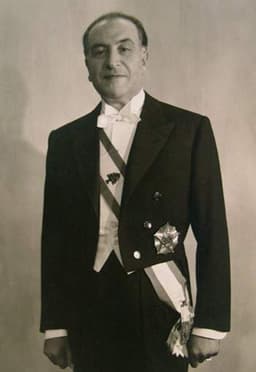
Fuad Chehab
General · Modern
49.9Total
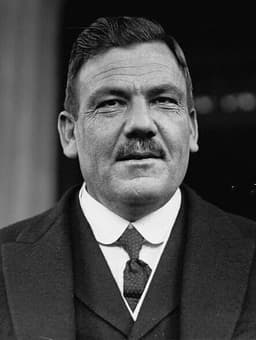
Plutarco Elias Calles
General · Modern
58.5Total
Basic Information
Born
1902
1877
Died
1973
1945
Era
Modern
Modern
Nationality
Lebanon
Mexico
Occupation
General
General
Civilization
Middle Eastern
Western
Score Comparison
Military (10%)
10.2
40.0
Political (20%)
70.0
70.3
Influence (20%)
54.1
68.0
Legacy (20%)
44.2
40.0
Leadership (15%)
72.0
78.0
Strategy (15%)
30.3
52.5
TOTAL
49.9
58.5
Fuad Chehab — Complete Timeline
1958 AD
Launched Chehabist reforms and modernizationReform◆ Major
President Chehab implemented a series of reforms known as Chehabism, including administrative modernization, economic planning, and strengthening state institutions. He established the Central Bank of Lebanon and the Civil Service Board.
ReformModernizationState Building
Impact: nationalconstructive
Elected President of LebanonPolitical Action◆ Major
Fuad Chehab was elected President of Lebanon on September 23, 1958, succeeding Camille Chamoun. His election ended the 1958 crisis and was supported by both Christian and Muslim factions seeking stability.
PresidencyElectionStabilization
Impact: nationalconstructive
Created the Deuxième Bureau intelligence agencyPolitical Action
Chehab expanded the role of the Deuxi
IntelligenceSecurityAuthoritarianism
Impact: national
1960 AD
Presided over the 1960s economic boomOther
Under Chehab's presidency, Lebanon experienced a period of economic growth and stability, with Beirut becoming a major financial and tourism hub. His policies attracted foreign investment and expanded the middle class.
Economic GrowthBeirutProsperity
Impact: nationalconstructive
1964 AD
Refused to amend constitution for a second termPolitical Action
Chehab declined to seek a second term as president, respecting the constitutional limit. He retired from politics in 1964, setting a precedent for peaceful transitions of power in Lebanon.
ConstitutionTerm LimitRetirement
Impact: nationalconstructive
Plutarco Elias Calles — Complete Timeline
1915 AD
Governorship of SonoraPolitical Action
Calles served as Governor of Sonora from 1915 to 1919, implementing radical reforms including land redistribution, anti-clerical laws, and labor rights. His governorship established him as a key figure in the Sonoran dynasty and a proponent of revolutionary change.
GovernorshipSonoraReforms
Impact: regionalconstructive
1924 AD
Presidency of MexicoPolitical Action◆ Major
Calles was elected President of Mexico in 1924, serving until 1928. His administration continued revolutionary reforms, including land reform, labor rights, and secularization, but also faced opposition from the Catholic Church and conservative groups.
PresidencyMexican RevolutionReforms
Impact: nationalconstructive
1926 AD
Cristero WarWar◆ Major
Calles enforced anti-clerical laws, including the Calles Law, which restricted the Catholic Church's role in society. This sparked the Cristero War (1926-1929), a violent rebellion by Catholic peasants against the state, resulting in tens of thousands of deaths.
Cristero WarAnti-clericalismReligious Conflict
Impact: nationaldestructive
1928 AD
MaximatoPolitical Action◆ Major
After his presidency, Calles remained the de facto ruler of Mexico during the Maximato (1928-1934), controlling puppet presidents. He continued to influence policy, but his power waned as President L
MaximatoPolitical ControlCárdenas
Impact: national
1929 AD
Founding of the National Revolutionary Party (PNR)Political Action
Calles founded the National Revolutionary Party (PNR) in 1929, which later became the Institutional Revolutionary Party (PRI). This party dominated Mexican politics for over 70 years, institutionalizing the revolution's legacy and centralizing power.
Political PartyPRIInstitutionalization
Impact: nationalconstructive
Expert Analysis
Fuad Chehab vs Plutarco Elias Calles
# The General Who Would Not Let Go, and the General Who Would Not Hold On
On a sweltering July morning in 1926, Mexico’s President Plutarco Elías Calles signed into law a set of decrees that would ignite a civil war. The Calles Law, as it came to be known, stripped the Catholic Church of its property, banned religious orders, and forbade priests from wearing their vestments in public. Across the Atlantic, three decades later, another general-president faced a very different crisis. When Lebanon’s Fuad Chehab took office in September 1958, he inherited a country still bleeding from a sectarian conflict that had nearly torn it apart. Where Calles chose to crush his enemies with fire, Chehab chose to embrace them with a policy of reconciliation. Two generals, two presidents, two utterly different answers to the same question: what does it mean to lead a fractured nation?
Origins
Plutarco Elías Calles was born in 1877 in Guaymas, Sonora, into the hardscrabble world of Mexico’s northern frontier. His father died when he was young, and Calles worked as a bartender, a baker, and a schoolteacher before the Mexican Revolution gave him a rifle and a cause. The revolution shaped him into a man who saw politics as war by other means—brutal, decisive, and unyielding. He believed that Mexico’s backwardness stemmed from the grip of the Catholic Church and the old landed elite, and that only a strong, secular state could drag the country into the modern age.
Fuad Chehab, born in 1902 in the mountain village of Ghazir, came from a very different world. He was a scion of Lebanon’s Maronite Christian aristocracy, educated at French military academies, and steeped in the traditions of the Ottoman Empire’s successor states. Lebanon was a mosaic of sects—Maronites, Sunnis, Shia, Druze, Greek Orthodox—held together by a fragile power-sharing agreement. Chehab grew up believing that the state’s only hope was to stand above the sects, not to crush them.
Rise to Power
Calles rose through the ranks of the revolutionary army, proving himself a capable administrator and a ruthless commander. In 1915, he became Governor of Sonora, where he immediately began redistributing land and attacking the Church’s influence. His governorship was a laboratory for the policies he would later impose on all of Mexico. By 1924, when he was elected president, Calles had already established himself as the iron fist of the revolution.
Chehab’s path was slower and more reluctant. He served as commander of the Lebanese army during the 1958 crisis, when President Camille Chamoun’s attempt to align Lebanon with the West against Nasser’s Egypt sparked a Muslim uprising. Chehab refused to order the army to crush the rebels, arguing that a military crackdown would destroy what remained of national unity. Instead, he brokered a truce, and when Chamoun stepped down, Chehab was elected president as the compromise candidate—a general who had proven he would not use his army to slaughter his own people.
Leadership & Governance
Calles governed with a hammer. His presidency from 1924 to 1928 was a whirlwind of reform and repression. He nationalized church properties, closed monasteries, and expelled foreign priests. When the Church resisted, he enforced the Calles Law with a brutality that sparked the Cristero War of 1926–1929, a bloody rebellion that killed an estimated 90,000 people. Calles did not flinch. He saw the war as a necessary purification. After his term ended, he did not leave power—he created the Maximato, a shadow presidency in which he controlled three puppet presidents from 1928 to 1934. In 1929, he founded the National Revolutionary Party (PNR), the political machine that would evolve into the Institutional Revolutionary Party (PRI) and dominate Mexico for seven decades.
Chehab governed with a scalpel. His Chehabist reforms aimed to modernize Lebanon’s administration, create a professional civil service, and reduce sectarian patronage. He established the Deuxième Bureau, a military intelligence agency that monitored politicians from all sects, keeping them honest through surveillance rather than violence. Under his presidency, Lebanon experienced an economic boom in the early 1960s, with Beirut blossoming into the financial capital of the Middle East. But Chehab’s greatest act of governance was his refusal to seek a second term in 1964. He respected the constitution and stepped down, hoping to set a precedent for peaceful, lawful transitions.
Triumph & Tragedy
Calles’s greatest triumph was building the PRI, a political party so durable that it would rule Mexico for seventy-one years. But his tragedy was the Cristero War, a conflict born of his own intransigence. He could have compromised with the Church; he chose not to. The war scarred Mexico’s soul, and the hatred it bred lingered for generations.
Chehab’s greatest triumph was saving Lebanon from disintegration in 1958. His tragedy was that his reforms did not take root. The Deuxième Bureau became a tool of repression in later hands. The sectarian system he tried to reform remained intact. And when he left office, Lebanon slipped back into the same old patterns, culminating in the catastrophe of the 1975–1990 civil war.
Character & Destiny
Calles was a man of iron will, convinced that history was on his side. He believed that the ends justified the means, that a generation of suffering was a fair price for a century of progress. His personality was forged in the crucible of revolution, where mercy was weakness and victory was everything. That same personality made him incapable of compromise, and that incapacity led him to create a political machine that would outlive him but also entrench corruption and authoritarianism.
Chehab was a man of deep caution, a soldier who had seen enough war to dread it. He believed that the state must be an honest broker, not a partisan warrior. His personality was shaped by Lebanon’s fragility—he knew that any misstep could shatter the mosaic. That caution made him a wise president but a hesitant reformer. He tried to change Lebanon without breaking it, and perhaps that was impossible.
Legacy
Calles is remembered as the father of modern Mexico’s political system, but also as the man who lit the fires of the Cristero War. His PRI ruled for decades, but its legacy is mixed: stability bought at the price of democracy. Today, Mexicans debate whether Calles was a visionary or a tyrant, or both.
Chehab is remembered as Lebanon’s most honest president, a rare figure who put the nation above his own ambition. But his legacy is fragile, a memory of what could have been. In a country where sectarianism has only deepened, Chehabism is a lost ideal, a road not taken.
Conclusion
Two generals, two nations, two destinies. Calles believed that the state must be strong enough to crush its enemies; Chehab believed it must be wise enough to embrace them. Calles built a machine that lasted; Chehab built a moment that faded. Perhaps the difference lies in their nations: Mexico’s revolution demanded a bulldozer, while Lebanon’s mosaic required a surgeon. Or perhaps it lies in their souls: one man could not stop fighting, and the other could not start. In the end, both were prisoners of their times, and both left behind the same question: how much force does it take to hold a country together, and how much forgiveness does it take to let it heal?
Rankings
🥇
Plutarco Elias CallesLeader
Mil: 40.0Pol: 70.3Inf: 68.0
58.5
🥈
Fuad Chehab
Mil: 10.2Pol: 70.0Inf: 54.1
49.9
+8.6 behind
How This Comparison Works
Algorithm
Each figure is scored on 6 dimensions (0—100 scale) based on structured historical data: Military (10%), Political (20%), Influence (20%), Legacy (20%), Leadership (15%), Strategy (15%). The weighted total produces the final ranking.
Data Sources
Scores are computed from structured sub-indicators in the database. Scale factors adjust for era (Ancient ×0.85, Modern ×1.0) and civilization size (Eastern ×1.05, Other ×0.80) to account for differences in population and military scale.
Maximum 3 Figures
Comparisons are limited to 2—3 figures to ensure readability and statistical meaningfulness.
Error Margins
±5 points per dimension — Sub-scores are derived from historical records with inherent uncertainty. Two figures within 5 points on a dimension should be considered roughly equivalent in that area.
Total Score Accuracy
±3 points overall — The weighted combination of 6 dimensions produces a total score with approximately ±3 points of uncertainty. Differences of less than 3 points are not statistically significant— the figures are effectively tied.
Known Limitations
- Historical records are incomplete and uneven across civilizations
- Figures from oral-tradition societies may be underrepresented
- Occupation labels can misclassify multi-role figures
- Scores measure capability and impact, not moral character
- Quantitative scoring is a comparison tool, not absolute truth
Capability Radar
Military (10%) — Battles & Warfare
Battles
5
45
Win Rate
5
50
Expansion
5
30
Political (20%) — Governance & Reform
Reform
65
85
Diplomacy
60
65
Economy
50
60
Influence (20%) — Cultural & Global Reach
Cultural
30
70
Global
25
60
Legacy (20%) — Historical Impact
Historical
35
75
Longevity
30
70
Leadership (15%) — Power & Stability
Tenure
55
70
Stability
45
55
Strategy (15%) — Tactics & Innovation
Strategy
10
55
Tactics
10
40
Reform
20
60
Similar Comparisons
Comments & Discussion
IronGeneral6/16/2026
Calles had the right diagnosis—clerical feudalism was strangling Mexico—but the wrong prescription. His 1926 Law that banned religious orders wasn't just harsh; it was strategically suicidal. The Cristero War cost 250,000 lives for what? A negotiated settlement six years later that gave the Church almost everything it wanted underground. Chehab understood that force without flexibility is just organized stupidity. Calles would've burned Beirut to the ground. That's why Mexico still limps, while
水泥锤6/16/2026
Calles 是典型的革命后强人幻觉患者。他忘了一件事:墨西哥人可能恨教士,但他们更恨政府抢走他们的礼拜堂。1926 年那套法令根本不是在打击教会,而是在给自己的政权挖坟。想想看,一个总统逼得数百万农民举着“基督为王”的旗子造反,这不叫领导力,这叫疯子治国。Chehab 比他高明太多了——他知道在一个教派分立的烂摊子里,有时候示弱才是真强势。
RegnumMundi6/16/2026
所有现代主义者都在嘲笑 Calles 的“野蛮”,但别忘了历史的上下文:墨西哥革命死了上百万人才勉强建立了一个世俗国家。Calles 不是反教权,他是在防火——挡住教会那条随时可能死灰复燃的咬人狗。问题在于他选了审判员而不是谈判员的角色。Chehab 的路看起来更“文明”,但在黎巴嫩那种每一条教派红线都是地雷的国家,“和平共处”本来就是一场永久的乞求。两人殊途同归:脆弱的和平都是自欺欺人。
StatistReaper6/16/2026
Let's stop lionizing Chehab as some enlightened peacemaker. His “reconciliation” in 1958 was just institutionalized paralysis dressed up as statesmanship. He gave every sect a veto, then called it stability. Meanwhile, Calles actually *governed*—yes, brutally, but he broke the Church's political spine for decades. The Cristero War was terrible, sure, but Mexico didn't descend into Lebanon's 15-year hell. Sometimes the strong hand wins by losing the right battle. Chehab's legacy? A state so weak
BayonetDiplomat6/16/2026
The real difference isn't philosophy—it's timing. Calles struck when Mexico's revolutionary state had the muscle to absorb a punch. Chehab took power *because* the punch had already landed. Calles in 1926 had an army fresh from ten years of civil war, disciplined and loyal. Chehab in 1958 commanded a military that fractured along sectarian lines within weeks. Two generals, yes—but one chose war because