Loading...
Fuad Chehab vs Olusegun Obasanjo
Olusegun Obasanjo leads by 10.3 pts · 2 figures compared
…
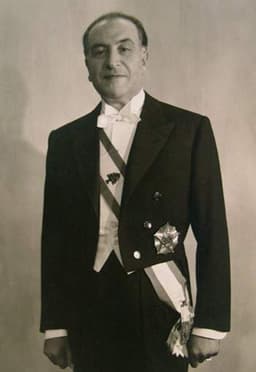
Fuad Chehab
General · Modern
49.9Total
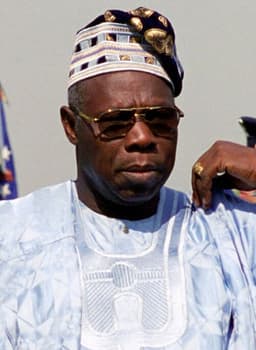
Olusegun Obasanjo
General · Modern
60.2Total
Basic Information
Born
1902
1937
Died
1973
—
Era
Modern
Modern
Nationality
Lebanon
Nigeria
Occupation
General
General
Civilization
Middle Eastern
Other
Score Comparison
Military (10%)
10.2
45.0
Political (20%)
70.0
72.0
Influence (20%)
54.1
55.0
Legacy (20%)
44.2
54.0
Leadership (15%)
72.0
78.0
Strategy (15%)
30.3
60.0
TOTAL
49.9
60.2
Fuad Chehab — Complete Timeline
1958 AD
Launched Chehabist reforms and modernizationReform◆ Major
President Chehab implemented a series of reforms known as Chehabism, including administrative modernization, economic planning, and strengthening state institutions. He established the Central Bank of Lebanon and the Civil Service Board.
ReformModernizationState Building
Impact: nationalconstructive
Elected President of LebanonPolitical Action◆ Major
Fuad Chehab was elected President of Lebanon on September 23, 1958, succeeding Camille Chamoun. His election ended the 1958 crisis and was supported by both Christian and Muslim factions seeking stability.
PresidencyElectionStabilization
Impact: nationalconstructive
Created the Deuxième Bureau intelligence agencyPolitical Action
Chehab expanded the role of the Deuxi
IntelligenceSecurityAuthoritarianism
Impact: national
1960 AD
Presided over the 1960s economic boomOther
Under Chehab's presidency, Lebanon experienced a period of economic growth and stability, with Beirut becoming a major financial and tourism hub. His policies attracted foreign investment and expanded the middle class.
Economic GrowthBeirutProsperity
Impact: nationalconstructive
1964 AD
Refused to amend constitution for a second termPolitical Action
Chehab declined to seek a second term as president, respecting the constitutional limit. He retired from politics in 1964, setting a precedent for peaceful transitions of power in Lebanon.
ConstitutionTerm LimitRetirement
Impact: nationalconstructive
Olusegun Obasanjo — Complete Timeline
1976 AD
Military coup that brought Obasanjo to powerPolitical Action
Following the assassination of General Murtala Mohammed in a failed coup, Obasanjo, as Chief of Staff, Supreme Headquarters, succeeded him as head of state. He oversaw the continuation of the transition to civilian rule.
CoupSuccessionMilitary Rule
Impact: national
1979 AD
Handover of power to civilian governmentPolitical Action
Obasanjo voluntarily handed over power to the elected civilian government of Shehu Shagari, marking the first peaceful transfer of power from military to civilian rule in Nigeria. This act established a precedent for democratic transition.
DemocracyTransitionCivilian Rule
Impact: nationalconstructive
1999 AD
Election as President of NigeriaPolitical Action
Obasanjo won the 1999 Nigerian presidential election as the candidate of the People's Democratic Party (PDP). His victory ended 16 years of military rule and began the Fourth Nigerian Republic.
ElectionDemocracyFourth Republic
Impact: nationalprogressive
2005 AD
Debt relief from Paris ClubPolitical Action◆ Major
Obasanjo's government negotiated a debt relief agreement with the Paris Club, resulting in the cancellation of $18 billion of Nigeria's external debt. This freed up resources for domestic spending and was a major economic achievement.
Debt ReliefEconomyNegotiation
Impact: nationalconstructive
2006 AD
Third term bid failurePolitical Action◆ Major
Obasanjo attempted to amend the Nigerian constitution to allow him to run for a third term. The bid was rejected by the National Assembly, marking a significant political defeat and reinforcing term limits.
Third TermConstitutionDefeat
Impact: national
Expert Analysis
Fuad Chehab vs Olusegun Obasanjo
# The General Who Wouldn't Stay
On a September morning in 1958, Fuad Chehab stepped into the presidential palace in Beirut, a reluctant victor. He had just been elected to end a bloody civil war, but the man who now held Lebanon's fate was a soldier who had never wanted power. Half a world away and two decades later, another general, Olusegun Obasanjo, found himself in a similar position—thrust into leadership after a bullet had felled his predecessor. Both men wore uniforms. Both inherited fractured nations. But their paths would diverge in ways that reveal the strange alchemy between a leader's character and a country's destiny.
Origins
Chehab was born into Lebanon's feudal aristocracy in 1902, a Maronite Christian from a family that had produced patriarchs and warriors. The Ottoman Empire was crumbling, and the young Chehab grew up in a Lebanon that was less a nation than a patchwork of sects—Maronites, Sunnis, Shia, Druze—each with its own loyalties. He joined the French-sponsored military, rising through ranks where discipline was absolute and politics was a forbidden game. This military detachment from the messy business of sectarian bargaining would define him.
Obasanjo, born in 1937 in rural southwestern Nigeria, came from a different world entirely. The son of a farmer, he joined the Nigerian army when it was still a British colonial force. Nigeria, like Lebanon, was an artificial creation—a jumble of Yoruba, Hausa, Igbo, and hundreds of other groups thrown together by imperial cartographers. But unlike Chehab's Lebanon, where sectarianism was ancient and entrenched, Nigeria's ethnic divisions were raw and new, inflamed by the discovery of oil and the bitterness of civil war.
Rise to Power
Chehab's rise was reluctant. In 1958, when President Camille Chamoun's attempt to stay in power sparked a rebellion, the army was ordered to crush the insurgents. Chehab refused. "The army does not fire on its people," he reportedly said—a decision that earned him the trust of both sides. When the crisis ended, he was the only man acceptable to everyone. He took office not as a conqueror but as a mediator, a general who had won his greatest battle by not fighting.
Obasanjo's path was bloodier. In 1976, General Murtala Mohammed, Nigeria's military ruler, was assassinated in a coup. Obasanjo, as his second-in-command, could have seized absolute power. Instead, he stabilized the regime and announced a plan: he would hand power to civilians within three years. In 1979, he kept his word, stepping down for Shehu Shagari. It was the first peaceful transfer of power in Nigeria's history—a moment of such rare grace that it still glows in the country's memory.
Leadership & Governance
Chehab's presidency was an experiment in what became known as "Chehabism"—a philosophy of strong, technocratic government that would rise above sectarian squabbling. He created the Deuxième Bureau, an intelligence agency that watched everyone, from politicians to journalists. "I am not a dictator," Chehab insisted, "but Lebanon needs order." He poured money into infrastructure, modernized the bureaucracy, and presided over Beirut's golden age as the "Paris of the Middle East." Yet his reforms were hollow. The Deuxième Bureau became a tool of surveillance, not justice. The economy boomed, but the wealth pooled in the hands of the same old families. Chehab tried to fix Lebanon's sectarian system from above, but he never dared to break it.
Obasanjo's first term as military ruler was brief but decisive. He inherited a country bleeding from years of military misrule. His genius was timing: he understood that Nigeria was not ready for democracy, but he also knew that it would never be ready unless someone took the risk. His handover in 1979 was a masterstroke—it earned him a credibility that no other Nigerian leader possessed.
When he returned as elected president in 1999, after years in prison under the dictator Sani Abacha, Obasanjo was a different man. He was harder, more pragmatic. He faced a country in ruins—a collapsed economy, a military that had raped its own people, and a debt of $30 billion. He negotiated debt relief from the Paris Club in 2005, canceling $18 billion. He pushed through reforms that stabilized the banking system. But his methods were rough. He purged the military, silenced critics, and used the police as his personal weapon. Nigeria's democracy survived, but it was a bruised, limping thing.
Triumph & Tragedy
Chehab's greatest moment was his exit. In 1964, despite immense pressure to amend the constitution and stay, he refused. "Power is a disease," he said, "and I have no wish to be a patient." He retired to his village, leaving behind a Lebanon that was peaceful, prosperous, and utterly unchanged. The sectarian demons he had tried to cage were still there, waiting. A decade after his death in 1973, they would tear the country apart.
Obasanjo's tragedy was his third-term bid. In 2006, after two terms as elected president, he tried to change the constitution to run again. The Nigerian Senate rejected it. For a man who had once voluntarily surrendered power, this desperate grab was a betrayal of his own legacy. It revealed a truth about Obasanjo: he believed he was indispensable. And in a country as fragile as Nigeria, that belief was both his strength and his poison.
Character & Destiny
Chehab was a man of restraint. He was cautious, almost to a fault. He saw Lebanon's problems clearly, but he lacked the ruthlessness to solve them. He was a surgeon who refused to cut deep. Obasanjo was a man of action. He was bold, sometimes reckless. He could break a country to save it—but he could also break it for himself. Chehab's flaw was timidity; Obasanjo's was arrogance.
Legacy
Today, Chehab is remembered as Lebanon's greatest president—a symbol of what might have been. His name is invoked by reformers who dream of a Lebanon that works, but his Chehabism is dead. The system he tried to tame consumed him and his ideals.
Obasanjo is more contested. To his admirers, he saved Nigeria twice—first by leaving power, then by returning to stabilize it. To his critics, he was a bully who deepened corruption while pretending to fight it. The truth lies somewhere in between. He is still alive, still meddling, still trying to shape a country that refuses to be shaped.
Conclusion
Two generals, two nations, two different answers to the same question: What does it mean to lead a fractured people? Chehab believed in order without force; Obasanjo believed in force without order. Neither fully succeeded. But perhaps that is the curse of the general who becomes a president—he is trained to command, not to heal. And in countries where the wounds are centuries old, no amount of military discipline can stitch them shut.
Rankings
🥇
Olusegun ObasanjoLeader
Mil: 45.0Pol: 72.0Inf: 55.0
60.2
🥈
Fuad Chehab
Mil: 10.2Pol: 70.0Inf: 54.1
49.9
+10.3 behind
How This Comparison Works
Algorithm
Each figure is scored on 6 dimensions (0—100 scale) based on structured historical data: Military (10%), Political (20%), Influence (20%), Legacy (20%), Leadership (15%), Strategy (15%). The weighted total produces the final ranking.
Data Sources
Scores are computed from structured sub-indicators in the database. Scale factors adjust for era (Ancient ×0.85, Modern ×1.0) and civilization size (Eastern ×1.05, Other ×0.80) to account for differences in population and military scale.
Maximum 3 Figures
Comparisons are limited to 2—3 figures to ensure readability and statistical meaningfulness.
Error Margins
±5 points per dimension — Sub-scores are derived from historical records with inherent uncertainty. Two figures within 5 points on a dimension should be considered roughly equivalent in that area.
Total Score Accuracy
±3 points overall — The weighted combination of 6 dimensions produces a total score with approximately ±3 points of uncertainty. Differences of less than 3 points are not statistically significant— the figures are effectively tied.
Known Limitations
- Historical records are incomplete and uneven across civilizations
- Figures from oral-tradition societies may be underrepresented
- Occupation labels can misclassify multi-role figures
- Scores measure capability and impact, not moral character
- Quantitative scoring is a comparison tool, not absolute truth
Capability Radar
Military (10%) — Battles & Warfare
Battles
5
25
Win Rate
5
30
Expansion
5
20
Political (20%) — Governance & Reform
Reform
65
65
Diplomacy
60
75
Economy
50
55
Influence (20%) — Cultural & Global Reach
Cultural
30
45
Global
25
60
Legacy (20%) — Historical Impact
Historical
35
55
Longevity
30
50
Leadership (15%) — Power & Stability
Tenure
55
70
Stability
45
60
Strategy (15%) — Tactics & Innovation
Strategy
10
40
Tactics
10
35
Reform
20
50
Similar Comparisons
Comments & Discussion
BeirutWolf6/16/2026
Chehab was a classic reluctant ruler who understood power as a curse, not a blessing. That rare humility let him build institutions — the Lebanese army, the Central Bank — that still survive today amid total chaos. But here's the tragedy: his very detachment from sectarian horse-trading made his reforms fragile. He refused to bribe warlords. Noble, yes. Effective? Short-term at best. Lebanon needed a butcher to impose order, not a monk.
稳健史官6/16/2026
奥巴桑乔是个精明的政治动物,两次上台两次交权,表面看是民主典范,实则是尼日利亚军阀体制的顶级玩家。1979年主动退位?那是他算准了军政府气数已尽,不如做个"民主之父"捞取国际资本。1999年卷土重来更是赤裸裸的权力交易——军头们需要文官面具,他需要总统宝座。别被骗了,他从来不是改革者,是体制的老狐狸。
DaggerStat6/16/2026
The Chehab-Obasanjo comparison is apples to oranges unless we factor in oil revenue. Obasanjo inherited a petro-state in 1976, with OPEC windfalls flooding Nigeria. That gave him the cash to bribe rivals and stage-manage transitions. Chehab got a shattered customs-dependent economy with zero resource wealth. He had to rule through moral authority, not patronage. One played Monopoly with oil money; the other played chess with empty pockets. Obasanjo's "success" owes more to geology than genius.