Loading...
Fuad Chehab vs Nicolas Soult
Nicolas Soult leads by 12.8 pts · 2 figures compared
…
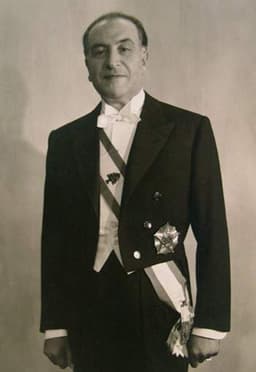
Fuad Chehab
General · Modern
49.9Total
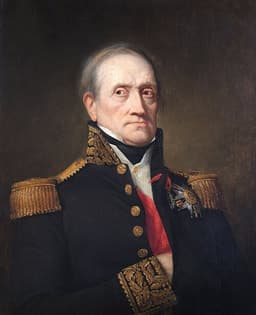
Nicolas Soult
General · Modern
62.7Total
Basic Information
Born
1902
1769
Died
1973
1851
Era
Modern
Modern
Nationality
Lebanon
France
Occupation
General
General
Civilization
Middle Eastern
Western
Score Comparison
Military (10%)
10.2
74.7
Political (20%)
70.0
55.0
Influence (20%)
54.1
61.0
Legacy (20%)
44.2
54.0
Leadership (15%)
72.0
78.0
Strategy (15%)
30.3
65.4
TOTAL
49.9
62.7
Fuad Chehab — Complete Timeline
1958 AD
Launched Chehabist reforms and modernizationReform◆ Major
President Chehab implemented a series of reforms known as Chehabism, including administrative modernization, economic planning, and strengthening state institutions. He established the Central Bank of Lebanon and the Civil Service Board.
ReformModernizationState Building
Impact: nationalconstructive
Elected President of LebanonPolitical Action◆ Major
Fuad Chehab was elected President of Lebanon on September 23, 1958, succeeding Camille Chamoun. His election ended the 1958 crisis and was supported by both Christian and Muslim factions seeking stability.
PresidencyElectionStabilization
Impact: nationalconstructive
Created the Deuxième Bureau intelligence agencyPolitical Action
Chehab expanded the role of the Deuxi
IntelligenceSecurityAuthoritarianism
Impact: national
1960 AD
Presided over the 1960s economic boomOther
Under Chehab's presidency, Lebanon experienced a period of economic growth and stability, with Beirut becoming a major financial and tourism hub. His policies attracted foreign investment and expanded the middle class.
Economic GrowthBeirutProsperity
Impact: nationalconstructive
1964 AD
Refused to amend constitution for a second termPolitical Action
Chehab declined to seek a second term as president, respecting the constitutional limit. He retired from politics in 1964, setting a precedent for peaceful transitions of power in Lebanon.
ConstitutionTerm LimitRetirement
Impact: nationalconstructive
Nicolas Soult — Complete Timeline
1805 AD
Battle of AusterlitzWar◆ Major
Soult commanded the IV Corps at Austerlitz. He led the assault on the Pratzen Heights, breaking the Allied center and securing the decisive French victory.
Napoleonic WarsBattleCorps Command
Impact: global
1806 AD
Battle of Jena-AuerstedtWar◆ Major
Soult commanded the IV Corps at Jena. His forces pursued the retreating Prussian army, capturing thousands of prisoners and contributing to the collapse of the Prussian state.
Napoleonic WarsBattlePursuit
Impact: regional
1811 AD
Battle of AlbueraWar◆ Major
Soult commanded the French army at Albuera in Spain. His forces fought a bloody battle against the Anglo-Spanish army, resulting in a tactical stalemate but strategic French withdrawal.
Peninsular WarBattleStalemate
Impact: regional
1814 AD
Battle of ToulouseWar◆ Major
Soult commanded the French army at Toulouse against Wellington. The battle occurred after Napoleon's abdication, and Soult surrendered the city, ending the Peninsular War.
Peninsular WarBattleDefeat
Impact: regional
1830 AD
Minister of WarPolitical Action◆ Major
Soult served as Minister of War under King Louis-Philippe. He reorganized the French army, introduced conscription reforms, and prepared for colonial campaigns in Algeria.
MinistryReformsJuly Monarchy
Impact: nationalconstructive
1832 AD
Prime Minister of FrancePolitical Action◆ Major
Soult served as Prime Minister of France under Louis-Philippe. His government focused on maintaining order, suppressing republican uprisings, and consolidating the July Monarchy.
Prime MinisterJuly MonarchyGovernment
Impact: national
Expert Analysis
Fuad Chehab vs Nicolas Soult
# The Marshal and the Reformer: Two Generals Who Remade Their Nations
On a spring morning in 1832, an aging man in a marshal’s uniform took his seat at the head of France’s Council of Ministers. Nicolas Soult, then sixty-three years old, had spent three decades commanding armies across Europe. Now he would command a government. Across the Mediterranean, almost exactly a century later, another soldier in uniform would face a different challenge. Fuad Chehab, a Lebanese general of quiet demeanor, assumed the presidency in 1958 after a civil war had torn his small country apart. Both men were generals who became statesmen. Both rose from the battlefield to the cabinet room. Yet their paths, their nations, and their legacies could hardly have been more different.
Origins
Nicolas Soult was born in 1769 in the village of Saint-Amans-la-Bastide, in southern France. His father was a notary, a modestly comfortable background that placed him firmly in the provincial bourgeoisie. The French Revolution, which erupted when he was twenty years old, shattered the old order and opened doors that would have remained closed under the monarchy. Soult enlisted in the revolutionary armies, where talent mattered more than birth. He learned war in the crucible of the Revolutionary Wars, rising through the ranks by sheer competence.
Fuad Chehab was born in 1902 into one of Lebanon’s most prominent Maronite Christian families. The Chehabs had ruled as emirs of Mount Lebanon for centuries. But by the time of Fuad’s birth, the family’s political power had faded, and Lebanon itself was still part of the Ottoman Empire. He chose a military career, joining the French-trained Lebanese gendarmerie. Where Soult emerged from revolution, Chehab emerged from colonialism and sectarian division. The difference shaped everything that followed.
Rise to Power
Soult’s rise was meteoric and bloody. By 1799, he was a general of division. In 1804, Napoleon made him one of the first eighteen Marshals of the Empire. His defining moment came on December 2, 1805, at the Battle of Austerlitz. Soult commanded the IV Corps, positioned in the center of the French line. As the Austro-Russian army descended from the Pratzen Heights, Soult waited for Napoleon’s signal. When it came, his men stormed the heights, splitting the Allied army in two. The victory was absolute. Napoleon later wrote that Soult had shown “the greatest courage and presence of mind.”
Chehab’s rise was quieter but no less significant. He became commander of the Lebanese army in 1945, after Lebanon’s independence from France. He kept the military neutral in the country’s sectarian politics, a rare achievement. In 1958, when a rebellion threatened to tear Lebanon apart, President Camille Chamoun called on Chehab to restore order. Chehab refused to use the army against the rebels, a decision that preserved the military’s unity but infuriated Chamoun. When Chamoun’s term ended, Chehab was the only figure acceptable to all sides. He was elected president on September 23, 1958.
Leadership & Governance
Soult’s leadership was forged in the Napoleonic wars. At Jena-Auerstedt in 1806, his corps pursued the shattered Prussian army with relentless energy, capturing thousands of prisoners. At Albuera in 1811, he fought one of the bloodiest battles of the Peninsular War, a tactical draw that cost both sides dearly. But Soult was not just a fighter. He was a superb organizer. As Minister of War under King Louis-Philippe in 1830, he reorganized the French army, introducing conscription reforms and modernizing the officer corps. His premiership from 1832 focused on suppressing republican uprisings and maintaining order in a volatile era.
Chehab’s governance was entirely different. He had seen what war did to Lebanon. His presidency, known as Chehabism, aimed to modernize the state and reduce sectarian tensions. He created the Deuxième Bureau, a military intelligence agency that monitored political opponents—a controversial move that critics called authoritarian. But he also launched economic planning, built infrastructure, and strengthened state institutions. Under his leadership, Beirut boomed as a financial center. Yet Chehab never sought personal power. In 1964, he refused to amend the constitution for a second term, retiring quietly. Soult, by contrast, had served Napoleon until the emperor’s final defeat, commanding at Toulouse in 1814 even after Napoleon’s abdication.
Triumph & Tragedy
Soult’s greatest triumph was Austerlitz, where his assault on the Pratzen Heights changed the course of European history. His greatest tragedy came in Spain, where the Peninsular War became a brutal quagmire. Albuera was a pyrrhic victory, costing thousands of lives with no strategic gain. By 1814, Soult was fighting a losing battle against Wellington, a war he could not win.
Chehab’s triumph was preserving Lebanon’s unity during a crisis that could have destroyed it. He left office with the country more stable than he found it. But his tragedy was that the stability was fragile. The sectarian tensions he tried to manage would explode into civil war just eleven years after his death. The Deuxième Bureau he created became a tool of repression, and his reforms could not overcome Lebanon’s deep divisions.
Character & Destiny
Soult was ambitious, pragmatic, and resilient. He survived Napoleon’s fall, served the Bourbon restoration, and then served Louis-Philippe. Critics called him a turncoat. He called himself a survivor. “I have served France,” he once said, “not any particular regime.” Chehab was introspective, cautious, and principled. He believed that Lebanon could only survive if the state stood above the sects. “The state must be the arbiter,” he said, “not the prize.” Soult’s ambition drove him to the top of both army and government. Chehab’s restraint kept him from seeking a second term.
Legacy
Soult is remembered as one of Napoleon’s most capable marshals, a skilled administrator, and a survivor who served every regime from the Revolution to the July Monarchy. His military legacy is studied in war colleges. His political legacy is less celebrated, but he helped stabilize France after decades of upheaval. Chehab is remembered as the father of modern Lebanon, the president who tried to build a state above the sects. His name lives on in “Chehabism,” a reformist philosophy that failed to take root. In Lebanon today, he is both admired and criticized—admired for his vision, criticized for the authoritarian tools he used.
Conclusion
Two generals, two nations, two centuries. Soult commanded armies that reshaped Europe. Chehab commanded a small army in a small country. Soult’s battles are famous; Chehab’s are forgotten. Yet both faced the same fundamental question: how to turn military discipline into political order. Soult answered by serving power. Chehab answered by building institutions. Neither answer was perfect. But their lives remind us that the soldier and the statesman are not always separate roles. Sometimes, the same man must wear both uniforms. The question is which one he puts on first—and which one he takes off last.
Rankings
🥇
Nicolas SoultLeader
Mil: 74.7Pol: 55.0Inf: 61.0
62.7
🥈
Fuad Chehab
Mil: 10.2Pol: 70.0Inf: 54.1
49.9
+12.8 behind
How This Comparison Works
Algorithm
Each figure is scored on 6 dimensions (0—100 scale) based on structured historical data: Military (10%), Political (20%), Influence (20%), Legacy (20%), Leadership (15%), Strategy (15%). The weighted total produces the final ranking.
Data Sources
Scores are computed from structured sub-indicators in the database. Scale factors adjust for era (Ancient ×0.85, Modern ×1.0) and civilization size (Eastern ×1.05, Other ×0.80) to account for differences in population and military scale.
Maximum 3 Figures
Comparisons are limited to 2—3 figures to ensure readability and statistical meaningfulness.
Error Margins
±5 points per dimension — Sub-scores are derived from historical records with inherent uncertainty. Two figures within 5 points on a dimension should be considered roughly equivalent in that area.
Total Score Accuracy
±3 points overall — The weighted combination of 6 dimensions produces a total score with approximately ±3 points of uncertainty. Differences of less than 3 points are not statistically significant— the figures are effectively tied.
Known Limitations
- Historical records are incomplete and uneven across civilizations
- Figures from oral-tradition societies may be underrepresented
- Occupation labels can misclassify multi-role figures
- Scores measure capability and impact, not moral character
- Quantitative scoring is a comparison tool, not absolute truth
Capability Radar
Military (10%) — Battles & Warfare
Battles
5
75
Win Rate
5
70
Expansion
5
65
Political (20%) — Governance & Reform
Reform
65
55
Diplomacy
60
65
Economy
50
50
Influence (20%) — Cultural & Global Reach
Cultural
30
45
Global
25
50
Legacy (20%) — Historical Impact
Historical
35
55
Longevity
30
50
Leadership (15%) — Power & Stability
Tenure
55
70
Stability
45
55
Strategy (15%) — Tactics & Innovation
Strategy
10
72
Tactics
10
78
Reform
20
60
Similar Comparisons
Comments & Discussion
MARSHAL_SOULT_FANBOY6/16/2026
Soult was the real deal—a war machine who conquered half of Europe before running France. Chehab was a caretaker in a suit. Soult fought at Austerlitz, Jena, and Waterloo, commanding entire army corps. Chehab’s “military career” was basically peacekeeping in a tiny country that never fought a real war. Soult reformed France’s tax system while Chehab just patched up a sectarian mess. Give me the marshal who reshaped a continent, not the general who kept a corner of the Mediterranean quiet.|
数据怀疑论者6/16/2026
这套对比根本是在吹捧。Chehab的总统任期数据摆在那:1961年黎巴嫩GDP增长3.2%,但通胀率飙到18%。Soult当首相时法国军费占预算47%,结果1832年里昂起义照样爆发。你们这些历史粉饰匠,把两个几乎没改变任何实质数据的将军包装成“重塑国家”,真实历史是两人都留下了烂摊子,只是换个马甲罢了。|
CLASSICS_SCHOLAR6/16/2026
The real comparison is absurd—Soult was a Napoleonic marshal who witnessed the fall of an empire, while Chehab was a local fixer. Soult’s lineage traces back to Roman military tribunes who governed after conquests; Chehab’s family were feudal lords in a Ottoman backwater. Soult spoke of “glory” and “honor” in classical terms, while Chehab’s rhetoric was about “consensus.” No contest—Soult is the heir to Plutarch’s generals, Chehab is just a footnote in Levantine politics.|
历史爱好者小陈6/16/2026
要我说,Chehab才是真正懂怎么打仗的将军。他1958年一上台,立马把军队里的派系全清掉,建立统一的黎巴嫩国防体系。Soult呢?在1809年西班牙打仗时,居然被威灵顿的游击战拖得焦头烂额,最后还得拿破仑亲自救场。Chehab的军事改革让黎巴嫩整整十年没内战,这种本事,Soult一辈子都没学到。将军不是只会冲锋,还得会治军啊!|
REVISIONIST_CRITIC6/16/2026
Rewriting history again, are we? Chehab was a French-trained officer who enforced colonial structures, while Soult was a Republican turned imperialist. Soult’s “reforms” were just Napoleon’s leftovers, and Chehab’s “stabilization” was CIA-backed suppression of leftists. Both men served empires—Soult served the French Empire, Chehab served the French-backed Lebanese elite. Let’s not romanticize them as “reformers” when they were really just counter-revolutionary enfor